 Blaine
 Why Board & Batten Is Showing Up on More Blaine Homes
Board and batten siding has a clean, vertical look that works on everything from a Semiahmoo waterfront home to a craftsman bungalow near downtown Blaine. Wide flat panels run vertically, with narrow strips — the "battens" — covering the seams. It reads as more modern or more farmhouse depending on trim and color choice, which is part of why it's become one of the most requested exterior styles in Whatcom County over the last several years.
The look is simple. Getting it to hold up on the Washington coast for thirty-plus years is not. Board and batten has more seams and more fastener penetrations per square foot than lap siding, and every one of those details is a potential water entry point if the wrong material or the wrong installer is behind it. That's the piece homeowners don't see in photos, and it's the reason we only build this style with James Hardie fiber cement.
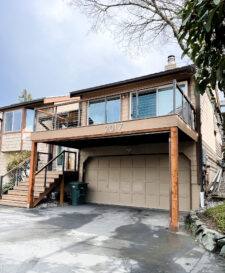
How the Board & Batten Look Is Actually Built
True board and batten with James Hardie isn't a single product — it's a system. We install HardiePanel vertical siding as the field panel, then run HardieTrim boards vertically over the panel seams to create the batten lines. Everything is factory-primed or factory-finished fiber cement, cut and fastened to Hardie's published specifications for panel siding.
Why This Matters More Than It Sounds
Some lower-cost approaches try to fake the look with a single grooved panel that mimics batten shadow lines, or with thin trim strips nailed directly over un-flashed seams. Those shortcuts can look fine from the curb for a year or two. The problems show up later, at the seams, once water has had a chance to find its way behind the panel repeatedly through a wet Pacific Northwest winter.
Why We Only Install James Hardie for This Style
We don't install LP SmartSide, vinyl, Cemplank, Allura, or raw wood board and batten — on this style or any other. That's a standard we hold across every job, not a preference we adjust by product line. For board and batten specifically, three things about James Hardie matter more than they would on a plainer lap job:
- Fiber cement doesn't move with moisture the way wood or engineered wood does. Board and batten has narrow battens that telegraph any swelling, cupping, or shrinkage immediately — it's an unforgiving style for a material that isn't dimensionally stable.
- ColorPlus factory finish holds its line at every seam. Board and batten has far more visible edges than lap siding. A factory-baked finish keeps color consistent at every one of those cut edges and seams instead of relying on field-applied paint to keep up.
- James Hardie is non-combustible fiber cement. That matters everywhere in Washington, and it removes one more variable on a style with a lot of vertical seams and trim detail.
James Hardie also engineers its siding formulations by climate zone rather than shipping one product nationwide. Our region falls under Hardie's HZ5 climate engineering, which accounts for the sustained moisture exposure typical of the Pacific Northwest rather than the freeze-thaw cycling common to colder inland climates. It's a detail most homeowners never hear about, but it's part of why the product performs differently here than a generic fiber cement panel would.
Built for What Blaine's Weather Actually Does
Blaine sits right on the water, between Drayton Harbor and Semiahmoo Bay, with a straight shot of salt-laden air off the Strait of Georgia. Combine that with Whatcom County's driving rain and a moss season that can run most of the year in shaded, north-facing exposures, and you get an exterior environment that's tough on any siding — and unforgiving of shortcuts on a style with this many seams.
Three Regional Factors That Shape Every Board & Batten Install We Do
- Salt air: accelerates corrosion on exposed or improperly rated fasteners and hardware, which is why we spec corrosion-resistant fasteners on every job this close to the water.
- Driving rain: wind-driven rain off the water pushes moisture sideways into seams and battens that would stay dry in a calmer climate — this is the single biggest reason installation detail matters more here than in drier regions.
- Moss season: shaded north and east elevations stay damp for extended stretches, which is exactly where poor drainage behind a panel does the most long-term damage.
The Installation Details That Actually Determine How This Holds Up
Board and batten fails or succeeds at the details most homeowners never inspect. These are the ones we don't skip:
| Detail | Why It Matters Here |
|---|---|
| Rain screen / drainage gap behind panels | Gives any moisture that gets behind the panel a path to drain and dry instead of sitting against the wall sheathing through our wet months |
| Batten spacing over structural framing | Battens fastened into framing (not just the panel) hold their line and resist wind load off the water |
| Flashing at every horizontal joint | Board and batten runs vertically, but horizontal seams between panel runs still need proper flashing to shed driving rain |
| Corrosion-resistant fasteners | Standard fasteners degrade faster in salt-air exposure common along Semiahmoo Bay and Drayton Harbor |
| Manufacturer-specified gaps and sealant | Fiber cement expands and contracts slightly with temperature; correct gaps prevent cracking at butt joints |
Board & Batten Material Comparison
Homeowners often ask how James Hardie board and batten actually compares to the alternatives they've seen quoted. Here's the honest breakdown:
| Material | Where It Falls Short for This Style | Where James Hardie Holds Up |
|---|---|---|
| Vinyl board and batten | Panels can bow or gap at battens with temperature swings; seams are visually harder to hide | Rigid fiber cement holds straight batten lines through temperature and moisture cycles |
| Raw wood / primed spruce | Requires ongoing paint maintenance and is prone to swelling at exposed batten edges in a wet climate | Factory ColorPlus finish and moisture-resistant fiber cement reduce maintenance and edge swelling |
| LP SmartSide / engineered wood | Wood-based core is more moisture-sensitive at cut edges and seams than fiber cement | Cement-based composition is not wood-based, removing that moisture-sensitivity concern |
| Off-brand fiber cement (Cemplank, Allura) | Not engineered by Hardie's climate-zone system or backed by Hardie's ColorPlus warranty structure | Climate-zone engineering plus a strong transferable warranty when installed to spec |
Maintenance: What Board & Batten Actually Needs
One reason people choose this style with James Hardie is that the upkeep is genuinely low compared to wood board and batten. It's not zero-maintenance, but it's straightforward:
- Rinse off accumulated salt spray and grime once or twice a year, especially on water-facing elevations
- Keep gutters and downspouts clear so runoff doesn't sheet directly down battens
- Trim back vegetation and control moss on shaded walls rather than letting it hold moisture against the siding
- Inspect caulking at trim and window transitions every couple of years and refresh as needed
- Watch for any impact damage and repair promptly rather than letting a chip sit through a wet season
What This Runs, and What Drives the Price
Board and batten with James Hardie generally costs somewhat more than a straightforward lap siding install, mainly because of labor — more seams, more trim, more precise fastening. Beyond the material itself, a few things move the number:
- Whether the existing wall needs new sheathing, moisture barrier, or a rain screen system added
- Number of windows, corners, and trim transitions on the home
- Home height and access — waterfront and multi-story homes take longer to stage safely
- ColorPlus color selection versus field-painted finish
- Removal and disposal of existing siding, especially if it turns out to be moisture-damaged underneath
Any contractor quoting this style should be able to walk you through where your specific number is coming from rather than handing over a flat per-square-foot figure.
What the Process Looks Like
A proper board and batten install starts with an inspection of the existing wall assembly, not just a measurement of square footage. From there: removal of old siding, correction of any moisture or sheathing issues found underneath, installation of a drainage plane, then HardiePanel and HardieTrim battens fastened to framing per manufacturer spec, with flashing and sealant details finished as we go rather than left for a final walk-through fix.
If you're weighing board and batten for a home in Blaine or elsewhere in Whatcom County, we're happy to walk your specific house, point out what your walls actually need, and put together a straightforward, no-pressure estimate — no obligation either way.