 Blaine
 Siding Built for a Peninsula Climate
Point Roberts sits on its own small peninsula at the southern tip of the Tsawwassen headland, surrounded on three sides by the waters of Boundary Bay and the Strait of Georgia. That geography shapes everything about how a house ages here. Homes get near-constant exposure to marine air moving in off the water, long stretches of damp, overcast weather, and enough shade from mature trees and coastal fog that north- and west-facing walls rarely get a chance to fully dry out between rain events. It's a beautiful place to live, but it is not a gentle environment for exterior building materials.
We're a Blaine-based siding, roofing, window, and deck contractor, and Point Roberts is part of our regular service area. We understand the specific combination of salt-laden air, driving rain, and moss growth that this stretch of Whatcom County produces, and we build our recommendations around what actually holds up here — not generic advice that ignores the local conditions.
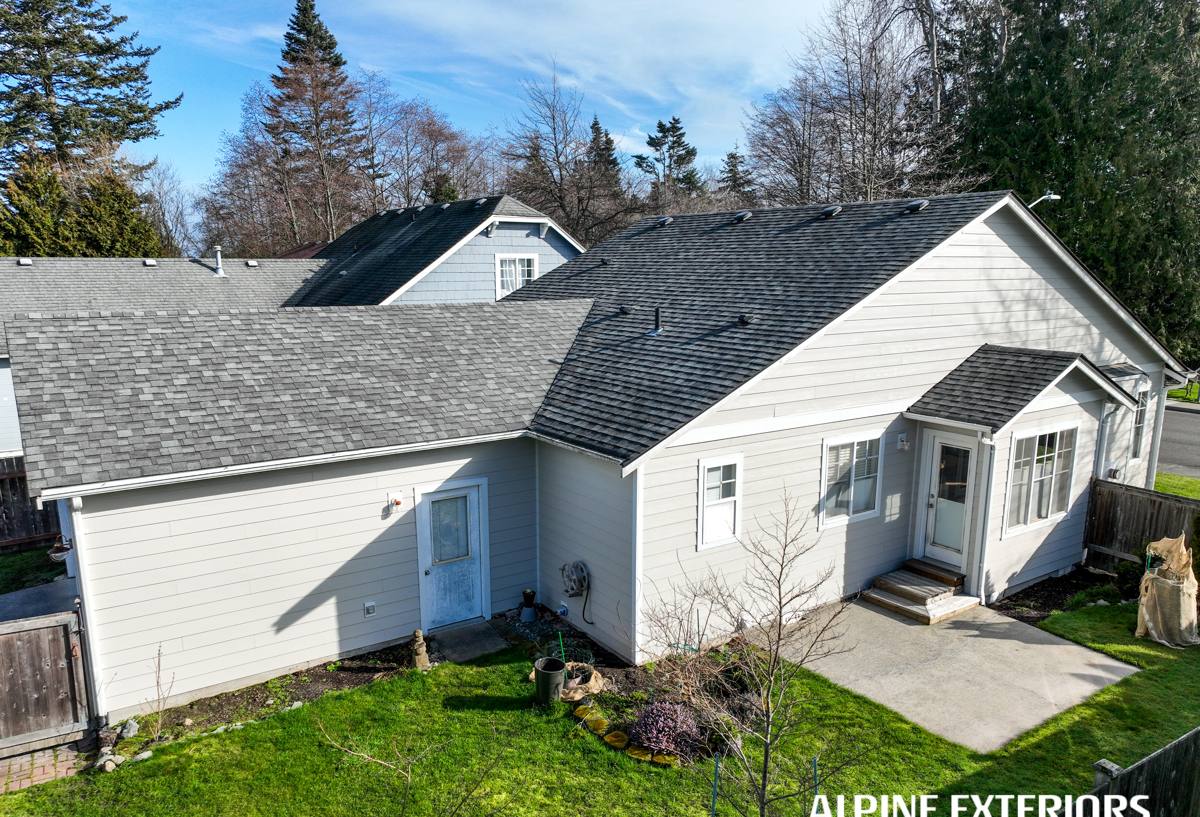
What Point Roberts Homes Are Up Against
Salt Air and Corrosion
Being surrounded by saltwater on nearly every side means airborne salt is a constant, low-level presence. Salt accelerates corrosion in fasteners, flashing, and any metal trim, and it can degrade certain coatings and caulks faster than they'd wear in an inland location. Siding materials and finishes that aren't formulated to handle coastal exposure tend to show fading, chalking, or fastener staining well ahead of schedule.
Driving Rain
Storms coming off the Strait of Georgia often arrive with wind-driven rain rather than straight-down rain. That matters because wind-driven moisture gets pushed sideways into seams, laps, and trim joints that a calmer rainfall would never reach. Siding systems and flashing details that aren't installed with real attention to water management can let moisture behind the cladding, where it causes rot in sheathing and framing long before anything looks wrong on the surface.
A Long Moss and Mildew Season
Shade, humidity, and mild temperatures add up to a moss and mildew season that runs long here — often most of the year on north-facing and tree-shaded walls. Moss holds moisture against a wall surface, and organic growth on siding isn't just cosmetic; sustained dampness at the surface is exactly the condition that shortens the life of moisture-sensitive materials.
Why We Install James Hardie Fiber Cement — and Nothing Else
We made a deliberate decision to install only James Hardie fiber cement siding, and we don't install vinyl, LP SmartSide, Cemplank, Allura, or primed wood products like spruce or cedar. That's not a marketing position — it's a standard we hold ourselves to because of what we've seen these products do over the long run in this climate.
Where the alternatives fall short in a marine climate
- Vinyl siding is affordable and low-maintenance in dry, moderate climates, but it isn't rigid, it can warp or become brittle over time with UV and temperature swings, and its seams and J-channels give wind-driven rain more opportunities to find a way behind the cladding.
- LP SmartSide is an engineered wood product. Engineered wood, by definition, still relies on resin-treated wood strands — and wood-based products are more vulnerable to sustained moisture exposure than fiber cement, which matters a great deal in a location with this much ambient dampness.
- Cemplank and Allura are also fiber cement, and fiber cement as a category is the right call for this climate. Our reason for standardizing on Hardie specifically comes down to consistency of the ColorPlus factory finish, the depth of their climate-specific HZ5 product engineering, and the strength of their transferable warranty — details that matter over a 30-plus-year ownership horizon.
- Primed spruce or cedar looks beautiful when new, but raw or primed wood siding needs disciplined recoating on a schedule to keep moisture out, and in a climate with this much salt air and rain, that maintenance window narrows fast. Miss a cycle and you're often looking at rot repair, not just a repaint.
None of this means these products are junk — used in the right setting, with the right maintenance commitment, they can perform fine. It means that for the specific combination of salt air, driving rain, and long moss seasons that Point Roberts homes face, we've concluded fiber cement — specifically James Hardie — gives homeowners the best balance of durability, low maintenance, and long-term value, and it's the only thing we'll put our name behind.
James Hardie's HZ5 Line and Why It Fits This Region
James Hardie engineers its HardieZone products for specific climate zones, and the Pacific Northwest falls into the HZ5 category — built to handle a wetter, more humid climate profile. Fiber cement itself is non-combustible and dimensionally stable, meaning it doesn't expand, contract, warp, or rot the way wood-based products can when exposed to repeated wet-dry cycles. The ColorPlus factory finish is baked on under controlled conditions rather than field-applied, which gives it better UV and fade resistance than a job-site paint job, and it comes backed by a strong, transferable limited warranty — an asset when a home changes hands, which matters in a community with a real mix of year-round and seasonal ownership.
Comparing Siding Options for a Marine Climate
| Material | Moisture Resistance | Maintenance | Typical Lifespan |
|---|---|---|---|
| James Hardie Fiber Cement | Excellent — non-combustible, dimensionally stable | Low — occasional wash, no repainting cycle with ColorPlus | 30+ years |
| Vinyl | Fair — seams and channels vulnerable to wind-driven rain | Low, but prone to warping/fading over time | 15-25 years |
| LP SmartSide (Engineered Wood) | Fair — better than raw wood, still moisture-sensitive | Moderate — edge sealing and coating upkeep | 20-30 years with maintenance |
| Primed Cedar/Spruce | Poor to Fair without diligent upkeep | High — recoating and sealing on a strict schedule | Varies widely with maintenance |
Roofing, Windows, and Decks Face the Same Climate
Siding isn't the only exterior system dealing with salt air and driving rain. Roofs on this peninsula take the same wind-driven moisture and need flashing and underlayment details that account for it, especially at valleys, chimneys, and any low-slope sections. Windows need properly sealed, well-flashed installations or the same wind-driven rain that threatens siding laps will find its way in around the frame. Decks — especially anything facing the water or exposed to salt spray — see accelerated fastener corrosion and finish breakdown, so hardware and coating choices matter more here than they would further inland. Because we handle siding, roofing, windows, and decks as one crew, we look at a home's whole exterior envelope together rather than treating each system in isolation.
What a Point Roberts Project Looks Like With Us
Point Roberts is geographically separate from the rest of Whatcom County — reaching it means crossing into Canada and back — and that reality shapes how out-of-area contractors treat the community. Crews that don't regularly work here can be inconsistent about showing up, slow on follow-up, and unfamiliar with the border-crossing logistics for materials and equipment. As a Blaine-based crew that already serves this area regularly, we build the border crossing into our scheduling rather than treating it as a surprise, and we show up when we say we will.
We also take seasonal ownership patterns into account. A number of homes here are used part-time, and that means project scheduling, material staging, and site access sometimes need more coordination than a typical full-time residence. We work with homeowners on timing that fits how the home is actually used.
What to Expect During a Siding Project
- An on-site inspection that looks at current siding condition, moisture damage risk areas, and trim/flashing details, not just square footage
- A written estimate that specifies the Hardie product line, color, and installation approach — no vague allowances
- Attention to water management details: flashing, kick-out flashing at rooflines, proper clearances, and correctly caulked or open joints per Hardie's installation specifications
- Coordination around border-crossing logistics and, where relevant, seasonal occupancy schedules
- A final walkthrough before we consider the job complete
Installation Quality Matters as Much as the Product
Even the best siding material fails early if it's installed wrong. Fiber cement has specific requirements around fastener placement, clearances from grade and roof surfaces, joint treatment, and flashing integration — and those requirements exist precisely because of climates like this one, where a small installation shortcut becomes a moisture problem within a few wet seasons. We install strictly to manufacturer specification because in a location with this much rain and salt air, the installation details are what actually determine whether a warranty means anything in practice.
Get a Straight Answer About Your Home
Every home on this peninsula faces slightly different exposure depending on how close it sits to the water, how much tree cover it has, and which direction it faces. If you're dealing with moss buildup, moisture stains, aging siding, or you're just planning ahead for a home you own here, we're happy to take a look and give you a straightforward assessment — no pressure, no inflated scope. Reach out for a free estimate and we'll walk the property with you and talk through what actually makes sense for your home.