 Blaine
 Why This Comparison Matters in Blaine
Blaine sits at the far northwest corner of Whatcom County, right on Semiahmoo Bay, which means every exterior product on a home here has to deal with salt-laden air, long stretches of driving rain off the Strait of Georgia, and a moss season that can run from October through May. Siding that performs fine in a drier inland climate can behave very differently fifteen minutes from saltwater. When homeowners ask us to compare fiber cement and vinyl siding, we try to give a straight answer rather than a sales pitch — because the honest answer is that vinyl isn't a bad product, it's just not the product we choose to install, and we want you to understand exactly why before you make a decision on your own home.
This page walks through how the two materials actually perform, what they cost over time, and where the real differences show up once a house has been through a few Whatcom County winters.
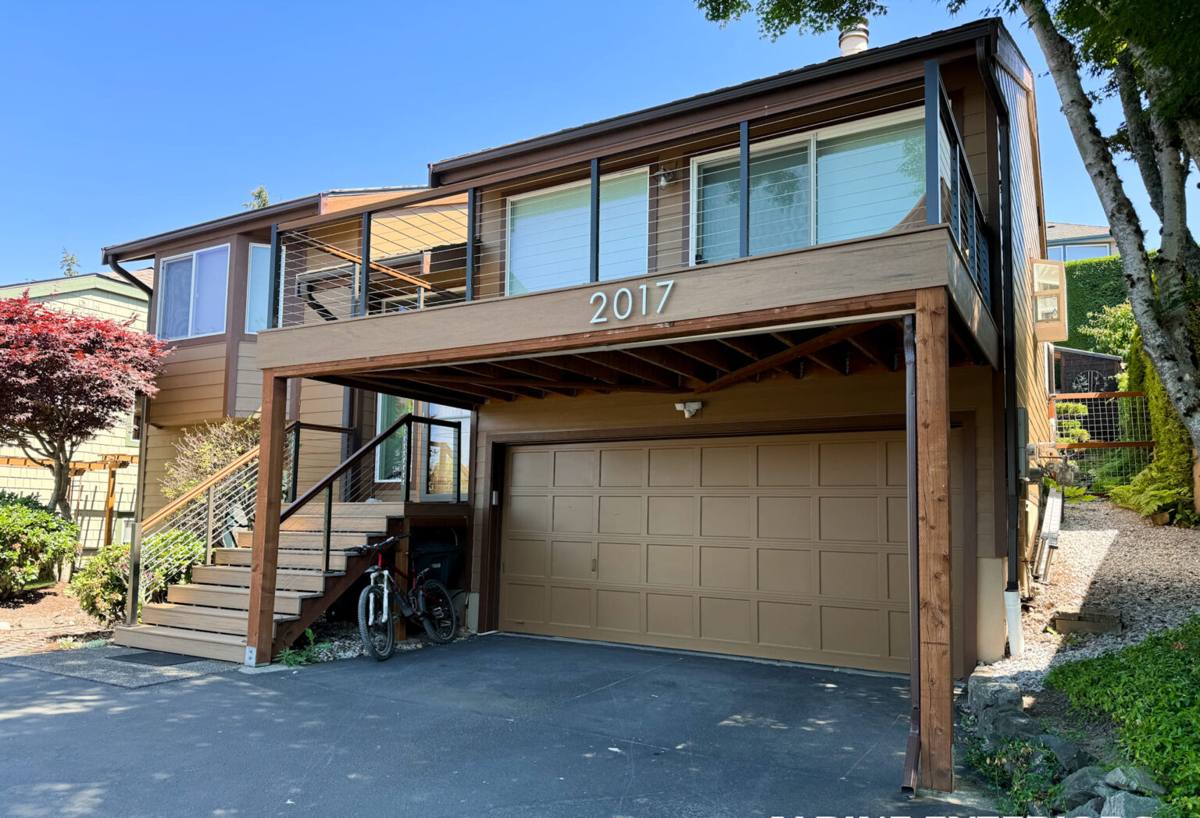
What Vinyl Siding Gets Right
Vinyl has stayed popular for decades for real reasons. It's inexpensive to buy and install, it's lightweight, and it doesn't need to be painted. In dry climates with moderate temperature swings, a well-installed vinyl job can look decent for a long time with minimal upkeep. For a budget-driven project, or a home that isn't going to be owned long-term, vinyl is a legitimate option — we're not going to pretend otherwise.
Where vinyl runs into trouble is in the specifics of our local climate and in how forgiving (or unforgiving) the material is of imperfect installation, sun exposure, and moisture cycling.
Where Vinyl Struggles Near Salt Water
- Expansion and contraction: Vinyl expands and contracts significantly with temperature swings. Panels must be installed with room to move, and if they aren't, you get buckling, waviness, or panels that pop loose in wind.
- Salt air exposure: Salt-laden air accelerates fading and can be harder on the fasteners, trim, and J-channel than it is on the panel itself, leading to premature wear at the details long before the field of the siding looks bad.
- UV fading: Darker vinyl colors fade unevenly over years of sun exposure, and once faded, vinyl can't be repainted easily because most paints don't bond well to it long-term.
- Impact damage: Vinyl cracks or shatters on cold days when struck by debris, hail, or even an errant ladder — and matching an aged, faded panel for a repair is close to impossible.
- Moss and mildew in seams: The overlapping seams and channels in vinyl siding trap moisture, which combined with our long moss season creates a steady breeding ground for mildew streaks that need regular washing to keep in check.
How Fiber Cement Handles the Same Conditions
James Hardie fiber cement siding is made from cement, sand, and cellulose fibers, engineered specifically to resist moisture, fire, and pests. It doesn't expand and contract the way vinyl does, it holds paint (it comes factory-finished with ColorPlus Technology, a baked-on finish) far longer than field-applied paint on wood, and it's dense enough that driving rain and salt spray don't degrade it the way they eventually degrade vinyl's fasteners and trim.
James Hardie also makes an HZ5 product line specifically engineered for climates like ours — regions with sustained moisture exposure and freeze-thaw cycling. That's not a marketing gimmick; it reflects real engineering differences in the formulation for high-moisture regions versus hot, dry ones.
Why We Standardized on Hardie
We install only James Hardie fiber cement products. We don't install vinyl, LP SmartSide, Cemplank, Allura, or bare cedar and primed spruce siding. That's a deliberate standard, not a lack of options. After years of doing exterior work in this exact climate, we've settled on Hardie because it's non-combustible, because the factory-applied ColorPlus finish resists fading and chalking far better than field-painted materials, and because the warranty coverage is strong and transfers to a new owner if you sell the home. When we put our name behind a job, we want the material underneath to hold up to Whatcom County weather for decades, not just look good for the first few years.
Side-by-Side Comparison
| Factor | Vinyl Siding | James Hardie Fiber Cement |
|---|---|---|
| Material composition | PVC plastic | Cement, sand, cellulose fiber |
| Fire resistance | Melts/burns, contributes fuel | Non-combustible |
| Moisture behavior | Doesn't absorb water, but seams trap moisture and mildew | Engineered (HZ5) for high-moisture, coastal climates |
| Color/finish life | Field color, fades over years, hard to repaint well | Factory-baked ColorPlus finish, longer color retention |
| Impact resistance | Cracks/shatters, especially in cold weather | Resists impact, dents rather than shattering |
| Expansion movement | Significant; needs slip joints and clearance | Minimal; more dimensionally stable |
| Typical lifespan | 20-30 years, condition-dependent | 30-50+ years with proper install and maintenance |
| Warranty structure | Varies widely by manufacturer/installer | Strong manufacturer warranty, transferable to new owner |
| Repair/patch appearance | Faded panels rarely match new stock | Repainting or replacement panels blend more consistently |
Cost Over the Life of the Siding
Vinyl almost always wins on upfront material and labor cost — it's lighter, faster to install, and the material itself is cheaper per square foot. If you're only weighing day-one cost, vinyl looks like the better deal. But siding is a long-hold decision, and the real comparison has to include what happens 10, 20, and 30 years down the road.
Cost Factors Worth Weighing
- Upfront installation: Vinyl is typically less expensive to install than fiber cement, largely due to lighter material and faster crew time.
- Repainting or refinishing: Vinyl generally isn't repainted (paint doesn't bond well long-term); it's replaced when it fades or fails. Hardie's factory finish is designed to go many years before it needs attention, and it does accept repainting when the time comes.
- Storm and impact repairs: Cracked vinyl panels need replacement, and older colors are often discontinued, forcing a color mismatch. Fiber cement handles impact differently and touch-up or replacement blends more predictably.
- Resale and buyer perception: Fiber cement siding, and James Hardie specifically, is widely recognized by buyers and appraisers as a premium, durable exterior — that can matter when you eventually sell.
- Moisture-related repairs: A moss and mildew-prone salt air climate like Blaine's tends to generate more washing and seam maintenance on vinyl over time than on a dense fiber cement panel.
Installation Quality Matters More Than the Product Name
It's worth being honest about something: a poorly installed Hardie job can underperform a well-installed vinyl job, at least for a while. Fiber cement is less forgiving of installation mistakes than people assume — improper fastening, wrong nail spacing, missing flashing details, or panels installed tight against grade or without proper clearance can cause problems regardless of how good the material is. This is part of why we only install Hardie ourselves rather than subcontracting it out loosely — the product's long-term performance depends on getting the water management details right the first time, especially in a climate that gets as much driving rain as Blaine does.
What to Check Before You Choose a Contractor
- Ask what siding brands and lines the contractor installs, and why they chose them — a contractor who installs everything often isn't specializing in getting any one product's details right.
- Ask how they handle flashing at windows, doors, and roof-to-wall intersections — this is where most siding failures actually start, regardless of material.
- Ask about manufacturer certification, especially for fiber cement, where proper fastening patterns and clearances affect the warranty.
- Ask how the warranty works if you sell the home — transferability matters for resale value.
- Get a clear explanation of how they'll handle moisture and ventilation behind the siding, not just the finish on top of it.
Our Honest Recommendation
If cost is the only factor and you don't plan to stay in the home long, vinyl is a legitimate, lower-cost option, and we won't tell you otherwise. But for homeowners planning to stay in their Blaine home for the long haul, or who want a material engineered to hold up against salt air, driving rain, and a moss season that doesn't take much of a break, we believe James Hardie fiber cement is the stronger long-term investment. That's the entire reason we built our business around installing it exclusively rather than offering both — we'd rather stand fully behind one product system we trust than spread ourselves across several we have reservations about.
If you'd like to talk through what fiber cement siding would look like — and cost — on your specific home, we're happy to walk the exterior with you and give you a straightforward, no-pressure estimate. There's no obligation, just an honest look at your options.