 Blaine
 Exterior Work in Custer: A Different Set of Conditions Than Inland Homes Face
Custer sits in the northwest corner of Whatcom County, close enough to the Strait of Georgia and Drayton Harbor that salt-laden air is simply part of daily life for homes in the area. Add in the long, wet fall-through-spring stretch typical of Blaine-area weather and a moss season that can run most of the year on shaded north- and west-facing walls, and you have a climate that is genuinely harder on exterior building materials than what homeowners a few miles inland deal with. This isn't a reason to over-build or over-spend — it's a reason to build correctly the first time, with materials and installation methods matched to what the marine environment actually does to a house over 10, 20, and 30 years.
We work throughout Whatcom County, and Custer's mix of rural acreage, shoreline-adjacent lots, and older farmhouses alongside newer construction means no two exterior jobs look quite the same. What stays consistent is the climate stress: wind-driven rain that finds gaps other regions never test, salt air that accelerates corrosion on fasteners and finishes, and a moss and mildew load that punishes any material that can't shed moisture or resist organic growth.
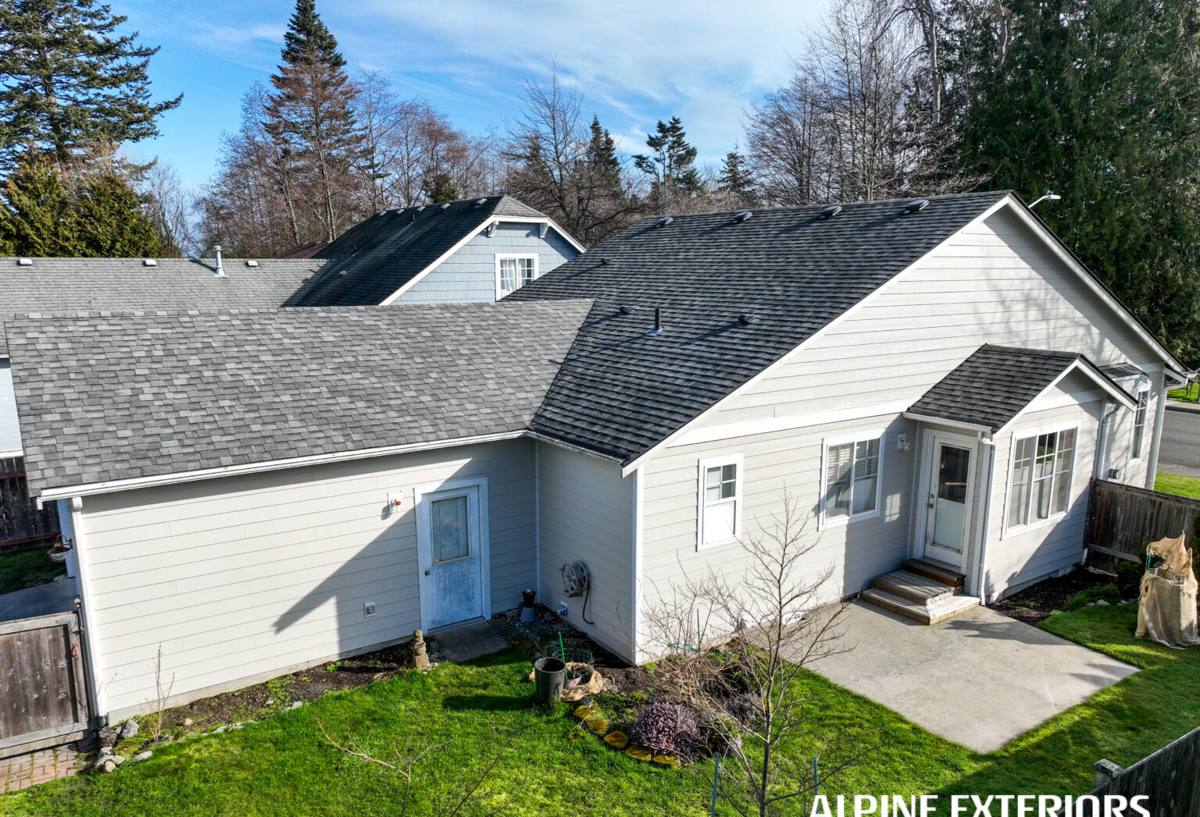
What Salt Air and Driving Rain Actually Do to a House
Salt Air
Proximity to Drayton Harbor and the Strait means airborne salt is a real factor, not a coastal myth. Salt accelerates corrosion in exposed metal fasteners, flashing, and hardware, and it can degrade certain paint and coating systems faster than manufacturers' standard weathering estimates assume. This matters most at siding fastener heads, roof flashing details, window hardware, and any exposed metal trim or railing on a deck.
Driving Rain
Wind off the water doesn't just drop rain straight down — it drives it sideways into wall assemblies, especially at corners, around windows, and under eaves with minimal overhang. A house can look fine from the street while water is working its way behind siding laps, around poorly flashed window openings, or into deck ledger connections. Over years, that moisture intrusion is what causes rot in wall sheathing, trim, and structural framing — damage that's expensive to find and worse to repair.
Moss and Sustained Dampness
Whatcom County's wet season means shaded and north-facing surfaces stay damp for extended stretches. Moss and algae don't just look bad — sustained organic growth holds moisture against a surface, which is exactly what accelerates rot in wood-based products and paint failure on lower-grade finishes.
Why We Standardized on James Hardie Fiber Cement
We install James Hardie fiber cement siding exclusively. We do not install vinyl, LP SmartSide, Cemplank, Allura, primed spruce, or cedar siding, and we're upfront with Custer homeowners about why.
Fiber cement is non-combustible and dimensionally stable — it doesn't expand and contract with moisture the way wood-based products do, which matters directly in a climate with this much sustained dampness. Hardie's ColorPlus factory-applied finish is baked on under controlled conditions rather than field-painted, which gives it better adhesion and color retention against UV and salt air exposure than most site-applied paint jobs achieve. Hardie also engineers region-specific product lines (HZ5 for areas with more moisture and temperature swing) rather than selling one formulation everywhere.
None of this means other products are junk — cedar has real appeal, vinyl is inexpensive, engineered wood has genuine strengths in the right climate. But for a marine environment like Custer's, we've made a professional judgment: the maintenance burden, moisture sensitivity, and long-term appearance trade-offs of those alternatives aren't worth it when a proven, climate-engineered alternative exists. That's the whole reason we only put Hardie on homes.
How the Common Alternatives Compare in This Climate
| Material | Moisture Behavior | Salt Air / Coastal Fit | Long-Term Maintenance |
|---|---|---|---|
| James Hardie Fiber Cement | Dimensionally stable, doesn't swell or rot | Factory finish holds up well; non-combustible | Repaint interval on trim only, per Hardie spec |
| Vinyl Siding | Can warp/buckle with heat and impact | Can fade and become brittle over time | Low, but limited repair options if damaged |
| Cedar | Natural material, absorbs moisture | Needs consistent sealing/staining to perform | High — regular refinishing required |
| LP SmartSide / Engineered Wood | Wood-based, sensitive to sustained moisture at edges/cuts | Requires careful sealing of all cut edges | Moderate to high, installation-sensitive |
Roofing: The First Line of Defense Against Driving Rain
In a wind-driven rain environment, roof details matter as much as the field material itself — flashing at valleys, chimneys, and roof-to-wall transitions is where most leaks actually start. We pay particular attention to underlayment quality, ice-and-water shield at vulnerable transitions, and proper venting, since trapped moisture under a roof deck in a persistently damp climate is a fast track to decking rot and premature shingle failure. Moss treatment and gutter/downspout sizing also matter more here than in drier parts of the state — undersized or clogged gutters overflow straight into fascia and soffit areas during a heavy Pacific system.
Windows: Sealing Out Wind-Driven Moisture
Window failures in this area are rarely about the glass — they're about flashing and sealant details around the rough opening. A window that isn't properly flashed and integrated with the water-resistive barrier will let wind-driven rain track behind the frame and into the wall cavity, often for years before anyone notices staining or soft trim. When we replace windows, we treat the flashing and integration work as equally important as the window unit itself, and we match glass packages to the orientation of the wall (west and south exposures generally benefit from better solar control given the amount of daylight this region does get between systems).
Decks: Built for Wet Ground and Salt Exposure
Deck framing and ledger connections in Whatcom County need hardware rated for the moisture exposure they'll actually see, not just minimum code compliance. Ledger flashing, proper fastener selection (to resist the corrosion salt air accelerates), and adequate ground clearance or drainage beneath the deck all matter more here than in a dry inland climate. For decking material, options range from wood to composite, and the right choice depends on the homeowner's maintenance appetite and budget — we walk through the honest trade-offs of each rather than pushing one system.
Why a Local Crew Matters for Custer Homes
Whatcom County's building requirements, typical framing practices, and the specific way weather hits a given lot (shoreline exposure vs. tree-sheltered inland parcels, for instance) are things a crew that works this area regularly understands without having to guess. A contractor unfamiliar with this climate can install a technically correct product the wrong way for these conditions — under-flashing a window that would be fine in a drier region, for example, or skipping moss-prevention details that matter here but wouldn't in Spokane. We work this county, so the details that matter locally aren't an afterthought.
What to Look for When Vetting an Exterior Contractor Here
- Manufacturer certification for the specific siding system being installed, not just general experience
- Written scope that specifies flashing details at windows, doors, and roof transitions — not just "install siding"
- Local references or completed work in Whatcom County, ideally in similar coastal-adjacent conditions
- Clear explanation of warranty terms — both manufacturer and workmanship — and what voids them
- Straight answers about maintenance requirements for whatever material they're proposing
- Proper licensing and insurance verifiable through Washington state records
What a Project Timeline Typically Involves
Most siding and exterior projects in this area follow a similar sequence: an on-site evaluation of existing conditions (including any hidden moisture damage), a written scope covering material, flashing details, and disposal, then scheduling around the weather window — we plan around Whatcom County's wet season rather than fighting it, since certain installation steps need dry conditions to be done right. Roofing and window work follows a similar logic. We'll walk through realistic timing during the estimate rather than giving a generic number that doesn't account for the specific job.
Cost Factors Worth Understanding Before You Get Quotes
| Factor | Why It Affects Price |
|---|---|
| Existing moisture damage | Rotted sheathing or framing found during tear-off adds repair scope |
| Home size and wall complexity | More corners, gables, and penetrations mean more labor and flashing detail |
| Material and product line | HZ5 and other climate-specific Hardie lines vary in cost from standard lines |
| Access and site conditions | Rural lots, steep grades, or limited equipment access add time |
| Scope bundling | Combining siding, roofing, or window work in one project can reduce overlapping costs |
If you're in Custer or anywhere else in the Blaine service area and want an honest look at what your home's siding, roofing, windows, or deck actually need, we're happy to come take a look. The estimate is free, there's no pressure, and we'll tell you plainly what we see and what we'd recommend.