 Blaine
 Bellingham's Exterior Climate Problem
Bellingham sits on the Salish Sea in Whatcom County, and that location shapes everything about how a house exterior ages here. Homes close to the water deal with salt-laden air that accelerates corrosion on fasteners, trim, and lower-grade siding materials. Move a few miles inland and the salt exposure drops off, but the rain doesn't — Whatcom County sees a long wet season with steady, driving rain off the water rather than short heavy downpours. That combination of moisture and salt air is a tough environment for exterior materials that weren't built to handle both at once.
Then there's moss. Bellingham's mix of mild temperatures, shade from mature trees, and near-constant dampness for months at a time gives moss and algae exactly what they need to take hold on roofs, siding, decking, and anywhere else moisture sits without enough sun or airflow to dry it out. Homeowners who've lived here a while know the drill: a north-facing wall or a shaded side yard will show green growth long before a sun-exposed elevation does.
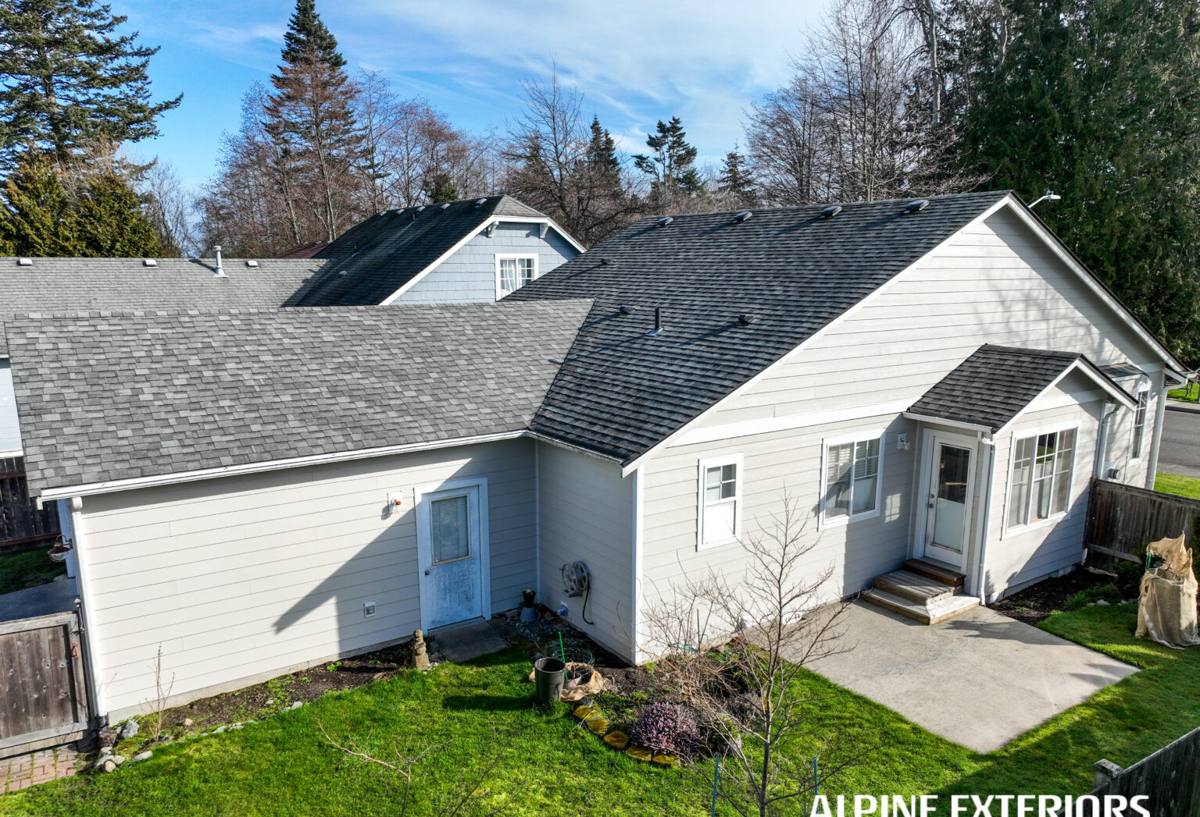
What We See on Bellingham Homes
After years of siding, roofing, window, and deck work in this area, a few patterns show up over and over on Bellingham properties:
- Siding that's absorbed moisture at seams, butt joints, and corners, leading to swelling, soft spots, or paint that won't hold
- Moss and algae staining on siding and trim, especially on shaded or north-facing walls
- Rust streaking from corroded fasteners or trim pieces, more common closer to the water
- Caulk and paint failure years ahead of schedule because the underlying material couldn't handle repeated wet-dry cycles
- Decking and fascia boards showing rot at ground contact points or wherever water collects and doesn't drain
None of this means Bellingham is a bad place to own a house — it means the exterior materials and installation details have to match the climate. A lot of the siding problems we get called out for aren't really material failures in the abstract; they're a mismatch between what was installed and what the Salish Sea climate actually demands over a couple of decades.
Why We Install Only James Hardie Fiber Cement
We made a decision as a company to install one siding system: James Hardie fiber cement. We don't install vinyl, LP SmartSide, Cemplank, Allura, primed spruce, or cedar. That's not a marketing angle — it's a standard we hold to because of what we've watched happen to those materials in exactly this kind of wet, coastal-adjacent climate.
Vinyl
Vinyl siding is inexpensive and easy to install, and in drier climates it can hold up reasonably well. In a marine environment like Bellingham's, vinyl tends to become brittle with UV and temperature cycling over time, and its seams and panels can allow moisture to get behind the cladding without an obvious sign on the surface. It's also a petroleum-based product with a look that reads as "vinyl" up close — a real trade-off for homeowners who want a natural wood-siding appearance.
LP SmartSide, Cemplank, Allura
LP SmartSide is an engineered wood product — it performs fine in a lot of climates, but wood-based substrates are inherently more vulnerable to sustained moisture exposure than fiber cement, and Bellingham's rain season is long. Cemplank and Allura are both fiber cement products, similar in concept to James Hardie, but we've standardized on one manufacturer, one installation system, and one warranty structure so our crews are experts in a single product rather than generalists across several. That specialization is part of how we keep installation quality consistent.
Primed Spruce and Cedar
Solid wood siding, whether primed spruce or cedar, has real appeal — it's a classic look with a long track record. But raw or primed wood requires disciplined, ongoing maintenance (repainting, sealing, monitoring for rot) to survive a climate this wet, and that maintenance burden falls entirely on the homeowner for the life of the siding. Cedar in particular is also a more combustible material than fiber cement, which matters to some homeowners weighing long-term risk.
Why Hardie
James Hardie fiber cement is non-combustible, engineered specifically for different climate zones (including the HZ5 line built for regions with freeze-thaw and heavy moisture exposure), and finished at the factory with ColorPlus technology — a baked-on finish that resists fading and chipping far better than field-applied paint. It doesn't rot, and it holds paint and color far more consistently over decades than wood-based alternatives. It's also backed by a strong transferable limited warranty, which matters if you sell the house before the siding's functional life is up. None of this means Hardie is maintenance-free — it still needs to be installed correctly and looked after — but it's the product we trust to perform in this specific climate.
James Hardie Product Lines for Whatcom County
James Hardie makes several siding profiles, and the right one for a given home depends on the architectural style and the homeowner's preference, not just the climate — HZ5 engineering underlies the whole product line in our region.
| Product | Look | Best For |
|---|---|---|
| HardiePlank lap siding | Traditional horizontal lap, smooth or cedar-textured | Most home styles; the most common Hardie install |
| HardiePanel vertical siding | Vertical panels, often with battens | Modern or farmhouse-style exteriors, accent walls |
| HardieShingle siding | Staggered or straight-edge shingle look | Craftsman and cottage-style homes |
| HardieTrim boards | Smooth or textured trim profiles | Window/door surrounds, fascia, corner boards |
All of these come in James Hardie's ColorPlus palette, factory-finished so the color is baked in rather than sprayed on-site. That matters in a climate where field-applied paint gets tested hard by driving rain and salt-laden air.
Beyond Siding: Roofing, Windows, and Decks
Siding is only one piece of a home's exterior envelope, and in Bellingham the same moisture and moss pressures that affect siding show up on roofs, windows, and decks too. We handle all four because they interact with each other — a roof that's shedding water improperly can rot the siding and trim below it, and windows with failed flashing can let water into wall assemblies no matter how good the siding is.
On roofing, we pay close attention to moss-resistant details and proper flashing at valleys and penetrations, since moss growth and slow water intrusion are the two biggest long-term threats to roofs in this climate. On windows, correct flashing and integration with the new siding plane is what actually keeps water out — the window unit itself is only part of the equation. On decks, drainage, ground clearance, and material choice determine how long the structure lasts before rot sets in, especially on shaded lots common around Bellingham's tree-covered neighborhoods.
Why a Local Crew Matters Here
A siding installer who's only worked in drier inland climates can make mistakes that don't show up for a few years in Bellingham — under-flashed penetrations, insufficient clearance at grade, or caulk used where a proper flashing detail was needed. Crews who work this area regularly know where water actually goes on a house exposed to Salish Sea weather: which elevations take the worst driving rain, where moss tends to establish first, and which details fail early when they're not done right the first time. That local pattern recognition is worth more than it sounds like on paper — it's the difference between siding that looks right on installation day and siding that still looks right in fifteen years.
What the Replacement Process Looks Like
A full siding replacement is disruptive, but a well-run project follows a predictable sequence:
- On-site evaluation of existing siding, sheathing, and any moisture or rot damage
- Removal of old siding and inspection of the wall assembly underneath
- Repair of any damaged sheathing or framing found during tear-off
- Installation of a weather-resistant barrier and proper flashing at all penetrations
- Installation of James Hardie siding to manufacturer specifications, including correct fastening and clearances
- Caulking, trim work, and final cleanup
Here's a practical checklist for homeowners evaluating a siding project on their own home:
- Check for soft or spongy spots when you press on the siding, especially near the bottom courses
- Look for paint that's peeling, bubbling, or chalking well ahead of its expected repaint cycle
- Note any persistent moss or algae staining, particularly on shaded or north-facing walls
- Check trim, window sills, and corner boards for rust streaking or visible gaps
- Ask any contractor for their specific fastening, flashing, and clearance details in writing, not just a verbal assurance
What Drives Cost
Every home is different, but a few factors consistently move the price of a siding project up or down:
| Factor | Effect on Cost |
|---|---|
| Extent of tear-off and sheathing repair | Hidden rot or damage found during removal adds cost but is necessary to fix properly |
| Home size and wall complexity | More corners, gables, and trim detail means more labor |
| Siding profile chosen | Lap, panel, and shingle styles carry different material and labor costs |
| Access and site conditions | Steep lots, limited access, or mature landscaping can add time |
| Combined scope | Bundling siding with roofing, window, or deck work can create efficiencies versus separate projects |
We won't quote a number without seeing the house, but we can walk through these factors during an on-site estimate so there are no surprises.
Living With Hardie Siding in This Climate
James Hardie siding is low-maintenance compared to wood or vinyl, but "low-maintenance" isn't "no-maintenance" anywhere on the Salish Sea. A periodic rinse to knock off moss and grime, prompt attention to any caulk that starts to separate, and keeping gutters clear so water doesn't sheet down the siding will go a long way toward getting the full life out of the material. Because the color is factory-baked rather than field-painted, most homeowners find they're not repainting on the aggressive cycle that raw wood or older vinyl often demands.
If you're weighing a siding, roofing, window, or deck project on a Bellingham home, we're happy to come take a look and talk through what we're seeing and what it would take to fix it right. There's no pressure and no cost to get an estimate — just a straight answer from a crew that works in this climate every week.