 Blaine
 Siding Built for Birch Bay's Waterfront Exposure
Birch Bay sits right on the water, and that's exactly why siding here wears out faster than it does even a few miles inland. Homes along the bay and back through the residential streets behind it take a steady combination of salt-laden air, wind-driven rain, and long stretches of shade and moisture that keep surfaces damp far longer than homeowners expect. We're a Blaine-based exterior contractor, and Birch Bay is part of our regular service area — not a stretch assignment we drive in for once and forget about.
This page focuses on siding, but it's worth knowing up front that we also handle roofing, windows, and decks. On a waterfront property, those systems all interact. A siding job that ignores flashing details at the roofline, or window trim that traps water against the wall, ends up failing early no matter how good the siding material is. We look at the whole exterior, not just one component.
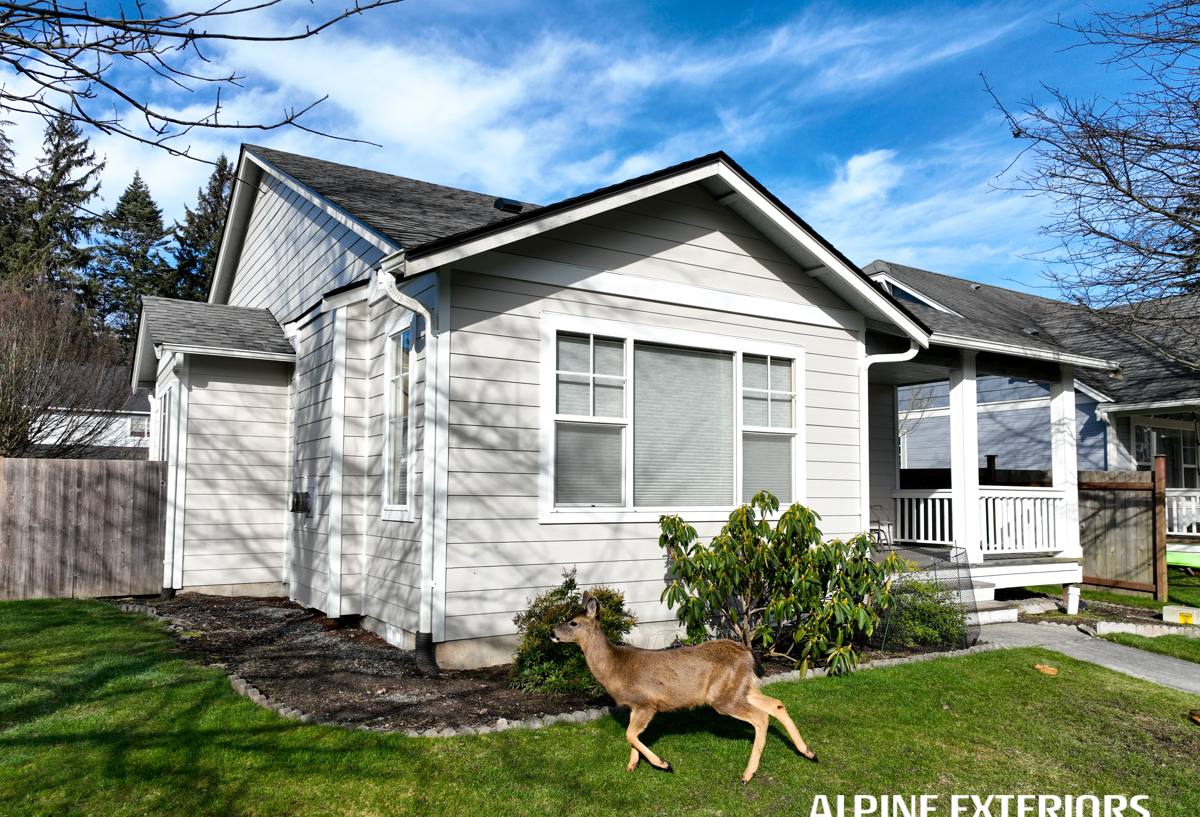
What Salt Air and Coastal Moisture Do to Siding
Birch Bay's exposure creates a specific set of stresses that show up differently than they would on a home set back from the water:
- Salt deposition — airborne salt settles on siding, trim, and fasteners, accelerating corrosion on anything metal and leaving a fine residue that holds moisture against the surface.
- Wind-driven rain — storms off the water push rain sideways into wall assemblies, stressing seams, laps, and butt joints that would stay relatively dry on a more sheltered site.
- Prolonged dampness — shaded north- and west-facing walls, common on lots with mature trees or close-set homes, can stay damp for days after a system passes through, which is exactly the condition moss and mildew need to take hold.
- Freeze-thaw cycling — Whatcom County doesn't get deep freezes often, but Birch Bay does see enough cold snaps combined with saturated siding to stress water-absorbent materials over time.
None of this means siding fails quickly here — it means the margin for error in material choice and installation is smaller. Products and details that would perform fine in a drier climate get exposed here.
Moss and Organic Growth
Whatcom County's long wet season means moss isn't an occasional nuisance — it's a persistent condition on shaded and north-facing walls for much of the year. Siding that absorbs moisture gives moss and algae something to root into over time, which is one of the main reasons we standardized on a non-porous fiber cement product rather than wood-based alternatives that stay damp longer after each rain.
Why We Install Only James Hardie Fiber Cement
We don't install vinyl, LP SmartSide, Cemplank, Allura, primed spruce, or cedar. That's a deliberate standard, not a lack of options. Each of those products has legitimate strengths, but none of them holds up to Birch Bay's specific combination of salt air, driving rain, and extended moss season as consistently as James Hardie fiber cement when it's installed to spec.
The honest trade-offs with the alternatives
| Material | What it does well | Why it's a tougher fit here |
|---|---|---|
| Vinyl siding | Low upfront cost, minimal maintenance | Can warp or become brittle with sun and temperature swings; seams and panels can allow moisture behind the cladding |
| LP SmartSide (wood-strand) | Lighter weight, easier to install, warmer appearance | Wood-based core is more sensitive to sustained moisture exposure at cut edges and butt joints than fiber cement |
| Cedar / primed spruce | Natural look, traditional appeal | Requires ongoing refinishing; absorbs moisture readily, which shortens service life in a wet, shaded coastal climate |
| Cemplank / Allura (other fiber cement) | Similar core material to Hardie, competitive pricing | Different factory finish and warranty structure; we standardized on one system so our crews install and warranty it consistently |
Fiber cement as a category resists moisture absorption, doesn't feed insects, and won't warp the way wood-based products can. James Hardie specifically engineers products for regional climate zones (their HZ5 line is built for the Pacific Northwest's wet, temperate conditions), backs the product with a strong transferable warranty, and finishes it at the factory with ColorPlus so the color coat is baked on rather than field-applied. For a waterfront community like Birch Bay, that combination matters more than it would somewhere drier.
James Hardie Product Lines We Install
Hardie's product system covers most of what a Birch Bay home needs on the exterior:
- HardiePlank lap siding — the standard horizontal siding, available in several textures and exposures
- HardieShingle — for homes wanting a shingle-style look without the moisture sensitivity of real wood shingles
- HardiePanel — vertical panel siding, often used for accents or board-and-batten style
- HardieTrim — matching trim boards for corners, fascia, and window/door surrounds
ColorPlus finishes come pre-baked at the factory in a range of colors designed to hold up to UV and weather better than field-applied paint, which also means less on-site painting time and a more consistent finish.
What a Siding Project Looks Like in Birch Bay
Assessment
We start by walking the exterior and looking specifically at the conditions that matter here: which walls face prevailing wind and rain, where moss and staining have already taken hold, how the existing siding is performing at seams and around openings, and whether flashing at the roofline and window heads is doing its job. On a waterfront lot, we're also checking how close vegetation sits to the walls, since shade and airflow affect how quickly siding dries out after a storm.
Removal and Prep
Once old siding comes off, we inspect the sheathing and water-resistive barrier underneath. This is often where problems that weren't visible from outside get found — trapped moisture, soft sheathing, or flashing that was never properly integrated. It's better to catch and fix that now than to cover it back up.
Installation
Correct fastening, proper clearances at grade and roof lines, and correctly lapped and caulked joints matter more in a high-exposure environment than they would somewhere sheltered. Hardie's own installation specifications exist for a reason, and skipping them is one of the more common causes of early siding problems we see on homes that weren't installed by a manufacturer-trained crew.
Finish Details
Trim, corners, and transitions around windows and doors get finished so water sheds away from the wall rather than collecting at joints — a detail that matters more here than in drier parts of the state.
Roofing, Windows, and Decks: The Rest of the Exterior
Siding doesn't work in isolation. A few things worth knowing if you're planning a broader exterior project in Birch Bay:
- Roofing — roof-to-wall flashing is one of the most common leak points on coastal homes; if your roof is due for attention around the same time as siding, doing both together avoids re-opening finished work later.
- Windows — old or poorly flashed windows are a frequent source of moisture getting behind siding, regardless of how good the siding itself is.
- Decks — waterfront decks take similar salt and moisture exposure to siding, and ledger board connections where a deck meets the house need the same careful flashing attention as any wall penetration.
Cost Factors for a Birch Bay Siding Project
| Factor | Why it affects cost |
|---|---|
| Home size and complexity | More wall area, corners, and roof lines mean more material and labor |
| Extent of sheathing repair needed | Moisture damage found during tear-off adds scope that can't be fully known until removal |
| Siding profile and trim detail | Lap width, shingle-style siding, and trim complexity all affect labor time |
| Site access | Waterfront lots with limited staging area or steep grades can add time |
| Removal of existing material | Multiple layers of old siding or extensive caulk/paint buildup add tear-off time |
We give real numbers after seeing the specific home — broad ranges without an on-site look aren't useful to homeowners trying to plan.
Why a Local Crew Matters Here
A contractor working across a wide multi-county territory treats Birch Bay like any other stop. We're based in Blaine, so this is our backyard — we see how homes here actually age through a full wet season and back, not just how they look on installation day. That matters when it comes to judgment calls: how much clearance to leave at grade, which walls need extra attention to moss-prone shading, how flashing details need to handle wind-driven rain off the bay. Those are decisions built from working this specific stretch of coastline repeatedly, not from a generic installation manual.
A Simple Checklist Before You Replace Siding
- Get a written scope that specifies the exact Hardie product line, profile, and trim details
- Confirm who's inspecting sheathing and moisture barrier once old siding is removed
- Ask how flashing at windows, doors, and roof lines will be handled — not just the field siding
- Check that the crew is trained and factory-certified on Hardie installation specs
- Understand the warranty terms, including whether it's transferable if you sell the home
- Ask about timeline around weather — coastal jobs need realistic scheduling around wet stretches
If you're weighing a siding project in Birch Bay, we're happy to walk the property, look at what your home is actually dealing with, and put together a straightforward, no-pressure estimate — no obligation either way.