 Blaine
 Birch Bay's Marine Climate and What It Does to a Roof
Birch Bay sits right on the water a few miles south of Blaine, and that shoreline location shapes everything about how a roof ages here. Salt-laden air moves in off the water and settles on every exposed surface, including your shingles, flashing, and fasteners. Add in driving rain that comes sideways during winter storms, and a moss season that can run eight months or longer under Whatcom County's cloud cover, and you have a roofing environment that's genuinely harder on materials than most inland parts of the state.
None of this means a roof here is doomed to fail early. It means the roof has to be built and installed with these specific stresses in mind. A roof replacement done to a generic standard, without accounting for salt exposure, wind-driven moisture, and constant dampness, tends to show problems years before it should. A roof replacement done correctly for this environment holds up the way it's supposed to.
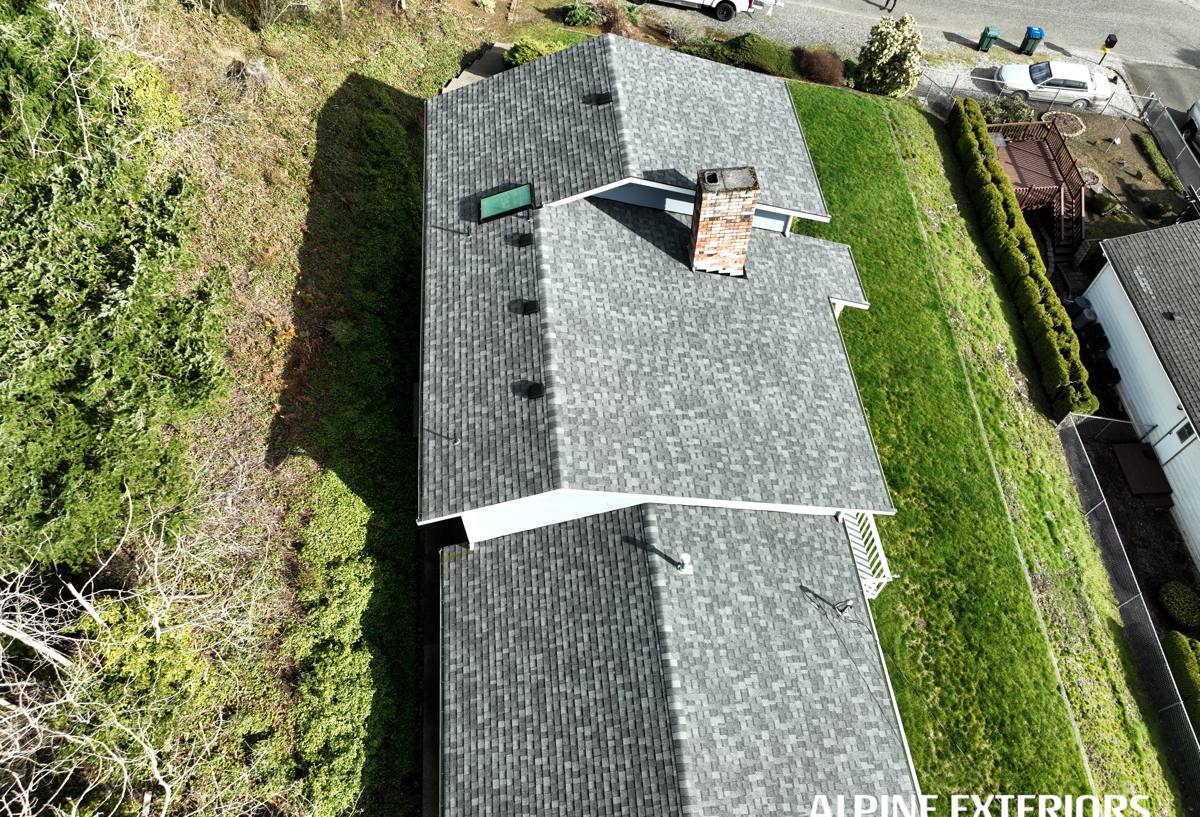
Signs a Birch Bay Roof Is Ready for Replacement
Most homeowners don't wake up one day and decide to replace a roof — they notice small things over a season or two that add up. In this climate, a few signs matter more than others because of how moisture and salt accelerate wear.
- Granule loss showing up in gutters or at the base of downspouts, which signals the shingle's protective surface is wearing thin
- Dark streaking or thick moss growth that keeps returning within a few months of cleaning
- Curling, cupping, or cracked shingles, especially on north-facing or shaded slopes that stay damp longest
- Rusted, pitted, or lifted metal flashing around chimneys, vents, and valleys
- Soft spots in the decking felt underfoot, or daylight visible through the attic at roof edges
- Interior ceiling stains that appear after wind-driven rain events rather than steady rain
- A roof already past 20-25 years old for asphalt shingle systems, which is a realistic ceiling in this climate rather than the 25-30 years sometimes quoted for drier regions
Any one of these on its own might be a repair. Two or three together, especially on an older roof, usually mean replacement is the more honest recommendation than another round of patching.
Choosing Roofing Materials That Hold Up to Salt Air and Moss
Asphalt Composition Shingles
Asphalt shingles remain the most common and most cost-effective choice for Birch Bay homes, and there's no reason to steer away from them if they're specified and installed correctly. The key is choosing a shingle line rated for higher wind exposure and, where the budget allows, one with algae-resistant granules. That single feature meaningfully slows the moss and algae staining that's otherwise constant in this climate.
Metal Roofing
Metal roofing sheds moss and moisture better than any shingle and holds up well to wind, but it comes with a real trade-off near the water: fastener and flashing metals have to be matched carefully, or dissimilar metals in a salt-air environment can corrode faster than the roofing panel itself. It's a good option for the right home and the right budget, but it requires more attention to detail during installation than it does even a mile or two inland.
Cedar Shake
Some of the older homes in and around Birch Bay still have cedar shake roofs. Cedar looks good and has a long local history, but it holds moisture, feeds moss growth, and needs more frequent maintenance than either asphalt or metal in a climate this wet. We'll always install it if that's what a homeowner wants for a legacy look, but we're upfront that it's the highest-maintenance option here, not the lowest.
| Material | Moss/Algae Resistance | Wind & Salt Durability | Typical Lifespan Here | Relative Cost |
|---|---|---|---|---|
| Asphalt (standard) | Fair | Good with proper fastening | 18-22 years | $ |
| Asphalt (algae-resistant, architectural) | Good | Good to very good | 22-25 years | $$ |
| Metal | Very good | Very good with matched fasteners | 35-50 years | $$$ |
| Cedar shake | Poor without upkeep | Fair, needs regular maintenance | 15-25 years with upkeep | $$$ |
These are general ranges based on how each material typically performs in this specific coastal climate, not manufacturer promises. The right choice depends on your roof's slope, shading, budget, and how much ongoing maintenance you want to take on.
What a Correct Roof Replacement Actually Involves
Tear-Off and Deck Inspection
A full tear-off matters more here than in drier climates because it's the only way to actually see the decking underneath. Trapped moisture under old shingles is common on Birch Bay roofs that have gone a long time between replacements, and soft or delaminated plywood needs to be found and replaced before anything new goes down. Skipping this step, or only spot-checking, is how new roofs end up with problems within a few years.
Underlayment and Water Protection
Underlayment is the layer that protects the deck if wind ever drives water up under the shingles, which happens more often here than in sheltered inland areas. We use synthetic underlayment as standard and add self-adhered ice-and-water membrane at vulnerable points, valleys, eaves, and around penetrations, rather than treating that upgrade as optional.
Flashing
Flashing around chimneys, skylights, vents, and roof-to-wall transitions is where most leaks actually start, not in the open field of the roof. In a salt-air environment, flashing metal and fastener choice both matter: mismatched metals accelerate corrosion, and that corrosion is what eventually opens a leak path.
Ventilation
Balanced intake and exhaust ventilation keeps the attic dry and helps the new roof shed the moisture load this climate produces. Poor ventilation traps humid air against the underside of the deck, which shortens the life of even a well-installed roof and can encourage the kind of mold and rot that's hard to spot until it's advanced.
Fasteners, Flashing Metals, and Salt-Air Corrosion
This is a detail that's easy to overlook and expensive to ignore. Standard fasteners and flashing that work fine a few miles inland can start showing rust and corrosion within a handful of years this close to the water. We specify corrosion-resistant fasteners and flashing metals for Birch Bay work as a baseline, not an upgrade, because replacing them after the fact means tearing into a roof that's otherwise in good shape.
Moss Season: Preventing Problems Before They Start
Whatcom County's long, wet, mild winters create ideal conditions for moss, and Birch Bay's shaded lots and coastal humidity make it worse than average. Moss isn't just a cosmetic issue — it holds moisture against the shingle surface, lifts shingle edges as it grows, and accelerates the granule loss that ages a roof early. A new roof gives you a clean start, and a few habits keep it that way longer.
- Keep overhanging branches trimmed back so the roof gets more sun and airflow
- Clean gutters and downspouts at least twice a year so water actually drains instead of backing up under shingle edges
- Have moss physically removed rather than pressure-washed, which can strip granules and shorten shingle life
- Consider zinc or copper strips near the ridge on shaded slopes, which release trace metals that inhibit new moss growth as rain washes over them
- Schedule a roof check after major wind storms, since that's when flashing and ridge caps are most likely to shift
Our Process for Birch Bay Roof Replacements
- On-site inspection of the current roof, decking, attic ventilation, and flashing points, with photos and a plain-language explanation of what we find
- A written estimate that lays out material options, scope of work, and timeline, with no pressure to decide on the spot
- Scheduling that accounts for weather windows, since we won't tear off a roof into a forecast that leaves your home exposed
- Full tear-off, deck inspection and repair as needed, and installation of underlayment, flashing, and the new roofing system to manufacturer specifications
- A final walkthrough covering what was done, what to watch for, and basic maintenance for this climate
Why Hiring a Crew That Already Works in Birch Bay Matters
Roofing crews who mostly work drier, inland areas don't always default to the details that matter here: algae-resistant shingles, corrosion-resistant fasteners, upgraded underlayment at vulnerable points, and ventilation sized for a wetter attic environment. None of that is exotic work, but it has to be the default, not an upsell, for a roof to perform well through Birch Bay's salt air and moss season year after year. A crew that already services this area has seen how roofs actually fail here, not just how they're supposed to hold up on paper, and builds the replacement around that reality from the start.
If your roof is showing its age or you just want an honest read on where it stands, we're glad to come take a look. Fill out the form below for a free, no-pressure estimate on your Birch Bay roof replacement.