 Blaine
 Peace Arch: A Neighborhood Shaped by the Water
Peace Arch sits right up against the international border in Blaine, in the far northwest corner of Whatcom County, with Semiahmoo Bay and the Strait of Georgia close by. That location is part of what makes the area distinctive — and it's also what makes exterior maintenance here different from a house fifty miles inland. Homes in this part of Blaine take on a steady diet of marine air, wind-driven rain, and long stretches of overcast, damp weather that never quite dries things out the way a sunnier climate would.
We've worked on homes throughout Blaine and the surrounding Whatcom County coastline long enough to know that "one size fits all" siding advice doesn't hold up out here. What performs well in Spokane or even in drier parts of the Puget Sound region can struggle on a lot that catches salt spray and prevailing wind off the water. This page is about what that means practically — for siding, roofing, windows, and decks — and how we approach exterior work for homes in the Peace Arch area specifically.
What the Marine Climate Actually Does to a House
It helps to be specific about the mechanisms at work, because "coastal weather is tough on houses" is true but vague. Three things matter most for homes near Peace Arch:
Salt Air
Airborne salt from Semiahmoo Bay and the wider Strait doesn't just affect boats and docks. It settles on siding, trim, fasteners, and metal flashing, where it accelerates corrosion and can degrade certain coatings and adhesives over time. Fastener choice and coating quality matter more here than they would twenty miles inland.
Driving Rain
Blaine gets plenty of rain, but the bigger issue for siding is wind-driven rain — moisture pushed sideways into wall assemblies rather than just falling straight down. That kind of exposure tests lap joints, butt seams, and window and door flashing much harder than a calm, straight-down rain does. Water-resistive barrier detailing and proper flashing sequencing aren't optional extras in this environment; they're the difference between a wall system that sheds water and one that slowly lets it in.
Moss and Sustained Dampness
Whatcom County's long moss season is a real thing homeowners here live with. Moss and algae thrive wherever a surface stays damp for extended periods — north-facing walls, areas shaded by trees, and roof valleys are the usual culprits. Beyond being unsightly, sustained moisture and moss growth can trap water against a surface and, over years, contribute to premature wear on materials that aren't built to handle it.
Why We Only Install James Hardie Fiber Cement Siding
Given all of that, our company made a deliberate call: we install James Hardie fiber cement siding exclusively. We don't install vinyl, LP SmartSide, Cemplank, Allura, primed spruce, or cedar. That's not a marketing position — it's a standard we hold ourselves to because of what we've seen hold up in this climate and what we're willing to warranty our workmanship against.
Each of the alternatives has real strengths, and we're not going to pretend otherwise. Vinyl is inexpensive and low-maintenance in mild climates. Cedar has genuine visual warmth that fiber cement can't fully replicate. Engineered wood products like LP SmartSide have improved a lot over the years. But in a marine, moss-prone climate like Blaine's, each carries trade-offs that matter:
- Vinyl can warp or become brittle with temperature swings and UV exposure, and its seams and J-channels give water a path in if installation isn't precise — a bigger risk under driving rain.
- Engineered wood siding is wood-based at its core, which means sustained moisture exposure at cut edges, seams, or damaged spots can lead to swelling or deterioration if it's not caught and sealed quickly.
- Cedar is a natural, organic material that needs regular refinishing to keep water out, and it's a magnet for moss and mildew in a climate with our humidity and shade patterns.
- Primed spruce and similar wood products rely heavily on the paint film to keep moisture out; once that film fails at a seam or fastener, the wood underneath is exposed to exactly the kind of damp cycling this area produces all winter.
James Hardie fiber cement is non-combustible, doesn't support rot the way wood-based products can, and comes with a factory-applied ColorPlus finish that's baked on and warranted against fading and cracking — which matters when a house sits in salt air and gets rinsed by rain most of the year. Hardie's HZ5 product line in particular is engineered for wetter, harsher climates, which is exactly the profile Blaine fits. Installed correctly, with proper flashing and fastening for a marine environment, it's the product we're comfortable standing behind on Peace Arch homes.
It's Not Just the Siding — The Whole Envelope Matters
A house is a system, and siding is only one piece of it. We handle roofing, windows, and decks alongside siding because water problems rarely respect trade boundaries — a roof that's shedding water onto a wall, or a window that's not flashed correctly, will undermine even the best siding job.
Roofing
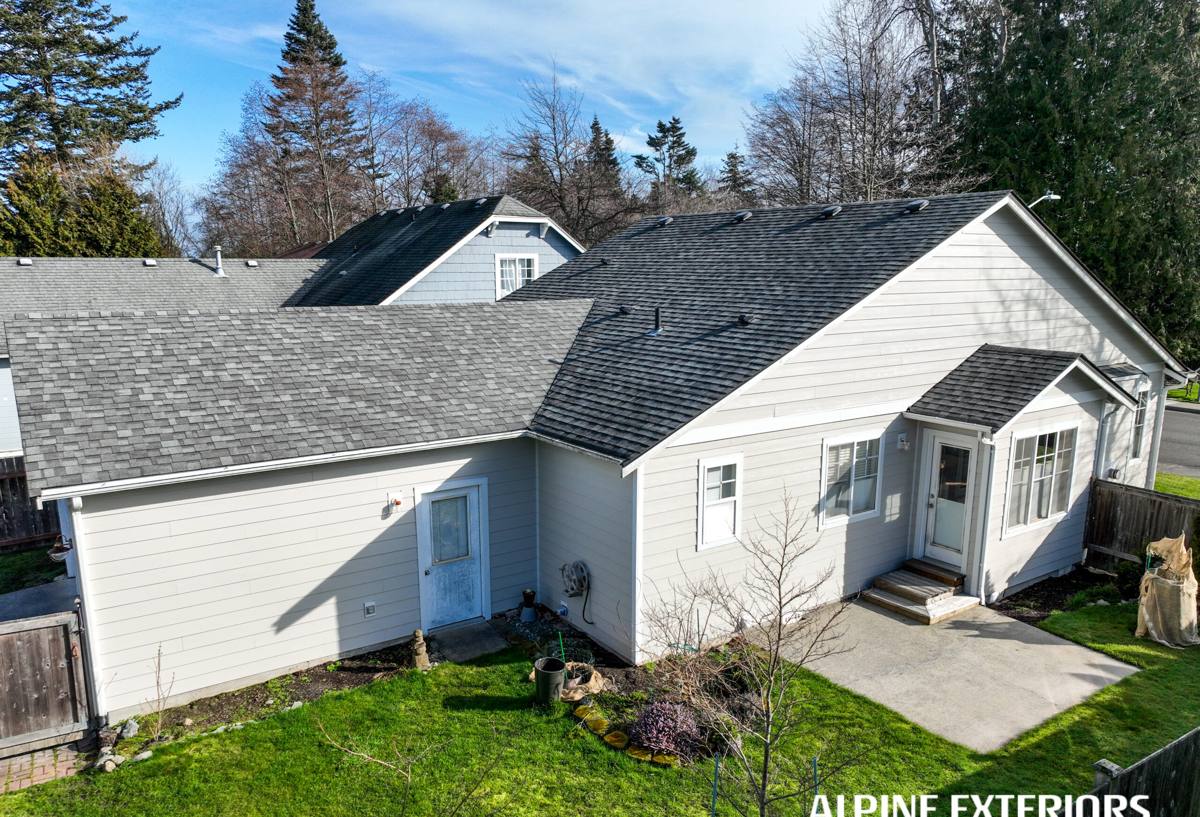
Roof valleys and north-facing slopes in shaded Peace Arch lots are prone to moss buildup and slower drying, which shortens the effective life of roofing materials if it isn't managed. Proper ventilation and moisture management at the roofline also protect the wall assembly below.
Windows
Window flashing is one of the most common failure points we find in older coastal homes. Wind-driven rain finds any gap around a window opening, and once water gets behind the siding at a window, it can travel and cause damage well away from where it entered. Replacing windows is also a natural point to correct flashing details that were never right to begin with.
Decks
Outdoor living space in this climate needs materials and fastening that can handle standing moisture, freeze-thaw cycles, and the same damp, shaded conditions that promote moss elsewhere on the property. Deck framing and ledger connections are also worth a second look on older homes, since that's a common area where water intrusion goes unnoticed.
Comparing Siding Options for a Peace Arch Home
| Factor | James Hardie Fiber Cement | Vinyl | Cedar | Engineered Wood |
|---|---|---|---|---|
| Moisture/rot resistance | High — cement-based, doesn't rot | Doesn't rot, but seams can leak | Needs regular sealing/refinishing | Vulnerable at damaged or unsealed edges |
| Finish durability | Factory ColorPlus finish, long warranty | Color molded in, can fade/chalk | Field-applied finish, recoats needed | Field or factory paint, recoat cycle needed |
| Fire resistance | Non-combustible | Combustible | Combustible | Combustible |
| Moss/algae resistance | Good with proper cleaning | Fair | Prone to moss in shade/damp areas | Prone in same conditions |
| Typical maintenance | Occasional wash, caulk checks | Occasional wash | Periodic refinishing | Periodic paint touch-up |
This isn't a claim that the alternatives fail outright — plenty of vinyl and cedar exteriors do fine with regular upkeep. It's a comparison of what tends to require more attention, sooner, in a climate like Blaine's.
Why a Local Crew Matters Here
Installation quality is what actually determines whether any siding product performs well long-term, and that's especially true in a marine climate where installation mistakes get found out fast. A crew that works this stretch of Whatcom County regularly knows to pay closer attention to a few things:
- Fastener and flashing choices suited to salt air exposure, not just generic code minimums
- Extra care at seams, corners, and window/door openings, where wind-driven rain does the most damage
- Realistic expectations about moss and algae — cleaning cadence, siding orientation, and shade from mature trees
- Sequencing work around a wet season that runs longer here than in many other parts of the state
That local familiarity is a big part of why we don't treat every job the same way we would in a drier climate. A house facing the water on a shaded Peace Arch lot gets different attention than one on an open, sun-exposed street elsewhere in Blaine.
Signs Your Exterior May Need Attention
Homeowners in this area often notice a few consistent warning signs before a bigger problem shows up. Worth a look if you're seeing:
- Persistent moss or dark streaking on siding or roof surfaces that keeps coming back after cleaning
- Soft or spongy spots on wood trim, fascia, or siding when pressed
- Paint or finish that's peeling, bubbling, or chalking faster than expected
- Visible gaps or separation at siding seams, corners, or window trim
- Water stains on interior walls or ceilings near exterior corners or window heads
- Rust staining running down from fasteners or metal flashing
Our Process for a Peace Arch Project
Every project starts with an honest look at the house, not a sales pitch. We walk the exterior, check for the moisture and flashing issues common in this climate, and talk through what's actually needed versus what can wait. From there:
- Assessment of existing siding, trim, roofing, windows, and decking for moisture damage or failure points
- A clear, written scope covering materials, flashing details, and sequencing
- Installation following James Hardie's specifications for our climate zone, including fastening and clearances suited to marine exposure
- Final walkthrough so you understand what was done and how to maintain it
We're not going to recommend a full siding replacement if targeted repairs and better flashing will solve the actual problem, and we'll say so plainly if that's the case.
If you're in the Peace Arch area and want a straight answer about what your siding, roof, windows, or deck actually need, we're happy to take a look. Reach out for a free, no-pressure estimate using the form below.