 Blaine
 Exterior Work on Sandy Point: Building for a Low, Open Shoreline
Sandy Point sits on a low, exposed stretch of shoreline northwest of Blaine, facing open water with very little to break the wind or slow down a storm coming off the Strait. It's a different exposure than homes get just a few miles inland — more wind, more salt in the air, and a foundation setting that's often sandy and low-lying rather than the firmer, higher ground found elsewhere in Whatcom County. Houses built for a spot like this need to be treated differently from the start, not patched later once problems show up.
We handle siding, roofing, windows, and decks for homes in and around Sandy Point, and we approach all four as one connected exterior system rather than separate trades bolted together. On siding, we install James Hardie fiber cement exclusively. That's not a brand we picked because it was easy to sell — it's the product we settled on after seeing, repeatedly, which materials actually survive an exposed waterfront setting like this one and which ones don't.
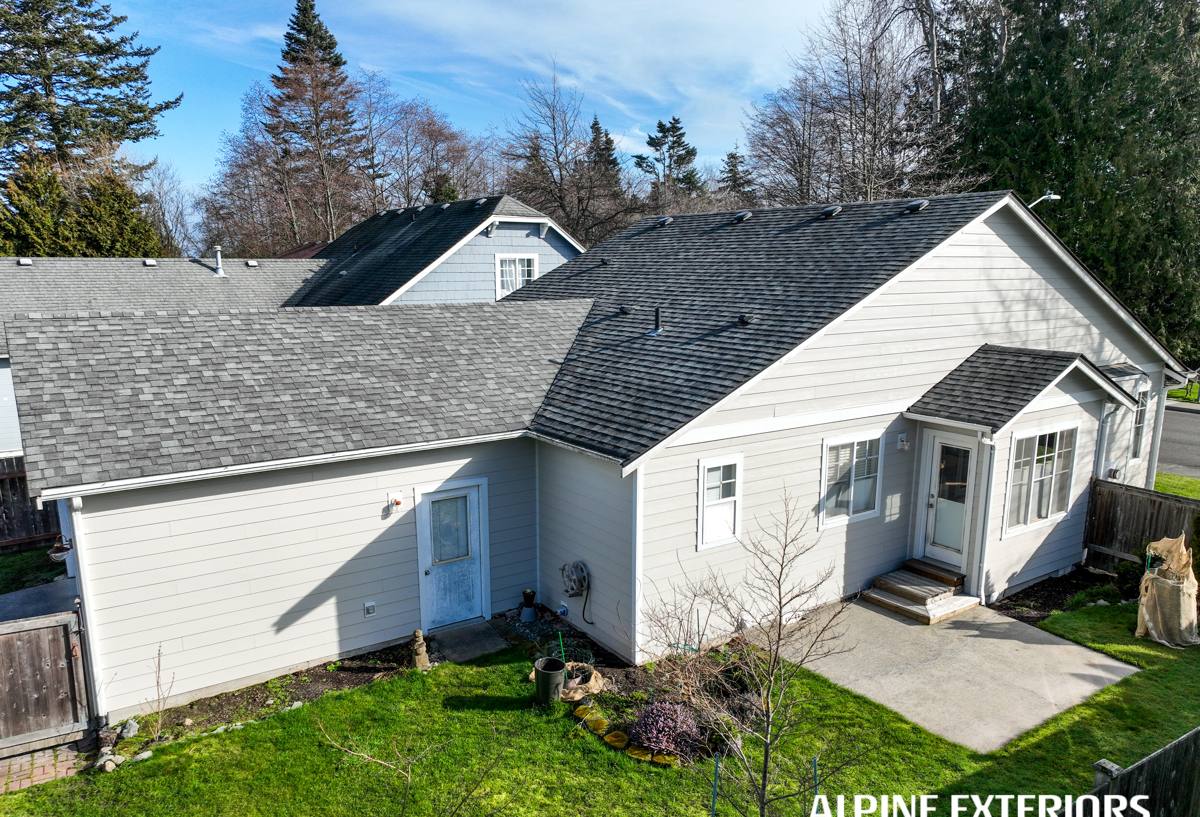
What This Climate Does to a House on Sandy Point
Salt Air and Near-Constant Wind
Open water means salt-laden air moving across the property more consistently than a sheltered, inland lot would ever experience. Salt speeds up corrosion in fasteners, flashing, and any exposed metal trim, and it wears down lower-grade paints and finishes faster than drier conditions would. On a property like Sandy Point, that corrosion risk has to be designed around from the first fastener chosen, not addressed after rust starts showing.
Driving Rain and Low-Lying Exposure
With little in the way of trees, hills, or neighboring structures to slow it down, wind off the water pushes rain sideways into wall assemblies, window flashing, and roof-to-wall transitions with more force than most inland Blaine properties see. That's a heavier moisture load than the region's average rainfall numbers alone would suggest. Details that hold up fine on a calmer, more sheltered lot can fail here specifically because water is being driven in sideways, through joints and laps never built to handle that kind of pressure.
A Long Moss and Mildew Season
Mild temperatures and near-constant humidity add up to a moss and mildew season that runs most of the year across this part of Whatcom County, and Sandy Point's waterfront setting doesn't shorten it. Roofs are usually the first place it shows, followed by any siding material that holds moisture rather than shedding it. Shaded, north-facing walls and low, damp ground around the foundation tend to see it worst.
Why We Only Install James Hardie Siding
We used to offer a wider range of siding products. We stopped, and the decision came directly from what we kept finding on service calls and tear-offs on exposed, low-lying waterfront properties like Sandy Point — not from a supplier deal or a sales push.
- Non-combustible core: Fiber cement doesn't feed a fire the way wood-based siding products can, which matters for both home safety and, in many cases, insurance underwriting.
- Factory-applied ColorPlus finish: The color is baked on under controlled factory conditions rather than brushed on in the field, and it resists fading, chalking, and moisture intrusion far longer than site-applied paint.
- Climate-engineered HZ product lines: Hardie's HZ5 formulation is built for regions with heavy moisture exposure and freeze-thaw cycling, which describes waterfront Whatcom County well.
- Dimensional stability: Fiber cement doesn't swell, cup, or warp the way engineered wood products can after repeated wetting over a long wet season.
- Strong transferable warranty: Hardie backs its product with one of the more substantial warranty structures in the industry, provided installation follows their published spec.
We won't install LP SmartSide, vinyl siding, Cemplank, Allura, primed spruce, or cedar. Each of those has a legitimate place in the market and homeowners who are satisfied with them in other settings. On an exposed, low-lying property like Sandy Point, though, we've made a professional call that we'd rather stand behind one system completely than offer a cheaper option that quietly pushes long-term maintenance risk onto the homeowner down the road.
What Correct Hardie Installation Requires
Fiber cement only performs the way it's engineered to when it's installed to Hardie's published specifications — the right fastener type and spacing, proper clearance from grade and roof lines, drainage or rain-screen detailing behind the panels where the assembly calls for it, and factory-mitered or properly caulked joints. A Hardie product installed loosely will still develop moisture problems in a climate like this one; the material is only as good as the installation behind it.
Roofing for Sandy Point Homes
Roofing takes the most direct hit from this climate — wind, driving rain, and moss all reach the roof plane before anything else. A roof system needs correct underlayment, properly lapped flashing at every penetration and wall transition, and ventilation that lets the attic and roof deck dry out between storms instead of trapping moisture against the sheathing. We treat those fundamentals as the baseline on every roof we build or repair here, not as an optional upgrade, because a roof that cuts corners on flashing or ventilation shows it within a few wet seasons on an exposed lot like this.
- Moss buildup in valleys or on shaded, north-facing slopes that keeps coming back after cleaning
- Granule loss showing up in gutters or downspouts
- Soft spots, sagging, or visible daylight at the attic near roof-to-wall transitions
- Water staining on interior ceilings near exterior walls, especially after a windy storm off the water
- Flashing that's visibly lifted, rusted, or missing sealant around chimneys, vents, and skylights
Windows That Hold Up to Wind-Driven Rain
On an exposed property like Sandy Point, window performance comes down to flashing and installation as much as the window unit itself. A high-end window installed with poor flashing integration will still leak under sustained wind-driven rain, while a mid-grade window installed correctly will often outperform it over time. We pay close attention to how new window flashing ties into the surrounding wall assembly and siding, since that transition is one of the most common places water finds its way into a wall system on open, low-lying lots.
Decks: Built for Salt Air and UV Exposure
Decks on Sandy Point deal with a combination most inland decks never face: near-constant salt exposure, strong UV off the open water, and repeated wetting-and-drying cycles that stress fasteners and structural connectors. Lower-grade decking materials tend to show wear here faster than they would a few miles inland. We use hardware rated for corrosive, marine-type exposure, and we walk homeowners through the real maintenance differences between wood and composite decking for this specific setting instead of pushing one answer for every property.
Comparing Common Exterior Materials in This Climate
| Material | Moisture Behavior | Maintenance in Salt Air | Typical Longevity Here |
|---|---|---|---|
| James Hardie fiber cement | Dimensionally stable, resists swelling | Low; factory finish resists fading and chalking | 30+ years with correct install |
| Vinyl siding | Can warp or distort under heat and settle over time | Low upfront, but seams and fasteners are exposure points | Variable; shorter in high-wind, open-water spots |
| LP SmartSide / engineered wood | Wood-based core is moisture-sensitive at cut edges and joints | Moderate; edge sealing and caulk upkeep matter | Depends heavily on installation and maintenance |
| Cedar / primed wood | Absorbs and releases moisture readily | High; regular refinishing needed in wet, salty air | Shorter without consistent upkeep |
Why a Local Crew Matters on Sandy Point
A contractor who regularly works this stretch of Whatcom County coastline already understands how salt air, open wind, and low-lying ground behave differently here than they do a few miles inland. That familiarity shows up in the small decisions — how flashing gets lapped, which fastener grade gets used, where extra drainage detailing gets added around a foundation set close to open water — and those details are exactly what determines whether an exterior system lasts one wet season or several decades on a property like this.
A Simple Checklist Before Hiring for Exterior Work on Sandy Point
- Ask what siding material they install and why, and whether they stand behind it with a written warranty
- Confirm they carry current Washington contractor licensing and active liability insurance
- Ask how they detail flashing at windows, doors, and roof-to-wall transitions for open, wind-driven rain
- Ask about fastener and hardware corrosion resistance, particularly for decks and roofing near the water
- Get a clear, written scope of work before any contract is signed
Our Process
We start with an on-site assessment of the existing exterior — siding, roofing, windows, or decking, depending on what's being addressed — and look specifically at how the current system has handled wind, moisture, and salt exposure over time. From there we put together a clear, written scope and timeline before any work begins. Throughout the project, flashing, drainage, and corrosion-resistant fastening are treated as standard practice on a property like this, not optional upgrades.
If you're weighing options for siding, roofing, windows, or a deck on a Sandy Point property, we're happy to walk the exterior with you and give an honest read on what it actually needs. Reach out below for a free, no-pressure estimate.