 Blaine
 Exterior Work Built for Cherry Point's Coastal Exposure
Cherry Point sits along the Salish Sea shoreline in Whatcom County, close enough to Blaine that homes here deal with the same weather patterns that shape the whole northwest corner of the state — just with an extra dose of direct marine exposure. Houses out this way catch wind and salt spray straight off the water, sit under low winter cloud cover for months at a time, and spend a good part of the year damp enough to grow moss on anything that holds moisture. That combination is hard on exteriors, and it's a big part of why we approach siding, roofing, windows, and decks differently for homes in this area than we might for a house twenty miles inland.
We're a local crew, which matters more here than people sometimes expect. Knowing which sides of a Cherry Point house take the worst weather, how far salt-laden air actually travels inland in this specific stretch of coastline, and which building details tend to fail first on homes exposed to it isn't something you get from a general contractor passing through. It's something you get from working on houses in this exact area, season after season.
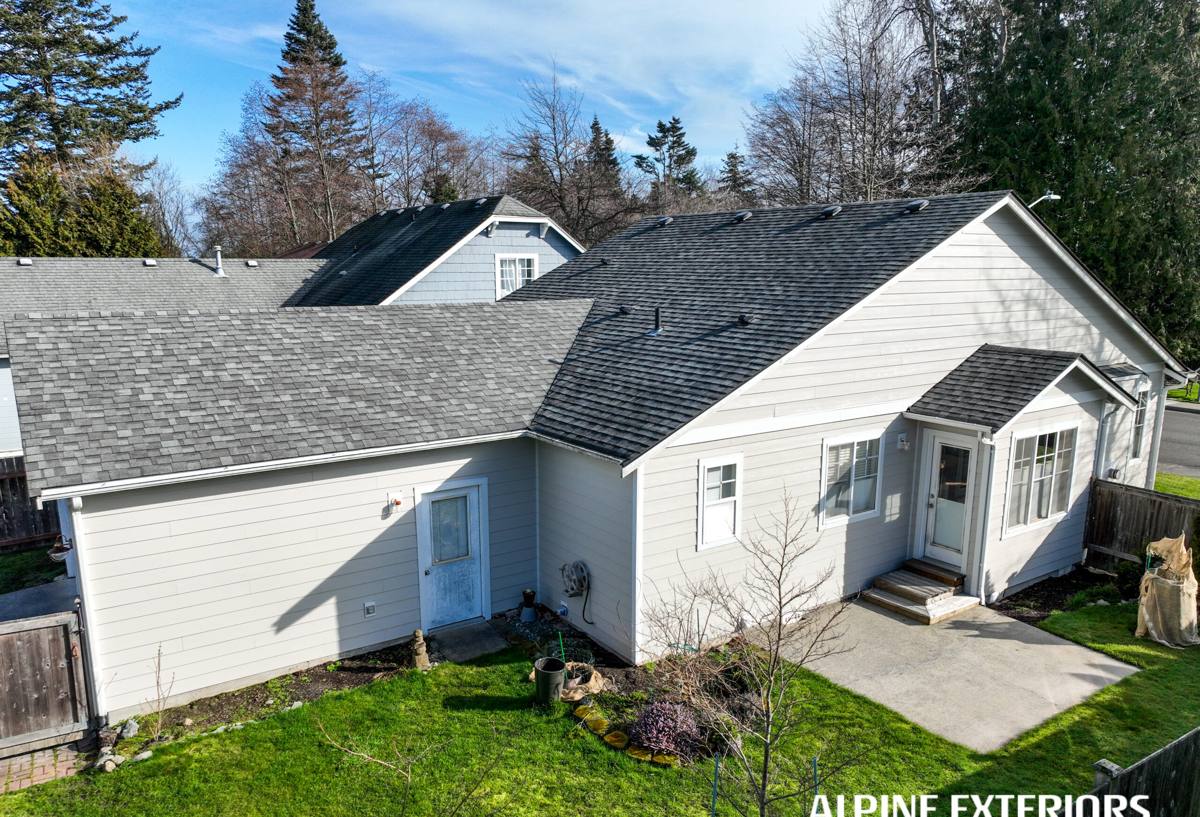
What Salt Air and Driving Rain Actually Do to a House
Salt Air
Airborne salt is corrosive to metal fasteners, flashing, and hardware, and it accelerates the breakdown of paint films and caulking. On a standard wood or engineered wood siding product, that means faster fading, more frequent recaulking, and a higher chance of hidden fastener corrosion behind the cladding — problems you often don't see until a section of siding is already compromised.
Driving Rain
Wind-driven rain off the water doesn't just fall on a house — it gets pushed sideways and upward into laps, joints, and trim intersections that would stay dry in a calmer climate. Over time, that pressure finds every weak seam in a siding system. Housewrap, flashing details, and the siding material's own moisture tolerance all matter more here than they would on a sheltered inland lot.
The Long Moss Season
Cool, wet, low-light conditions for much of the year give moss and algae plenty of time to establish themselves on roofs, deck boards, and the north- and shade-facing sides of siding. Moss holds moisture against whatever it's growing on, which is a slow but real threat to roofing material, wood trim, and any siding product that isn't dimensionally stable when wet.
Why We Install Only James Hardie Fiber Cement Siding
We don't install vinyl, LP SmartSide, Cemplank, Allura, primed spruce, or cedar siding. That's a deliberate standard, not a limitation of what we're capable of installing — and in a place like Cherry Point, the reasoning holds up especially well.
| Material | What it does well | Where it struggles in this climate |
|---|---|---|
| Vinyl | Low upfront cost, low maintenance in mild climates | Can warp or become brittle with temperature swings; seams and fastener slots are a path for wind-driven rain |
| LP SmartSide / engineered wood | Good workability, reasonable cost | Wood-based core is vulnerable to prolonged moisture exposure if any edge seal fails |
| Primed spruce / cedar | Natural appearance, long tradition in the Northwest | Requires ongoing repainting and caulk maintenance to keep moisture out; more susceptible to rot and moss buildup |
| Cemplank / Allura (other fiber cement brands) | Similar base material to Hardie, generally durable | Different factory finish and warranty structure; we've standardized on one system we know inside and out |
| James Hardie fiber cement | Non-combustible, engineered for moisture and climate, factory-baked ColorPlus finish | Higher material cost than vinyl; correct installation technique matters more than with vinyl |
James Hardie fiber cement is cement, sand, and cellulose fiber — it doesn't absorb and swell the way wood-based products can, and it isn't affected by salt air the way bare or painted wood trim is. The ColorPlus factory finish is baked on under controlled conditions, so it holds color and resists the fading and chalking that marine air and UV exposure cause faster than an on-site paint job would. Hardie also engineers specific product lines (their HZ5 line, for example) for harsher climate zones, which is directly relevant to a shoreline location like this one. On top of the material itself, Hardie backs its siding with a strong transferable warranty — the kind of long-term backing that matters more, not less, in a climate that's actively working against your exterior every day.
None of this means other products are junk. Vinyl and engineered wood have real advantages in the right setting. But for homes taking direct salt spray and driving rain off the water at Cherry Point, we've seen enough to know which product gives homeowners the best odds over 30-plus years, and that's what we put on houses.
How We Approach a Siding Job Here
Assessment First
Before we talk product, we look at the house: which elevations take the worst wind and rain, where existing moisture damage shows up, how the current siding and flashing are performing, and what the roofline and drainage are doing around the building. A siding job that ignores flashing, housewrap, and drainage detailing will fail regardless of what material goes on top.
Installation Detail That Matters More on the Coast
- Correct fastener spacing and type, chosen to resist corrosion in salt air
- Proper flashing at windows, doors, and butt joints to shed wind-driven rain instead of trapping it
- Rainscreen or drainage plane detailing where the house's exposure calls for it
- Caulking and sealant use limited to where Hardie's install spec actually calls for it — over-caulking can trap moisture instead of keeping it out
- Attention to the ground-to-siding clearance, since splash-back and standing moisture at the base of a wall are common failure points
This is where a local crew earns its keep. Installing James Hardie correctly to spec isn't optional — the material performs the way it's designed to only when it's installed the way it's designed to be installed, and that's truer in a high-exposure coastal spot than almost anywhere else in the county.
Roofing, Windows, and Decks Face the Same Conditions
Roofing
Roofs here deal with the same moss pressure and driving rain as siding. Ventilation, underlayment quality, and flashing at valleys and penetrations all matter more when a roof spends months of the year wet and shaded.
Windows
Window flashing and sealing are one of the most common failure points on coastal homes. A window that isn't properly flashed into the surrounding siding system gives wind-driven rain a direct path into the wall assembly — a problem that often shows up as siding damage before anyone traces it back to the window.
Decks
Deck boards and structural framing facing near-constant dampness and moss growth need material and fastening choices that account for that, plus enough airflow underneath to let the structure dry out between rain events instead of staying saturated.
We handle all four — siding, roofing, windows, and decks — because on a house exposed to this kind of climate, they're rarely independent problems. Water that gets past a roof detail or a window flashing shows up as a siding or structural issue eventually.
Signs a Cherry Point Home May Need Exterior Attention
- Persistent moss or dark streaking on north- or shade-facing walls and the roof
- Soft spots, bubbling, or visible warping in existing wood-based siding or trim
- Caulk joints that are cracked, gapped, or missing around windows and trim
- Rust staining below fasteners or metal flashing
- Peeling or chalking paint that's returned faster than expected after a repaint
- Any soft or spongy decking, especially near ground contact or under overhangs
Cost Factors Worth Understanding
| Factor | Why it affects the estimate |
|---|---|
| Home size and elevation count | More wall area and more corners/trim details mean more material and labor |
| Existing damage | Rot or moisture damage found under old siding needs repair before new siding goes on |
| Siding profile and trim complexity | Lap width, trim detail, and accent choices affect both material and install time |
| Access and site conditions | Waterfront and sloped lots can affect staging and equipment access |
| Scope | Siding-only work versus combined siding, roofing, window, or deck work changes sequencing and total cost |
We don't quote sight-unseen prices for a reason — the honest number depends on what's actually going on with your specific house, and the only way to know that is to look at it.
Why a Local Crew Makes a Real Difference
A contractor who works this stretch of Whatcom County regularly knows how Cherry Point's exposure compares to a more sheltered Blaine lot a few miles inland, which details tend to fail first on homes here, and how to sequence a job around the area's weather windows. That local knowledge shows up in decisions a homeowner might never notice directly — where extra flashing gets added, which elevation gets prioritized, how a deck's substructure gets ventilated — but it's exactly the kind of decision-making that determines whether an exterior holds up for one decade or three.
Get a Free, No-Pressure Estimate
If your Cherry Point home is showing signs of wear from salt air, wind-driven rain, or moss, or you're just planning ahead for siding, roofing, window, or deck work, we're happy to take a look and walk you through what we see — no pressure, no obligation. Use the form below to request a free estimate.