 Blaine
 Siding Built for Sumas, Not Just Sold There
Sumas sits at the far northern edge of Whatcom County, hard against the Canadian border and backed up close to the foothills. It's a different pocket of weather than the coastline a few miles west, but it shares the same core problem every home in this part of Washington deals with: months of sustained damp, followed by a growing season for moss and algae that never really ends. We're a Blaine-based crew, and Sumas is well within the territory we run trucks to regularly. That matters more than it sounds like it should — a contractor who's worked this specific stretch of Whatcom County knows what siding actually has to survive here, not just what a spec sheet says it should handle.
We install siding, roofing, windows, and decks, and on the exterior cladding side we've made a deliberate call: we only install James Hardie fiber cement siding. That's not a marketing position, it's an operational one. We'd rather stand behind one product system we trust completely than juggle installation methods, warranty terms, and maintenance conversations across five different materials. Below is why that matters for a Sumas home specifically, and what the process looks like from first look to final walkthrough.
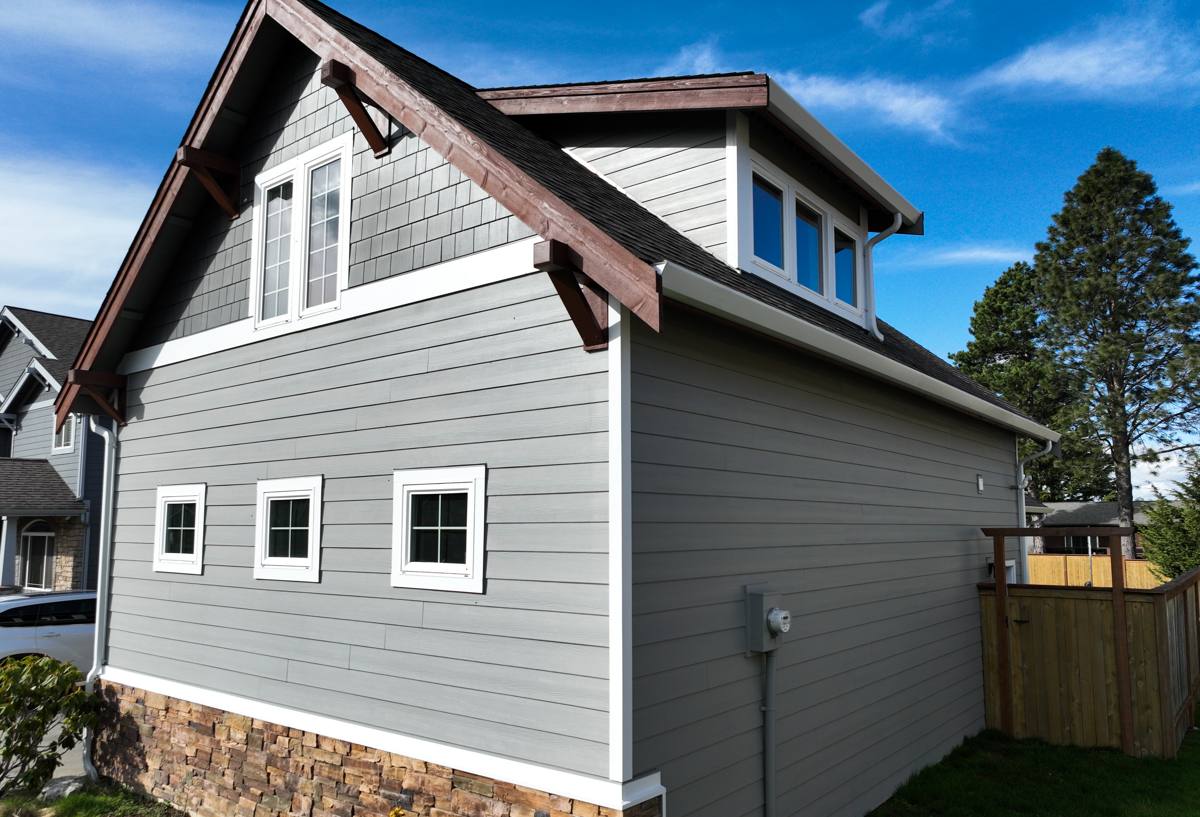
What Whatcom County Weather Does to Siding
Sumas and the greater Blaine area sit inside a marine-influenced climate zone, which sounds mild until you break down what that actually means for the outside of a house. It's not extreme heat or brutal cold that does the damage here — it's duration. Rain that falls for days at a time. Humidity that doesn't fully clear between storms. A cool, shaded, damp microclimate that's ideal for moss, algae, and mildew and terrible for anything on your siding that can absorb moisture or hold onto organic growth.
The Three Things That Wear Out a House Here
- Sustained moisture exposure: Long stretches of rain mean siding spends more time wet than dry for much of the year, which is hard on any material that swells, wicks water, or takes a long time to dry out.
- Moss and algae growth: Shaded north- and east-facing walls, tree cover, and general humidity give moss a long season to establish itself on porous or textured surfaces.
- Driving wind-driven rain: Storms coming off the water and through the lowlands push rain sideways into wall assemblies, stressing seams, laps, and trim details more than a straight-down rain ever would.
None of this is dramatic the way a hurricane or hailstorm is. It's slow, cumulative wear — and it's exactly the kind of wear that separates siding materials that are engineered for this climate from siding materials that just happen to be sold here.
Why We Standardized on James Hardie
James Hardie fiber cement is a cement-based composite, not a wood product and not a plastic one. That distinction is the whole reason it holds up differently in a climate like ours.
What That Means in Practice
- Non-combustible: Fiber cement doesn't burn, which matters for insurance considerations and for peace of mind, especially with wildfire smoke seasons becoming a more regular part of Pacific Northwest summers.
- Dimensionally stable: It doesn't swell and contract with moisture the way wood-based products do, so paint and caulk joints hold up longer instead of cracking as the material moves.
- Factory-applied ColorPlus finish: The color is baked on in a controlled factory process rather than field-painted, which gives more even coverage and a finish that's built to handle UV and moisture cycling from day one.
- Climate-engineered HZ product lines: Hardie manufactures regional formulations (HZ5 for the Pacific Northwest, for example) specifically tuned for the moisture and freeze-thaw patterns of our region, rather than a single generic formula sold nationwide.
- Strong transferable warranty: A long-term, transferable warranty backed by a manufacturer that's been in the fiber cement business for decades — useful for you now and useful for resale value later.
None of that means Hardie is maintenance-free. It still needs to be installed to spec, caulked correctly, and cleaned periodically like any exterior surface exposed to moss and algae. What it means is that when it's installed correctly, it's engineered to shed and resist moisture rather than absorb it, which is the single biggest variable in how well siding performs in a climate like Sumas's.
Why We Don't Install Everything
We get asked fairly often about vinyl, LP SmartSide, primed spruce, cedar, and composite alternatives like Cemplank or Allura. We don't install any of them, and we think homeowners deserve an honest answer as to why, not a vague "we just don't do that."
| Material | What It Gets Right | Why It's a Harder Fit Here |
|---|---|---|
| Vinyl siding | Low upfront cost, low maintenance in dry climates | Can warp or become brittle with UV and temperature cycling; seams and trim are more prone to water intrusion in sustained wet climates |
| LP SmartSide | Engineered wood, more stable than raw lumber, budget-friendly | Still wood-based at its core; edge and cut-end sealing has to be near-perfect to prevent moisture wicking over time |
| Primed spruce / cedar | Natural look, long tradition in the Northwest | Highest maintenance burden of any option — repainting, caulking, and moisture monitoring are ongoing, and moss/mildew take hold quickly on wood in shaded, damp spots |
| Cemplank / Allura | Also fiber cement, similar core material to Hardie | We standardized on one manufacturer's installation system, warranty structure, and finish process so every crew member trains and installs the same way, every time |
This isn't us telling homeowners those products are junk — plenty of houses around the region are clad in each of them and holding up fine. It's us being honest that we'd rather install one product exceptionally well, understand every failure point it has, and warranty it with total confidence than spread that expertise thin across half a dozen materials.
What the Installation Process Looks Like
A siding job in Sumas starts the same way any job in our service area does: we look at the actual condition of the wall assembly before we talk about the finish material.
Typical Project Steps
- On-site assessment: We check existing siding, sheathing, and any signs of moisture damage or rot before quoting anything — you can't spec new siding correctly without knowing what's underneath the old siding.
- Water management review: Flashing, house wrap, and drainage details get checked and corrected as needed. Siding is only as good as the moisture barrier behind it.
- Removal and prep: Old material comes off, damaged sheathing gets addressed, and the wall is prepped to manufacturer spec for Hardie installation.
- Hardie installation: Panels, planks, or shingle-style siding installed per James Hardie's fastening, clearance, and caulking requirements — the details that determine whether a warranty actually holds up.
- Trim and detail work: Corners, window and door trim, and transitions are finished to shed water, not just to look clean.
- Final walkthrough: We go over the finished work with you before calling the job done.
Because we also handle roofing, windows, and decks, we're often looking at a home's full exterior envelope at once — a leaking window or an undersized gutter system can undermine even perfectly installed siding, so we'll flag those issues honestly rather than install siding around a problem that's just going to resurface.
Moss, Algae, and Long-Term Upkeep
Even with a material engineered to resist moisture the way Hardie is, no siding in Whatcom County is completely immune to moss and algae staining, especially on shaded north-facing walls or under heavy tree cover. The difference with a properly installed fiber cement system is that the growth stays cosmetic — sitting on a stable, factory-finished surface — rather than working its way into a material that's absorbing and holding moisture underneath it.
- Periodic gentle washing (not high-pressure blasting, which can drive water behind panels) keeps ColorPlus finishes looking like new.
- Keeping gutters clear and downspouts directed away from the foundation reduces splash-back onto lower siding courses.
- Trimming back vegetation that shades and holds moisture against exterior walls slows moss growth considerably.
- Caulk joints and trim seams are worth a visual check once a year — catching a failed seal early is a five-minute fix, not a repair project.
Why a Local Crew Matters
Sumas isn't a market that gets flooded with siding contractors the way denser parts of Whatcom County do, and that has real consequences. A crew that isn't based nearby has less incentive to come back for a warranty callback, less familiarity with how this specific stretch of the county drains and drives rain, and less accountability if something needs a second look six months after installation. We're already in Blaine and the surrounding area on a regular basis, which means a Sumas project isn't a special trip — it's part of the territory we already know and already service.
That local presence also means we've seen how homes in this area actually age, not just how a product performs in a lab test. That's the kind of knowledge that doesn't show up on a spec sheet but shows up in how a job is scoped, flashed, and finished.
Getting Started
If your Sumas home's siding is showing its age — fading, moss buildup that won't stay clean, warping, or soft spots near the bottom courses — it's worth getting a straight assessment before deciding what to do next. We'll look at the actual condition of your home, walk you through what James Hardie fiber cement siding would involve for your specific house, and give you honest numbers with no pressure to sign anything on the spot. Reach out below for a free estimate.