 Blaine
 Why Blaine Harbor Homes Wear Out Faster Than Homes Inland
Blaine sits right where the Strait of Georgia meets Drayton Harbor and Semiahmoo Bay, and that location is exactly why exterior materials here don't age the same way they do twenty or thirty miles inland. Homes close to the water take on a steady dose of salt-laden air, near-constant marine humidity, and wind-driven rain that comes in sideways off the water instead of straight down. Add in Whatcom County's long, gray, wet season and you've got a climate that is genuinely harder on siding, trim, and roofing than most of the state realizes.
None of this means a house near the harbor is doomed to look shabby in ten years. It means the materials and the installation details matter more here than they do in a dry inland subdivision. That's the whole reason we standardized on one siding product instead of offering a menu of options — we wanted a system engineered for exactly this kind of exposure, not a compromise.
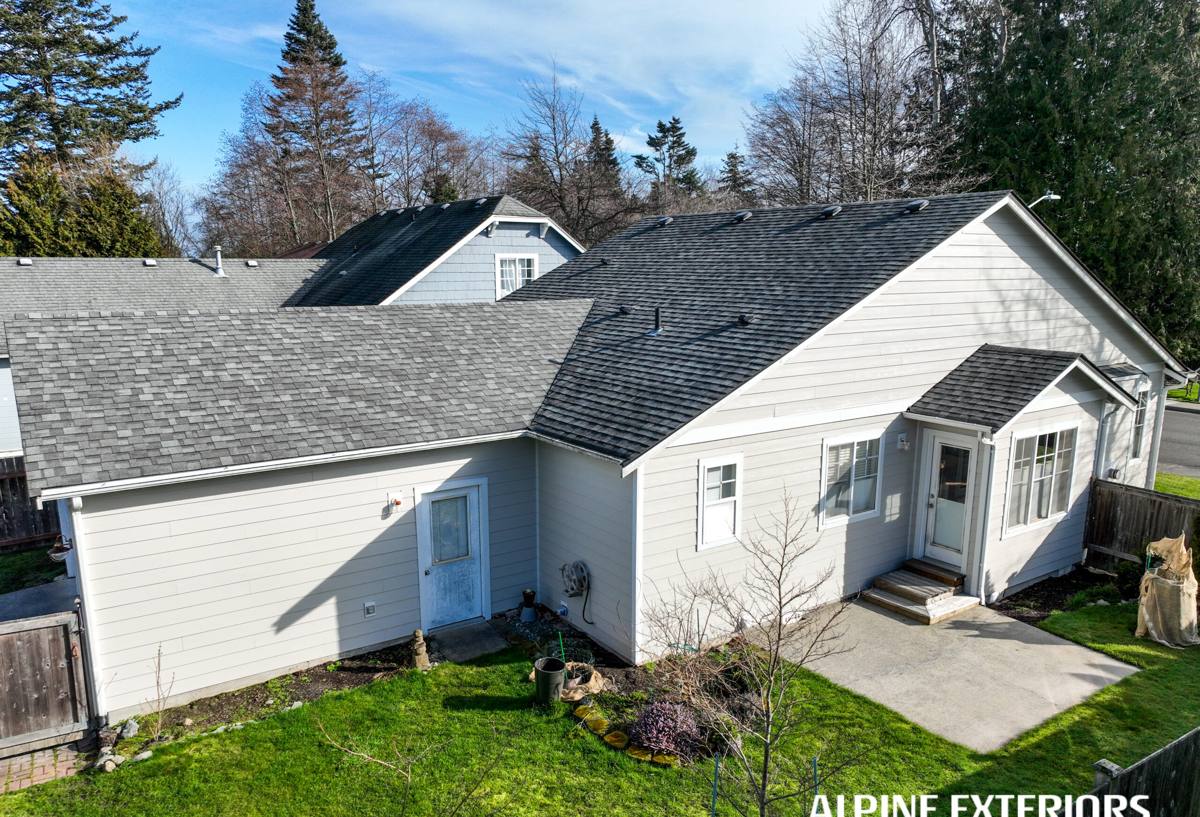
Salt Air: The Slow, Quiet Damage
Salt air doesn't announce itself the way a storm does. It works slowly, settling into porous or absorbent materials, accelerating corrosion on fasteners and metal trim, and breaking down paint films faster than the same paint would fail on a house in Bellingham's foothills or out past Lynden. Over years, homeowners near Blaine's waterfront see it show up as:
- Paint that chalks, fades, or peels years ahead of its expected life
- Rust bleed at nail heads and metal flashings
- Swelling or soft spots at butt joints and corners on materials that absorb moisture
- Caulk joints that crack and open sooner than the manufacturer's stated life
Fiber cement doesn't eliminate every one of these issues on its own — fasteners and flashing details still need to be chosen and installed correctly — but the siding panel itself doesn't rot, doesn't swell with moisture, and doesn't feed mold or algae the way wood-based or wood-adjacent products can. That's a meaningful advantage in a harbor town.
Driving Rain and How a Wall Actually Manages Water
Rain in Blaine rarely falls straight down for long. Wind off the water pushes it sideways into walls, corners, and window returns, which is why water management at the wall assembly matters as much as the siding product itself. A correctly built wall behind James Hardie siding includes:
- A drainage plane (weather-resistive barrier) that sheds water down and out, not into the wall cavity
- A rain screen gap or furring strategy where conditions call for it, so any moisture that gets behind the siding can dry out instead of sitting against it
- Properly lapped and sealed window and door flashing, since these are the most common failure points on any coastal home
- Correctly gapped and caulked joints, sized to Hardie's own installation specs rather than "close enough"
We've seen plenty of siding failures over the years that had nothing to do with the siding brand and everything to do with a flashing detail that was skipped to save an hour of labor. On a home exposed to driving rain off Semiahmoo Bay or Drayton Harbor, those shortcuts show up faster and cost more to fix than they would somewhere sheltered.
Moss Season: Longer Here Than Most of the State Realizes
Whatcom County's moss season stretches longer than it does in drier parts of Washington, and shaded, north-facing walls near the harbor stay damp for extended stretches through fall, winter, and spring. Moss and algae need moisture and organic material to take hold. Wood, wood-composite, and some engineered wood siding products give them exactly that. Fiber cement is inorganic — it doesn't provide the food source that algae and moss spores need to establish themselves, which is a real, practical difference for a shaded wall in a wet climate, not a marketing claim.
That said, no siding is immune to surface growth if it's constantly wet and never gets airflow. Good installation — proper clearance from grade, functioning gutters, trimmed vegetation, and a drainage plane that actually drains — does as much work here as the material choice.
Why We Only Install James Hardie
We get asked fairly often why we don't offer vinyl, LP SmartSide, or one of the other fiber cement brands like Allura or Cemplank. The honest answer: we used to see a wide range of exterior products fail in coastal Whatcom County conditions in ways that were predictable in hindsight — vinyl that goes brittle and cracks in cold snaps and fades unevenly in UV exposure over the water, engineered wood siding that's more sensitive to sustained moisture exposure at joints and butt seams, and lower-grade fiber cement that doesn't carry the same factory finish warranty.
James Hardie's HZ5 product line is specifically engineered for the wetter, harsher climate zones on the West Coast. It's non-combustible, it holds paint (or comes pre-finished with ColorPlus, a factory-applied finish backed by its own warranty) far longer than field-applied paint on wood products, and it has a long track record in exactly this kind of marine-influenced climate. That's why it's the only siding we put on homes — not because every alternative is junk, but because we're not willing to install something we don't believe will hold up here.
What ColorPlus Finish Means for a Harbor-Adjacent Home
ColorPlus is baked on in a controlled factory setting, cured, and backed by a separate finish warranty from Hardie. That matters near saltwater because field-applied paint is exposed to UV, humidity, and salt air the moment it goes on the wall — factory-cured finish has a head start most site-applied paint jobs can't match, and it typically means longer stretches between repainting.
How Our Siding Process Works for Blaine Harbor Properties
- On-site assessment — we look at wall orientation, shade patterns, existing moisture damage, gutter and drainage condition, and how exposed the home is to wind off the water
- Tear-off and inspection — old siding comes off and we inspect the sheathing and framing underneath for rot or existing moisture problems before anything new goes up
- Water management first — house wrap or weather barrier, flashing at every penetration, and a rain screen approach where the wall assembly calls for it
- Hardie installation to spec — correct fastener type and spacing, proper clearances from grade and roofline, and joints sealed per manufacturer instructions
- Final walkthrough — trim, caulking, and touch-up review with the homeowner before we call the job done
Roofing, Windows, and Decks: The Rest of the Exterior Envelope
Siding doesn't work in isolation. On a home near Blaine's waterfront, the roof, windows, and any exterior decking all deal with the same salt air and driving rain, and they all interact with each other — a leaking window or a failing roof edge will undermine even a perfectly installed wall of siding. Because we handle roofing, window replacement, and decks alongside siding, we can look at a home's exterior as one connected system rather than patching one component while ignoring how it ties into the next. That's especially useful in a place where a single storm event can expose weak points in flashing, roof-to-wall transitions, or deck ledger connections all at once.
Cost Factors for Blaine Harbor Siding Projects
| Factor | Why It Matters Here |
|---|---|
| Home size and wall complexity | More corners, dormers, and wall planes mean more flashing and cutting labor |
| Existing sheathing condition | Coastal moisture exposure sometimes means hidden rot that has to be repaired before new siding goes on |
| Rain screen / drainage strategy | Homes with direct wind exposure off the water often benefit from added drainage detailing, which adds labor |
| Siding profile and finish | Lap width, shingle-style panels, and trim/color choices affect material cost |
| Tear-off scope | Full removal of old siding vs. layering changes both labor and disposal cost |
Why a Local Crew Matters in a Town Like Blaine
Blaine is a small, tight-knit community, and a crew that works this area regularly gets to know which properties face the harshest wind exposure, which neighborhoods hold onto moisture longest into spring, and which older homes are more likely to have moisture issues hiding under the existing siding. That local pattern recognition is hard to replicate with a crew driving up from out of the area for a single job. It also means we're around after the install if a question comes up — not just during the sales pitch.
Questions Worth Asking Any Contractor Before You Hire
- Are you a licensed and insured contractor in Washington State?
- Who is doing the actual installation — your own crew or subcontracted labor?
- What's your approach to flashing and drainage on a wind-exposed wall?
- Can you explain why you install the specific siding product you recommend?
- What does your warranty cover, and what does the manufacturer's warranty cover separately?
Getting Started
If you own a home in the Blaine Harbor area and you're noticing paint failure, soft spots, moss buildup on shaded walls, or you're just planning ahead for a siding replacement, we're glad to come take a look. We'll walk the exterior with you, point out what we see, and give you a straightforward, no-pressure estimate — no hard sell, just an honest read on what your home needs.