 Blaine
 Exterior Work Built for Grandview's Climate
Homes in the Grandview area of Blaine sit in one of the more demanding exterior environments in Whatcom County. You're close enough to Semiahmoo Bay and the Strait of Georgia that salt-laden air is a constant factor, not an occasional one. Add in the Pacific Northwest's driving, wind-pushed rain and a moss season that can stretch from October well into spring, and you've got a combination that wears down the wrong exterior materials faster than most homeowners expect. We've built our approach around that reality rather than working around it.
This page covers how we approach siding, roofing, windows, and decks for homes in and around Grandview, what the local climate actually does to a house over time, and why we've standardized on one siding product instead of offering the full menu most contractors sell from.
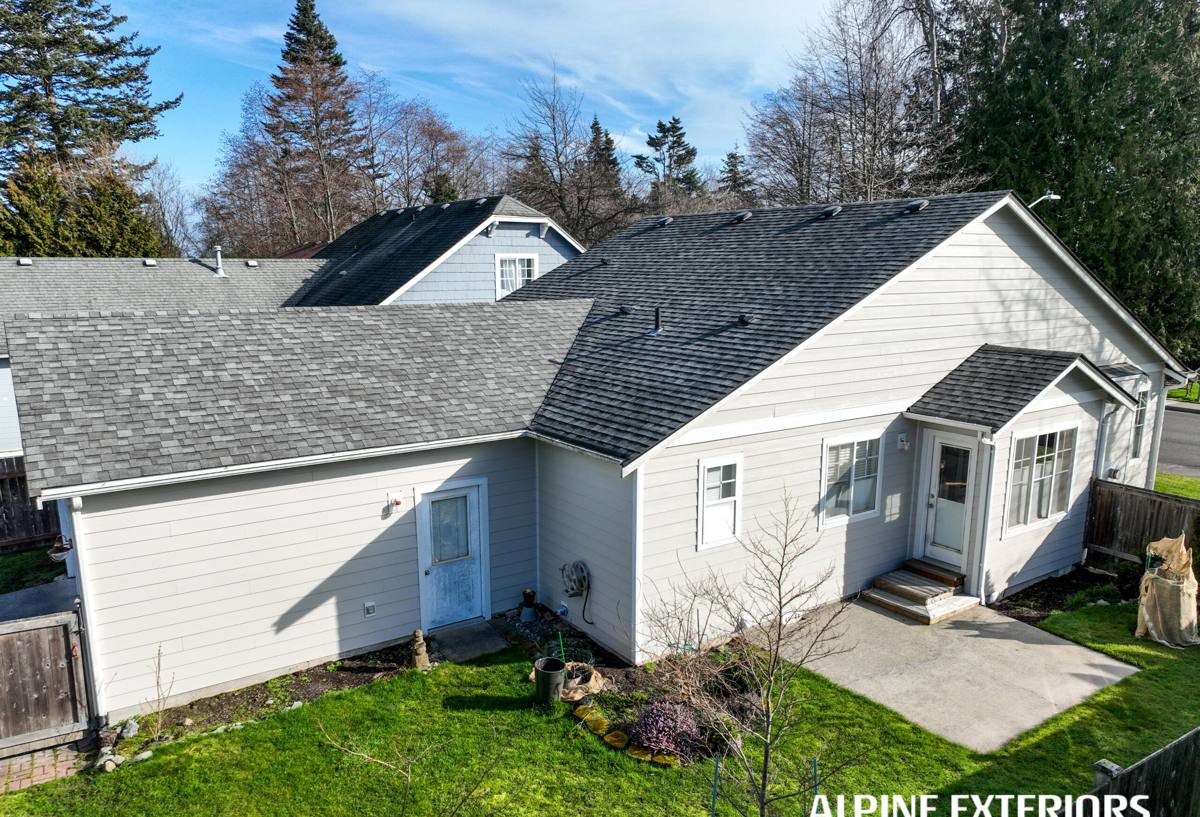
What Grandview's Climate Does to a House
Salt Air
Proximity to open water means airborne salt settles on every exterior surface, not just the ones facing the water directly. Over years, salt exposure accelerates corrosion on fasteners, trim, and any metal flashing or hardware that isn't rated for a marine-adjacent environment. It also breaks down cheaper paint films and coatings faster than inland homes ever experience, which is why paint that looks fine after five years forty miles inland can be chalking and peeling here in half that time.
Driving Rain
Blaine doesn't just get a lot of rain — it gets rain pushed sideways by wind coming off the water. That matters for siding and window performance specifically, because a product or installation that only manages water running straight down a wall will let moisture drive up and under laps, trim, and window flanges during a real storm. Flashing details and drainage planes matter more here than they do in drier climates.
Moss and Sustained Moisture
Whatcom County's wet season is long, and shaded north-facing walls and roof planes stay damp for extended stretches. That's ideal growing conditions for moss and algae, which hold moisture against the surface underneath them and, on the wrong substrate, contribute to rot, delamination, or coating failure. Roofs are the most visible casualty, but siding and deck surfaces in shaded, poorly ventilated spots take the same kind of punishment.
Siding: Why We Only Install James Hardie
We install James Hardie fiber cement siding exclusively. We don't install vinyl, LP SmartSide, Cemplank, Allura, primed spruce, or cedar. That's a deliberate standard, not a limitation in what we're capable of installing — we've made the call that in a coastal, wet-climate market like Blaine, the trade-offs on those other products aren't ones we're willing to put our name behind.
The short version, by product
- Vinyl siding is inexpensive and low-maintenance, but it's a petroleum-based product that becomes brittle in cold snaps, can warp or deform in direct sun and heat cycling, and simply doesn't hold up to wind-driven debris the way a rigid material does. It also can't be painted to refresh a look without specialized coatings.
- LP SmartSide is engineered wood — real wood fiber with resin binders. It performs well when installed and maintained correctly, but wood-based products are inherently more sensitive to sustained moisture exposure than fiber cement, and in a climate with Grandview's rain and moss load, that sensitivity matters more, not less.
- Cemplank and Allura are both fiber cement, similar in concept to Hardie, and they're reasonable products. Where they fall short for us is factory finish quality and the depth of a transferable warranty program — details that matter over a 20-30 year ownership horizon.
- Primed spruce and cedar are traditional, attractive, and completely dependent on the homeowner staying ahead of repainting and sealing on a strict schedule. Miss a cycle in a climate this wet and you're often looking at rot repair, not just a fresh coat of paint.
James Hardie fiber cement is non-combustible, dimensionally stable in wet-dry cycling, and comes from the factory with a ColorPlus finish baked on rather than field-applied — which matters directly for salt air and driving rain, since the factory finish is more consistent and more resistant to the coating breakdown we described above. Hardie's HZ product lines are engineered specifically for climate zones like ours, and the warranty structure is transferable if you sell the home, which is a real factor for resale in a market where buyers are increasingly asking what the siding is and when it was done.
Comparing Common Siding Options
| Product | Moisture Behavior | Maintenance | Typical Lifespan |
|---|---|---|---|
| James Hardie fiber cement | Dimensionally stable, factory-sealed finish | Low — occasional wash, no repainting cycle required for color | 30-50+ years with correct install |
| Vinyl | Doesn't absorb water but can warp/crack with heat and cold cycling | Low, but not repaintable without special coatings | 20-30 years, variable |
| LP SmartSide / engineered wood | Moisture-sensitive at cut edges and joints if not maintained | Moderate — caulking and coating upkeep | 25-30 years with diligent maintenance |
| Cedar / primed spruce | Highly moisture-sensitive; prone to rot if coating fails | High — repainting/sealing on a strict cycle | 15-25 years, heavily maintenance-dependent |
Roofing in a Wet, Mossy Climate
Roofs in Grandview take the brunt of Blaine's weather. The two things we watch most closely on any roofing job here are ventilation and moss management. A roof that's properly ventilated dries out faster between rain events, which slows moss growth and extends the life of the roofing material underneath. Where a roof has existing moss, we address it as part of the job rather than just laying new material over a problem that will come back. Flashing details around chimneys, valleys, and roof-to-wall transitions get extra attention here too, since driving rain finds the weak points in flashing far more readily than vertical rain does.
Windows: Managing Driving Rain
Window failures in this climate are rarely about the glass — they're about water intrusion around the frame. Wind-driven rain will find gaps in flashing tape, sealant, or a window that wasn't shimmed and flashed correctly at install. We pay close attention to the flashing sequence around every window opening, not just the sealant bead on the surface, because a caulk line alone won't hold up to years of sideways rain off the water. Replacing older, single-pane or poorly sealed windows also has a real energy benefit in a house that's fighting wind exposure most of the year.
Decks: Built for Shade and Moisture
Deck surfaces in shaded parts of a Grandview lot — under tree cover or on the north side of the house — hold moisture longer than open, sun-exposed decks. That affects both the wear pattern on the decking material and how slick the surface gets underfoot during the wet months. Proper spacing, ledger flashing, and drainage underneath the deck structure matter as much as the decking material itself. We build and repair decks with that moisture reality in mind rather than treating every deck the same regardless of site conditions.
Why a Local Crew Matters Here
Climate-specific detailing isn't something you can apply generically. A crew that mostly works drier inland jobs may not default to the flashing sequences, ventilation choices, or coating standards that a coastal Whatcom County property actually needs. Working regularly in Blaine and the surrounding area means we see how houses in this specific environment age — where moss actually forms, which walls take the worst of the wind-driven rain, and which details fail first when they're cut short. That local pattern recognition shapes how we spec and install every job, not just the ones on waterfront lots.
What to Expect From a Project
- An on-site assessment of your home's specific exposure — sun, shade, prevailing wind, and moisture patterns
- A clear explanation of what's driving any recommendation, including why we'd steer you toward or away from a given approach
- Attention to flashing, drainage, and ventilation details, not just the visible finish material
- Straight talk about maintenance expectations for whatever material is on your home now, even if it's not something we install
- A written estimate with no pressure to sign on the spot
Cost Factors Homeowners Should Know
| Factor | Why It Matters in Grandview |
|---|---|
| Extent of existing moisture damage | Rot repair behind old siding or roofing adds cost but has to be addressed, not covered up |
| Wall exposure to wind and rain | Water-facing and windward walls may need more flashing detail work than sheltered sides |
| Existing moss or algae growth | Remediation before new material goes on affects both cost and the substrate's long-term performance |
| Trim and detail complexity | Homes with more window and roofline transitions need more flashing work, which affects labor time |
If you're weighing siding, roofing, window, or deck work on a home in Grandview, we're glad to come take a look and give you a straight, no-pressure estimate — including an honest read on what your current exterior materials are actually dealing with in this climate.