 Blaine
 Why Birch Bay Windows Wear Out Faster Than the Manual Says
Birch Bay sits right on the water, and that changes what a window has to survive. Salt-laden air corrodes hardware and pits aluminum trim faster than it does even ten miles inland. Wind-driven rain off the Strait doesn't just hit the glass — it gets pushed sideways into every joint, seam, and nailing flange, which means a window that's "good enough" in a sheltered yard can still leak here. And then there's the long stretch of gray, damp months every year where moss and algae get a running start on any surface that stays wet. None of this means Birch Bay needs exotic materials. It means the install has to be done right, the flashing has to actually shed water instead of just deflecting it, and the hardware has to be rated for a marine-adjacent environment instead of a generic suburban one.
We work windows in Blaine and around Whatcom County regularly, and Birch Bay jobs get treated differently from the start — not because the homes are unusual, but because the exposure is.
What "Custom" Actually Means Here
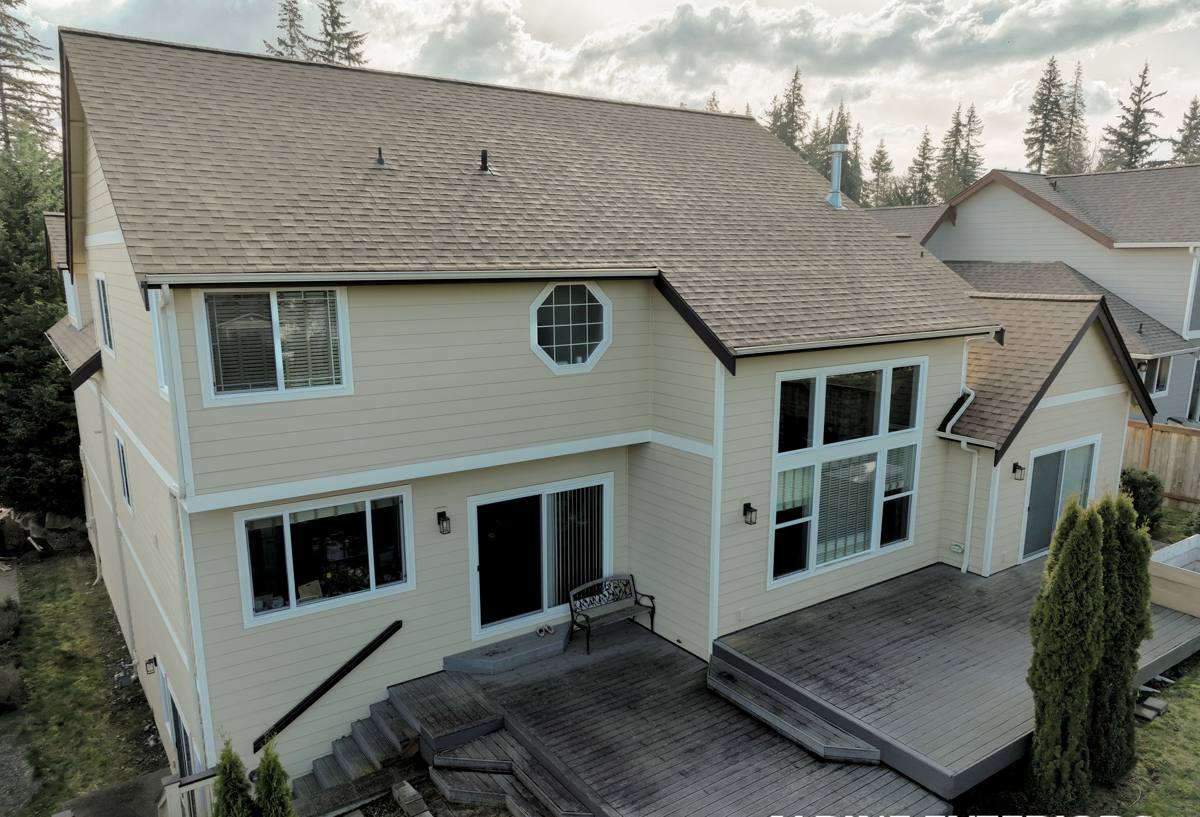
Custom doesn't mean expensive or fancy. It means the window is built to the actual opening and the actual conditions, instead of forcing a stock size to fit and papering over the gaps. For Birch Bay that usually shows up in a few practical ways:
- Openings on older waterfront and near-waterfront homes are rarely perfectly square — custom sizing avoids shims, gaps, and caulk doing the job flashing should do
- Hardware and cladding specified for coastal exposure, not the builder-grade default
- Glass packages chosen for wind load and condensation control, not just looks
- Flashing details that match how water actually moves on a wall exposed to driving, sideways rain
None of that requires an unusual product line. It requires paying attention to the site instead of treating every install like it's the same job in a dry climate.
Material and Frame Choices That Hold Up on the Water
Vinyl
Good vinyl windows with reinforced frames are a solid, low-maintenance choice for most Birch Bay homes. They don't corrode, they handle moisture well, and they're priced sensibly. The trade-off is that lower-end vinyl can flex or discolor over time in constant sun-and-salt exposure, so we're specific about which lines we'll put in this close to the water.
Fiberglass
Fiberglass frames expand and contract at close to the same rate as glass, which matters when you get big daily temperature swings between a cold, wet morning and a sunny afternoon off the water. It resists corrosion completely and holds paint or finish longer than vinyl. It costs more up front, and we tell people that plainly — it's a longer-horizon investment, not a universal must-have.
Wood and Wood-Clad
Wood windows look right on a lot of the older homes in this area, but bare wood in a salt-air, high-moisture climate is a maintenance commitment — it needs to be sealed and checked regularly or it will fail early. Clad wood (wood interior, metal or composite exterior) solves most of that, but the cladding and its seams have to be installed correctly or you've just moved the failure point outward. We're straightforward about that trade-off rather than selling wood as maintenance-free, because it isn't.
Aluminum
Aluminum frames are strong and can look sharp, but bare aluminum conducts cold and is prone to pitting and corrosion in salt air unless it has a marine-rated finish. We use it selectively — mostly on specific architectural applications, not as a default for a full-house replacement here.
| Frame Material | Salt Air Resistance | Maintenance | Typical Fit |
|---|---|---|---|
| Vinyl (reinforced) | Good | Low | Most homes, budget-conscious |
| Fiberglass | Excellent | Low | Long-term investment, big temp swings |
| Clad Wood | Good, if cladding installed correctly | Moderate | Character homes, traditional look |
| Bare Wood | Poor without upkeep | High | Not recommended this close to the water |
| Aluminum | Fair to poor unless marine-rated | Low to moderate | Specific architectural uses |
Glass and Weatherstripping: The Part Nobody Sees Until It Fails
In a climate that stays damp for months at a stretch, condensation and seal failure are the two complaints we hear most about old or poorly installed windows. Dual-pane, low-E glass with a good gas fill cuts down on both interior condensation and heat loss — worthwhile in a place where the heating season runs long. Weatherstripping matters just as much as the glass. Cheap or thin weatherstripping compresses and fails within a few years under constant damp cycling, which is exactly what lets driving rain find its way past the sash. We spec weatherstripping and seal systems rated for sustained moisture exposure, not just cost.
The Install Details That Actually Keep Water Out
Most window failures in this area aren't product failures — they're install failures. Flashing tape or building paper lapped the wrong direction, a sill pan skipped to save time, sealant used to bridge a gap instead of correct flashing sequence underneath it. In a climate with wind-driven rain, those shortcuts show up as interior water stains within a few wet seasons, sometimes sooner.
What a correct install includes
- A sloped sill pan under every window, so any water that gets past the sash drains outward instead of pooling
- Flashing tape applied in the correct shingle-lap sequence — bottom up, sides, then top — so water sheds down and out
- Proper integration with the existing house wrap or building paper, not just sealant slapped over the seam
- Backer rod and quality exterior sealant at the trim, sized correctly instead of overfilled
- Fasteners and shims rated for exterior, corrosion-prone conditions
- A final water test or visual check of flashing laps before trim and siding go back on
This is also why we don't recommend simply popping new sashes into old frames as a shortcut in this area. It's faster and cheaper, but it leaves the original flashing — often decades old and already compromised — as the only thing standing between the house and Birch Bay's weather.
Our Process for a Birch Bay Window Job
- On-site assessment. We look at each opening, check for existing water damage or rot around the frames, and note wind exposure — a wall facing the water gets different attention than a sheltered side.
- Product selection. We walk through frame material, glass package, and hardware options against your budget and how exposed the home is, with the trade-offs explained plainly.
- Precise measurement and custom ordering. Each opening is measured individually — no assumption that openings match, especially on older homes.
- Removal and prep. Old windows come out carefully, and we inspect the framing underneath for hidden rot or moisture damage before anything new goes in.
- Correct flashing and install sequence. Sill pan, flashing laps, and air sealing done in the right order — this is where most of the long-term performance actually comes from.
- Finish and cleanup. Interior and exterior trim finished, sealant tooled, site cleaned up, and everything checked for smooth operation before we call it done.
Moss, Algae, and Long-Term Care in a Wet Climate
Whatcom County's damp season is long, and any north-facing or shaded window trim can develop moss or algae growth over time, especially on wood or wood-clad units. It's mostly cosmetic, but left unaddressed it holds moisture against the trim and shortens the life of paint or finish. A simple annual rinse and inspection — checking sealant lines, weep holes, and trim for early growth — goes a long way. We're happy to point out what to watch for on your specific windows when the job is done.
Why Hire a Crew That Already Works Birch Bay
Window installation isn't uniform across climates, and a crew that mostly works drier inland conditions can do a technically fine install that still isn't right for a home exposed to Strait winds and salt air. Working Blaine and Birch Bay regularly means we already know which flashing sequences hold up here, which hardware finishes actually resist corrosion instead of just looking good for a year, and which shortcuts cause callbacks in this specific environment. That's not a sales pitch — it's just the difference between generic installation experience and installation experience matched to this coastline.
Getting a Straight Answer on Cost
Window pricing depends on frame material, glass package, size, number of openings, and how much of the surrounding trim or siding needs to be opened up to do the flashing correctly. Rather than throw out a number that doesn't apply to your house, we'd rather look at the actual openings and give you a real range based on what your home needs — not an upsell, not a lowball to get in the door.
If you're dealing with drafty, foggy, or leaking windows in Birch Bay, or you're planning ahead before the next wet season sets in, we're glad to come take a look. The estimate is free, there's no pressure, and you'll get a straight explanation of what your home actually needs — just fill out the form below.