 Blaine
 Why Sandy Point Roofs Wear Differently Than the Rest of Blaine
Sandy Point sits right up against the water, and that changes what a roof deals with day to day. A shingle roof three miles inland in Blaine can go years without much drama. A roof on a Sandy Point home is fighting salt-laden air, near-constant wind off the Salish Sea, and driving rain that comes in sideways more often than most homeowners expect. On top of that, Whatcom County's mild, wet winters keep roof surfaces damp for long stretches, which is exactly the condition moss and algae need to get established.
None of that means asphalt shingles are the wrong choice for Sandy Point — they're still one of the most practical, cost-effective roofing systems for this climate when they're installed and maintained correctly. It does mean the product selection, the flashing details, and the maintenance schedule all need to account for a shoreline environment instead of a generic inland install.
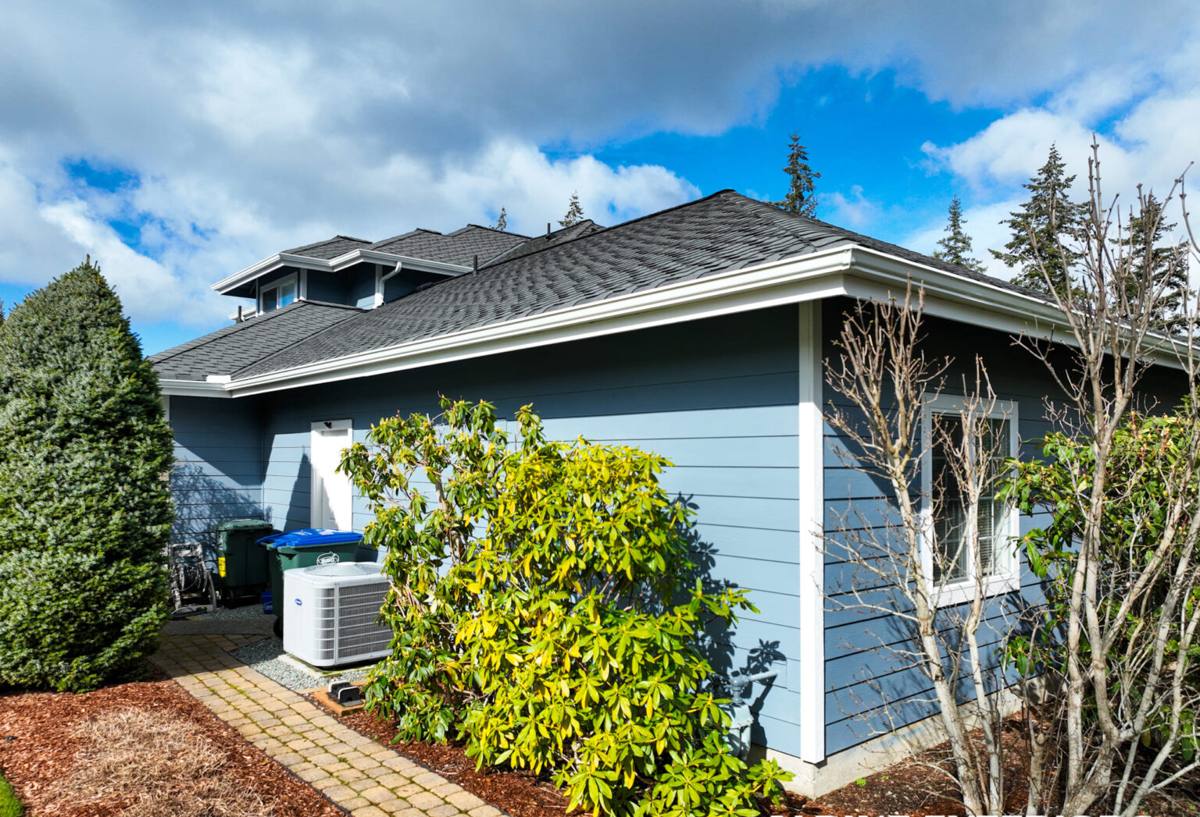
What Salt Air, Wind, and Rain Actually Do to a Shingle Roof
It helps to understand the specific stress a Sandy Point roof is under, because it explains every recommendation that follows.
Salt Air
Airborne salt accelerates corrosion on any exposed metal — nail heads, flashing, vent stacks, gutter hardware. A roof detail that would last decades inland can start showing rust streaks or early failure near the water if the wrong fasteners or flashing metal were used.
Wind
Open water exposure means gusts hit Sandy Point roofs harder and more often than roofs tucked into town. Wind doesn't just tear off loose shingles — it works at edges, ridges, and any spot where sealant hasn't fully bonded, gradually loosening things that look fine from the ground.
Driving Rain
Rain that comes in at an angle finds its way under shingle tabs, around vent boots, and behind poorly lapped flashing far more easily than rain falling straight down. This is where underlayment quality and flashing detail work matter more than the shingle brand printed on the wrapper.
Moss and Algae
Shade, moisture, and mild temperatures are a perfect combination for moss growth on north-facing slopes and anywhere debris collects. Moss roots into the shingle mat over time, lifts tabs, and holds water against the roof deck long after the rain has stopped.
Signs a Sandy Point Roof Needs a Look
Because coastal wear often starts at the edges and details rather than the field of the roof, it's easy to miss until it's a bigger repair. Walk your property periodically and watch for:
- Moss or dark algae streaking, especially on shaded or north-facing slopes
- Granules collecting in gutters or at downspout outlets
- Lifted, curled, or missing shingle tabs after a windstorm
- Rust staining around vent stacks, flashing, or exposed nail heads
- Soft spots or sagging when walked on (a sign of deck moisture damage)
- Daylight visible through the roof deck from inside the attic
- Water stains on interior ceilings, especially near chimneys, skylights, or valleys
Any one of these on its own isn't necessarily an emergency, but they're worth a professional look before the next winter storm cycle finds the weak spot for you.
What a Correctly Built Shingle Roof Includes Here
A roof that's going to hold up on Sandy Point needs a few things done right that get skipped or shortcut on lower-quality jobs:
Underlayment
Synthetic underlayment with strong water resistance, installed with proper overlaps, is the backup layer that protects the deck if wind-driven rain does get past the shingles. On this stretch of coastline, that backup layer isn't optional — it's the difference between a nuisance leak and a dry attic.
Flashing and Fasteners
Corrosion-resistant flashing and fasteners matter more here than almost anywhere else in the county. We detail valleys, chimneys, skylights, and roof-to-wall transitions with materials chosen to hold up against salt exposure, not just whatever's cheapest at the yard.
Ventilation
Balanced intake and exhaust ventilation keeps the attic temperature and moisture level in check, which extends shingle life and helps prevent the trapped moisture that feeds mold and rot. It also keeps the underside of the roof deck from staying damp during Blaine's long stretches of overcast, wet weather.
Wind-Rated Sealing
Proper nailing pattern and full shingle seal-down are what actually keep tabs from lifting in gusts — this is a workmanship detail, not a product feature, and it's where a lot of underbid roofing jobs cut corners.
Our Asphalt Shingle Roofing Process for Sandy Point Homes
- On-site assessment — We look at the existing roof, the deck condition underneath, ventilation setup, and how the specific slopes are exposed to wind and rain off the water.
- Product and detail recommendation — We recommend shingle class, underlayment, and flashing based on your home's actual exposure, not a one-size-fits-all package.
- Deck inspection and repair — Any soft, rotted, or water-damaged decking gets replaced before new roofing goes down. Covering up a bad deck is how small leaks turn into structural problems.
- Underlayment and flashing installation — This is where most of the long-term water resistance actually comes from, and we don't rush it.
- Shingle installation — Installed to manufacturer specification and wind-rating requirements, with attention to nailing pattern and seal-down.
- Ventilation check — We confirm intake and exhaust venting is balanced for the attic space, adding or correcting vents where needed.
- Final walkthrough — We review the completed work with you and explain any maintenance specific to your roof's exposure.
Choosing a Shingle for Coastal Exposure
Not every asphalt shingle line performs the same in a salt-air, high-wind environment. Here's how the general categories compare for a Sandy Point property:
| Shingle Type | Wind Performance | Algae/Moss Resistance | Typical Lifespan |
|---|---|---|---|
| 3-tab standard | Lower wind rating, more prone to edge lift | Standard, no built-in resistance | Shorter end of the range |
| Architectural (laminate) | Higher wind rating, better wind performance | Often available with algae-resistant granules | Mid-to-long range |
| Algae-resistant (copper-infused granules) | Same as base shingle line | Specifically formulated to slow algae/moss growth | Comparable to base line, cleaner appearance longer |
| High-wind rated laminate | Highest available wind rating for asphalt | Often paired with algae resistance | Long end of the range with proper install |
For most Sandy Point homes, we lean toward architectural shingles with algae-resistant granules and a strong wind rating — the added upfront cost is modest compared to the difference it makes in how the roof holds up to the specific conditions here.
What Affects the Cost of a Sandy Point Roofing Project
| Factor | Why It Matters |
|---|---|
| Roof size and pitch | More surface area and steeper slopes increase labor and material needs |
| Deck condition | Rotted or water-damaged decking found during tear-off adds repair cost |
| Shingle class chosen | Standard vs. architectural vs. high-wind-rated pricing varies |
| Number of penetrations | Chimneys, skylights, and vents each require flashing detail work |
| Access and site conditions | Waterfront lots can have tighter access or staging constraints |
| Ventilation upgrades | Adding or correcting intake/exhaust venting affects scope |
We give you a specific number after seeing your roof, not a phone estimate — coastal jobs vary too much from house to house to guess accurately from a description alone.
Living With a Shingle Roof in a Moss-Prone, Salty Climate
A well-built roof still benefits from basic upkeep in this environment:
- Keep gutters and valleys clear of debris where moss likes to start
- Have moss treated and removed gently — pressure washing damages granule surfaces and shortens shingle life
- Trim back overhanging branches that keep shaded areas of the roof damp
- Have flashing and vent boots checked periodically, since these fail before the shingle field usually does
- Address small leaks quickly — in a wet climate, delayed repairs turn into deck and insulation damage fast
Why Local Experience on Sandy Point Specifically Matters
A roofing crew that mainly works inland jobs may not think twice about fastener choice or flashing metal — and inland, it usually doesn't matter much. On Sandy Point, those same shortcuts show up as rust stains and premature failure within a few years. Working this specific stretch of Blaine and Whatcom County's coastline means knowing which slopes on which lots take the worst of the wind, where moss tends to establish first, and which details actually hold up against salt air over time — not just what works on paper.
If you're noticing wear on your Sandy Point roof, or you're planning ahead for a replacement, we're happy to take a look and walk you through what your specific roof needs. Reach out for a free, no-pressure estimate using the form below.