 Blaine
 Blaine Harbor sits where Semiahmoo Bay meets the open water of the Strait of Georgia, and that location shapes everything about how siding performs here. Homes a few blocks from the water take a different kind of weathering than homes inland — salt-laden air, wind-driven rain that hits walls sideways instead of falling straight down, and a moss and algae season that runs longer than almost anywhere else in Whatcom County. Siding that isn't built and installed for this specific exposure shows it within a few years: chalking, swelling, cupped boards, and green-black streaking that no amount of pressure washing fully solves.
This page is about one product, in one place: James Hardie fiber cement siding, installed on homes in and around Blaine Harbor. Not a general overview of siding — the specific conditions this neighborhood deals with, what a correct installation looks like here, and why the crew doing the work matters as much as the product itself.
What Blaine Harbor's Climate Actually Does to Siding
Three things drive most of the siding failures we see near the harbor, and they compound each other.
Salt Air
Airborne salt from Semiahmoo Bay settles on exterior surfaces and accelerates corrosion of anything metal — fasteners, flashing, trim edges. It also draws moisture out of the air and holds it against the wall surface longer than a dry inland breeze would. Materials that rely on paint film alone to keep moisture out lose that protection faster in a salt-air environment because the film degrades quicker.
Driving Rain
Blaine's exposure to Pacific storm systems means rain doesn't just fall here, it's pushed sideways by wind coming off the water. That matters because it forces water into joints, laps, and fastener penetrations that would stay dry in a calmer climate. A siding system's water management — how it's lapped, flashed, and sealed at penetrations — carries more of the weatherproofing burden here than the surface material itself.
A Long Moss and Algae Season
Persistent damp, filtered coastal light, and shaded north- and west-facing walls give moss and algae a long growing window — often close to nine months of the year in this part of Whatcom County. Porous or absorbent siding materials hold moisture at the surface and become a growing medium. Dense, factory-sealed fiber cement gives moss and algae far less to hold onto.
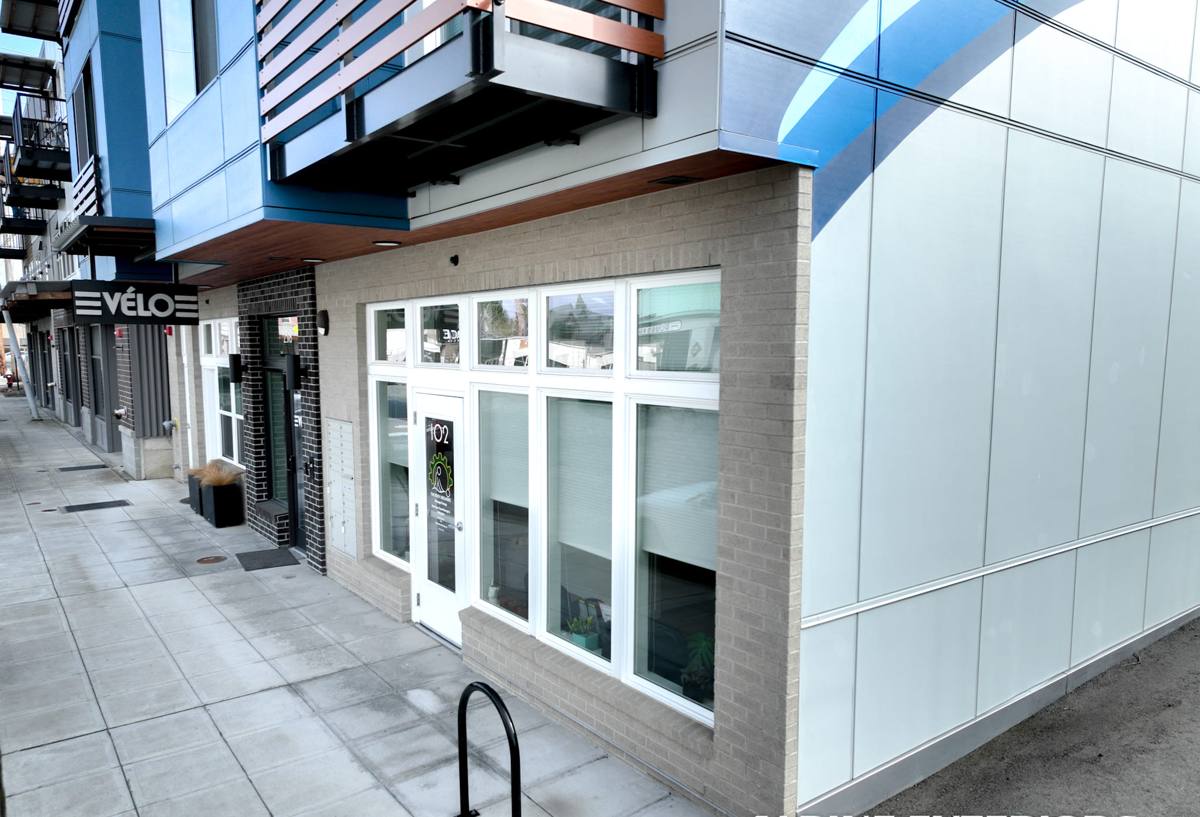
Why Fiber Cement Fits Blaine Harbor Better Than the Alternatives
Fiber cement is dense, dimensionally stable, and doesn't absorb water the way wood-based or wood-fiber composite sidings do. That stability matters most in exactly the conditions Blaine Harbor has: constant humidity swings, salt exposure, and long stretches without a real drying period between storms. It won't swell at cut edges the way an engineered wood product can if water gets past the finish, and it won't rot.
We install James Hardie fiber cement exclusively — not LP SmartSide, not vinyl, not Cemplank, not Allura, not primed spruce or cedar. That's a deliberate standard, not a sales pitch. Wood-based composite sidings depend on an intact factory coating to keep moisture out of an absorbent wood-strand core; once that coating is compromised at a cut edge, fastener hole, or damaged spot, the core can take on water and swell, especially in a climate that rarely gives a surface enough dry time to fully recover. Vinyl flexes and can crack in the region's wind events, and its butt joints and J-channels give driving rain more places to work its way behind the panel. Cedar and primed wood need a maintenance cycle — recoating, caulking, spot repair — that most homeowners underestimate until the first signs of rot show up at the bottom courses.
James Hardie's fiber cement is non-combustible, holds paint and factory finish significantly longer than wood-based products in humid coastal air, and is engineered specifically for wet, marine-influenced climates through its HZ5 product line. That's the product family we use on Blaine Harbor homes.
What a Correct Installation Involves Here
The product is only half the equation. Most of the fiber cement failures we get called to inspect trace back to installation shortcuts, not the material itself — and in a driving-rain, salt-air environment, those shortcuts show up faster than they would somewhere drier.
- Drainage plane and rainscreen gap: A ventilated air gap behind the siding lets any water that does get past the surface drain and dry out instead of sitting against the sheathing.
- Correct flashing at every penetration: Windows, doors, hose bibs, light fixtures, and vents each need properly lapped flashing — this is where driving rain finds its way in if it's skipped or rushed.
- Manufacturer-specified fastener pattern and spacing: Hardie's install specs exist for a reason; under-fastening or fastening too close to panel edges leads to cracking and loosening in high-wind exposure.
- Corrosion-resistant fasteners and trim hardware: Standard fasteners corrode faster in salt air; the harbor-adjacent lots need stainless or hot-dip galvanized hardware, not the minimum-spec option.
- Proper clearance at grade and horizontal surfaces: Siding held too close to a deck, patio, or the ground wicks moisture continuously — a common defect we find on older installs near the water.
- Caulked and back-primed cut edges: Every field cut exposes raw fiber cement; sealing those edges is a small step that's easy to skip and costly to skip.
Our Process for Blaine Harbor Homes
We walk the exterior first and look specifically for what the current siding — whatever it is — has revealed about that lot's exposure: which walls take the worst of the wind-driven rain, where moss has already established itself, where past water intrusion left signs at trim and window returns. That assessment shapes the flashing and drainage detailing plan before a single board goes up.
From there: remove existing siding down to the sheathing, inspect and repair any damaged sheathing or framing before it's covered up again, install the weather-resistive barrier and rainscreen system, then install James Hardie panels or lap siding to spec with corrosion-resistant fasteners and correctly lapped flashing at every opening. We finish with ColorPlus factory-finished boards where possible, which reduces on-site painting and gives a more consistent, longer-lasting finish than field-applied paint — a real advantage in a climate that doesn't offer many good painting-weather windows.
Why the Crew Matters as Much as the Product
James Hardie siding installed to spec and James Hardie siding installed to a national-average shortcut list look identical on installation day. The difference shows up two, five, and ten years later — at the flashing details, the fastener corrosion, the moss growth pattern at shaded walls. A crew that regularly works Blaine Harbor and the surrounding Whatcom County coastline already knows which walls on a given lot orientation take the worst of the weather, what wind exposure the local jurisdiction's code accounts for, and where past installs in this specific area tend to fail. That's not something a crew primarily working drier, inland jobs picks up quickly.
Cost Factors for a Blaine Harbor Project
Every home is different, but these are the variables that most affect the scope and cost of a fiber cement siding project in this area:
| Factor | Why It Matters Here |
|---|---|
| Sheathing condition under existing siding | Water-damaged sheathing near the harbor is common and must be repaired before new siding goes on |
| Product line (HZ5 lap vs. panel vs. shingle profile) | Profile and coverage affect material needs and labor time |
| Number of penetrations (windows, doors, fixtures) | Each one needs proper flashing — more penetrations mean more detail work |
| Wall exposure to wind-driven rain | Water-facing walls may warrant extra flashing attention or rainscreen detailing |
| Trim and fascia scope | Matching trim work is often bundled with siding replacement for a finished result |
| Access and site conditions | Waterfront lots can have tighter access or landscaping that affects staging |
Living With Fiber Cement in a Salt-Air, High-Moss Climate
Correctly installed James Hardie siding is genuinely low-maintenance, but "low" isn't "none," especially this close to the water. An annual rinse-down helps keep salt residue and early moss growth from building up, particularly on north- and west-facing walls that stay shaded and damp longer. Keep an eye on caulked joints at trim and penetrations — caulk is the one component of the system with a shorter service life than the siding itself, and it's worth recaulking proactively rather than waiting for a leak to show up. Trim back vegetation and keep gutters clear so runoff isn't directed against the wall surface, which is a common contributor to localized moss growth and staining.
A Straightforward Checklist Before You Hire
- Ask what rainscreen or drainage plane detailing they use — "none" is not an acceptable answer this close to the water
- Confirm they're using corrosion-resistant fasteners and hardware, not standard-grade
- Ask how they flash windows, doors, and penetrations specifically — a vague answer is a red flag
- Get clarity on whether sheathing repair is included if damage is found once old siding is removed
- Ask whether they're a James Hardie-certified or preferred installer
- Request the manufacturer's written installation instructions be followed, not just "industry standard"
If you're weighing a siding replacement on a Blaine Harbor home, we're happy to walk the exterior with you, point out what your current siding and trim are telling us about that lot's specific exposure, and put together a straightforward estimate — no pressure, no upsell script.