 Blaine
 Why Bellingham Roofs Age Differently Than Roofs Inland
Bellingham sits close enough to the water and far enough into Whatcom County's wet weather pattern that roofs here take a different kind of beating than roofs 100 miles inland. It isn't one dramatic event that wears a roof out — it's the accumulation of small, constant stresses: salt-laden air off the bay corroding exposed metal, long stretches of driving rain that find every weak seam, and a moss season that can run eight or nine months out of the year on shaded, north-facing slopes. A roof that would last three decades in a dry climate can start showing real problems at year eighteen or twenty here if it wasn't built for this environment in the first place.
That's the core difference between a generic roof install and one done right for this area: material selection, fastener choice, underlayment strategy, and ventilation all need to account for moisture that doesn't fully go away between storms. We've built our new roof installations around that reality for homes throughout Bellingham and the surrounding Blaine service area, and it changes several decisions that a roofer unfamiliar with Whatcom County might make differently.
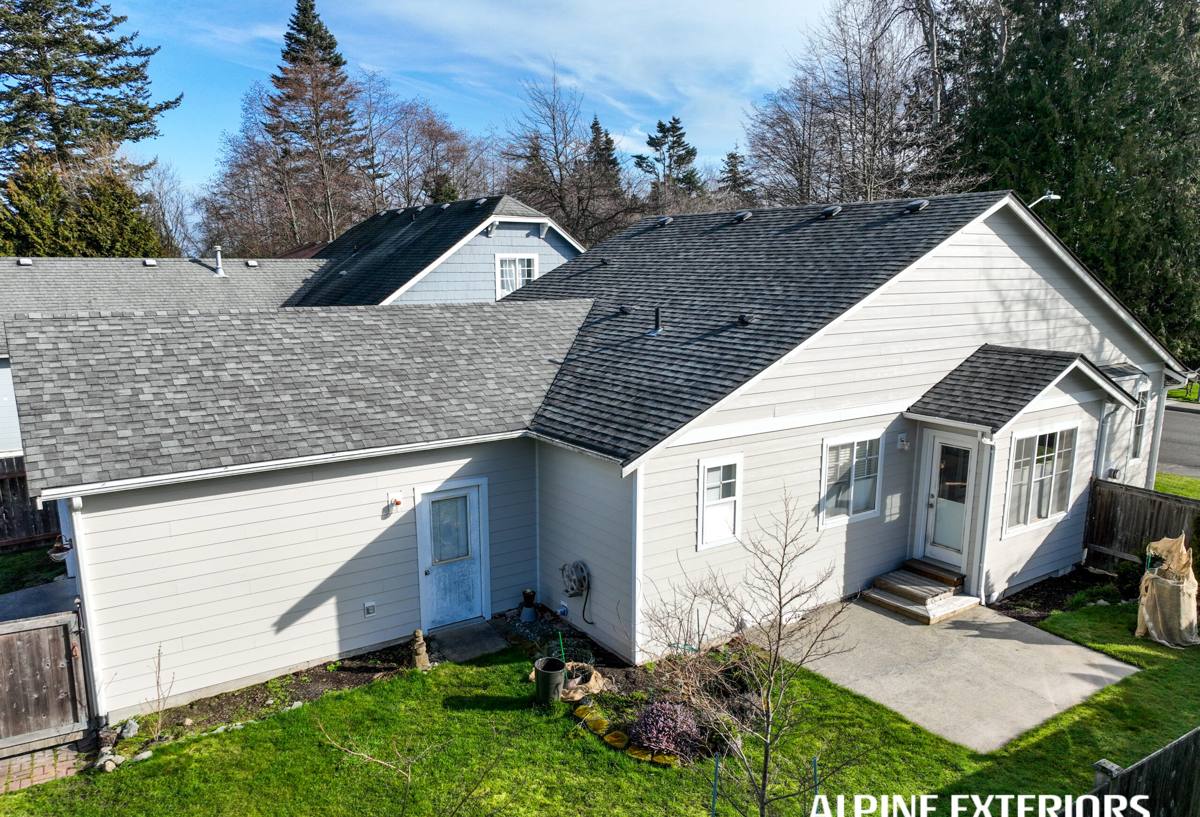
What Salt Air, Rain, and Moss Actually Do to a Roof
Salt Air and Corrosion
Bellingham's proximity to Bellingham Bay means airborne salt travels further inland than most homeowners expect, especially on windier days. Salt accelerates corrosion on any exposed metal — flashing, fasteners, drip edge, vent caps, and gutter hardware. Standard electro-galvanized fasteners can start rusting within a handful of years in this environment. Once flashing corrodes, water finds its way behind it, and by the time a stain shows up on an interior ceiling, the deck underneath has often already been wet for a season or more.
Driving Rain and Wind-Driven Water
Rain in this region rarely falls straight down. Wind off the Strait and the bay pushes it sideways, which means water gets driven up under shingle tabs, into vents, and along ridge lines in ways that a roof designed only for vertical rainfall won't handle. Underlayment coverage, starter strip placement, and how tightly seams are sealed matter more here than in drier, calmer climates.
Moss and Prolonged Moisture
Shaded roof slopes — especially north-facing ones under tree cover, which is common on wooded Bellingham lots — stay damp for extended periods. That moisture is exactly what moss needs to establish. Moss holds water against the roofing material, lifts shingle edges as it grows, and works its way into seams. A roof with poor ventilation or the wrong material for a shaded lot will grow moss noticeably faster than one designed with that exposure in mind.
What a Correct New Roof Installation Actually Involves
"New roof" covers a lot of ground, and the difference between a roof that lasts and one that fails early almost always comes down to what happens under the visible material, not the material itself. A correct install includes:
- Full tear-off to the deck — layering a new roof over an old one traps moisture and hides deck damage; we don't recommend it for this climate.
- Deck inspection and repair — any soft, delaminated, or water-stained sheathing gets replaced before anything new goes down.
- Ice-and-water shield at vulnerable points — eaves, valleys, and around penetrations, where wind-driven rain and ice dams (on colder nights) cause the most damage.
- Synthetic underlayment across the full deck — a continuous, high-quality water barrier rather than felt alone.
- Corrosion-resistant flashing and fasteners — chosen specifically to handle salt exposure, not just meet code minimums.
- Balanced intake and exhaust ventilation — so the attic can actually dry out between storms instead of staying damp.
- Proper starter strip, drip edge, and ridge detailing — the small trim details that determine whether wind-driven rain gets pushed off the roof or pulled under it.
Skip any one of these and the roof might look fine for a few years — the failures in this climate tend to show up slowly, as rot, mold, or soft decking, rather than as an obvious leak on day one.
Roofing Material Options for Bellingham Homes
There's no single "best" roofing material — the right choice depends on the home's exposure, roof pitch, budget, and how much shade the roof gets. Here's how the common options actually perform in this climate:
| Material | Performance in Salt Air & Rain | Moss Resistance | Typical Lifespan Here |
|---|---|---|---|
| Architectural asphalt shingle | Good with proper flashing and fasteners | Moderate — benefits from algae-resistant granules | 20–30 years |
| Standing seam metal | Very good if fasteners/flashing are corrosion-rated | Excellent — sheds moisture, little for moss to grip | 40–50+ years |
| Cedar shake | Requires diligent maintenance in salt air | Poor without regular treatment | 15–25 years, maintenance-dependent |
| Synthetic/composite shingle | Good, consistent performance | Good to excellent depending on product | 30–50 years |
We don't install cedar shake as a default recommendation for shaded, salt-exposed Bellingham lots — not because it's a bad product, but because the maintenance burden (cleaning, treating, and monitoring for moisture retention) is honest work that most homeowners underestimate, and the moisture behavior on a shaded north slope works against it. If a homeowner wants the look and understands the upkeep, we'll talk through it. For most homes in this area, a quality architectural asphalt shingle with algae-resistant granules or standing seam metal gives the best balance of cost, appearance, and low-maintenance durability.
Cost Factors for a New Roof in This Area
Every roof is priced from its own measurements, pitch, and material choice, so we won't quote a number without seeing the roof — but these are the factors that move the price up or down on most Bellingham jobs:
| Factor | Why It Matters |
|---|---|
| Roof pitch and complexity | Steep or multi-plane roofs take longer and require more safety setup |
| Deck condition | Rotted or delaminated sheathing found during tear-off adds material and labor |
| Material choice | Standing seam metal and premium composite cost more upfront than standard asphalt but last longer |
| Layers of existing roofing | Multiple old layers add tear-off time and disposal cost |
| Access and site conditions | Tree cover, tight lot access, or long driveways affect staging and dump trailer placement |
| Ventilation upgrades needed | Older homes often need intake or exhaust vents added or corrected, not just replaced |
Our Installation Process, Start to Finish
- On-site inspection. We walk the roof, check the attic for ventilation and moisture issues, and look at flashing, valleys, and any known trouble spots.
- Written estimate. A clear scope of work and price, with material options explained so the decision is yours, not a sales pitch.
- Scheduling around weather. We plan install windows with Whatcom County's rain patterns in mind and stage materials to keep the deck protected if weather shifts mid-job.
- Tear-off and deck inspection. Old roofing comes off down to the sheathing; any soft or damaged decking is identified and replaced.
- Underlayment and flashing. Ice-and-water shield at vulnerable areas, full synthetic underlayment, and corrosion-resistant flashing throughout.
- Ventilation correction. Intake and exhaust balanced so moisture has somewhere to go instead of sitting in the attic.
- Material installation. Shingles, panels, or composite installed to manufacturer spec, with attention to the wind-driven-rain details that matter most locally.
- Final walkthrough. We review the finished roof with the homeowner, clean the site, and go over warranty paperwork.
Ventilation and Moss Prevention Built Into the Install
A lot of moss and premature aging problems trace back to poor attic ventilation rather than the roofing material itself. When an attic can't breathe, warm moist air sits under the deck, condensation forms, and the underside of the roof stays damp far longer than it should — which speeds up rot and gives moss an easier foothold from below as well as above. On every new roof install, we check intake (soffit vents) and exhaust (ridge or box vents) and correct the balance if it's off, which is common on older Bellingham homes that were built or re-roofed before ventilation standards tightened up. We also talk through simple moss-prevention steps homeowners can take afterward, like keeping overhanging branches trimmed back and clearing debris from valleys before the wet season sets in.
Signs Your Current Roof Needs Replacing, Not Just Patching
- Granules collecting in gutters or at downspout outlets in noticeable amounts
- Shingles that are curling, cupping, or cracking, especially on south- and west-facing slopes
- Visible moss or algae streaking that comes back quickly after cleaning
- Soft or spongy spots when walking the roof, or sagging visible from the ground
- Daylight visible through the attic roof deck, or damp insulation
- Rusted, lifted, or missing flashing around chimneys, vents, or valleys
- Interior water stains that appear or worsen after wind-driven rain, not just heavy downpours
- A roof approaching or past 20–25 years old with no major maintenance history
One or two of these on their own might mean a repair is enough. Several together, especially combined with deck softness, usually means the underlying structure has been absorbing moisture for a while and a full replacement is the more honest recommendation.
Permits, Warranty, and Timeline
Reroofing in Whatcom County typically requires a permit through the applicable jurisdiction, and we handle that as part of the job so homeowners aren't navigating it alone. Manufacturer material warranties vary by product and are separate from our workmanship warranty, which we explain in plain terms before work starts — no fine print surprises at the final walkthrough. Timeline depends on roof size and complexity, but most single-family residential tear-offs and reinstalls in this area run a few days to just over a week, weather permitting. We build weather buffers into scheduling rather than rushing a job to hit a date, because a roof installed in the wrong conditions is a roof that starts its life already compromised.
Why a Crew That Already Works Bellingham Matters
Roofing crews that mainly work drier, inland regions sometimes treat Pacific Northwest coastal conditions as an afterthought — standard fasteners, standard underlayment, ventilation sized to code minimums rather than to the actual moisture load. We work Bellingham and the greater Blaine area regularly, which means the flashing details, fastener specs, and ventilation choices described above aren't extra steps we upsell — they're just how we build a roof here. We also know which slopes on which lot orientations tend to hold moss longest, which matters when we're advising on ventilation placement or trim detailing during the estimate. That local familiarity doesn't replace a careful inspection of your specific roof, but it does mean fewer surprises and a build that's matched to what this climate actually does to a house over twenty or thirty years.
If your roof is showing its age or you're planning ahead rather than reacting to a leak, we're glad to come out, walk the roof, and give you a straightforward, no-pressure estimate — just fill out the form below.