 Blaine
 Birch Bay's Climate Is Harder on a Roof Than It Looks
Birch Bay sits right on the water in Whatcom County, and that waterfront location changes what a roof has to deal with compared to homes even a few miles inland. Salt-laden air moves off the bay and settles on everything, including fasteners, flashing, and shingle granules. Add in driving rain that comes sideways during winter storms, near-constant humidity for much of the year, and a moss and algae season that can run from fall through spring, and you have an environment that ages an asphalt shingle roof faster than the manufacturer's brochure numbers suggest.
None of this means asphalt shingles are a bad choice for Birch Bay. They're still the most practical, cost-effective roofing option for most homes here. It means the installation details matter more than they would in a drier, calmer climate, and cutting corners shows up sooner — usually as moss buildup, granule loss, or leaks at the edges and valleys.
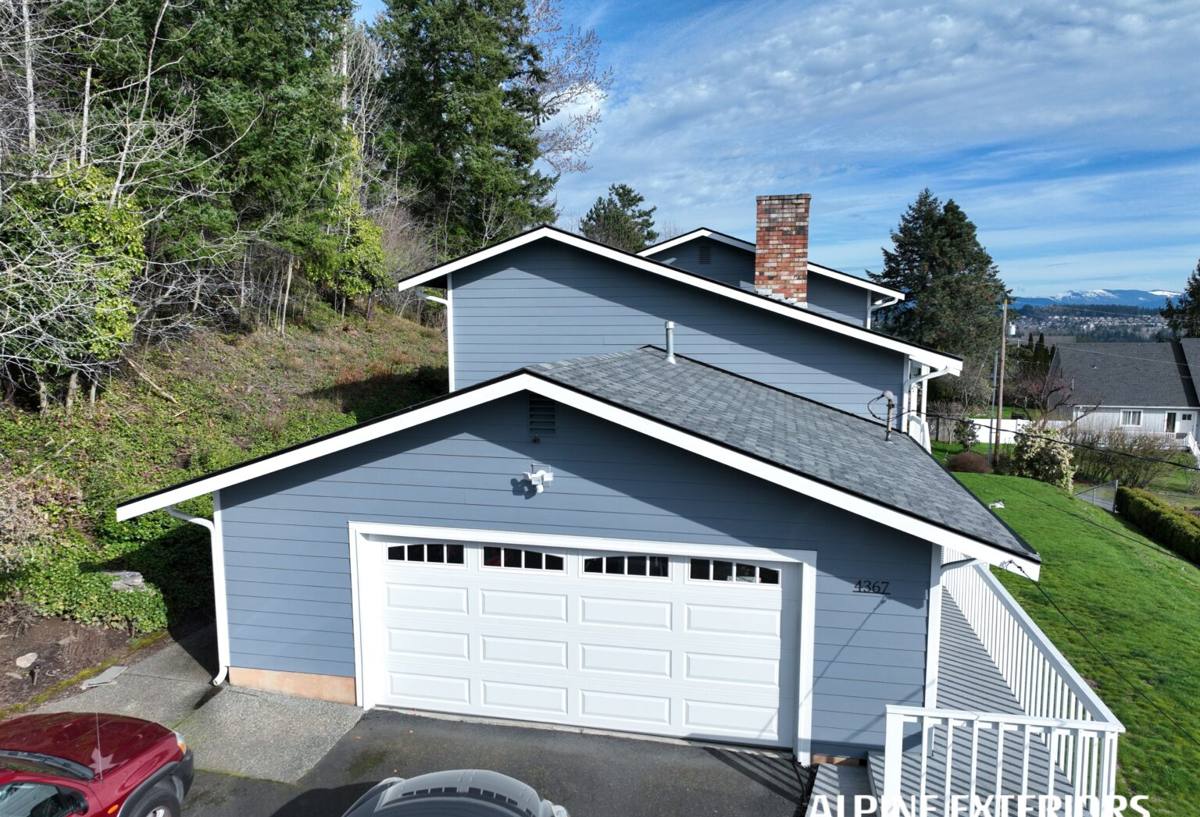
Signs a Birch Bay Roof Is Reaching the End of Its Life
Because moss and algae growth is so common here, homeowners sometimes assume a roof just needs cleaning when it actually needs replacing. A visual check from the ground and the attic can tell you a lot before you call anyone out.
- Shingle edges that are curling, cupping, or lifting, especially on the sides of the roof exposed to prevailing wind off the water
- Bald patches where granules have washed away, leaving the black asphalt mat visible
- Moss growing in a continuous mat rather than isolated patches, particularly on north-facing slopes that stay shaded and damp longer
- Dark streaking that doesn't wash off, which is usually algae rather than dirt
- Soft spots when walking the roof, or sagging visible from the street
- Daylight, water stains, or a musty smell in the attic, especially near vents, valleys, or the chimney
- Shingle granules collecting in gutters after every storm, not just occasionally
- A roof that's 18-25+ years old and has never had a full tear-off, only patches
Any one of these on its own might just mean a repair. Several at once, especially combined with the roof's age, usually means it's time to talk about full replacement.
What a Correct Asphalt Shingle Installation Actually Involves
A shingle roof is a system, not a single product. The shingles get the attention, but in a coastal, wet climate like Birch Bay's, the layers underneath and around them do most of the work of keeping water out.
Tear-off and deck inspection
We remove existing shingles down to the deck rather than installing over an old layer. Overlaying hides deck problems, adds weight, and voids most manufacturer warranties. Once the deck is exposed, we check for soft or delaminated sheathing — common where a roof has had slow leaks — and replace only what's actually bad.
Underlayment and water protection
Synthetic underlayment goes down across the whole deck as the first line of defense. In valleys, along eaves, and around any penetration, we add self-adhering ice-and-water membrane. Birch Bay doesn't get heavy ice damming the way colder inland areas do, but that same membrane does double duty against wind-driven rain forcing its way under shingles during winter storms off the water.
Flashing
Flashing around chimneys, skylights, sidewalls, and roof-to-wall transitions is where most leaks actually start, not in the open field of shingles. We install new metal flashing rather than reusing old, corroded pieces — salt air accelerates corrosion on flashing and fasteners, so this is not a place to save money by reusing what's there.
Ventilation
Balanced intake and exhaust ventilation keeps the attic close to outdoor temperature and lets moisture escape instead of condensing on the underside of the deck. In a humid coastal climate, poor ventilation is one of the biggest hidden causes of premature deck rot and shingle failure from underneath.
Shingle installation
Starter strips at eaves and rakes, correct nail placement and count per the manufacturer's wind-rated instructions, and proper offset patterns all matter more in an area that sees regular gusts off the bay. We follow the manufacturer's high-wind nailing specification rather than the minimum standard pattern.
Choosing the Right Shingle for a Bay-Front Climate
Not every shingle line is built the same, and in Birch Bay the differences that matter most are wind resistance, algae resistance, and how the shingle handles repeated wet-dry cycles. Major manufacturers such as GAF, Owens Corning, and CertainTeed all offer tiers built for exactly this kind of exposure.
| Shingle Type | Typical Lifespan | Wind Rating | Best Fit for Birch Bay |
|---|---|---|---|
| 3-tab (economy) | 15-20 years | Lower | Budget projects only; least suited to coastal wind and wet cycling |
| Architectural/laminate | 25-30 years | Higher, wind-rated lines available | Standard recommendation for most Birch Bay homes |
| Algae-resistant (AR) laminate | 25-30 years | Higher | Strong choice given the area's long moss and algae season |
| Impact-rated (Class 4) | 30+ years | Highest | Worth considering for exposed, high-wind lots near the water |
Algae-resistant granules use copper or zinc compounds that slow algae and moss growth over time. They don't make a roof moss-proof — nothing does in this climate — but on a roof that gets regular shade and moisture, the difference in appearance after 10 years is noticeable. For most Birch Bay homes, a mid-to-upper architectural shingle with AR granules and a manufacturer's high-wind nailing pattern is the sensible middle ground between cost and durability.
Cost Factors Worth Understanding Before You Get Quotes
Asphalt shingle replacement pricing depends on more than square footage. A few factors tend to move the number the most on Birch Bay homes specifically:
- Roof pitch and access: steep pitches and homes with limited driveway or yard access for staging materials take longer and cost more
- Layers to remove: a single-layer tear-off is more straightforward than removing two layers of old shingles
- Deck condition: plywood or plank replacement is priced separately once the old shingles are off and the deck is visible
- Ventilation upgrades: adding or correcting ridge and soffit vents is a smart add-on but does add cost
- Shingle tier: moving from a basic architectural shingle to an AR or impact-rated line raises material cost but extends the maintenance-free years
- Flashing scope: homes with chimneys, skylights, or multiple roof-wall intersections need more custom flashing work
Ask for a written estimate that breaks these out individually rather than one lump number — it makes it much easier to see where your money is actually going and to compare quotes apples to apples.
Our Process, Start to Finish
- On-site inspection: we walk the roof and attic, check the deck, flashing, and ventilation, and take photos of anything that needs discussion.
- Written estimate: a clear scope of work and price, broken down by category, with shingle options explained rather than assumed.
- Material selection: we help you weigh standard architectural versus AR or impact-rated lines based on your roof's exposure and budget.
- Tear-off and deck repair: full removal of old roofing, deck inspection, and replacement of any compromised sheathing before anything new goes down.
- Underlayment, flashing, and ventilation: the layers that actually keep water out, installed to manufacturer spec, not the bare minimum.
- Shingle installation: correct nailing pattern for wind exposure, proper starter courses, and attention to valleys and edges.
- Cleanup and magnetic sweep: full site cleanup, including a check for stray nails around the yard and driveway.
- Final walkthrough: we go over the finished roof with you before calling the job done.
Ventilation and Moisture: The Part Homeowners Rarely See
A shingle roof can look fine from the curb while quietly failing from the inside because of poor attic ventilation. In a climate with as much ambient humidity as Birch Bay's, warm moist air that gets trapped in an attic condenses on cold sheathing, and that moisture cycle rots decking and shortens shingle life from underneath — problems that never show up as an obvious leak until they're advanced. Whenever we replace a roof, we check the intake-to-exhaust balance and flag it if it's undersized or blocked, since it's far cheaper to correct during a re-roof than as a standalone repair later.
Why a Crew That Already Works Birch Bay Matters
Roofing crews that mostly work drier, inland areas sometimes underbuild for what a bay-front lot actually experiences. A crew that regularly works Birch Bay and the surrounding Whatcom County coastline knows to spec wind-rated nailing patterns as standard rather than an upsell, to expect corrosion issues with lower-grade fasteners and flashing near the water, and to plan installation timing around the wetter stretches of the year rather than fighting them. That local familiarity also extends to knowing which manufacturers' warranties actually hold up their algae-resistance and wind ratings when a claim comes in, and how Whatcom County permitting and inspection typically runs for residential re-roofs.
None of this is exotic knowledge — it's just the accumulated detail that comes from doing this work in this specific environment repeatedly, rather than treating every roof the same regardless of where it sits.
Maintenance After Installation
A correctly installed shingle roof in Birch Bay still benefits from periodic attention given the climate. A yearly visual check, gutter clearing before the wet season ramps up, and prompt attention to any moss that establishes itself on shaded slopes will get more useful life out of the roof than the shingle warranty alone guarantees. If moss does take hold, it should be treated gently — pressure washing or aggressive scraping can strip granules and shorten shingle life faster than the moss itself would.
If you're weighing repair versus replacement, or just want an honest read on where your current roof stands, we're happy to take a look. Estimates are free and there's no pressure — fill out the form below and we'll set up a time to come out.