 Blaine
 Board & Batten Siding for Birch Bay's Coastal Climate
Birch Bay sits right on the water in Whatcom County, and that location shapes everything about how siding performs there. Homes along the bay and the bluffs above it take on salt-laden air, wind-driven rain coming straight off the Strait of Georgia, and a moss season that stretches through most of the wet months. Board and batten siding is a popular choice in this area because the vertical lines suit the coastal and craftsman styles common to Birch Bay, but the profile itself creates a few installation details that matter more here than they would on a sheltered inland lot.
This page covers what board and batten siding needs to hold up in Birch Bay specifically, what a correctly built system looks like, and why we install it exclusively in James Hardie fiber cement rather than vinyl, LP SmartSide, or cedar.
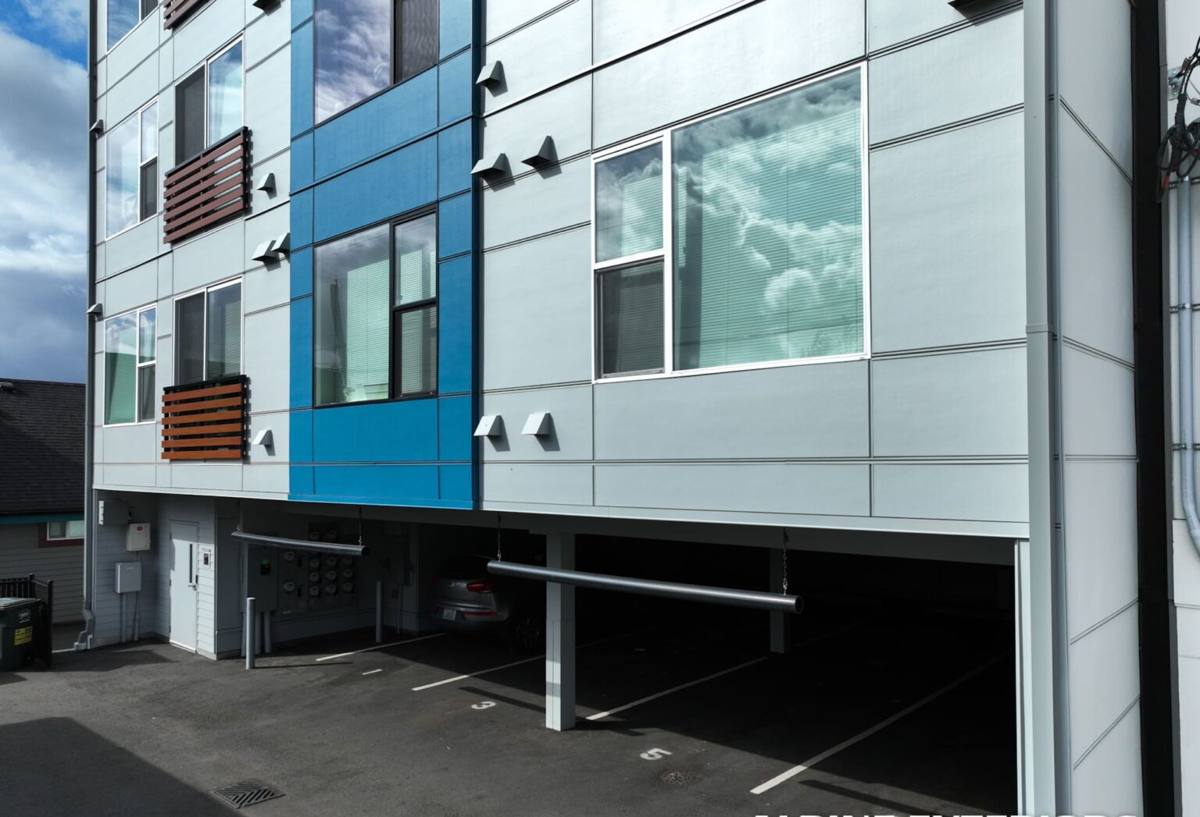
What Birch Bay Homes Ask of Their Siding
Salt Air
Airborne salt accelerates corrosion on fasteners, flashing, and any metal trim tied into the siding system. On a board and batten wall, the battens themselves are fastened through the underlying panel, which means every batten nail or screw is a potential weak point if the wrong fastener was used. Salt exposure is worse the closer a home sits to open water, but it travels well inland on prevailing wind, so even homes set back from the bay aren't fully exempt.
Wind-Driven Rain
Birch Bay gets weather off the water that pushes rain sideways into wall assemblies rather than straight down. Vertical board and batten siding has long, continuous seams running the height of the wall, and those seams are exactly where wind-driven rain looks for a way in. How those seams are detailed — batten width, fastening pattern, and what's behind the siding — determines whether that rain stays on the surface or finds its way to the sheathing.
Moss and Persistent Moisture
Long, damp winters and shaded lots around Birch Bay give moss plenty of time to establish, especially on north-facing walls and anywhere tree cover blocks sun and airflow. Moss holds moisture against the siding surface far longer than open sun and wind would allow, which matters most for whatever material is actually absorbing that moisture underneath the finish.
Why the Board & Batten Profile Raises the Stakes on Material Choice
Vertical siding profiles are less forgiving of material weaknesses than horizontal lap siding. Lap siding sheds water down and off each course; board and batten relies more on the surface coating and the drainage plane behind it to keep moisture out over a tall, uninterrupted run. That makes the choice of base material more consequential here than on a typical lap-sided elevation.
| Material | Behavior in Salt Air / Wet Climate | Long-Term Concern for Board & Batten |
|---|---|---|
| Vinyl | Won't rot, but becomes brittle and can warp with UV and temperature swings; seams and battens are often just overlapped, not truly sealed | Vertical seams can flex and gap over time, and color is baked in with no realistic refinish option |
| LP SmartSide (engineered wood) | Wood-based core is vulnerable if moisture reaches cut edges or fastener penetrations | Batten fastening creates more penetration points; any breach at those points risks swelling at the substrate |
| Cedar / primed spruce | Natural material that moves with moisture and requires ongoing sealing and refinishing | Salt air and constant damp shorten the interval between recoats; battens and board edges are the first places finish fails |
| James Hardie fiber cement | Non-combustible, dimensionally stable, engineered for wet climates (HZ5 product line) | Correctly installed and caulked, the batten seams stay stable and the ColorPlus finish resists fading and moisture damage |
This is the core of why we standardized on James Hardie for every project, including board and batten work in Birch Bay. It's not that the alternatives are unusable everywhere — it's that this profile, in this climate, exposes their weak points faster than a lower-exposure application would.
What a Correctly Installed Board & Batten Job Involves
Board and batten looks simple from the street — wide boards or panels with narrower battens covering the seams — but the assembly behind that clean look is what determines whether it lasts. A correct installation in a coastal, wet climate like Birch Bay's includes:
- A weather-resistive barrier and, where wall conditions call for it, a drainage gap so any moisture that gets past the surface can drain and dry rather than sit against the sheathing
- Panel and batten layout planned around actual stud spacing, not just visual spacing, so every fastener lands in solid framing
- Corrosion-resistant fasteners — stainless steel or hot-dip galvanized, not standard coated fasteners that can rust and streak in salt air
- Battens fastened with the correct spacing and edge distance so they don't split the board beneath or work loose under wind load
- Factory-primed or factory-finished cut edges sealed in the field, since a raw cut edge is the fastest way moisture gets into any fiber cement product
- Careful flashing and sealant detailing at windows, doors, and any point where the vertical run is interrupted
- Proper clearance at the base of the wall and at grade so the bottom of the siding isn't sitting in standing water or buried mulch
Skipping any one of these doesn't usually show up in year one. It shows up in year five or eight, as staining, soft spots at the base, or battens that have started to separate — right around the time a lot of homeowners assume their siding should still look brand new.
James Hardie Options for a Board & Batten Look
James Hardie offers a few ways to get the board and batten aesthetic, and the right one depends on the home and the look the owner wants:
- HardiePanel vertical siding with HardieTrim battens — the classic board and batten build-up, with wide panels and separate trim boards installed over the seams
- Artisan vertical siding — a premium, smooth-finish option for homeowners who want a more refined, tighter-grain appearance
- ColorPlus factory finish — a baked-on finish applied under controlled conditions, which holds color and resists the fading and chalking that field-applied paint struggles with in salt air and UV exposure
All of these carry James Hardie's engineered-for-climate construction and a strong transferable warranty when installed to the manufacturer's specifications — which is exactly why correct installation, not just correct material, is the point of this page.
Our Process for Birch Bay Projects
Every board and batten job in Birch Bay starts with a walk of the property, not a generic quote. We look at which elevations face the water and prevailing wind, where moss and shade are already a problem, what condition the existing siding and sheathing are in, and whether the wall assembly needs a drainage gap added as part of the job. From there we plan batten layout against actual framing, confirm fastener spec for the site's exposure level, and detail every seam, window, and penetration before the first board goes up. When the job is done, we walk it with the homeowner so they know exactly what was installed and what basic upkeep it needs going forward.
Maintenance in a Salt Air, Moss-Prone Environment
James Hardie siding is low-maintenance, not no-maintenance. In a spot like Birch Bay, a bit of regular attention goes a long way toward protecting the installation:
- Rinse salt residue and grime off the siding a couple of times a year, especially on water-facing elevations
- Keep gutters clear so overflow doesn't run down the wall and feed moss growth at the top of the siding
- Trim back vegetation and tree cover that's shading a wall and keeping it damp longer than the rest of the house
- Check caulking at window and door trim periodically — sealant is the first line of defense and the first thing to wear
- Address any moss with a gentle wash rather than pressure-washing directly into seams, which can force water behind the siding
Why Hiring a Crew That Already Works Birch Bay Matters
Board and batten siding installed to spec in a mild inland climate can still fail early on a Birch Bay waterfront lot if the crew doesn't adjust for wind exposure, salt air fastener requirements, and drainage. A crew that already works this stretch of Whatcom County knows which elevations typically need extra attention, understands local permitting through the county, and has already seen how the first few winters treat a new installation here. That local pattern recognition is difficult to replace with a generic install, no matter how good the materials are on paper.
If you're considering board and batten siding for a home in Birch Bay, we're happy to take a look and talk through what your specific lot and exposure actually call for. Reach out for a free, no-pressure estimate using the form below.