 Blaine
 Birch Bay's Climate Is Harder on Windows Than It Looks
Birch Bay sits right on the water, which means homes here take a steadier beating than houses even a few miles inland. Salt-laden air corrodes hardware and finishes faster than dry inland air does. Driving rain off the Strait pushes water sideways into gaps that would stay dry elsewhere, and the long, damp moss season that settles over Whatcom County most of the year keeps wood, trim, and sealants wet for weeks at a stretch. None of that is dramatic on its own, but it adds up year after year, and windows are usually the first place it shows.
Most window failures we see in Birch Bay aren't from the glass itself. They're from what's happening around the frame — failed seals letting moisture behind the trim, hardware that's corroded from salt exposure, or a original install that never had proper flashing to begin with. Replacing the window without addressing those causes just buys a few more years before the same problem comes back.
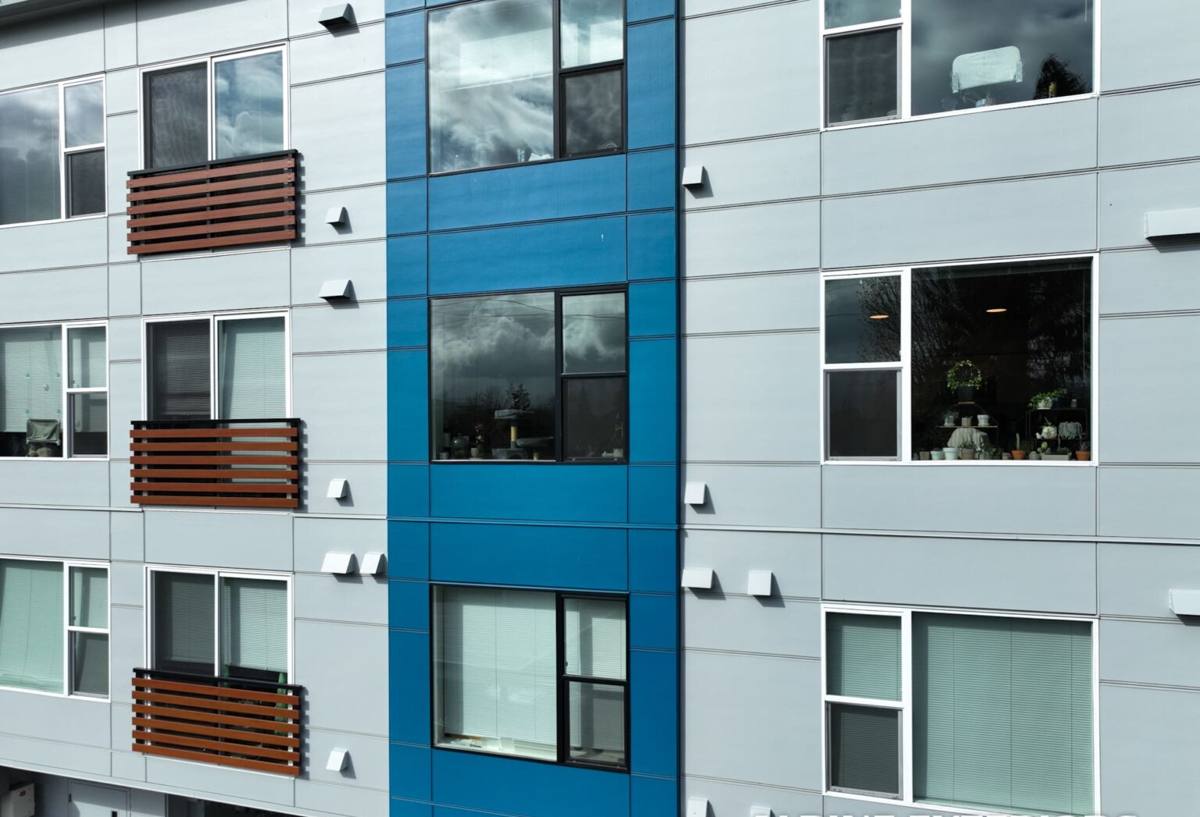
Signs a Birch Bay Home Needs Window Replacement, Not Just a Repair
Not every window problem means a full replacement. But there's a point where patching stops making sense — either because the window can't be repaired reliably, or because repair costs start approaching replacement cost anyway. Here's what we look for when we're deciding which side of that line a window is on:
- Fogging or a visible haze between panes — the seal has failed and the insulating gas is gone for good
- Wood trim or sill that's soft, spongy, or shows dark staining when pressed
- Windows that are noticeably harder to open, close, or lock than they used to be
- Visible daylight or a draft you can feel around the frame with the window shut
- Condensation forming on the inside of the glass regularly, even in normal weather
- Corroded or frozen hardware — cranks, latches, or balances that no longer move smoothly
- Paint or finish that's bubbling or peeling specifically around the window opening, not the wall in general
- A noticeable rise in heating costs with no other explanation
If you're only seeing one or two of these and the frame itself is still solid, a repair or re-seal might genuinely be the right call. We'll tell you that if it's true — a window that doesn't need replacing yet is money better spent elsewhere.
What a Correct Window Replacement Actually Involves Here
Full-Frame vs. Insert Replacement
There are two basic approaches. An insert replacement fits a new window into the existing frame, leaving the original exterior trim and flashing in place. It's faster and less invasive, and it works fine when the existing frame is still sound, square, and properly flashed. A full-frame replacement removes the window down to the rough opening, including the old flashing, so everything — frame, flashing, and weather barrier — gets rebuilt from scratch.
In a climate that pushes this much wind-driven rain against a wall, we lean toward full-frame replacement whenever there's any sign the original flashing was inadequate, or whenever there's already been water intrusion around the opening. An insert replacement over a bad flashing job just seals a new window on top of an existing problem.
Flashing, Sealing, and the Weather Barrier
This is the part that doesn't show once the trim goes back on, and it's also the part that determines whether the window lasts fifteen years or thirty. A correct install integrates the window's flashing with the house's weather-resistant barrier in the right shingle-lap order — meaning water that gets past the outer seal (and on this coast, eventually some will) has a continuous path down and out, rather than a place to pool against the framing. Sill pans, properly lapped flashing tape, and back-caulking on the nailing fin all matter more here than they would somewhere drier. Skipping any of these steps is exactly how a "new window" ends up with rot behind it in five years.
Choosing a Frame Material for Salt Air and Driving Rain
Every frame material has real trade-offs, and the right choice depends on the specific window, its exposure, and your budget — not a single "best" answer. Here's how the common options actually compare for a marine, salt-air setting like Birch Bay:
| Material | How it handles salt air & rain | Maintenance | General cost |
|---|---|---|---|
| Vinyl | Won't corrode or rot; performs consistently in coastal exposure | Low — occasional cleaning | Lower to mid |
| Fiberglass | Very stable in wet, salty conditions; resists warping and corrosion | Low | Mid to higher |
| Aluminum | Strong but prone to corrosion and condensation without a quality thermal break and finish | Moderate | Mid |
| Wood / wood-clad | Handsome, but exposed wood needs consistent upkeep in this much moisture | High — regular refinishing | Higher |
Our standard is to steer most Birch Bay homeowners toward vinyl or fiberglass unless there's a strong architectural reason for wood — not because wood windows are bad, but because the maintenance schedule they need to hold up in constant salt-damp air is a real, ongoing commitment most homeowners underestimate. If you do want a wood or wood-clad look, we'll walk you through what upkeep that actually requires before you commit, not after.
Glass and Weatherstripping Choices That Matter in This Climate
Double-pane, low-E, argon-filled glass is the practical standard for this area and covers most homes well. Triple-pane adds meaningful insulation value but at a real cost premium, and for most Birch Bay homes the return on that upgrade is modest unless you're dealing with a particularly exposed, north- or west-facing wall that takes the brunt of the weather. We size these decisions to the specific wall, not a blanket recommendation for the whole house.
Weatherstripping and corrosion-resistant hardware matter just as much as the glass. Cheaper hardware can start showing surface corrosion within a few seasons in this air. We spec hardware rated for coastal/marine use on every install here — it costs a little more up front and saves the callback five years down the road.
Our Process for a Birch Bay Window Replacement
- On-site assessment. We look at each window individually — frame condition, existing flashing, signs of past water intrusion — rather than quoting off a photo or a phone call.
- Honest scope. We tell you which windows need full replacement, which could be repaired, and why — including if that means a smaller job than you expected.
- Written estimate. Clear pricing by window, material options explained in plain terms, no pressure to upgrade beyond what the house actually needs.
- Proper removal and flashing. Old units come out cleanly, the opening gets inspected for hidden damage, and flashing is integrated correctly with the weather barrier before the new window goes in.
- Installation and sealing. New window set plumb and square, sealed and insulated per manufacturer spec, hardware and locks tested before we call it done.
- Trim and cleanup. Exterior and interior trim finished to match, site cleaned up, old windows hauled away.
- Walkthrough. We go over the finished work with you and answer questions before we consider the job closed.
What Window Replacement Costs in Birch Bay: The Real Factors
There's no honest single price per window — too much depends on the specifics. What actually moves the number:
| Factor | Why it matters |
|---|---|
| Insert vs. full-frame | Full-frame costs more but is often necessary when flashing has already failed |
| Frame material | Vinyl is typically the most budget-friendly; fiberglass and wood cost more |
| Window size and type | Large picture windows or custom shapes cost more than standard double-hungs |
| Hidden damage | Rotten framing or sheathing found once the old window is out adds to the scope |
| Number of windows | Doing several at once is generally more cost-efficient per window than one at a time |
| Access and site conditions | Second-story or hard-to-reach openings take more time and equipment |
We'd rather walk your home and give you real numbers than throw out a broad range that doesn't mean much either way. If we open a wall and find something worse than expected, we'll show you before doing the work, not bill you for a surprise afterward.
Why a Crew That Already Works Birch Bay Matters
A window that's correctly installed for a dry inland climate isn't automatically correct for a house that takes wind-driven rain off the water and sits in salt air most of the year. A crew that works this specific stretch of Whatcom County regularly already knows which details can't be skipped here — the flashing sequence, the hardware grade, which walls on a Birch Bay lot tend to take the worst weather exposure. That's not something you pick up from a general install checklist; it's something you learn by doing the work in this exact environment, house after house.
It also means someone who's easy to reach if a question comes up after the job is done — not a crew that did one job in the area and moved on to the next region.
Moss Season and Keeping New Windows Performing Long-Term
Whatcom County's long moss season doesn't just affect roofs. Moss and algae growth around window trim and sills holds moisture against the surface for extended periods, which is exactly the condition that breaks down caulking and finishes early. A quality install starts you off right, but a little seasonal attention keeps it that way: clearing debris and moss buildup from sills and tracks, checking caulk lines once a year for cracking, and making sure gutters and downspouts near window openings are clear so water isn't sheeting down the wall face. None of this is complicated, but skipping it is how a well-installed window ends up needing attention years earlier than it should.
If you're weighing repair versus replacement, or just want a straight answer about what your windows actually need, we're glad to come take a look. The estimate is free, there's no pressure attached to it, and you'll get a real answer about your specific windows — not a generic quote. The form below is the easiest way to get started.