 Blaine
 Birch Bay Roofs Take a Different Kind of Beating
Birch Bay sits right where the roof of a house meets the weather off the water, and that changes what a roof actually needs. Homes a few blocks from the shoreline deal with salt-laden air that speeds up corrosion on anything metal — fasteners, flashing, gutter hangers, even the coating on some shingle granules over time. Add wind-driven rain that comes in sideways off the bay during winter storms, and water gets pushed into laps and seams that would stay dry on a calmer inland roof. Then there's the shaded, damp stretch of fall through spring when moss and moisture sit on the roof for weeks at a time. None of these problems are dramatic on their own, but stacked together over a Whatcom County winter, they're exactly why roofs in Birch Bay tend to develop leaks and wear patterns that look different from what we see a few miles inland.
A roof repair here isn't just patching a hole. It's understanding which of these three forces — salt air, driving rain, or moss — actually caused the failure, because that determines what the correct fix looks like.
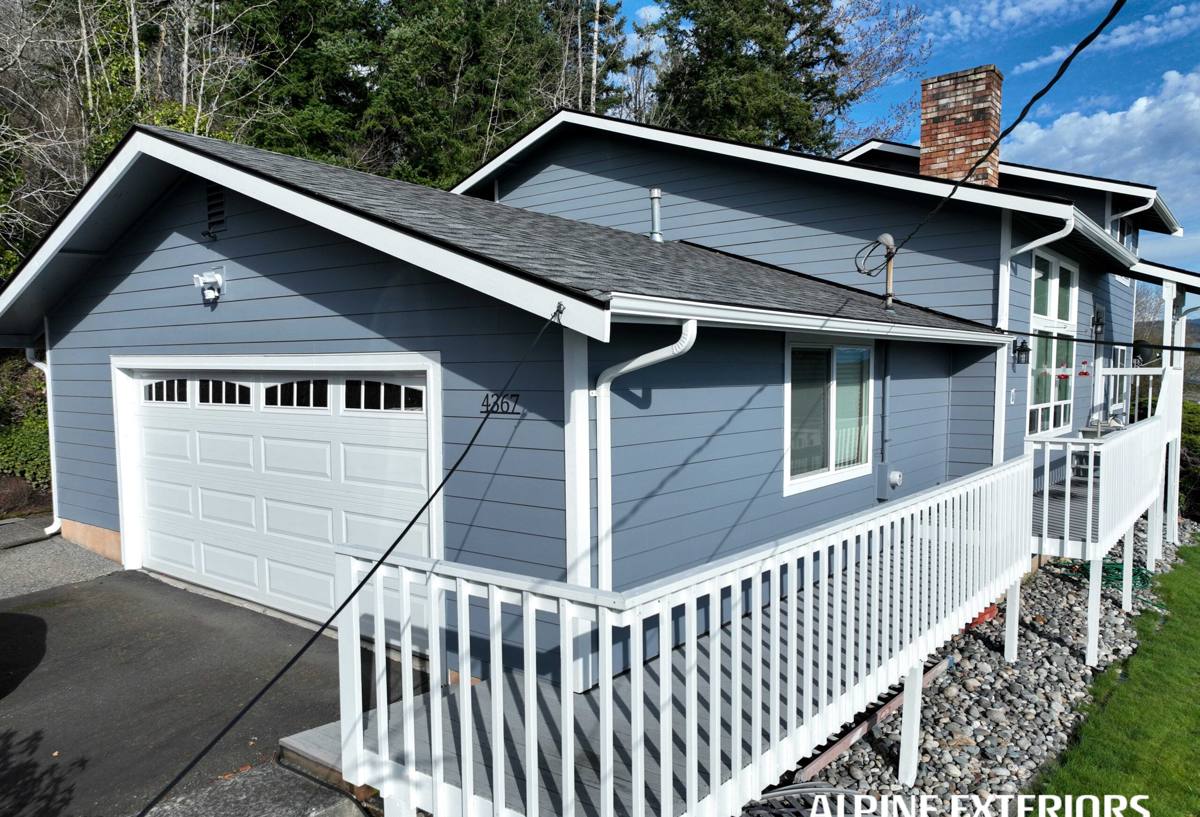
What Actually Goes Wrong on Birch Bay Roofs
Salt Air and Metal Fatigue
Flashing, drip edge, valley metal, and fasteners are the first things to show wear near the water. Salt air accelerates oxidation, and once flashing starts to pit or a nail head corrodes, it stops sealing the way it should. The shingle or panel above it can look fine while the metal underneath is quietly failing — which is why a lot of "mystery leaks" near chimneys, valleys, and roof-to-wall transitions in Birch Bay trace back to flashing, not the roofing material itself.
Wind-Driven Rain
Storms coming off the strait don't just drop rain straight down — they push it sideways and upward under laps, at ridge caps, and around any roof penetration (vents, skylights, chimneys). A roof that would shed water fine in a calm rain can leak in a wind-driven one if laps are under-lapped, sealant has failed, or fasteners have backed out even slightly. This is also why ridge caps and hip caps are common failure points here — they take the brunt of the wind and are often under-fastened from the original install.
Moss and Prolonged Moisture
Shaded slopes, north-facing roof planes, and areas under overhanging trees stay damp longer through the region's long wet season, which gives moss time to establish. Moss doesn't just look bad — it holds moisture against the roofing material, lifts shingle edges as it grows, and works into any gap in the surface, and can hold enough water in valleys and behind chimneys to slowly rot the decking underneath if it's left unaddressed for a few seasons.
Signs a Birch Bay Roof Needs Repair, Not Just a Look
- Water stains on interior ceilings, especially near chimneys, skylights, or where two roof planes meet
- Granules collecting in gutters or at downspout outlets faster than expected for the roof's age
- Visible moss or dark streaking concentrated on shaded or north-facing slopes
- Lifted, curling, or missing shingles after a windstorm, particularly along ridges and hips
- Rusted or pitted flashing around vents, chimneys, and valleys
- Soft spots underfoot or sagging in the roof deck when walked (a sign moisture has reached the sheathing)
- Daylight visible through the roof deck from inside an attic
Any one of these on its own might be minor. Several together, especially after a wet winter, usually mean it's worth having someone look before the next storm season.
What a Correct Repair Actually Involves
The most common mistake in roof repair — anywhere, not just Birch Bay — is treating the visible symptom instead of the cause. Sealing over a cracked flashing seam or replacing a single shingle without checking why it failed usually buys a homeowner a year or two before the same leak comes back, often after the water has already done more damage underneath.
A repair done right starts with tracing the actual water path, which is frequently not directly above the interior stain — water can travel along rafters or decking before it drips through. From there, a correct repair typically includes:
- Removing enough surrounding material to see the full extent of the damage, not just the failed spot
- Checking the decking underneath for soft or rotted wood before anything new goes back on
- Replacing flashing rather than just re-sealing it, when corrosion or gaps are the actual cause
- Matching shingle or panel material as closely as possible so the repair doesn't stand out or create a new weak seam
- Re-fastening ridge and hip caps to spec, since these take the most wind load in Birch Bay's exposure
- Confirming underlayment is intact around the repair area before closing it back up
Our Roof Repair Process
- Inspection and diagnosis. We look at the roof from the ground, from the attic side if accessible, and up close at the affected area — not just where the stain shows up inside.
- Honest assessment. We tell you whether it's a straightforward repair, a repair that will buy several more years, or a situation where the roof's overall condition means repair is throwing money at a roof that's near the end of its service life.
- Written scope before work starts. You know what's being fixed and why before we're on the roof.
- The repair itself. Matched materials, correct flashing, proper fastening — done to hold up through the next windstorm, not just look fixed.
- A look at the rest of the roof. While we're up there, we'll flag anything else worth knowing about — moss buildup, aging flashing elsewhere, gutter issues — so you can plan for it instead of being surprised later.
Repair or Replace? How We Help You Decide
Not every Birch Bay roof issue needs a full replacement, and not every leak is worth chasing with repairs indefinitely. The honest answer depends on the roof's age, how much of it is affected, and what's driving the damage.
| Factor | Leans Toward Repair | Leans Toward Replacement |
|---|---|---|
| Roof age | Under roughly 15 years, or well-maintained | Nearing or past typical material lifespan |
| Extent of damage | Localized — one valley, one flashing point, one section | Multiple areas, or damage spread across several slopes |
| Decking condition | Solid, no soft spots found | Soft, rotted, or delaminated in multiple spots |
| Cause of failure | Isolated flashing or fastener issue | Widespread granule loss, brittle material, or material failure |
| Moss history | Recent, hasn't reached the decking | Long-term moss growth with underlying rot |
We'll walk you through where your roof falls on this before recommending anything — a repair should genuinely solve the problem, not just delay a bigger conversation.
Materials and Fasteners Suited to This Location
Because salt air is a real factor for Birch Bay's shoreline-facing homes, the fasteners and flashing we use for repairs are chosen with that exposure in mind rather than defaulting to whatever's standard inland. Corrosion-resistant fasteners and properly rated flashing metal cost a little more up front, but on a roof that sits in salt air, cutting that corner is exactly what leads to the same repair being needed again in a few years. We also pay close attention to sealant selection — not every sealant holds up the same way under repeated wet-dry cycling and UV exposure on this coastline, and using the wrong one is a common reason repairs fail early.
Keeping Moss From Undoing the Repair
A repair is only as good as what happens to the roof afterward, and in Birch Bay's climate, moss is the thing most likely to shorten a repair's life if it's ignored. A few practical habits go a long way:
- Keep gutters and valleys clear of needles and debris, since trapped debris is what lets moss get started
- Trim back overhanging branches where practical to let shaded slopes dry out faster between rains
- Have moss physically removed rather than power-washed, since high-pressure washing can strip granules and shorten shingle life
- Consider zinc or copper control strips at the ridge on moss-prone slopes, which discourage regrowth as rainwater runs over them
- Schedule a roof check after major windstorms, since that's when flashing and ridge caps are most likely to loosen
Why It Matters That We Work Birch Bay Regularly
A roofer who mostly works drier, more sheltered inland areas can still do competent work, but they're not necessarily thinking about salt-air fastener corrosion or wind-driven rain intrusion as a default consideration — because it isn't one where they usually work. Crews who repair roofs in and around Birch Bay and the rest of Whatcom County regularly see the same failure patterns often enough to know what to check first: which flashing details tend to fail here, which slopes hold moss longest, and which fastening details actually hold up through winter storms off the water. That familiarity shows up in fewer repeat visits and fixes that are matched to what this specific location does to a roof over time, not a generic patch job.
Get an Honest Look at Your Roof
If you're dealing with a leak, storm damage, or a roof that's showing moss and wear after a Birch Bay winter, we're happy to come take an honest look. There's no pressure and no obligation — just a straightforward assessment of what's actually going on and what it would take to fix it right. Reach out below for a free estimate.