 Blaine
 Windows Built for Grandview's Weather, Not Just Grandview's Style
Grandview homes take a different kind of beating than houses twenty miles inland. Being this close to the water means salt-laden air is a daily fact of life, not an occasional coastal breeze. That air finds its way into window hardware, frame seams, and glazing edges year-round, and it does it quietly — corrosion and seal failure rarely announce themselves until a window is already fogging between the panes or the crank mechanism is seizing up. Add in Blaine's driving, wind-pushed rain and the long stretch of damp, low-sun months that keep moss thriving on roofs and siding, and you've got a climate that's genuinely hard on window systems. An energy-efficient window in Grandview isn't just about a lower heating bill — it's about a frame and glazing package that can shed wind-driven water, resist salt corrosion, and keep performing after a decade of Whatcom County winters.
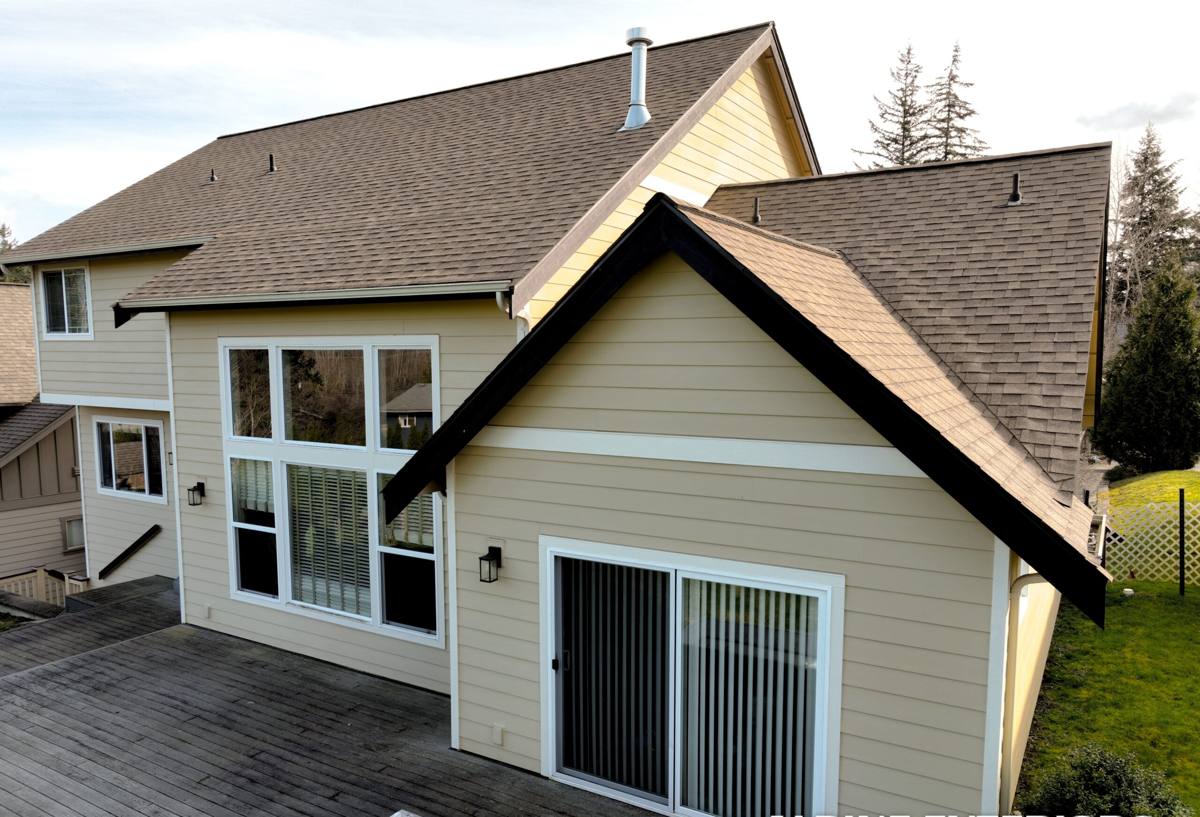
What "Correct" Window Replacement Actually Involves
A lot of window jobs look fine for the first year and then start failing at the two- to five-year mark. The window itself is rarely the problem — the installation is. Doing it right in a marine climate means paying attention to a few things that don't show up in a sales brochure.
Flashing and Moisture Management
Every window opening needs to be treated like it will eventually see water at the sill, no matter how well-caulked the exterior looks. That means a proper sill pan (sloped so water drains back out, not into the wall), correctly lapped flashing tape integrated with the house wrap, and head flashing that sheds water over the top of the unit rather than letting it pool. In a climate with sustained wind-driven rain, gravity alone won't keep water out — the flashing sequence has to assume wind will push moisture sideways and upward at times, not just straight down.
Air Sealing Behind the Frame
The gap between the window frame and the rough opening is where most heat loss and most hidden moisture problems start. It should be sealed with a low-expansion foam or backer rod and sealant, not packed with fiberglass insulation alone, which does little to stop air movement and can hold moisture against the frame if it ever gets wet.
Hardware and Fastener Selection
Salt air corrodes standard fasteners and hardware faster than most homeowners expect. Stainless or corrosion-resistant screws at the frame, and hardware finishes rated for coastal exposure, matter more in Grandview than they would twenty miles inland — this is one of the details that separates a window that still operates smoothly in year eight from one that's already sticking.
Choosing a Frame Material for This Exposure
There's no single "best" window material for every climate — the right choice depends on what the local conditions actually do to a frame over time. For Grandview's combination of salt air, sustained moisture, and temperature swings between damp winters and mild summers, here's how the common options stack up:
| Frame Material | Salt/Moisture Resistance | Maintenance | Typical Trade-offs |
|---|---|---|---|
| Vinyl (multi-chamber) | Very good — won't corrode or rot | Low | Frame profiles are thicker than fiberglass; color options are more limited |
| Fiberglass | Excellent — very low expansion/contraction, dimensionally stable | Low | Higher upfront cost than vinyl |
| Wood or wood-clad | Requires diligent upkeep near salt air and constant damp | High | Best appearance for some homes, but exterior wood or clad seams are the first thing coastal moisture attacks if maintenance lapses |
| Aluminum | Conducts cold and can corrode without a quality coating | Moderate | Poor thermal performance unless thermally broken |
Our default recommendation for most Grandview homes is a quality multi-chamber vinyl or a fiberglass frame, specifically because they don't give salt air and moisture a foothold. We're not against wood-clad windows on principle — it's a legitimate look many homeowners want — but we're honest that it comes with a maintenance schedule that has to be kept up in this environment, and we'll say so plainly rather than oversell it.
Glass Packages and Energy Ratings That Actually Matter Here
Whatcom County's climate is mild compared to a lot of the country, but it's persistently damp and overcast for long stretches, and heat retention is the bigger concern most of the year rather than blocking intense sun. That changes which numbers on the energy label matter most.
U-Factor Over Solar Heat Gain Coefficient
U-factor measures how well a window keeps heat inside the house — lower is better, and it's the number that matters most for a heating-dominated coastal climate like this one. Solar Heat Gain Coefficient (SHGC) matters too, but Grandview homes generally benefit from a moderate SHGC that still lets in some passive winter warmth on the clearer days, rather than the very low SHGC glass that makes more sense in a hot, sun-heavy climate.
Double vs. Triple Pane
Double-pane, low-E glass with an argon fill is the standard baseline and performs well for most Grandview homes. Triple-pane adds real performance and helps with sound dampening, at added cost and weight — it's worth discussing for north-facing rooms or homes closer to the water where wind exposure is highest, but it isn't a blanket necessity for every window on every house.
Look for NFRC Labels, Not Marketing Claims
Any legitimate energy-efficient window should carry an NFRC (National Fenestration Rating Council) label with independently tested U-factor, SHGC, and air leakage numbers. Manufacturer marketing language like "energy efficient" or "green" on its own means nothing without the label to back it up.
Signs Your Grandview Windows Are Already Underperforming
Homeowners often wait until a window visibly fails before calling anyone, but there are earlier warning signs worth acting on:
- Visible fogging or a cloudy haze between the panes — the seal has failed and the insulating gas is gone
- Condensation forming on the inside of the glass regularly, even when the house isn't especially humid
- A noticeable draft near the frame edge on windy days, especially on walls facing the water
- Hardware that's stiff, corroded, or requires force to lock and unlock
- Visible moss or dark staining building up on the exterior sill or trim below a window, which points to standing moisture
- Rooms near older single-pane or aluminum-frame windows that feel noticeably colder than the rest of the house
- Paint or trim peeling specifically around a window frame while the rest of the siding looks fine
Any one of these on its own isn't an emergency, but they're worth having looked at before the surrounding wall framing gets involved.
Our Installation Process for Grandview Homes
- On-site assessment. We check existing frame condition, look for signs of past water intrusion, and measure each opening — retrofit and full-frame replacements are assessed differently depending on what the existing structure allows.
- Product selection based on exposure. A window on a wall that takes direct wind-driven rain gets treated differently than one on a sheltered side of the house — we don't recommend the same spec for every opening by default.
- Removal and opening inspection. Once the old window is out, we check the rough opening and sheathing for hidden rot or moisture damage before anything new goes in. This is the point where problems from a previous install often surface.
- Sill pan and flashing installation. Sloped sill pan first, then flashing tape integrated correctly with the existing house wrap or building paper, lapped so water always sheds outward and downward.
- Window installation and air sealing. The unit is set, shimmed level and square, and the perimeter gap is sealed with low-expansion foam or backer rod and sealant — never packed solid with standard fiberglass insulation.
- Exterior trim and sealant finish. Corrosion-resistant fasteners, proper caulk joints, and trim details finished to shed water rather than trap it.
- Final function and seal check. Every sash and lock mechanism is operated and checked before we consider the job done.
Cost Factors for Grandview Window Projects
Window pricing varies a lot based on specifics, and we'd rather explain what actually drives the number than quote a figure that doesn't mean anything without context.
| Factor | How It Affects Cost |
|---|---|
| Frame material | Vinyl is typically the most budget-friendly; fiberglass and wood-clad cost more upfront |
| Retrofit vs. full-frame replacement | Full-frame costs more but is often necessary when there's existing rot or the opening needs correction |
| Glass package | Triple-pane and specialty coatings add cost over standard double-pane low-E |
| Number and size of openings | Larger units and multi-window projects have per-unit savings but higher total cost |
| Existing damage | Hidden rot or water damage found during removal adds repair scope that wasn't visible beforehand |
| Exterior trim complexity | Custom trim profiles or matching existing siding details takes more labor time |
Broad ranges exist for a reason — a single-window retrofit and a whole-house full-frame replacement with rot repair are simply not the same project. We'll walk through your specific windows and give you real numbers rather than a generic estimate that doesn't hold up once the job starts.
Why Hiring a Crew That Already Works Grandview Matters
Window installation looks similar on paper everywhere, but the details that actually matter — how aggressive the flashing needs to be, which frame materials hold up, how much salt exposure a given wall really gets — are learned by working this specific area over time, not from a general training manual. A crew that's done this work around Blaine and the rest of Whatcom County has already seen what happens to a poorly flashed window after a few wet winters and what a properly sealed one looks like a decade in. That's the kind of judgment that shows up in the details a homeowner never sees until something goes wrong — or doesn't.
If you're considering window replacement for a Grandview home, we're happy to take a look and give you a straightforward, no-pressure assessment of what your specific windows need. There's a form below to request a free estimate — no obligation, just an honest read on your situation.