 Blaine
 Window Replacement for Custer Homes: Doing It Right the First Time
Custer sits inland in the agricultural flatland of Whatcom County, north of Ferndale and a short drive from downtown Blaine, on open farmland and low-lying lots that don't get much of a wind break. Homes out here skip the direct salt spray a true waterfront property takes, but they still see plenty of salt-tinged marine air carried in on winter storms, long stretches of driving rain pushed sideways across open fields, and a moss season that can run most of the year on shaded siding and window trim. For windows specifically, that's a demanding combination, because a window unit isn't just glass and a frame — it's a seam in the building envelope, with moving hardware and a rough opening that has to stay sealed against everything the weather throws at it.
This page is about full window replacement — swapping out windows that have reached the end of their useful life, not patch repairs on a unit or two. A lot of Custer properties are older farmhouses, ranch homes, and manufactured or site-built houses from an era when window technology, sealing, and flashing practices were simpler than they are today. When several windows on a house are original, or when a first round of replacement windows installed decades ago is now failing, doing the job right usually means replacing the group as a coordinated project rather than swapping one unit at a time as each one finally gives out.
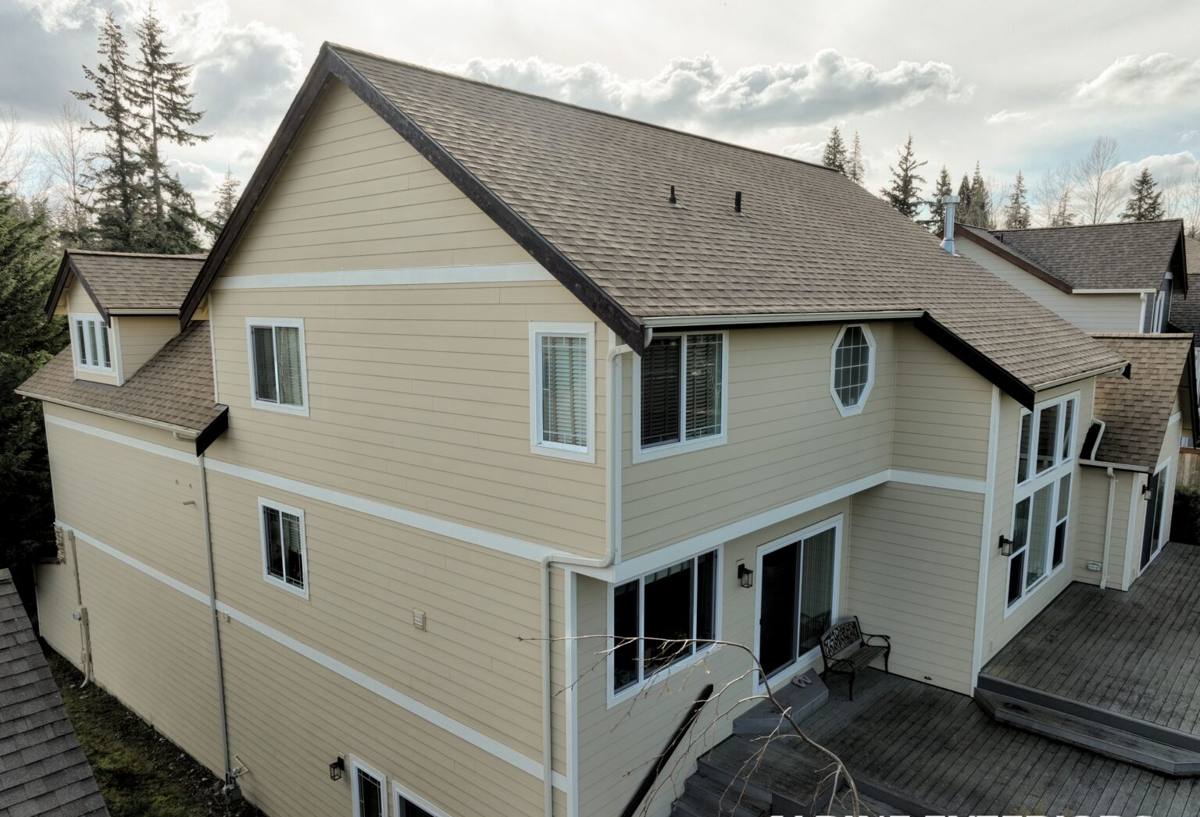
Why Older Custer Homes Are Ready for Full Replacement
Original Windows and Accumulated Wood Rot
A lot of the older housing stock around Custer still has original wood-frame windows, or first-generation aluminum units, that were never built to modern sealing or insulation standards. Decades of Whatcom County's driving rain and damp winters take a steady toll on painted wood sills and frames, and once rot sets into the wood around a window opening, no amount of caulking or weatherstripping fixes the underlying problem. At that point the window isn't underperforming — it's failing, and it's usually taking part of the surrounding wall framing with it.
Early Double-Pane Windows Losing Their Seal
Homes that already went through one round of window upgrades, often in the 1980s or 1990s, are now hitting the point where the insulated glass units are failing. Seal failure shows up as fogging or a hazy film between the panes that never wipes off, because moisture has worked its way into the gap and the argon or air fill that used to insulate the glass is gone. Those windows still look intact from the yard, but they've stopped doing the job they were installed to do.
Doing the Whole Group at Once
Replacing windows one at a time as each one fails usually costs more over the life of a house than planning a coordinated replacement, because every visit carries its own setup, trim work, and disruption. It also means living with mismatched window ages and performance for years. When several windows on a Custer home are showing their age together, a single project — planned around size, budget, and which rooms matter most — is almost always the more efficient path.
What Custer's Weather Demands From a New Window
Wind-Driven Rain Across Open Farmland
Flat, open agricultural land doesn't slow wind down the way a tree-lined in-town lot does, and storms moving through this part of Whatcom County push rain sideways into exposed walls instead of straight down. A new window has to be installed with that in mind — flashing that laps correctly with the surrounding wall, sealed on every seam, so wind-driven rain never gets a path behind the frame in the first place.
Marine Air Reaching Inland
Custer is set back from the water, but marine-influenced air still travels inland on winter systems, carrying enough salt content to speed up corrosion on lower-grade window hardware and fasteners over time. It's a slower process than what a waterfront home in Blaine or Birch Bay deals with directly, but it adds up, and it's part of why hardware grade matters even on a property that never sees actual salt spray.
A Long Moss and Mildew Season
Mild temperatures and near-constant fall-through-spring moisture give moss and mildew a growing season that stretches across most of the year in Whatcom County. Window sills, trim, and any wood left exposed around a frame are common places it takes hold first, especially on shaded or north-facing elevations. New window products and trim details that shed water instead of holding it make a real difference here.
Full-Frame vs. Insert Replacement
Not every window replacement is the same kind of job. The two main approaches are full-frame replacement, where the old frame comes out down to the rough opening, and insert (or pocket) replacement, where a new window is fitted into the existing frame. Which one makes sense depends on the condition of what's already there.
| Factor | Insert Replacement | Full-Frame Replacement |
|---|---|---|
| Existing frame condition | Sound, no rot or damage | Damaged, rotted, or out of square |
| Labor and disruption | Lower — faster, less trim work | Higher — more involved, more trim rebuild |
| Access to flashing and framing | Limited — works within the old frame | Full — flashing and rough opening fully addressed |
| Best fit | Newer homes with sound original frames | Older Custer homes with wood rot or failed original flashing |
A lot of older Custer properties end up needing full-frame replacement once we're actually into the opening, even when the plan going in was an insert job, because the rot or flashing failure underneath isn't always visible from outside. We'll always tell you plainly which approach a given window needs and why, rather than defaulting to whichever is faster.
What a Correct Installation Actually Involves
The window product matters, but installation quality is what determines whether it performs for one wet Whatcom County winter or several decades. A correct replacement includes:
- Full removal and inspection of the old unit and surrounding framing, checking for hidden rot or moisture damage before anything new goes in
- Flashing that laps correctly with the weather-resistive barrier and siding, so water is directed out and away from the rough opening rather than trapped behind it
- Proper shimming and squaring of the new unit so the sash operates smoothly and the seal isn't compromised by an out-of-plane installation
- Low-expansion foam or approved insulation around the frame perimeter, avoiding gaps that create drafts or cold spots
- Sealed, weather-rated caulking at every exterior seam, used as a supplement to flashing rather than a substitute for it
- Interior and exterior trim finished to match the surrounding wall, with attention to how it sheds water on the exterior side
Caulk alone is one of the most common shortcuts we find undone on older Custer homes — it was used in place of real flashing rather than alongside it, and caulk by itself cracks and fails well before the window it's supposed to be protecting does.
Choosing Window Products for This Climate
We install vinyl and fiberglass window systems built for the Pacific Northwest's wet, mild climate, and we walk homeowners through the real trade-offs rather than steering everyone toward one product. Wood-frame windows without cladding require far more upkeep in a climate this damp, which is why we standardize on low-maintenance frame materials for long-term performance rather than a material that needs regular repainting and sealing to hold up. A few things worth understanding when comparing options:
- U-factor: This measures how well a window resists heat loss — lower is better for a cold, damp climate like Whatcom County's winters.
- Glazing package: Double-pane with a low-E coating is the practical baseline here; triple-pane adds cost and is worth it mainly for particularly exposed or noise-sensitive rooms.
- Hardware grade: Corrosion-resistant hardware holds up longer against the marine air that reaches inland to Custer than standard-grade hardware.
- Warranty structure: A manufacturer's product warranty only covers the product — we stand behind our installation work separately, since most window failures we see trace back to installation, not the unit itself.
Cost Factors for a Custer Window Replacement Project
| Factor | Why It Matters |
|---|---|
| Number of windows | Whole-home projects typically cost less per window than piecemeal replacement over time |
| Full-frame vs. insert | Full-frame requires more labor and trim work but is often necessary once rot or flashing failure is found |
| Frame material and glazing package | Vinyl, fiberglass, glazing tier, and hardware grade all affect the per-unit price |
| Custom sizing | Non-standard openings, common in older farmhouses, require custom-built units and longer lead times |
| Trim and exterior finish work | Matching existing trim or siding around each opening adds labor beyond the window itself |
These are the drivers, not a quote — every Custer home is a little different once we're actually measuring openings and looking at what's behind the existing trim. We walk the property and give you real numbers before any commitment.
Our Window Replacement Process
We start with an on-site assessment of every window being considered for replacement, checking frame condition, seal integrity, and how the existing flashing ties into the siding around each opening. From there we give a straightforward read on full-frame versus insert replacement for each unit, walk through product options within your budget, and put together a written scope before ordering anything. Because custom-sized windows for older openings can take several weeks to arrive, we plan the schedule around that lead time from the start rather than surprising you with it later. Installation follows the same flashing, insulation, and sealing standard on every window, and we finish with interior and exterior trim work and a walkthrough before calling the job done.
Why a Crew That Already Works Custer Matters
A contractor who works this stretch of Whatcom County regularly already knows how open-field wind exposure and inland marine air behave here, compared to a more sheltered in-town lot or a true waterfront property closer to Blaine. That experience shows up in decisions that aren't always obvious from a quote sheet — how much flashing lap a given wall orientation needs, which hardware grade is worth specifying for a property this exposed to wind, and how to sequence a whole-home project so your house isn't sitting open to the weather longer than necessary. It also means fewer surprises with permitting questions and realistic scheduling around the wetter months, since we're not learning this part of the county for the first time on your job.
Get a Free, No-Pressure Estimate
If your Custer home has original or aging windows that are drafty, foggy, hard to operate, or simply past their working life, we're glad to take a look and give you a straightforward read on what full replacement would actually involve — no pressure, no upsell script. Reach out using the form below to schedule a free estimate.