 Blaine
 Custer Roofs Take a Different Kind of Beating
Custer sits a few miles inland from Blaine, but that doesn't mean the roofs here get an easier ride than the ones closer to the water. Wind off the Strait of Georgia and Drayton Harbor still funnels across the open farmland and tree lines around Custer, and it carries salt-laden moisture with it. Add Whatcom County's long, wet fall-through-spring stretch and you get a roof that's rarely given a real chance to dry out. That combination — wind, salt air, and sustained damp — is exactly what breaks roofs down faster than their rated lifespan would suggest.
Storm damage in this area isn't usually one dramatic event. It's often a windstorm that lifts a few shingle tabs, followed by weeks of rain finding that opening, followed by moss quietly working its way into the gap before anyone notices a stain on the ceiling. By the time a homeowner sees the damage inside, the roof has usually been compromised for a while.
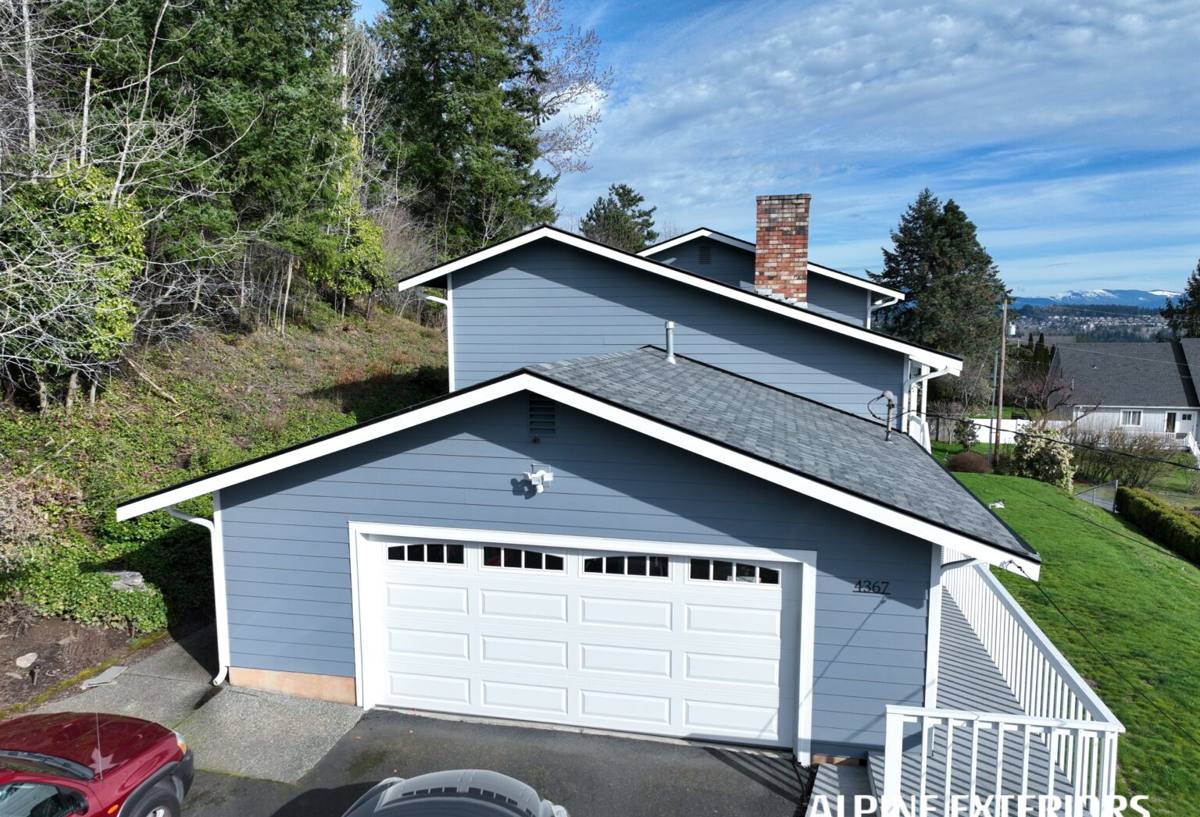
What Actually Counts as Storm Damage Here
"Storm damage" covers more than a hole punched by a falling branch. In Custer, the storm-related issues we see most often include:
- Wind-lifted or torn shingle tabs, especially along ridge lines and roof edges where uplift is strongest
- Flashing knocked loose or bent around chimneys, skylights, and roof-to-wall transitions
- Granule loss from wind-driven rain, which thins a shingle's protective layer even without visible tearing
- Moss colonies that took hold after a storm loosened a shingle's seal, then spread and held moisture against the roof deck
- Gutter and downspout damage that lets storm runoff back up under the roof edge instead of draining away
- Fastener pull-through, where repeated wind gusts work nails loose over several storms rather than one
Some of this is obvious from the ground. Much of it isn't. A shingle that looks intact from the driveway can already have a broken seal or exposed nail head that only shows up on a close inspection.
Why Salt Air and Moss Complicate the Repair
Two things make Whatcom County storm repairs different from a drier inland climate. First, salt-laden air accelerates corrosion on exposed metal — flashing, fasteners, and gutter hardware wear out faster here than the manufacturer's general lifespan estimates assume. A repair that ignores the metal components and only replaces shingles is a repair that will need to be revisited sooner than it should.
Second, moss doesn't just sit on top of a roof looking bad. It holds moisture against the shingle surface and roof deck for months at a time, and it works into any gap a storm has already opened. A storm-damaged spot that would dry out and cause minimal harm in a drier climate can turn into rot in Custer simply because the moss and the wet season give it time to do damage. That's why a proper storm repair here has to address both the immediate damage and the conditions that let it get worse.
What a Correct Storm Damage Repair Involves
Full Inspection, Not Just a Patch
A rushed repair replaces the shingles you can see are torn and calls it done. A correct one starts by checking the surrounding area — the shingles adjacent to the damage, the flashing nearby, and the roof deck underneath. Wind and water damage rarely stays confined to the exact spot that looks bad.
Deck Condition Check
If water has been getting under the roofing for any length of time, the plywood or OSB deck underneath may be soft, delaminating, or starting to rot. Shingles laid over a compromised deck won't hold their seal or their warranty. This is the step that separates a repair that lasts from one that fails again in the next storm season.
Matching Materials
Whenever possible, a repair should use shingles that match your existing roof in profile, weight, and as close to color as the product line allows. A visibly mismatched patch isn't just a cosmetic issue — it can also indicate a lower-grade product was substituted, which won't weather the same way as the rest of the roof.
Flashing and Underlayment
Any flashing disturbed by the storm or the repair itself gets reset or replaced, not just re-caulked. Underlayment in the repaired section should be intact and properly lapped, since that's the actual water barrier if a shingle ever fails again.
Repair or Replace: How We Help You Decide
Not every storm-damaged roof needs to come off. But a repair on a roof that's already near the end of its service life is often money spent to buy a year or two, not a real fix. Here's how we weigh it:
| Factor | Points Toward Repair | Points Toward Replacement |
|---|---|---|
| Roof age | Under roughly 12-15 years | Nearing or past manufacturer's expected lifespan |
| Extent of damage | Isolated to one section or slope | Spread across multiple slopes or the whole roof |
| Deck condition | Solid, dry decking under the damage | Soft spots, rot, or repeated moisture intrusion found |
| Storm history | First significant damage in several years | Recurring repairs after multiple storm seasons |
| Moss and staining | Localized, recently established | Widespread moss with visible granule loss across the roof |
We'll walk you through where your roof lands on this before recommending either option — the goal is an honest answer, not the bigger invoice.
Our Process, Start to Finish
- Contact and scheduling. Tell us what you're seeing — a leak, missing shingles, storm debris — and we'll get someone out to look at it.
- On-roof inspection. We check the damaged area and the surrounding roof, including flashing, deck condition where accessible, and gutter drainage.
- Written scope and estimate. You get a clear explanation of what's damaged, what needs to happen, and what it costs — no pressure to upsell into a full replacement if a repair will genuinely hold.
- Repair work. Damaged materials come off, the deck is checked and addressed if needed, and new materials go in matched as closely as possible to your existing roof.
- Final walkthrough. We confirm the repair with you before we consider the job finished, including photos of the completed work for your records.
Insurance Claims: What We Can and Can't Do
Many storm repairs in this area involve a homeowner's insurance claim. We can document damage clearly, provide a detailed written estimate, and meet an adjuster on site if that's helpful. What we won't do is inflate a scope of work to match a claim number or write up damage that isn't actually there — that's not a service to you, and it's the kind of thing that causes problems with insurers down the line. A straight, accurate estimate serves you better in a claim than an exaggerated one.
After a Storm: What to Check From the Ground
Before anyone gets on a ladder, there's a lot you can safely observe from the yard:
- Shingle pieces or granules collected in gutters, downspouts, or on the ground
- Visible gaps, curled edges, or discoloration on roof slopes you can see from the ground
- Flashing that looks bent or separated around the chimney or any roof penetrations
- Fresh moss growth or dark streaking that wasn't there before the storm
- Water stains on ceilings or ridges of dampness in the attic after the storm passes
- Debris — branches, fencing, siding pieces — resting on the roof surface
If you see any of these, avoid the urge to climb up and inspect it yourself, especially on a wet roof. Whatcom County's rain doesn't give roofs much time to dry between storms, and a wet shingle surface is genuinely dangerous underfoot.
Why It Matters That We Already Work in Custer
A repair crew that's worked roofs throughout Custer and the greater Blaine area knows what the salt air and moss season actually do over time, not just in theory. We know which flashing details tend to fail first in this climate, how fast moss can re-establish after a partial cleaning, and what a properly matched repair should look like on the shingle lines common to this area. That local pattern recognition is the difference between a repair that addresses the real cause and one that just covers the visible symptom.
Being local also means a faster response when storm season hits and a lot of roofs need attention at once. We're not driving in from out of the county to look at your roof once and disappear — we're available if the repair needs a follow-up check after the next big blow.
If a recent storm has left your Custer home with missing shingles, a new leak, or roof damage you're not sure how to assess, we're glad to take a look. Reach out for a free, no-pressure estimate using the form below.