 Blaine
 Roofing Built for Blaine Harbor's Marine Climate
Homes near Blaine Harbor sit close enough to the water that the roof takes a different kind of beating than a house ten miles inland. Salt-laden air off the harbor accelerates corrosion on exposed metal fasteners and flashing. Driving rain off Semiahmoo Bay and the Strait finds every weak seam in a roof system, not just the shingles themselves. And Whatcom County's long, cool, wet stretch from fall through spring gives moss and moisture months to work on a roof before a dry season ever arrives to let it recover. Asphalt shingle roofing done right in this pocket of Blaine isn't just about picking a shingle color — it's about detailing the whole system so it sheds water fast, resists salt corrosion, and doesn't hold moisture against the deck.
We work Blaine Harbor and the surrounding area regularly, which means we're not guessing at what this climate does to a roof over ten or fifteen years. We're the ones who get called back to look at what went wrong on roofs installed by crews who don't work this coastline day to day.
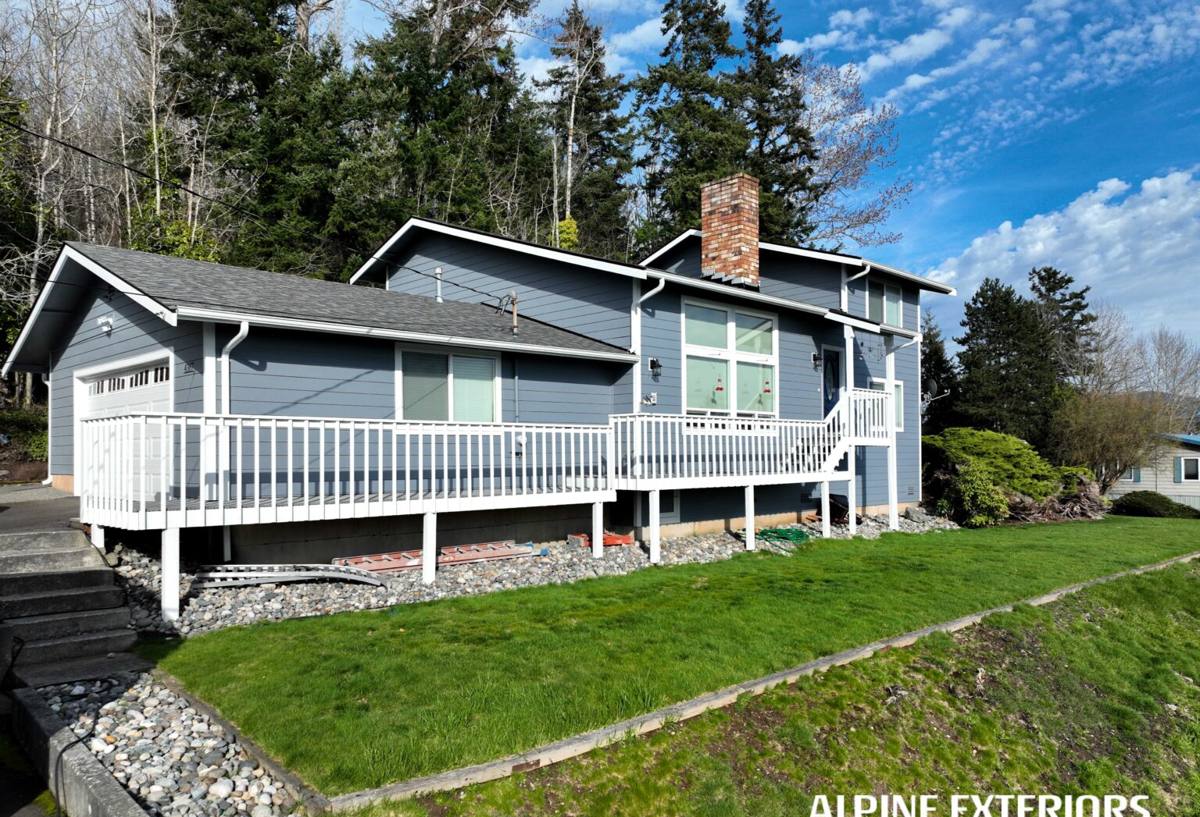
What Salt Air and Moisture Actually Do to a Roof Here
Salt Air and Metal Components
Asphalt shingles themselves are fairly inert to salt, but the metal parts of a roof system are not. Flashing, drip edge, nails, vent stacks, and gutter hardware all corrode faster within a mile or two of open water. Cheaper electro-galvanized fasteners can start showing rust streaks and weakening within a handful of years in a harbor-adjacent yard. This is a material selection issue, not a workmanship shortcut — it matters which flashing and fastener grade goes on the roof, not just how it's nailed down.
Driving Rain and Wind-Driven Water
Storms moving in off the water frequently push rain sideways, not straight down. That means underlayment quality, shingle sealing, and flashing laps at valleys, walls, and penetrations matter more here than they would in a calmer inland climate. A roof that would perform fine in a drier region can leak at Blaine Harbor if those details are cut corners.
Moss, Shade, and the Long Wet Season
Whatcom County's roofs stay damp for a large part of the year, and many Blaine Harbor lots have mature trees or northern exposures that keep parts of the roof shaded and slow to dry. Moss and algae take hold in those damp, shaded zones first, and once established they lift shingle edges, trap moisture against the granule surface, and shorten the shingle's usable life. A roof designed for this area accounts for moss risk from day one — not as an afterthought once it's already growing.
What a Correctly Installed Asphalt Shingle Roof Includes
A shingle roof is a system, not a single product. Skipping or downgrading any one layer is usually where the leaks and premature wear start. For a Blaine Harbor home, we treat these as non-negotiable:
- Full tear-off to sound decking whenever the existing roof has more than one layer or the deck shows soft spots — layering over a failing roof just hides problems
- Deck inspection and repair or replacement of any water-damaged sheathing before anything new goes down
- Ice-and-water shield or equivalent self-adhered membrane at eaves, valleys, and around every penetration, given how often wind-driven rain and occasional freeze events hit this coastline
- Synthetic underlayment across the full field for a secondary water barrier under the shingles
- Corrosion-resistant flashing and fasteners suited to a marine-influenced environment, not generic inland-grade hardware
- Proper valley, wall, and chimney flashing laps installed shingle-style so water is always directed down and out, never trapped
- Balanced intake and exhaust ventilation so the attic can dry out between wet spells instead of holding moisture against the deck from underneath
- Manufacturer-specified nailing pattern and exposure, since under-nailing or high-nailing is a leading cause of early wind and rain failure
Choosing Shingles for a Coastal Whatcom County Home
Not every asphalt shingle product is built the same, and for a harbor-adjacent home the differences matter more than the color swatch. We generally steer Blaine Harbor homeowners toward architectural (laminated) shingles over basic three-tab options, and toward products with strong algae-resistant granule warranties given how much moss and algae pressure this climate puts on a roof.
| Factor | 3-Tab Shingles | Architectural Shingles |
|---|---|---|
| Wind rating | Lower, more vulnerable to lifting in driving coastal storms | Higher rated, better performance in gusty harbor weather |
| Moss/algae resistance | Basic granules, shorter resistance window | Often available with enhanced algae-resistant granules |
| Expected lifespan (this climate) | Shorter, moisture and salt exposure shorten it further | Longer, better suited to sustained wet-season exposure |
| Appearance | Flat, uniform look | Dimensional, heavier shadow lines |
| Upfront cost | Lower | Moderate premium, generally worth it long-term here |
We're happy to install either product where it fits the home and budget, but our professional standard is to explain these trade-offs plainly rather than let a homeowner find out the hard way three winters in.
Our Process for a Blaine Harbor Roof
1. On-Site Assessment
We walk the roof and attic, not just the ground-level view. That means checking deck condition, existing ventilation, flashing condition around chimneys and walls, and moss or moisture patterns specific to the lot's shade and wind exposure.
2. Straightforward Written Estimate
You get a clear scope — tear-off or overlay, underlayment and flashing specs, shingle product, ventilation work, and a real number, not a vague range that changes once the crew shows up.
3. Tear-Off and Deck Repair
Old material comes off down to the deck. Any soft, delaminated, or water-stained sheathing gets replaced before new underlayment goes down — this is the step that gets skipped by crews trying to move fast, and it's the one that causes early leaks.
4. Underlayment, Flashing, and Shingle Installation
Self-adhered membrane at vulnerable zones, synthetic underlayment across the field, corrosion-resistant flashing at every transition, then shingles installed to the manufacturer's nailing and exposure spec.
5. Ventilation Check and Cleanup
We confirm intake and exhaust venting is balanced for the attic size, then do a full site cleanup including a magnetic sweep for stray fasteners.
6. Walkthrough
We walk the finished roof and the details with you before calling the job done, so you know what was done and why.
Maintenance That Actually Matters in This Climate
A well-installed shingle roof in Blaine Harbor still needs some seasonal attention given the moss and moisture load. The goal is catching small issues — a lifted shingle tab, a clogged gutter backing water up under the eave, a moss patch starting in a shaded valley — before they turn into deck damage.
- Keep gutters clear, especially heading into the fall storm season, so water isn't backing up under the shingle edge
- Have moss physically and gently removed rather than left to spread, and treated preventively in shaded zones prone to regrowth
- Trim back overhanging branches that keep sections of the roof shaded and slow to dry
- Schedule a visual inspection after major windstorms, since wind-driven rain events are when marginal flashing or sealing details tend to show themselves
- Watch for granule buildup in gutters or downspouts, which can signal a shingle surface nearing the end of its service life
Why a Roof That's Fine Inland Can Fail at the Harbor
We've been called to look at roofs installed by out-of-area or one-time crews that used inland-grade fasteners, skipped extra underlayment at valleys, or didn't account for moss risk on a shaded north slope. None of those choices are dramatic mistakes on their own — they're just decisions that don't hold up when the roof sits this close to salt air and gets this much sustained wet weather. A roof built to a generic regional standard, not this specific stretch of Whatcom County coastline, is where premature flashing corrosion, moss-driven granule loss, and wind-driven leaks tend to start.
Why Hire a Crew That Already Works Blaine Harbor
A roofing crew that regularly works this part of Blaine already knows which fastener and flashing grade holds up near the water, which lots tend to hold moss longest based on tree cover and sun exposure, and which valley and wall details actually stop wind-driven rain in a real Pacific storm. That local pattern recognition is the difference between a roof that's installed to code and one that's installed to actually last in this specific environment. We're not learning Blaine Harbor's climate on your roof — we already know it.
Get a Free, No-Pressure Estimate
If your Blaine Harbor home needs a new roof, a repair, or just an honest opinion on what shape your current shingles are in, we're glad to take a look. Use the form below to request a free estimate — no pressure, no obligation, just a straight answer about what your roof actually needs.