 Blaine
 Roofing on an Exclave: Why Point Roberts Asks More of a Roof
Point Roberts is a strange piece of geography. It's part of Whatcom County and part of the United States, but the only way to drive there is through Canada. That isolation shapes a lot about how homes get built and maintained out on the point, and roofing is no exception. Materials, crews, and equipment all have to cross the border to get there, which means scheduling and logistics matter more here than almost anywhere else in our service area.
The bigger factor, though, is the climate sitting right on top of that geography. Point Roberts is surrounded on three sides by the Strait of Georgia and Boundary Bay, so nearly every home is within a short distance of open salt water. Add in wind-driven rain off the water, heavy tree cover on many lots, and the gray, damp stretch that runs from fall through spring, and you've got a roofing environment that punishes a lazy install a lot faster than it would on a dry, sheltered lot fifteen miles inland.
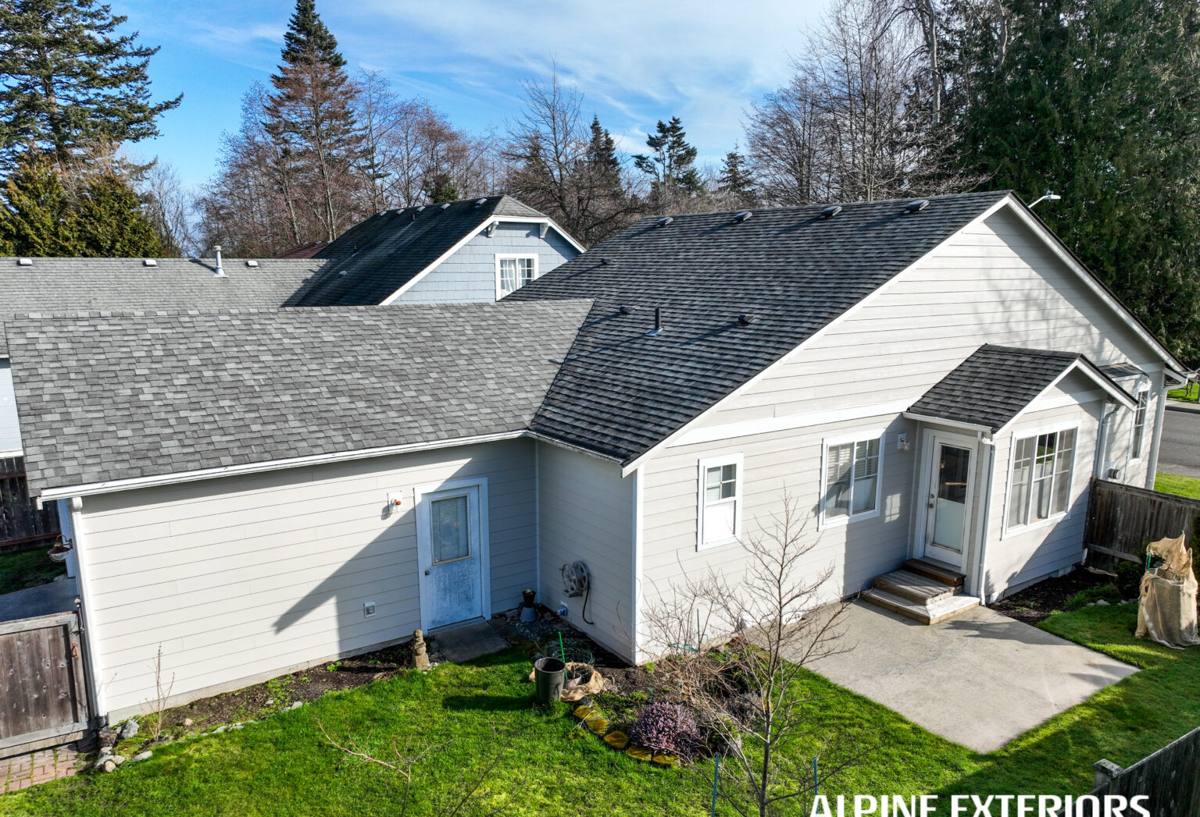
What Salt Air, Driving Rain, and Moss Actually Do to a Shingle Roof
Salt Air
Salt-laden air doesn't just affect metal flashing and fasteners, though that's part of it. Airborne salt also degrades the mineral granules on shingles a little faster over time and accelerates corrosion on exposed nail heads, vent stacks, and metal drip edge. A roof a few blocks from the water needs corrosion-resistant fasteners and flashing details that a roof twenty miles inland can get away without.
Driving Rain
Point Roberts catches weather straight off the Strait, and storms here tend to push rain sideways instead of straight down. That matters because a shingle roof isn't just shedding water downhill — it's fighting water trying to work sideways and upward under the shingle edge. Underlayment quality, shingle sealing, and detail work at valleys, eaves, and penetrations carry a lot more weight in a driving-rain climate than they do in a calm one.
Moss
Between the marine humidity and the number of shaded, tree-lined lots on the point, moss pressure here is real and constant. Moss isn't just cosmetic — it holds moisture against the shingle surface, works its way under shingle edges as it grows, and can lift tabs enough to let wind and rain in behind them. A roof that isn't kept clear of moss will age noticeably faster than one that is, regardless of the shingle brand installed.
What a Correct Asphalt Shingle Job Looks Like Out Here
A shingle roof is a system, not just a layer of shingles nailed to plywood. In a climate like Point Roberts', every layer in that system earns its keep:
- Deck inspection and repair — any soft, delaminated, or moisture-damaged sheathing gets replaced before anything new goes down, not covered up.
- Ice-and-water shield or synthetic underlayment at eaves, valleys, and around penetrations, sized for a climate where wind-driven rain is normal, not rare.
- Corrosion-resistant flashing and fasteners — a real consideration this close to salt water, not an upgrade you can skip.
- Proper nailing pattern matched to the shingle manufacturer's wind rating, since a mis-nailed shingle is the single most common cause of early wind and rain failure.
- Balanced attic ventilation so moist interior air isn't condensing against the underside of the deck through our long damp season.
- Clean valley, eave, and penetration detailing, since these are where driving rain finds its way in first.
Skip any one of these and the shingles on top can look fine for a while and still fail early. Most of the roof problems we get called out for on the point trace back to a shortcut in one of these details, not a bad batch of shingles.
Signs a Point Roberts Roof Needs a Closer Look
Because of the tree cover and salt exposure here, roofs on the point often show trouble sooner than the same age roof would elsewhere in Whatcom County. Worth checking for, especially after the wet season:
- Moss or dark streaking building up along the shaded slopes or north-facing sections of the roof
- Granules collecting in gutters or at downspout outlets
- Shingle tabs that look curled, cupped, or lifted at the edges
- Rust staining around vent stacks, flashing, or exposed fasteners
- Soft or discolored ceiling drywall, especially near exterior walls or chimneys
- Daylight visible around flashing when viewed from the attic
None of these mean an automatic full replacement. Some are maintenance items; some point to a repair; a few mean the roof is genuinely near the end of its service life. The honest answer depends on what's actually happening under the shingles, which is why a real inspection matters more than guessing from the ground.
Choosing a Shingle for This Climate
Asphalt shingles aren't all built for the same conditions. For a Point Roberts home, wind rating and algae/moss resistance matter more than they would on a dry inland lot, and it's worth weighing those against upfront cost.
| Shingle Type | Typical Wind Rating | Typical Lifespan | Best Fit |
|---|---|---|---|
| 3-tab | Lower end of the range | Shorter | Budget-conscious projects on more sheltered lots |
| Architectural / dimensional | Mid to high | Mid to long | Most Point Roberts homes; good balance of durability and cost |
| Impact-rated / high-wind | High | Long | Exposed, waterfront, or storm-exposed lots |
Algae-resistant shingles, which use copper- or zinc-infused granules to slow moss and algae growth, are worth the small upcharge on nearly every roof out here given how much shade and moisture the area gets. They don't make a roof moss-proof, but they buy meaningful time between cleanings.
Cost Factors Worth Understanding Up Front
| Factor | Why It Moves the Price |
|---|---|
| Roof pitch and accessibility | Steeper or harder-to-reach roofs take longer and need more safety setup |
| Deck condition | Rotten or delaminated sheathing found underneath adds material and labor |
| Number of penetrations and valleys | More flashing detail work means more labor hours |
| Layers being removed | Tear-off of an existing roof adds disposal and labor cost over a fresh deck |
| Shingle class chosen | Higher wind rating and algae resistance cost more per square but last longer |
We'd rather walk a homeowner through these factors honestly during an estimate than throw out a number that doesn't hold up once we're actually on the roof.
How We Work in Point Roberts
Working on the point means planning ahead in a way that other jobs in Whatcom County don't require. Crews and material deliveries cross the border to get there, so we build that into scheduling rather than treating it as a surprise on install day. We also plan material staging and disposal hauls as full trips rather than back-and-forth runs, which keeps a project moving efficiently once we start rather than stretching it out.
Because we already work regularly in Point Roberts, we're not learning the area's quirks on your job. We know what the salt exposure does to fasteners and flashing near the water, how much of a head start moss gets on shaded, tree-covered lots, and how a driving rain off the Strait tests a roof's weak points. That local familiarity shows up in the details — the flashing choices, the underlayment coverage, the nailing pattern — not just in the finished look of the shingles.
Maintenance That Actually Extends the Roof's Life Here
A well-installed asphalt shingle roof in this climate still needs periodic attention, not because the install was wrong but because the environment doesn't let up. A reasonable maintenance rhythm for a Point Roberts home includes:
- Gutter and downspout clearing at least once a year, more often on heavily treed lots
- Moss removal using proper methods before it establishes under shingle tabs, not after
- A visual check of flashing and vent boots for corrosion or lifted edges every year or two
- Prompt attention to any interior water staining rather than waiting to see if it "dries up" on its own
Pressure washing a shingle roof is not part of that list — it strips granules and shortens the roof's life rather than protecting it. Moss and debris removal should be done with methods that don't damage the shingle surface.
Why the Crew Matters as Much as the Shingle
Two roofs can go up with the same shingle brand and age very differently depending on who installed them and how well the details underneath were handled. In a climate that combines salt air, driving rain, and heavy moss pressure, that gap shows up faster than it would in a milder location. A contractor who already works Point Roberts regularly isn't guessing at how to detail a valley for wind-driven rain or which fasteners hold up near the water — that knowledge comes from doing the work here repeatedly, not from a manufacturer's install manual alone.
If you're weighing a repair, a re-roof, or just want an honest read on how much life is left in your current shingles, we're happy to take a look. There's a free, no-pressure estimate form below whenever you're ready.