 Blaine
 Why Birch Point's Setting Is Hard on Siding
Birch Point sits close to the water on the western edge of Whatcom County, and that proximity comes with a trade-off. The same exposure that makes the setting desirable also means homes here take a steady beating from salt-laden air, wind-driven rain coming off the water, and a moss season that can run most of the year in this part of the Pacific Northwest. Siding that would hold up fine twenty miles inland doesn't always perform the same way a few hundred feet from open water.
Salt air is corrosive to exposed metal fasteners and trim, and it accelerates the breakdown of paint films and caulk joints. Driving rain doesn't just wet the siding surface — on a home facing the water, wind pressure can force moisture up and under lap joints and around penetrations that would stay dry in a calmer inland location. And Whatcom County's damp, moderate climate keeps moss and algae growing on north- and shade-facing walls for much of the year, which holds moisture against the siding surface longer than homeowners realize.
What This Means for Material Choice
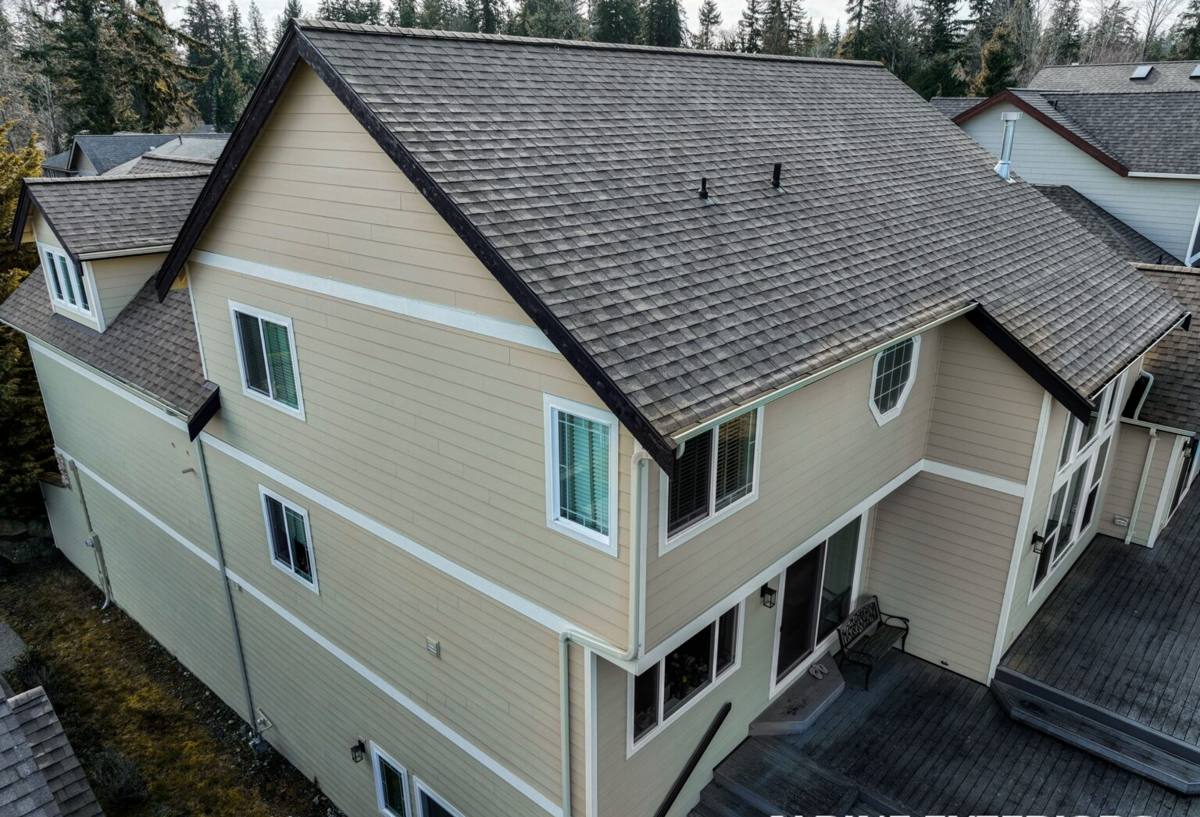
None of this is unusual for coastal Blaine — it's simply the baseline a siding product has to handle here. That's why we install fiber cement exclusively, and specifically James Hardie's engineered lines built for this climate zone, rather than vinyl, wood, or other fiber cement brands. The material has to resist moisture intrusion, hold paint and color without excessive maintenance, and stay dimensionally stable through wet-dry cycles year after year.
Why James Hardie Fiber Cement Fits This Climate
James Hardie manufactures region-specific product lines, and homes in coastal Washington get the HZ5 formulation — engineered for climates with prolonged moisture exposure and freeze-thaw cycling. It's denser and more moisture-resistant than the HZ10 product sold in hot, dry regions, which matters directly for a property exposed to the kind of weather Birch Point sees.
Fiber cement itself is a mix of Portland cement, sand, and cellulose fibers, pressed and cured into a rigid board. Unlike wood, it doesn't provide a food source for rot or insects. Unlike vinyl, it doesn't expand and contract enough in temperature swings to work fasteners loose over time, and it won't warp or soften from constant damp exposure. It's also non-combustible, which matters increasingly for insurance underwriting in Washington regardless of proximity to wildfire zones.
The Factory Finish Matters as Much as the Board
Most of the long-term performance difference between fiber cement products comes down to the finish, not just the substrate. James Hardie's ColorPlus finish is baked on at the factory under controlled conditions, which produces better adhesion and UV resistance than field-applied paint. In a salt air environment, that finish is doing real work — it's the layer standing between the board and airborne salt, moisture, and constant moss exposure. A factory finish backed by a real product warranty is worth more here than it would be in a drier, more sheltered location.
What a Correct Installation Involves
Fiber cement siding fails in coastal climates almost exclusively because of installation shortcuts, not because the product itself is inadequate. The board is only as good as the water management system built behind it. On a home exposed to driving rain off the water, every one of the following details matters more than it would on a sheltered inland lot.
- A drainage plane or rainscreen gap behind the siding so any moisture that gets past the surface has somewhere to go besides the sheathing
- Correct flashing at every window, door, and roof-to-wall intersection, lapped so water sheds outward at each layer
- Fasteners driven to the manufacturer's specified depth and pattern — overdriven or underdriven nails are one of the most common causes of early siding failure
- Proper lap and gap spacing at butt joints, with sealant only where Hardie's install specs actually call for it
- Clearance between the bottom edge of the siding and grade, decks, patios, and roof lines to keep splash-back and standing water off the board
- Caulking and touch-up paint matched to the ColorPlus finish system so warranty coverage isn't compromised
Why Fastening and Flashing Details Are Non-Negotiable Here
On a property that takes direct wind-driven rain, a flashing detail that's "close enough" inland can become a chronic leak point at the water. The margin for error is smaller. This is the main reason we don't treat installation as a generic checklist — every Birch Point job gets water management details sized to the specific exposure of that wall, not a one-size-fits-all approach.
Reading the Signs Your Current Siding Is Losing
Homeowners in Birch Point usually come to us after noticing one or more of these signs, often on the walls facing the water or shaded from direct sun:
- Persistent moss or dark algae streaking that returns within weeks of cleaning
- Paint that's chalking, peeling, or losing adhesion faster than it should
- Soft spots, bubbling, or visible swelling, especially near the bottom courses or around trim
- Caulk joints that have cracked, shrunk, or pulled away from the siding
- Rust staining running down from fastener heads or metal flashing
- A musty smell or visible staining on interior walls that back up to exterior siding
Any of these can show up years before a full failure, and catching them early is almost always cheaper than waiting. If you're seeing more than one of these at once, it's worth having the wall assembly looked at rather than just addressing the surface symptom.
James Hardie Product Lines We Install
We install the full James Hardie lineup and match the product to the home's style and exposure rather than defaulting to one option everywhere on a project.
| Product | Best Use | Notes for Coastal Exposure |
|---|---|---|
| HardiePlank Lap Siding | Primary wall cladding, most home styles | Most common choice; HZ5 formulation handles wind-driven rain well |
| HardiePanel Vertical Siding | Modern facades, accent walls, gables | Fewer horizontal laps means fewer joints for water to find |
| HardieShingle | Craftsman and cottage-style accents | Works well for gable or dormer accents on waterfront-style homes |
| HardieTrim | Corners, fascia, window and door trim | Keeps trim material consistent with the siding's moisture resistance |
Color and Finish Considerations Near the Water
ColorPlus finishes come in a range of factory colors, and darker tones will show mineral deposits or salt residue a bit more visibly between cleanings than lighter tones. That's a cosmetic consideration, not a performance issue, but it's worth discussing during color selection if the home faces open water directly.
Cost Factors for Birch Point Projects
Every home is different, but the factors that move a fiber cement project's price up or down tend to be consistent. We give firm numbers only after walking a specific home.
| Factor | Why It Affects Cost |
|---|---|
| Existing siding removal | Tear-off and disposal of old wood, vinyl, or damaged fiber cement adds labor |
| Sheathing and framing condition | Hidden moisture damage found during removal requires repair before new siding goes on |
| Home size and wall complexity | More corners, dormers, and roof intersections mean more flashing and cutting |
| Product mix | Combining lap siding with shingle or panel accents adds material and labor variety |
| Trim and accessory scope | Full trim replacement versus reusing sound existing trim changes the total |
| Access and site conditions | Waterfront lots, steep grades, or limited staging area can affect labor time |
Our Process for Birch Point Homes
Assessment First
We start by walking the exterior and, where accessible, checking for moisture behind the current siding rather than just looking at surface condition. This is especially important on homes with a direct water-facing exposure, where damage can be present behind sound-looking siding.
Scope and Product Selection
We put together a plan that specifies the exact James Hardie products, trim details, and water management approach for each elevation of the home — the water-facing side of a house often needs more attention to flashing and clearances than the sheltered sides.
Installation
Old siding comes off, sheathing gets inspected and repaired as needed, and the drainage plane, flashing, and new siding go on to manufacturer specification. We don't skip the water management layer to save time, even though it's invisible once the job is done.
Final Walkthrough
We review the finished work with the homeowner, cover basic care for the specific product installed, and make sure any warranty registration paperwork is handled.
Why Local Experience in Birch Point Matters
A crew that already works this stretch of Whatcom County knows what a water-facing wall in Birch Point is actually up against, rather than treating it like any other siding job. That shows up in small decisions — where extra flashing attention is worth it, which walls need wider fastener spacing consideration, how much clearance to leave near grade on a lot with limited drainage, and how local moss and algae patterns tend to behave on shaded elevations. It also means familiarity with Whatcom County permitting requirements and a realistic sense of scheduling around the wetter months, so a project isn't left exposed mid-install when a system moves in off the water.
Maintaining Fiber Cement Siding in a Salt Air Environment
James Hardie siding is low-maintenance compared to wood, but "low-maintenance" isn't "no-maintenance," especially this close to the water. A simple annual routine goes a long way:
- Rinse the exterior at least once a year to clear salt residue and organic buildup, more often on shaded or water-facing walls
- Inspect caulk joints at trim, windows, and doors annually and re-caulk if you see cracking or gaps
- Trim back vegetation and landscaping that keeps a wall shaded and damp longer than the rest of the house
- Check fastener heads and flashing for early rust staining and address it before it spreads
- Address moss growth promptly rather than letting it establish, since it holds moisture against the surface
If you're weighing whether to repair, patch, or fully re-side a Birch Point home, we're glad to take a look and give you a straight answer — including telling you if a full replacement isn't actually necessary yet. Reach out for a free, no-pressure estimate using the form below.