 Blaine
 Roofing on the Water's Edge: Why Birch Point Is Its Own Case
Birch Point sits close to the water, and that changes what a roof has to deal with year-round. Homes just a few blocks inland in Blaine can go years between roof issues that show up on a Birch Point roof in a single wet season. The combination of salt-laden air, wind-driven rain coming straight off the water, and a moss season that runs longer than most homeowners expect is specific to this stretch of Whatcom County, and it calls for repair work that accounts for all three, not just whichever one happens to be visible when you call.
This page is about one job: repairing an existing roof on a Birch Point home. Not a sales pitch for a full tear-off, not a generic list of roofing tips. What follows is what we actually look at, what a correct repair involves in this environment, and why hiring a crew that already understands Birch Point conditions tends to save homeowners a second call a year later.
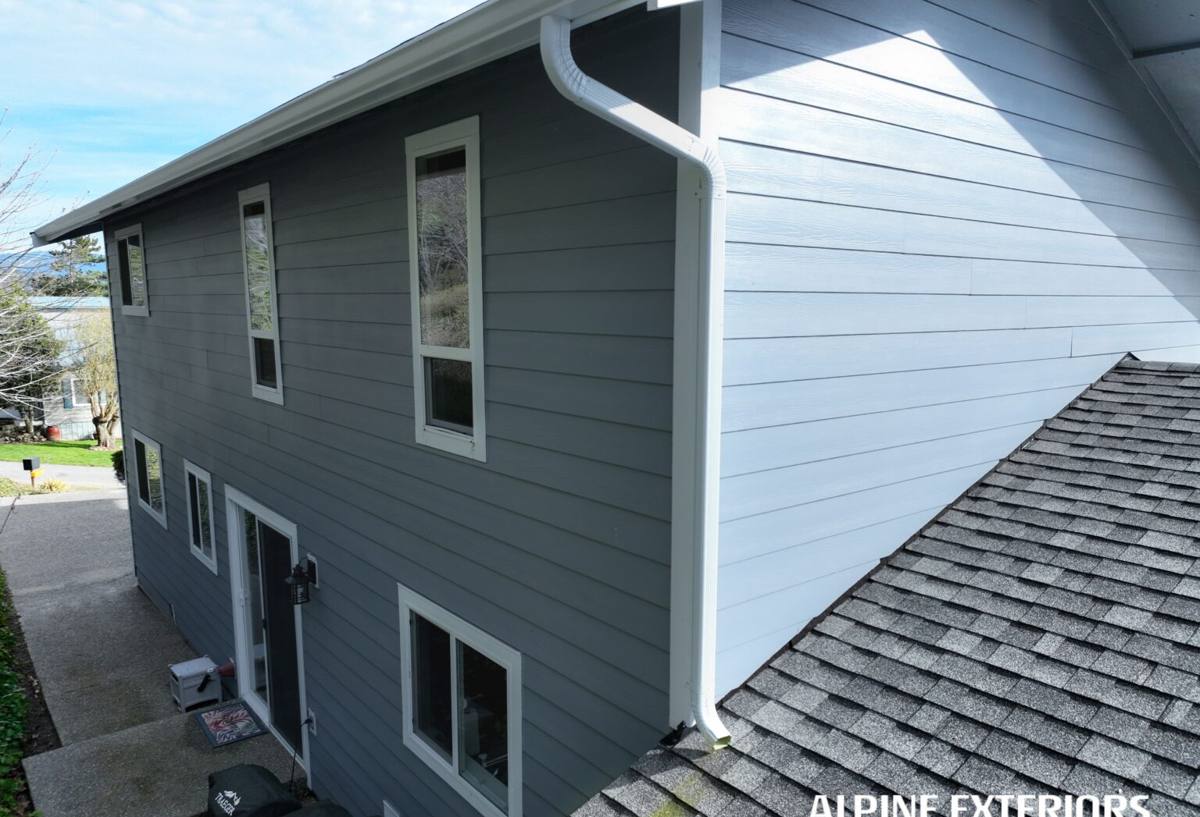
What Salt Air, Rain, and Moss Actually Do to a Roof
Salt Air and Metal Fasteners
Roofs don't fail because of salt air directly — they fail because salt air accelerates corrosion in the metal components that hold everything together and keep water out. Nail heads, flashing, drip edge, and vent stacks are all metal, and standard-grade fasteners and flashing corrode faster within a mile or two of saltwater than they would further inland. Once a fastener corrodes, it loses its grip on the shingle or panel it's holding, and once flashing pits or thins, it stops shedding water the way it's supposed to.
Driving Rain and Wind Direction
Rain that falls straight down is rarely the problem. Rain that comes in sideways off the water, pushed by wind, finds every gap a standard installation wasn't built to handle — under lifted shingle tabs, around loose flashing, through nail holes that have started to widen. Birch Point's exposure means wind-driven rain is a regular event, not an occasional storm, and repairs here have to assume water will be pushed uphill against gravity at some point during the year.
Moss and a Long Wet Season
Whatcom County's moss season is long, and Birch Point's proximity to water and tree cover keeps roofs damp longer after a rain than homes in drier, more open parts of Blaine. Moss doesn't just sit on top of shingles — it holds moisture against the roofing material, works its way under tab edges as it grows, and can lift shingles enough to let water underneath. A roof with moss left unchecked for a couple of seasons often has more going on underneath than what's visible from the ground.
Signs a Birch Point Roof Needs Repair
Most homeowners call us after noticing one of these. None of them require a ladder to check for — start from the ground or from inside the attic.
- Granules collecting in gutters or at the base of downspouts
- Shingle tabs that look lifted, curled, or cupped, especially on the side facing the water
- Moss or dark streaking concentrated in shaded or north-facing sections
- Rust staining below metal flashing, vent stacks, or valleys
- Water stains on interior ceilings, especially near exterior walls or after a windy rainstorm
- Visible gaps or lifted flashing around chimneys, skylights, or roof-wall intersections
- Soft or spongy spots when walking the roof (a sign to stop and call, not to keep testing)
- Daylight visible through the roof deck from inside the attic
Any one of these on its own might be minor. Two or three together, especially in the same area of the roof, usually means water has been getting past the surface layer for a while.
What a Correct Repair Actually Involves
Diagnosis Before Anything Gets Touched
A repair that only patches the spot you can see from the ground is a repair that gets called back out in a year. We start by tracing where water is actually entering — which is often several feet from where the stain or damage shows up, since water runs along the underlayment or decking before it finds a gap to drip through. That means checking the roof deck condition under the damaged area, not just the shingle surface.
Flashing and Underlayment, Not Just Shingles
In a salt-air, high-wind-driven-rain environment, most repair failures trace back to flashing and underlayment, not the shingles themselves. A correct repair replaces compromised flashing with new material rather than resealing old, pitted flashing in place, and checks that underlayment in the repaired section is intact and properly lapped, since a new shingle over failing underlayment just delays the same problem.
Matching Materials the Right Way
Shingles fade and wear unevenly over time, so a patch using brand-new material next to weathered shingles will stand out. We aim to source a close match and blend the repair into the least visible part of the roof plane where possible, but we're upfront when an exact match isn't realistic — that's a conversation to have before the work starts, not a surprise afterward.
Repair or Replacement? What Actually Decides It
Not every roof issue in Birch Point needs a full replacement, and not every roof issue is fixable with a patch. The honest answer depends on a handful of factors we walk through with every homeowner before recommending either path.
| Factor | Favors Repair | Favors Replacement |
|---|---|---|
| Roof age | Under 60–70% of expected material lifespan | Near or past expected lifespan |
| Extent of damage | Isolated to one section or feature (valley, flashing, vent) | Spread across multiple slopes |
| Deck condition | Solid, no soft spots found | Soft decking or rot found in more than one area |
| Moss history | Recent onset, surface-level | Long-term, with lifted shingles across large areas |
| Prior repair history | First or second repair on this roof | Repeated repairs to the same areas |
We'll tell you plainly if a repair is a short-term patch on a roof that's really due for replacement. There's no benefit to either of us in doing a repair that doesn't hold.
Our Process on a Birch Point Repair Call
- Ground and attic assessment — checking for the visible signs above and interior signs of moisture before getting on the roof
- Roof inspection — tracing the actual water path, checking deck condition, flashing, and surrounding shingle condition, not just the reported problem spot
- Straight answer on repair vs. replacement — with the reasoning behind it, in writing if you want it
- Written scope and estimate — what's being replaced, what materials, and what's excluded
- The repair itself — proper tear-out of the affected section, deck repair if needed, new underlayment and flashing, matched shingles or roofing material
- Cleanup and a final look — including checking adjacent areas we noticed during the work
Materials and Fasteners for This Environment
Standard-grade fasteners and flashing are built for average conditions, not for a home sitting exposed to salt air off the water. Where it makes sense, we use corrosion-resistant fasteners and flashing rated for coastal exposure, since the labor cost of a repair is the same whether the materials underneath will last five years or fifteen — it's the materials that make the difference. We'll explain the trade-offs (cost, availability, appearance) for any upgraded material rather than assuming you want the premium option by default.
Why a Crew That Already Works Birch Point Matters
A roofer who mostly works inland Blaine or elsewhere in Whatcom County isn't wrong about roofing in general — they just haven't spent time seeing how fast standard materials corrode a few hundred feet from the water, or how long moss actually persists on a shaded, damp roof in this specific pocket of the county. That shows up in small decisions: which fastener grade to use, how aggressively to address moss versus just cleaning it off, whether a given flashing detail will hold up to wind-driven rain from the water side of the house. None of it is complicated, but it's the kind of judgment that comes from having repaired roofs in this exact setting before, not from a general roofing background alone.
After the Repair: Keeping Moss and Moisture From Coming Back
A good repair is undone faster in Birch Point than in a drier part of town if moss and standing moisture aren't kept in check afterward. A few habits make a real difference:
- Keep gutters and downspouts clear so water doesn't back up under the roof edge
- Trim back overhanging branches that keep sections of roof shaded and damp longer than the rest
- Have moss removed gently (not power-washed, which can strip granules) before it spreads across a slope
- Do a quick visual check after any major windstorm off the water, since that's when flashing and shingle edges take the most stress
- Get a roof looked at every year or two rather than waiting for a leak to show up inside
If you're seeing any of the signs above, or just want an honest read on what shape your roof is really in, we're happy to take a look. The estimate is free, there's no pressure to move forward, and if a simple repair is genuinely the right call, that's exactly what we'll recommend — use the form below to get in touch.