 Blaine
 Siding Replacement Built for Birch Point's Waterfront Climate
Birch Point sits close enough to the water that homes here take a different kind of weathering than siding just a few miles inland. Salt-laden air off the Salish Sea, wind-driven rain that hits walls sideways instead of straight down, and a moss and mildew season that can run most of the year all combine to shorten the life of siding that isn't built or installed for the conditions. When we replace siding on a Birch Point home, we're not just swapping old material for new — we're correcting for the specific ways this stretch of Whatcom County breaks siding down faster than the manufacturer's brochure assumes.
This page covers what siding replacement actually involves for a home in this area: what fails first and why, what a correct replacement job looks like from tear-off to finish, and why local experience with this exact microclimate matters more here than in most parts of the county.
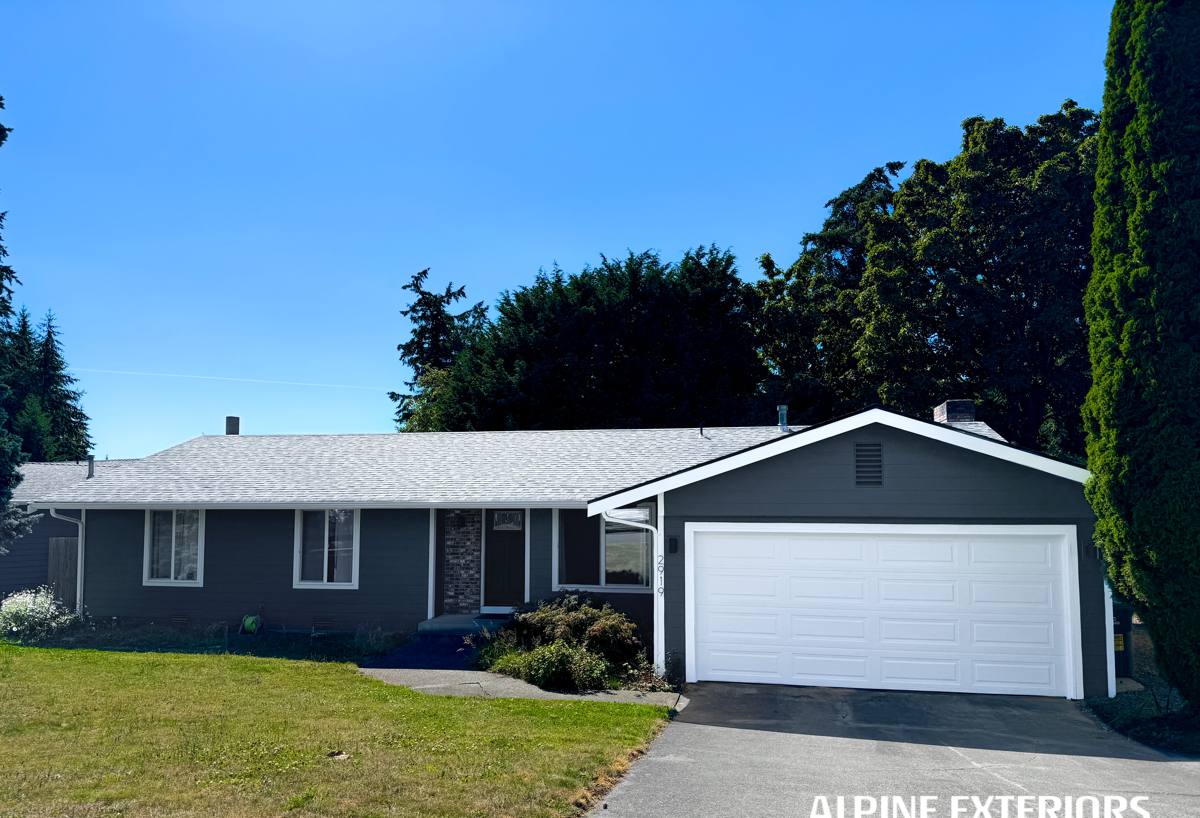
Why Siding Fails Faster Near Birch Point
Salt Air and Corrosion
Airborne salt doesn't just affect metal — it accelerates the breakdown of caulking, fasteners, and the surface finish on lower-grade siding products. Over years, salt exposure works into seams and fastener heads, and any siding product that relies on a painted-on finish rather than a factory-cured finish will chalk, fade, and lose its protective layer faster this close to the water.
Driving Rain and Wind-Loading
Birch Point catches wind off the water with little to break it up before it reaches a house. That means rain doesn't just fall on siding, it's driven into laps, seams, and butt joints under pressure. Siding installed with generous manufacturer-spec clearances and correctly lapped courses sheds that water. Siding installed too tight, without proper flashing, or with gaps caulked instead of engineered, lets that same wind-driven rain find its way behind the cladding.
Moss, Mildew, and the Long Wet Season
Western Whatcom County's wet season stretches long, and homes near the water stay damp longer after a storm than homes further inland because of slower air movement and higher ambient humidity. Moss and mildew take hold on any siding surface that stays damp and shaded, but the real damage isn't cosmetic — it's what's growing underneath. Organic growth holds moisture against the siding surface, and for wood-based or wood-adjacent products, that sustained moisture is what leads to soft spots, delamination, and rot at seams and bottom edges.
What a Correct Siding Replacement Involves
Replacing siding correctly in a coastal-influenced area like Birch Point is not a cosmetic swap. It's a system rebuild, and skipping steps here is exactly how a home ends up needing another full replacement in 10-12 years instead of 30-plus.
Full Tear-Off and Inspection
We remove the old siding completely rather than installing over it. That's the only way to see what's actually happening underneath — sheathing condition, evidence of past moisture intrusion, and whether trim, corners, and window flashing were done correctly the first time. On homes this close to the water, we routinely find moisture-related sheathing damage that wouldn't show from the outside.
Weather-Resistive Barrier and Flashing
A correctly installed water-resistive barrier (WRB) and properly integrated window and door flashing matter more here than almost anywhere inland. The barrier and flashing system is what actually keeps wind-driven rain out of the wall assembly — the siding itself is the first line of defense, not the only one. We flash every penetration and lap every layer so water is directed out and down, never trapped.
Fastening and Clearances to Manufacturer Spec
James Hardie fiber cement has specific fastening patterns, gap requirements at butt joints, and ground/roof clearance minimums. In a driving-rain environment, those clearances aren't a suggestion — they're what allows any water that does reach the siding to drain and dry instead of wicking upward into end grain and seams.
Finish and Caulk Details
We use sealants and caulk formulated for the movement and moisture exposure this location sees, and we minimize how much of the system relies on caulk in the first place — good flashing and lapping should do most of the work, with sealant as a backup, not the primary defense.
Why We Install Only James Hardie Fiber Cement
We standardized on James Hardie siding and don't install vinyl, LP SmartSide, primed spruce, cedar, or other fiber cement brands. That's a deliberate call, not a brand preference, and it matters more in a place like Birch Point than in a dry, sheltered neighborhood.
Why It Matters Here Specifically
- Fiber cement doesn't rot, swell, or delaminate the way wood-based and wood-adjacent products can when they stay damp under moss and mildew growth.
- Hardie's ColorPlus factory finish is baked on and warrantied, so it holds up to salt air and UV exposure better than field-applied paint that has to be maintained and eventually redone.
- Hardie's HZ5 product line is engineered specifically for climates with sustained moisture exposure, which describes this stretch of coastline accurately.
- Fiber cement is non-combustible, which is a genuine safety advantage regardless of climate, and one more reason we don't ask homeowners to trade that off for a cheaper material.
We're honest that Hardie siding costs more upfront than vinyl or engineered wood siding. The trade-off is a product that's built for exactly the punishment this location delivers — salt, wind-driven rain, and sustained dampness — and a warranty structure that reflects the manufacturer's confidence in that performance.
How We Approach a Birch Point Siding Replacement
1. On-Site Assessment
We walk the exterior, check current siding condition at grade level, corners, and around penetrations, and look for the early signs of moisture intrusion — soft trim, staining, or bulging — that are common on homes in this location once siding starts to fail.
2. Scope and Product Selection
We talk through Hardie's plank, panel, and shingle options and help you choose a profile and color that fits the home and holds up to salt air without excessive maintenance. Darker ColorPlus finishes and lighter finishes both perform well here — the finish system matters more than the shade.
3. Tear-Off, Repair, and Barrier Installation
Old siding comes off, any damaged sheathing or framing gets repaired before anything new goes up, and the weather-resistive barrier and flashing get installed to spec.
4. Installation to Manufacturer Spec
Siding goes on with correct fastening, clearances, and lapping — not just correct paint color and finish, but correct water management underneath it.
5. Final Walkthrough
We walk the finished job with you, cover care and maintenance specific to this climate, and make sure trim, caulking, and transitions are all sealed and finished correctly.
Cost Factors for Siding Replacement in This Area
Every home is different, so we won't quote a number without seeing the house, but these are the main variables that move the price up or down for a Birch Point replacement:
| Factor | Why It Matters Here |
|---|---|
| Extent of hidden moisture damage | Homes near the water more often need sheathing or framing repair discovered during tear-off, which affects scope |
| Home size and wall complexity | More corners, dormers, and penetrations mean more flashing detail work, which takes time to do right |
| Siding profile and finish | Lap, shingle, and panel profiles all install differently and price differently |
| Trim and accessory scope | Full trim replacement alongside siding is often worth doing at the same time to match the new water-management system |
| Access and site conditions | Waterfront-adjacent lots sometimes have wind exposure or access constraints that affect scheduling and setup |
Maintenance After Replacement
New Hardie siding still needs basic upkeep in this climate, though far less than wood-based alternatives. A short annual routine goes a long way:
- Rinse siding periodically to remove salt residue, especially on walls facing the water
- Keep gutters clear so water doesn't overflow and run down the siding face
- Trim back vegetation and tree cover that keeps siding shaded and damp longer than necessary
- Check and refresh caulking at trim joints and penetrations every few years, since sealant is a wear item even when the siding itself isn't
- Watch for moss starting at ground level or in shaded corners and address it early rather than letting it establish
Why Local Experience in This Exact Area Matters
A crew that mostly works drier, more sheltered neighborhoods inland doesn't build the same instincts for flashing details, clearance tolerances, and barrier work that a home exposed to Birch Point's wind and salt actually needs. We work this coastline regularly, which means we've seen where siding fails first in this specific environment and we build the replacement to address those failure points directly, not just to match the old siding's appearance. That local pattern recognition — knowing which corners, which elevations, and which details fail first near the water — is the difference between a replacement that lasts and one that starts showing problems again in a decade.
Get a Free, No-Pressure Estimate
If your siding is showing moss, soft spots, fading, or you just want an honest read on its remaining life, we're happy to take a look. Fill out the form below for a free estimate on siding replacement for your Birch Point home — no pressure, just a straight assessment of what your house needs.