 Blaine
 Why Decks Near Blaine Harbor Wear Out Faster
A deck built two miles inland in Whatcom County and a deck built along Blaine Harbor age at very different rates, even if they were built the same year with the same materials. Homes near the water deal with a steady mix of salt-laden air, wind-driven rain, and long stretches of damp shade that inland properties simply don't see as often. That combination attacks a deck from several directions at once: metal fasteners corrode faster, wood fibers stay wet longer between dry spells, and moss and algae get a head start every fall and don't fully let go until late spring.
None of that means a deck near the harbor is doomed to fail early. It means the deck has to be built for that environment specifically, not built to a generic spec and hoped for the best. That's the difference between a deck that needs replacing again in ten years and one that holds up for decades.
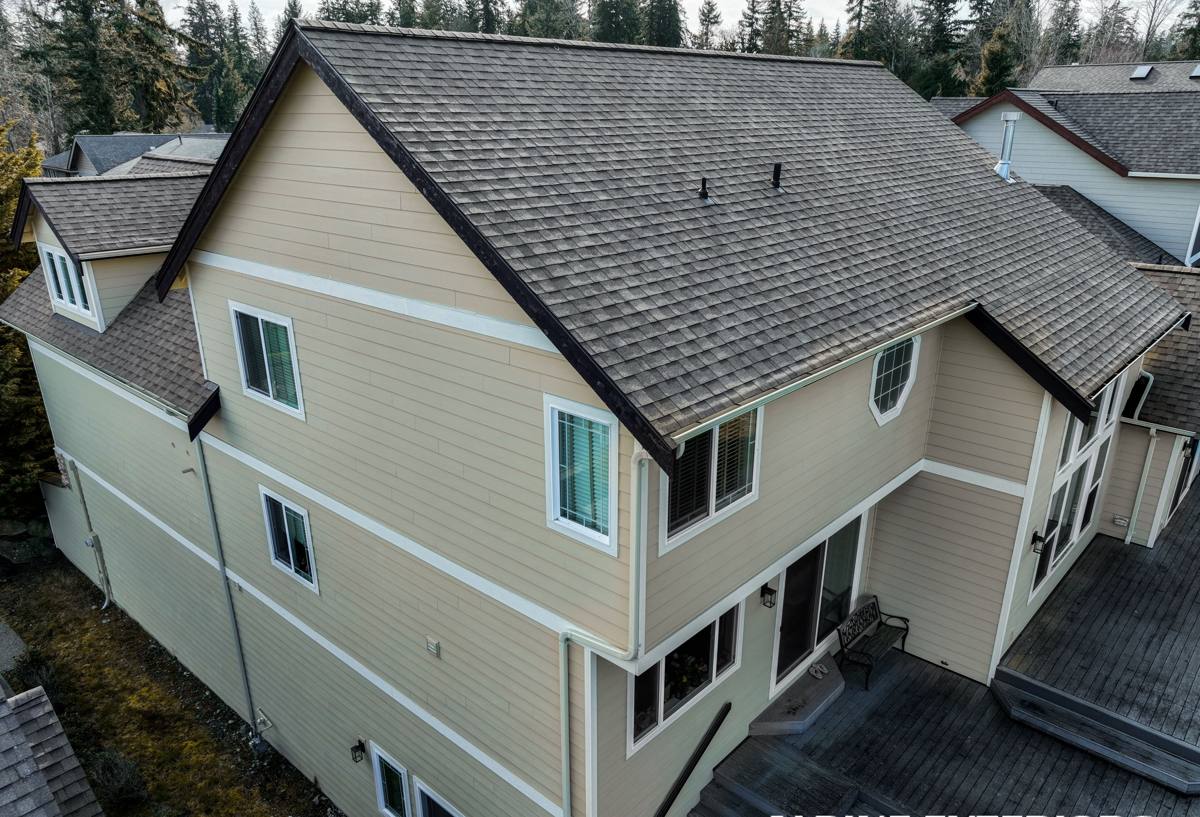
Signs Your Deck Has Crossed From "Repair" to "Replace"
Homeowners often ask us to patch a board or two, and sometimes that's genuinely all that's needed. But in a marine climate, surface problems are frequently a sign of what's happening underneath. Here's how we tell the difference on a walkthrough:
- Soft or spongy decking in more than one area, not just a single board
- Rust streaking around fasteners or visible corrosion on structural hardware
- Ledger board separating slightly from the house, or flashing that's cracked or missing
- Posts that feel loose or show rot at the base, especially where they meet concrete footings
- Persistent moss or black staining that comes back within weeks of cleaning
- Railings that flex more than they should when leaned on
One or two of these can often be repaired in place. Several at once, especially involving the ledger, framing, or posts, usually means the structure itself has been compromised and a full replacement is the more honest recommendation — both for safety and for your wallet, since repeated patch jobs on failing framing rarely save money in the long run.
Why Framing Failure Matters More Here Than Elsewhere
A deck's surface boards are the part everyone sees, but the framing underneath is what actually holds the structure up. In a wetter, salt-exposed environment, framing failure tends to happen quietly — moisture gets trapped between the decking and the joists, or behind the ledger flashing, long before it shows on the surface. By the time a board feels soft underfoot, the framing beneath it has often been wet for a while.
What a Correct Deck Replacement Actually Involves
A deck replacement done right in this climate is not just pulling old boards and screwing down new ones. The work that matters most is the part you won't see once the project is finished.
Ledger and Flashing
The ledger board — where the deck attaches to your house — is the single most common failure point on any deck, and it's especially critical near the water. We install proper flashing that directs water away from the house framing rather than trapping it against the wall, and we use fasteners rated for the exposure the ledger will see.
Joists, Beams, and Posts
Framing lumber gets sized and spaced to current code, not just matched to what was there before. Post bases get set to keep wood off standing water, and any wood-to-concrete contact points get proper isolation so moisture doesn't wick up into the post over time.
Fasteners and Hardware
This is where a lot of decks near the water quietly fail. Standard fasteners corrode faster in salt air, and once a fastener starts rusting, it loses grip strength and can stain the surrounding wood or composite. We use corrosion-resistant fasteners and structural hardware rated for coastal exposure throughout the frame, not just on the parts that are visible.
Decking Surface
Whatever material you choose, proper spacing and drainage matter more here than in a dry climate. Boards need room to shed water and dry between rains, and any hidden fastener systems need to be ones that won't trap moisture against the board.
Choosing a Decking Material for Salt Air and Long Wet Seasons
There's no single "best" decking material — there's a best material for your budget, your maintenance appetite, and how much direct salt and moisture exposure your specific deck gets. Here's how the common options actually perform in a Blaine Harbor–type setting.
| Material | How It Handles Salt Air & Rain | Maintenance | Typical Lifespan |
|---|---|---|---|
| Pressure-treated wood | Needs consistent sealing to resist moisture; more prone to warping and fastener staining near the water | Annual cleaning and re-sealing | 10–15 years with upkeep |
| Cedar | Naturally moisture-resistant but still needs finish to fight graying and moss in a wet, shaded climate | Periodic sealing, moss treatment | 15–20 years with upkeep |
| Capped composite | Strong resistance to moisture absorption and salt exposure; won't rot or splinter | Occasional washing, no sealing | 25–30+ years |
| PVC decking | Fully synthetic, essentially immune to moisture damage and corrosion staining | Occasional washing | 25–30+ years |
We install all of these and won't push you toward the most expensive option if it's not the right fit for your home. Where we draw a firm line is on the details underneath the surface — flashing, fastener grade, and framing spec — because those decisions matter more to long-term performance than the decking material alone, no matter which one you choose.
Our Deck Replacement Process
- On-site assessment. We inspect the existing deck, ledger connection, framing, and posts to determine what's actually failing and why, not just what's visible from the top.
- Honest scope and estimate. You get a clear breakdown of what needs replacing, what materials we recommend for your exposure, and a straightforward cost range — no pressure, no upsell tactics.
- Removal and disposal. Old decking, framing, and hardware are removed and hauled off; we check the ledger area and house framing behind it for hidden moisture damage before rebuilding.
- Framing and flashing. New structural framing goes in to current code, with corrosion-resistant hardware and proper ledger flashing throughout.
- Decking installation. Your chosen material is installed with correct spacing, fastening, and drainage detailing for a wet, salt-exposed climate.
- Railings and final details. Railings, stairs, and any trim are installed and checked for solid, code-compliant attachment.
- Final walkthrough. We walk the finished deck with you, point out any maintenance basics specific to your material choice, and answer questions before we consider the job done.
Permits and Local Code Considerations
Deck replacement projects in Whatcom County typically require a permit once you're rebuilding structural elements like framing, ledger attachment, or railings — even if the footprint stays the same. Requirements can vary depending on deck height, size, and proximity to property lines, so we handle the permit process as part of the job rather than leaving it for the homeowner to sort out. Building near the water can also mean additional review depending on your property's specific location, which is worth confirming early rather than after work has started.
Living With Moss Season: What Homeowners Can Do Between Visits
Whatcom County's wet season runs long, and a shaded or harbor-adjacent deck can stay damp for weeks at a stretch — ideal conditions for moss and surface algae. A well-built deck resists this better than a failing one, but no deck is completely maintenance-free in this climate.
- Sweep debris off the deck regularly, especially in fall — trapped leaves hold moisture against the surface
- Rinse off salt residue after storms with onshore wind, particularly on metal hardware and railings
- Keep gutters and downspouts near the deck clear so runoff isn't draining directly onto it
- Treat moss promptly rather than letting it establish — it's far easier to remove early
- Have wood decking re-sealed on the schedule your material calls for, not "when it starts looking rough"
None of this is complicated, but skipping it is exactly how a well-built deck ends up needing early repairs. We'll walk you through the specific maintenance schedule for whatever material you choose.
Why Hire a Crew That Already Works Blaine Harbor
A contractor who mostly works inland can absolutely build a technically sound deck — but they may not default to coastal-grade fasteners, they may not think to check ledger flashing as carefully, and they may not have a feel for how fast moss returns on a shaded, harbor-facing deck. Those aren't dramatic differences on paper, but they show up in how the deck performs five and ten years down the line.
We work on homes throughout Blaine and Whatcom County, including properties right along the harbor, and we build every deck to handle that exposure whether or not the homeowner asks for it specifically. It's a baseline, not an upcharge.
What to Ask Before Hiring Anyone for This Job
- Are you licensed and insured to work in Washington State, and can you provide proof?
- What fastener and hardware grade do you use, and is it rated for coastal or marine exposure?
- Will you pull the required permit, or is that left to me?
- What does your ledger flashing detail look like, and why?
- What's included in your estimate versus what could come up as an added cost once work starts?
- Can you walk me through material options honestly, including the trade-offs, not just the upsell?
A contractor who answers these clearly and without hesitation is one who's done this work enough times to know why it matters.
If your deck is showing its age or you're just not sure whether it needs a repair or a full replacement, we're happy to take a look and give you a straight answer. Use the form below to request a free, no-pressure estimate for your Blaine Harbor property.