 Blaine
 Blaine Harbor's Climate Is Tougher on Siding Than Most of Whatcom County
Homes right around Blaine Harbor sit closer to open water than almost anywhere else in Whatcom County. That proximity to Drayton Harbor and Semiahmoo Bay means more than a nice view — it means salt-laden air moving across your siding almost every day, driving rain pushed in by wind off the water, and a shaded, damp season that runs long enough for moss to take hold on anything that stays wet. Siding here doesn't just need to look good. It needs to survive a combination of salt, moisture, and organic growth that inland Whatcom County homes rarely deal with at the same intensity.
We install exclusively James Hardie fiber cement siding, and on Blaine Harbor properties specifically, that choice comes down to how the material handles exactly these three stressors — not because it's trendy, but because we've seen what salt air and moss do to siding that isn't built for it.
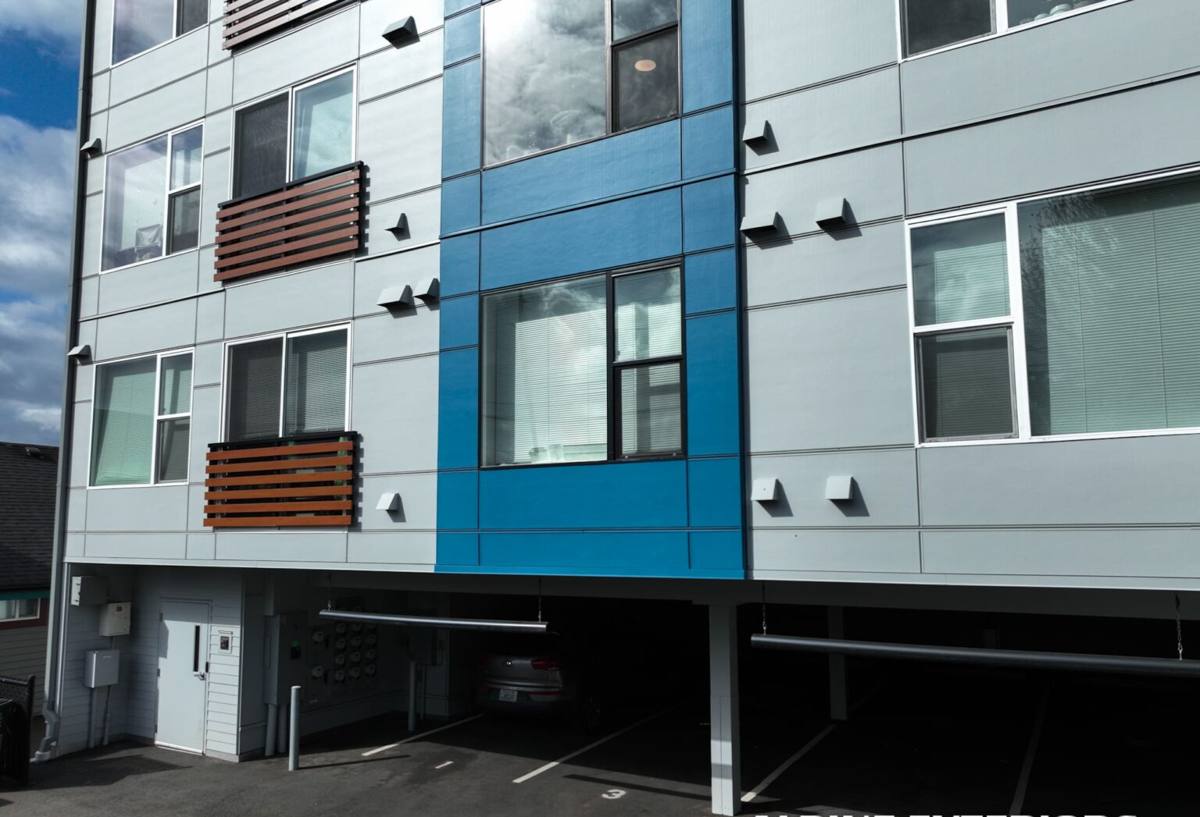
What Salt Air, Driving Rain, and Moss Actually Do to Siding
Salt Air
Airborne salt is corrosive and hygroscopic — it pulls moisture out of the air and holds it against whatever surface it lands on. On siding, that means fasteners, trim, and exposed seams stay damp longer than they would a few miles inland. Materials that depend on a paint film or a thin coating to keep water out are usually the first to show chalking, fading, and edge deterioration in a salt-air environment.
Driving Rain
Wind off the harbor doesn't just drop rain straight down — it drives it sideways, into laps, seams, and butt joints that were designed mainly for vertical rainfall. Any gap in flashing, caulking, or panel overlap becomes an entry point. Over years, that's how water gets behind siding and starts rotting sheathing long before a homeowner ever sees a stain on the outside.
Moss Season
Blaine's wet season runs long, and shaded north- and west-facing walls near the harbor can stay damp for weeks at a stretch. Moss and algae need exactly that — sustained moisture and low sun exposure. Once organic growth establishes itself on a siding surface, it holds even more water against the material, which accelerates whatever damage is already happening underneath.
Why We Only Install James Hardie Fiber Cement Here
James Hardie siding is fiber cement — a mix of cellulose fiber, sand, and Portland cement pressed and cured into planks and panels. It doesn't rot, it isn't a food source for moss and algae the way wood is, and it's non-combustible. For a harbor-adjacent home, the properties that matter most are:
- Dimensional stability — fiber cement doesn't swell and shrink with humidity swings the way wood-based products do, so joints and caulk lines stay tighter over time
- Factory-applied ColorPlus finish — a baked-on finish that resists fading and chalking better than field-applied paint, which matters when salt air is already working against any coating
- HZ5 engineered formulation — James Hardie makes climate-specific product lines, and the HZ5 formulation is engineered for cold, wet, high-moisture regions like the Pacific Northwest coast
- No organic food source — moss and algae can still land on the surface, but they aren't feeding on the material itself the way they can with wood or wood-composite siding
We don't install LP SmartSide, vinyl, Cemplank, Allura, or bare cedar or spruce siding. Each has legitimate uses elsewhere, but on a Blaine Harbor property we'd be asking a product to fight a losing battle against salt, wind-driven rain, and moss — and we'd rather not put our name on an installation we don't believe will hold up over the long run.
The James Hardie Product Lineup for Blaine Harbor Homes
| Product | Typical Use | Why It Fits Here |
|---|---|---|
| HardiePlank lap siding | Primary wall siding | Most common choice; wide range of profiles and ColorPlus colors, engineered joint system reduces gaps |
| HardiePanel vertical siding | Accent walls, gables | Clean modern look with fewer horizontal laps for water to find |
| HardieShingle | Accent sections, gable ends | Traditional coastal look without the moisture vulnerability of real wood shingle |
| HardieTrim boards | Corners, window/door surrounds, fascia | Matches the durability of the field siding so trim doesn't fail first |
| HardieSoffit panels | Eaves, overhangs | Vented options help manage moisture in the roofline near the water |
What a Correct Installation Involves
James Hardie siding performs the way it's engineered to only when it's installed correctly, and in a driving-rain environment the installation details matter more than the spec sheet. A correct job on a Blaine Harbor home includes:
Water Management Behind the Siding
A weather-resistant barrier and, on most walls, a rainscreen gap between the barrier and the siding so any water that does get past the surface can drain and dry instead of sitting against sheathing. Flashing at every window, door, and horizontal transition, installed to shed water outward rather than trap it.
Fastening and Clearances
Corrosion-resistant fasteners, driven per James Hardie's published fastening schedule — not just "close enough." Proper clearance between the bottom of the siding and grade, decks, and roof lines, since sustained ground moisture and splash-back are common near the harbor.
Joints and Caulking
Butt joints backed with flashing or H-molding rather than caulk alone, since caulk is a maintenance item, not a permanent water seal. Paintable, high-quality sealant only where James Hardie's install guide actually calls for it — not as a substitute for proper flashing.
This is exactly where a rushed or unfamiliar installation fails. Fiber cement installed loosely, fastened wrong, or without proper flashing will develop the same moisture problems as a lesser material — the product isn't magic, the installation is what makes it perform.
Our Process for Blaine Harbor Projects
- On-site assessment — we look at wall exposure, existing moisture damage, roofline and drainage, and which walls take the worst of the harbor wind and rain
- Tear-off and sheathing check — old siding comes off and we inspect sheathing for rot or soft spots before anything new goes up, since covering existing water damage just hides the problem
- Weather barrier and flashing — house wrap or building paper, window and door flashing, and rainscreen furring where the wall assembly calls for it
- James Hardie installation — plank, panel, or shingle siding installed to manufacturer fastening and clearance specs, with trim and soffit work to match
- ColorPlus finish and final detailing — factory-finished color means no field painting is needed on most projects, which also means no paint failure to worry about later
- Walkthrough — we go over the finished work with the homeowner and flag anything that needs a maintenance eye down the road
Living with Salt Air and Moss Season After Installation
James Hardie siding is low-maintenance, not zero-maintenance. In a harbor environment, a little seasonal attention keeps it performing for decades:
- Rinse salt residue off the siding a couple of times a year with a garden hose, especially on walls that face the water directly
- Keep gutters and downspouts clear so runoff isn't sheeting down the siding face during heavy rain
- Trim back vegetation and tree cover that keeps shaded walls damp longer than necessary — moss needs shade and moisture together
- Check caulking at trim joints and penetrations once a year; caulk is the one component that does wear out and needs periodic replacement
- Avoid pressure washing directly at joints and butt seams — a soft wash from a normal garden hose is enough for a ColorPlus finish
- Watch for soft or discolored trim near ground level, which can point to a drainage or grading issue rather than a siding failure
What Affects the Cost of a Blaine Harbor James Hardie Project
| Factor | Why It Matters |
|---|---|
| Home size and wall complexity | More corners, gables, and cutouts mean more trim work and labor time |
| Current siding removal | Tear-off of old wood, vinyl, or damaged material adds labor before installation starts |
| Sheathing repair | Water-damaged sheathing found during tear-off needs to be repaired before new siding goes on |
| Product mix | Plank, panel, shingle accents, and trim packages price differently |
| Rainscreen and flashing detail | Harbor-exposed walls often warrant extra water management, which adds material and labor |
| Access and site conditions | Waterfront lots, slopes, and limited access can affect equipment and staging time |
We give exact numbers only after walking the property — a broad range without seeing the home and its exposure isn't much use to a homeowner trying to budget accurately.
Why Hiring a Crew That Already Works Blaine Harbor Matters
Siding contractors who mostly work inland don't always account for how much harder a harbor-facing wall works compared to a sheltered one a few miles away. Knowing which walls in this specific area tend to need extra flashing detail, where moss establishes first, and how wind-driven rain behaves against a given orientation isn't something you get from a general install manual — it comes from doing the work in this exact environment, on this exact water. We install James Hardie siding throughout Whatcom County, and Blaine Harbor's combination of salt air, wind exposure, and prolonged moisture is one of the more demanding settings we work in on a regular basis.
If you're planning a siding project on a Blaine Harbor home, we're happy to take a look and walk you through what your specific walls and exposure would need. Reach out for a free, no-pressure estimate using the form below.