 Blaine
 Board & Batten Siding, Built for Sumas Conditions
Sumas sits close enough to the water and the Cascade foothills that its homes deal with a specific combination of weather: salt-tinged air drifting in off the Strait, long stretches of driving rain through fall and winter, and a moss season that can run half the year on shaded north and west walls. Board and batten siding is a strong architectural fit for this area's farmhouse, craftsman, and rural-modern homes, but the look only holds up if the material underneath the vertical lines is chosen and installed for this exact climate. That's what this page walks through.
We are a Blaine-based crew that already works homes in and around Sumas. We install James Hardie fiber cement exclusively — no vinyl, no LP SmartSide, no primed wood battens, no Cemplank or Allura. That's not a marketing line; it's a standard we hold because of what we've seen happen to other materials on homes exactly like the ones in this neighborhood.
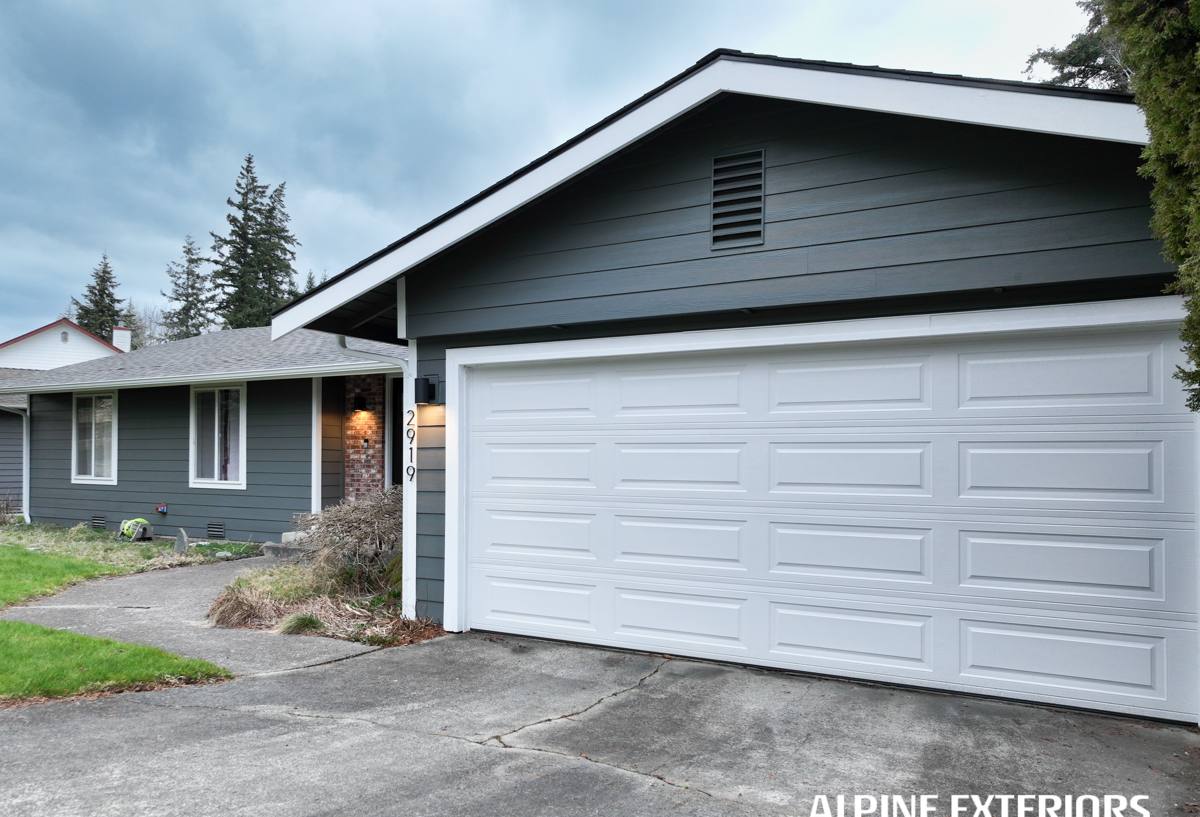
What Whatcom County Weather Does to Board & Batten Siding
Board and batten relies on a lot of exposed vertical seams and butt joints compared to standard lap siding. Every one of those seams is a place where water can find its way behind the cladding if the material or the installation is wrong. In a climate like Sumas's, that risk compounds over the years rather than showing up right away.
Salt Air
Proximity to Boundary Bay and the Strait of Georgia means airborne salt reaches inland further than most homeowners expect, especially during winter storms. Salt accelerates corrosion on exposed fasteners and trim metal, and it degrades cheap paint finishes faster than inland weather would. A board and batten system with unprotected fastener heads or a thin factory coat will show chalking, streaking, and rust bleed years before it should.
Driving Rain
Wind-driven rain doesn't just fall on a wall — it gets pushed sideways into every gap, lap, and batten joint. Vertical board and batten profiles are more exposed to this than horizontal lap siding because rain runs directly down the face of the battens and can wick sideways at the joints if flashing and caulking details aren't done correctly.
Moss and Sustained Moisture
Shaded elevations in Sumas, particularly walls that face tree lines or sit close to neighboring structures, stay damp for extended stretches. Moss and algae don't just look bad — sustained organic growth holds moisture against the siding surface, and on materials that aren't dimensionally stable or properly sealed at the core, that moisture exposure eventually becomes a real problem, not just a cosmetic one.
Why the Siding Material Choice Matters More With This Profile
Board and batten is often installed as either an engineered wood product, a vinyl panel system, or fiber cement. Each behaves differently once water finds a way to a cut edge or a seam.
- Engineered wood substrates (OSB-core or similar) can swell, delaminate, or develop soft spots at cut edges and butt joints if moisture gets in and stays in — and in a driving-rain climate, cut edges are unavoidable at every batten and panel joint.
- Vinyl board and batten doesn't rot, but it expands and contracts significantly with temperature swings, which can telegraph as wavy battens over time, and it offers no real fire resistance.
- Fiber cement is dimensionally stable across our seasonal temperature range, doesn't support rot, and — when it's James Hardie specifically — comes with a factory-baked ColorPlus finish that's formulated to resist the fading and chalking that salt air and UV cause over time.
This is the core reason we standardized on Hardie for every board and batten job, including the ones in Sumas: the material has to survive decades of exactly this weather pattern, not just look good on install day.
The James Hardie Board & Batten System
James Hardie's board and batten look is typically achieved with HardiePanel vertical siding combined with HardieTrim battens, or with individual HardiePlank installed vertically with battens over the seams, depending on the look the home calls for. Both approaches use engineered fiber cement — a mix of Portland cement, sand, and cellulose fiber — that's manufactured to resist moisture intrusion, won't feed pests, and carries a Class A noncombustible fire rating.
For a coastal Whatcom County property, we generally spec Hardie's HZ10 product line, engineered for wetter, harsher climates rather than the HZ5 line built for drier regions. The difference matters on a home exposed to the amount of driving rain and salt air common around Sumas.
| Feature | What It Means for a Sumas Home |
|---|---|
| ColorPlus factory finish | Baked-on, UV- and salt-resistant coating that resists fading and chalking far longer than field-applied paint |
| HZ10 climate engineering | Formulated for high-moisture, high-rain regions rather than dry-climate installs |
| Fiber cement core | Won't rot, swell, or feed insects even with repeated wetting cycles |
| Class A fire rating | Noncombustible, unlike vinyl or wood-based sidings |
| Transferable warranty | Manufacturer-backed coverage that can carry to a future homeowner if the property sells |
What a Correct Board & Batten Installation Actually Involves
The finished look of board and batten is simple — vertical lines and clean shadow gaps — but the assembly behind it is where jobs succeed or fail. Skipping steps here is exactly how a siding job looks fine for two years and then starts showing water damage in year five.
Weather-Resistive Barrier and Drainage Plane
Every board and batten installation needs a correctly lapped weather-resistive barrier underneath, with a drainage gap that lets any water that does get behind the siding find its way back out instead of sitting against the wall sheathing. On vertical siding profiles, this drainage detail is arguably more important than on horizontal lap, because water tends to travel straight down rather than shedding at each course.
Flashing at Every Horizontal Transition
Window heads, door heads, deck ledgers, and any horizontal trim board need proper metal flashing integrated with the barrier — not just caulk. Caulk is a maintenance item that degrades; flashing is the permanent water management layer.
Fastening and Clearances
James Hardie specifies exact fastener types, spacing, and minimum ground clearance for its board and batten products. Corrosion-resistant fasteners matter especially here given the salt air exposure — the wrong fastener can start bleeding rust streaks down the face of the siding within a few seasons.
Batten Spacing and Seam Treatment
Battens need consistent spacing and correct fastening into structural framing, not just into the panel below. Seams behind battens should be treated per manufacturer spec so the assembly performs as a system rather than a series of individually caulked joints.
Our Process on a Sumas Board & Batten Project
- On-site assessment — we look at the home's specific exposure: which walls take the worst wind-driven rain, which elevations stay shaded and damp longest, and what the existing wall assembly and trim condition look like.
- Product and layout plan — we spec HZ10 panels or plank, batten layout, and trim details suited to the home's architecture and this climate.
- Tear-off and substrate check — old siding comes off and we inspect sheathing for any existing moisture damage before anything new goes up.
- Barrier, flashing, and drainage plane installation — the water management layer goes in correctly before a single piece of siding is hung.
- Panel and batten installation to manufacturer spec — correct fasteners, spacing, and clearances throughout.
- Final trim, caulking, and touch-up — finish details that protect seams without relying on caulk as the primary water barrier.
- Walkthrough — we go over the finished job and what maintenance, if any, the home will need going forward.
Why a Local Blaine Crew Matters for This Job
Board and batten in a driving-rain, salt-air climate is not a forgiving install to get wrong, and it's not something you want a crew learning on your house. A crew that already works Sumas and greater Whatcom County has already seen how homes in this specific area age — which elevations take the worst weather, how moss builds on shaded walls, and what happens to lesser materials after a few winters here. That local pattern recognition shapes real decisions: where we add extra flashing attention, which walls get the closest look during the assessment, and how we talk homeowners through realistic maintenance expectations.
| Consideration | Local Crew Already Working Sumas | Out-of-Area or Big-Box Install |
|---|---|---|
| Familiarity with local wind/rain exposure patterns | Built from repeat local jobs | Generic, not site-specific |
| Response for warranty or follow-up questions | Local, reachable | Often a call center or distant office |
| Understanding of Whatcom County permitting and inspection norms | Established | Learning curve on every job |
| Material standard | James Hardie only, chosen for this climate | Varies by crew and contract |
Maintenance Expectations for Board & Batten in This Climate
Correctly installed Hardie board and batten is low-maintenance, not no-maintenance. A little seasonal attention keeps it performing for decades.
- Rinse salt residue and grime off the siding once or twice a year, especially on walls facing prevailing weather.
- Check shaded, moss-prone elevations periodically and gently clean any buildup before it holds moisture against the surface long-term.
- Inspect caulking at trim and penetrations annually and touch up before gaps open into real water paths.
- Keep gutters and downspouts clear so roof runoff isn't dumping extra water directly onto siding and battens below.
- Trim back vegetation that shades walls or holds moisture against the siding face.
Cost Factors on a Sumas Board & Batten Project
Every home is different, but the main variables that move the price on a board and batten project are consistent across the area.
| Factor | Why It Matters |
|---|---|
| Wall square footage and complexity | More cuts, corners, and trim details mean more labor |
| Substrate condition | Existing moisture damage found during tear-off adds repair scope |
| Trim and batten density | Tighter batten spacing and more trim detail add material and labor |
| Access and site conditions | Sloped lots, tree cover, and staging space affect scheduling and labor |
| Color and finish selection | ColorPlus factory finishes vary slightly by product line |
We give straightforward, itemized estimates so homeowners understand exactly what they're paying for and why — no vague lump-sum numbers.
Get a Straight Answer for Your Home
If you're weighing board and batten siding for a home in Sumas, we're happy to come take a real look — not a sales pitch, an honest read on your walls, your exposure, and what it would actually take to do the job right with James Hardie fiber cement. The estimate is free and there's no pressure either way. Fill out the form below and we'll get in touch to schedule a time.