 Blaine
 Building a Deck for California Creek's Wooded, Waterside Setting
California Creek runs through the rural, wooded country just south of downtown Blaine on its way to Drayton Harbor, and the homes tucked along that corridor sit in a noticeably different microclimate than a lot out in the open a mile or two away. Bigger, tree-covered parcels, dense conifer and alder canopy, and a creek corridor running through or near the property change how sun, shade, and moisture behave on a deck here compared to a more exposed Blaine lot. It's still Whatcom County's salt air and driving rain, but layered with the shade and dampness that come from being close to a creek and under a heavy tree line.
A deck built for a California Creek property needs to account for that combination specifically — persistent shade, organic debris from overhanging trees, and ground that holds moisture longer than an open, sun-exposed lot. This page covers what that actually means for material choice, construction detail, and upkeep, and how our process works for a custom deck build in this part of the Blaine area.
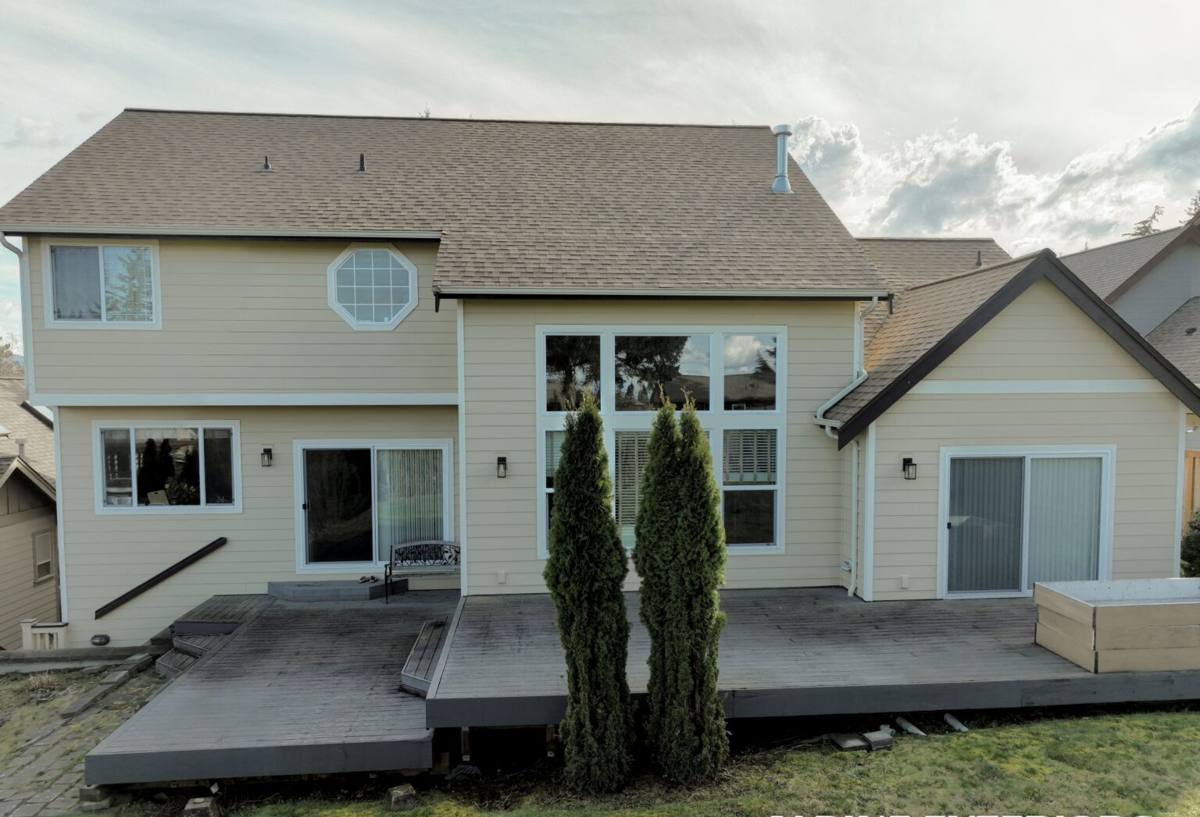
What This Setting Does to a Deck
Heavy Tree Canopy and Persistent Shade
Mature conifers and deciduous trees along the creek corridor keep a lot of these decks in partial or near-full shade for large stretches of the day, which sounds pleasant in July but works against a deck the rest of the year. A shaded deck surface dries out far slower after rain than one that gets direct sun, and that extended damp window is exactly what moss, algae, and mildew need to take hold. Needles, leaves, and seed pods from overhanging trees also collect in board gaps and against railing posts, holding moisture against the wood or composite even longer if they're not cleared regularly.
Damp Ground Near the Creek Corridor
Properties close to California Creek tend to sit on ground that stays wetter, longer, than a lot set back from any water feature — seasonal high water tables, softer soil after sustained rain, and general runoff patterns tied to the creek's drainage all play a part. That matters most for what's underneath the deck: footings, posts, and framing sitting over consistently damp ground need more attention to drainage and ventilation than a deck built on drier, better-draining soil elsewhere in town.
Salt Air Still Reaches This Far South
California Creek sits inland from the harbor itself, but it's still close enough to Drayton Harbor and Semiahmoo Bay that salt-laden air reaches properties here, just with less intensity than a waterfront lot right on the water. Combined with the shade and dampness from the tree canopy, that salt exposure still accelerates corrosion in exposed fasteners and hardware over time, even if the effect is more gradual than it would be on a spit or shoreline property.
Choosing the Right Decking Material for a Shaded, Damp Site
Material choice matters differently here than it does on an open, sunny Blaine lot. UV fade is less of a concern under heavy tree cover, but moisture retention and moss resistance move to the top of the list. The right material for a California Creek deck is usually the one that handles sustained dampness and organic debris best, not necessarily the one that resists sun the most.
| Material | Handling Persistent Shade & Moisture | Moss & Debris Resistance | Upkeep in This Setting |
|---|---|---|---|
| Cellular PVC | Excellent — no wood fiber to absorb moisture | Strong, smooth non-porous surface sheds debris easily | Periodic clearing and washing |
| Capped composite | Strong — cap layer resists moisture absorption | Good on most lines, especially textured or grooved boards | Regular clearing of leaf and needle debris |
| Uncapped composite | Weaker — exposed wood fiber absorbs moisture in shade | Fair; more prone to buildup under heavy canopy | Frequent cleaning to stay ahead of buildup |
| Cedar | Weak without diligent sealing — shade slows drying badly | Poor under heavy shade without regular treatment | Regular oiling or sealing, more often than a sunny lot |
| Pressure-treated wood | Weak — sustained dampness accelerates decay | Poor without regular treatment | Regular sealing or staining |
In practice, that pushes most California Creek homeowners toward capped composite or PVC rather than wood, simply because the shade and ground moisture here work against wood's natural resistance faster than they would in a drier, sunnier spot. Wood can still be the right call for homeowners who want that look and are committed to the upkeep it needs — we'll build it either way, but we're honest about which material fights this specific site and which one works with it.
What a Correctly Built Deck Involves Here
Given the shade and ground moisture this area sees, the substructure and drainage details matter even more than they would on a sunnier Blaine lot. A build done right for a California Creek property includes:
- Footings and posts set for the actual soil conditions on site, since ground near the creek corridor can hold more moisture and drain differently than a typical inland lot
- Framing lumber rated for sustained moisture exposure, sized correctly for span and load rather than a generic layout
- Stainless or coastal-grade corrosion-resistant fasteners throughout, given the salt air that still reaches this area combined with persistent dampness
- Board gapping sized for real drainage, since shaded boards take longer to dry and need every bit of airflow the gaps provide
- Ventilation and clearance underneath the deck so damp ground air can move instead of sitting stagnant against the framing
- Grading and drainage routing around the deck footprint so runoff moves away from posts and footings rather than pooling against them
- Ledger flashing at the house connection detailed for sustained moisture, not just occasional rain
- Material and fastener choices selected with the tree canopy in mind — smoother, less porous surfaces that shed needle and leaf debris more easily
None of that is visible once the deck is finished, which is exactly why it gets skipped on lower-quality builds. On a shaded, damp lot like this, cutting corners on drainage and ventilation shows up faster than it would on a drier site — often within a couple of wet seasons rather than several years.
Design Considerations for a California Creek Property
Beyond material and structure, a few site-specific questions come up more often on wooded, creekside lots than they do on a typical in-town Blaine property. Tree proximity affects not just shade but root systems near proposed footing locations, which can change post placement or push toward footing types that work better around established root zones. Larger, less uniform lots along the creek often mean the deck's orientation relative to the house matters more for capturing what sun does reach the site through breaks in the canopy. And because runoff and drainage patterns are already shaped by the creek corridor, deck placement and grading need to work with the site's existing water movement rather than fighting it.
None of this makes a California Creek deck harder to build well — it just means the design phase has to account for the actual site rather than applying a standard layout and hoping the shade and ground conditions cooperate.
How Our Process Works
We start with a site visit that looks specifically at what a wooded, creekside lot presents — tree canopy and root zones near the build area, how wet the ground actually is at different points on the property, drainage patterns tied to the creek corridor, and what sun does reach the site through the canopy over the course of a day. From there we talk through decking material with those specifics in mind, being direct about which options handle this site's shade and moisture well and which ones will fight it.
Permitting for a deck in this part of Whatcom County follows the standard setback, structural, and elevation requirements, along with any additional considerations tied to proximity to the creek corridor, and we handle that as part of the job. Once permitted, we build the substructure and framing first — sized and detailed for the actual ground conditions and drainage on site — then the decking surface, railing, and any stairs. We finish with a walkthrough covering what your specific material and site actually need going forward, since a shaded, creekside deck has a different upkeep rhythm than one built out in the open.
What Your Deck Still Needs From You
Even a well-built deck in the right material needs more routine attention on a shaded, creekside lot than it would on a sunny, open one. A short list worth keeping in mind:
- Clear needles, leaves, and seed pods from board gaps and against railing posts regularly, especially in fall and through the wet months
- Rinse or wash the deck surface periodically to clear moss growth and organic buildup before it works into the surface or cap layer
- Check underneath the deck once a year for standing water, soft framing, or debris blocking drainage paths
- Trim back branches that overhang the deck to reduce debris and let more air and light reach the surface
- Check railing posts and hardware yearly for early corrosion, since salt air combined with sustained dampness can accelerate it even this far from open water
Why It Matters That We Already Work This Area
A crew that mostly builds decks on open, sunny lots elsewhere in Blaine can still put one together competently, but a California Creek property has variables that don't come up as often on a typical in-town job — persistent shade from mature tree canopy, ground moisture tied to the creek corridor, and debris management that a sun-exposed deck never has to deal with. Working this area regularly means we've already worked through those questions on other properties along the corridor, from footing decisions around root zones to which decking surfaces actually shed needle debris well.
That familiarity shows up in the details that matter most on a site like this — how a deck gets oriented to catch what sun the canopy allows, how drainage gets routed around footings on ground that stays damp longer, and being straightforward about the upkeep a shaded deck actually needs versus what's optional.
Get a Straight Answer About Your Deck
Whether you're replacing a deck that's struggled with moss and moisture under heavy tree cover, building new on a California Creek lot, or just want an honest read on what your property actually needs, we're happy to walk the site with you and lay out the options plainly. Reach out below for a free, no-pressure estimate.