 Blaine
 Siding Built for California Creek's Coastal Exposure
California Creek sits close enough to Semiahmoo Bay and Drayton Harbor that homes here take on a different kind of weather load than siding a few miles inland. Salt-laden air moves through on the marine breeze, driving rain comes in sideways off the water during winter storms, and the shaded, damp corners of a lot stay wet long after the rain stops. Add in Whatcom County's long, gray moss season and you have an environment that finds every weak point in a siding system within a few years, not a few decades.
Homeowners in this part of Blaine usually come to us with one of two problems: siding that's failing faster than it should for its age, or a new build/remodel where they want to get the exterior right the first time. Either way, the fix starts with understanding what this specific stretch of coastline actually does to a wall assembly, and choosing a siding product and installation method that's engineered to handle it.
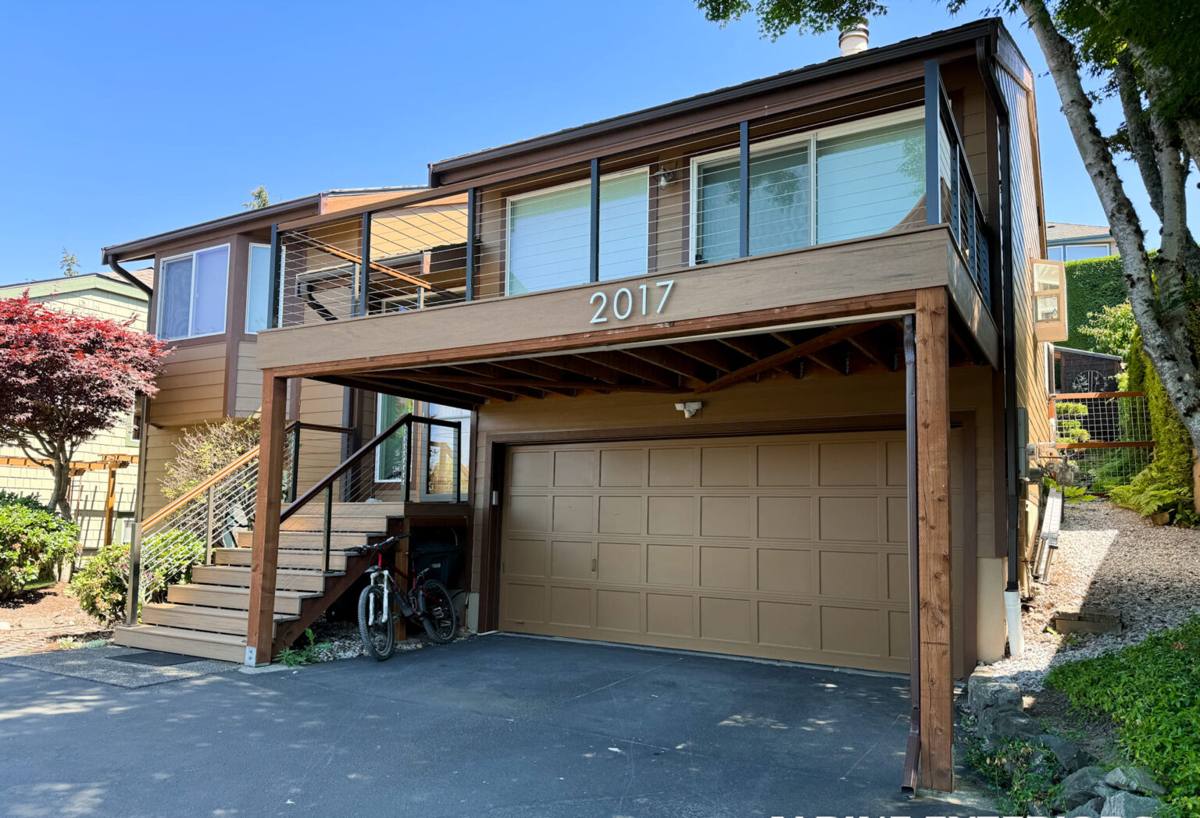
What Salt Air, Rain, and Moss Actually Do to Siding
Salt Air
Airborne salt is corrosive to metal fasteners, flashing, and trim, and it accelerates the breakdown of coatings that aren't formulated to resist it. On wood-based and wood-composite sidings, salt-laden moisture speeds up swelling, checking, and paint failure at the surface. Over years, this shows up as chalky, thin-looking paint, rusting fastener heads bleeding through, and edges that start to soften.
Driving Rain
California Creek's exposure means wind-driven rain doesn't just fall on siding, it gets pushed into laps, seams, and butt joints. A siding system with poor water management — or one installed without proper flashing, house wrap integration, and drainage gaps — will trap that water behind the cladding. That's how you get rot in wall sheathing that isn't visible until a wall starts to feel soft or a room starts to smell musty.
Moss and Sustained Dampness
Whatcom County's moss season runs long, and California Creek's tree cover and marine humidity make it worse. Moss and algae don't just look bad on north-facing walls and shaded siding runs — they hold moisture against the surface for extended periods, which is exactly the condition that degrades paint, primer, and any siding material with a lower tolerance for sustained wet exposure.
Why We Only Install James Hardie Fiber Cement Here
We standardized on James Hardie fiber cement siding for every home we side, and in an exposure like California Creek's, the reasoning is even more concrete than usual. Fiber cement is dimensionally stable — it doesn't swell, warp, or absorb moisture the way wood and wood-composite products can, so it holds paint and holds its shape through repeated wet-dry cycles. It's also non-combustible, which matters to insurers and to homeowners thinking long-term about risk.
Just as important for this specific location is Hardie's ColorPlus factory finish. It's baked on in a controlled environment with a UV-cured, multi-coat process, which gives it stronger adhesion and better fade and chip resistance than field-applied paint — the kind of finish that matters when salt air and sun are working against a painted surface every day. Hardie's HZ5 product line is engineered specifically for climates with more moisture exposure, which fits Blaine's coastal weather pattern better than a general-purpose siding spec.
We don't install LP SmartSide, vinyl, Cemplank, Allura, primed spruce, or cedar. Each of those has legitimate uses elsewhere, but for a marine-exposed, high-rainfall, moss-prone area like California Creek, we've made a professional call that fiber cement — installed correctly — gives homeowners the best combination of durability, appearance retention, and long-term value. That's the product we stand behind and the only one we put our crews' name on.
What a Correct Installation Looks Like Here
The siding product is only half the equation. In an exposure like this, installation detail is what actually determines whether a home stays dry for the next 30-plus years. On every California Creek project, our process includes:
- Full inspection and repair of existing sheathing and framing before any new siding goes on — covering up rot doesn't fix it
- Correct water-resistive barrier installation with properly lapped and taped seams
- A drainage gap behind the siding so any moisture that does get past the cladding can drain and dry instead of sitting against the wall
- Rain-screen detailing at grade, window and door openings, and roof-to-wall transitions — the spots where driving rain finds its way in
- Corrosion-resistant fasteners set to Hardie's specifications, not generic trim screws or nails
- Proper flashing at every horizontal transition, including butt joints, so water sheds outward instead of behind the panel
- Correct clearance between siding and grade, decks, patios, and roof lines to keep splash-back and standing moisture away from the bottom courses
Skip any one of these steps and you can install a genuinely good product and still end up with moisture problems in five years. It's the combination of the right material and the right detailing that actually solves the problem California Creek's climate creates.
How Our Process Works
1. On-Site Assessment
We walk the exterior, check current siding condition, look for signs of trapped moisture or existing rot, and evaluate exposure on each elevation — north-facing and tree-shaded walls typically need different attention than south- and west-facing walls that get more sun and wind.
2. Scope and Estimate
You get a clear, written scope covering material, prep work, flashing and water management details, and timeline. No surprise change orders for things we could have caught during the walkthrough.
3. Tear-Off and Substrate Repair
Old siding comes off, sheathing and framing get inspected, and any water-damaged material is repaired or replaced before anything new goes up.
4. Weather Barrier and Flashing
This is the step that determines long-term performance. We install the water-resistive barrier, drainage plane, and flashing details to spec — not to the minimum code requirement, but to what the exposure actually calls for.
5. James Hardie Installation
Siding, trim, and accessories go on per Hardie's fastening and clearance requirements, maintaining proper gaps at grade, decks, and openings.
6. Final Walkthrough
We review the finished work with you, covering care and maintenance specific to a coastal, high-moss exposure like California Creek's.
Comparing Siding Approaches for a Coastal Blaine Exposure
| Factor | Wood / Cedar | Vinyl | James Hardie Fiber Cement |
|---|---|---|---|
| Moisture response | Absorbs, swells, prone to rot without diligent upkeep | Doesn't absorb, but can warp and gap, letting water behind panels | Dimensionally stable, doesn't swell or rot |
| Salt air resistance | Finish degrades faster; needs frequent recoating | Color can fade and become brittle over time | ColorPlus finish holds up well to UV and salt exposure |
| Moss/algae resistance | Porous surface holds moisture, feeds growth | Can trap moisture behind panels in damp climates | Non-porous, factory-finished surface resists staining better |
| Fire rating | Combustible | Combustible | Non-combustible |
| Maintenance | Regular painting/staining and moisture checks | Low, but repairs can be visible and color-matching is hard | Periodic caulk/paint checks per warranty; no repainting cycle for color retention |
Signs Your California Creek Home May Need New Siding
- Paint that's chalking, peeling, or failing faster than it should for its age
- Soft or spongy spots when you press on siding, especially near the bottom courses or under windows
- Persistent moss or algae staining that returns quickly after cleaning
- Visible gaps, warping, or separation at butt joints and corners
- A musty smell near exterior walls, which can indicate trapped moisture behind the siding
- Rusted or bleeding fastener heads showing through the surface
If any of these sound familiar, it's worth getting a professional look before small issues turn into sheathing or framing repairs.
What It Costs to Do It Right
Every project is different based on square footage, current siding condition, how much substrate repair is needed, and trim/detail complexity. In general, the cost drivers on a California Creek project break down as:
| Cost Factor | Why It Matters Here |
|---|---|
| Substrate condition | Hidden rot from past water intrusion adds repair scope before new siding can go on |
| Elevation exposure | Walls facing prevailing wind and rain often need more robust flashing detail |
| Trim and detail complexity | More windows, corners, and transitions mean more flashing points to get right |
| Siding profile and finish | Lap width, texture, and ColorPlus finish selection affect material cost |
| Access and site conditions | Tree cover, slope, and setback can affect labor time |
We give honest, itemized estimates so you know exactly what you're paying for and why, with no pressure to upgrade beyond what your home actually needs.
Why Local Experience in This Exposure Matters
A siding crew that mainly works drier, inland jobs doesn't always think about drainage gaps, salt-tolerant fasteners, or moss-prone shaded walls the same way a crew that regularly works Blaine's waterfront-adjacent neighborhoods does. California Creek's combination of marine air, driving rain, and shade-driven moss growth is a specific set of conditions, and getting the installation details right for that combination is what separates siding that lasts from siding that needs attention again in a few years.
We work throughout Blaine and Whatcom County, and we bring the same water-management and installation standard to every job — because in this climate, cutting corners on flashing or fastener choice shows up as a real problem within a handful of winters, not decades.
If your California Creek home needs new siding or you're planning ahead for a project, we're happy to walk the exterior with you and give you a straightforward, no-pressure estimate — just fill out the form below to get started.