 Blaine
 Deck Repair in Cherry Point: Built for the Water, Not Against It
Cherry Point sits right where Whatcom County meets the Strait of Georgia, and that location shapes everything about how a deck ages out here. Homes on or near the shoreline take a steady diet of salt-laden air, wind-driven rain, and enough shade and moisture in the winter to grow moss on almost anything horizontal. A deck that would last two decades in a dry inland yard can start showing real trouble in half that time if it wasn't built — or repaired — with this specific climate in mind.
We work on decks throughout Blaine and the surrounding Whatcom County shoreline, and Cherry Point comes with its own particular wear pattern. This page covers what we actually see out there, what a correct repair looks like, and how to tell whether your deck needs patching, structural work, or a full rebuild.
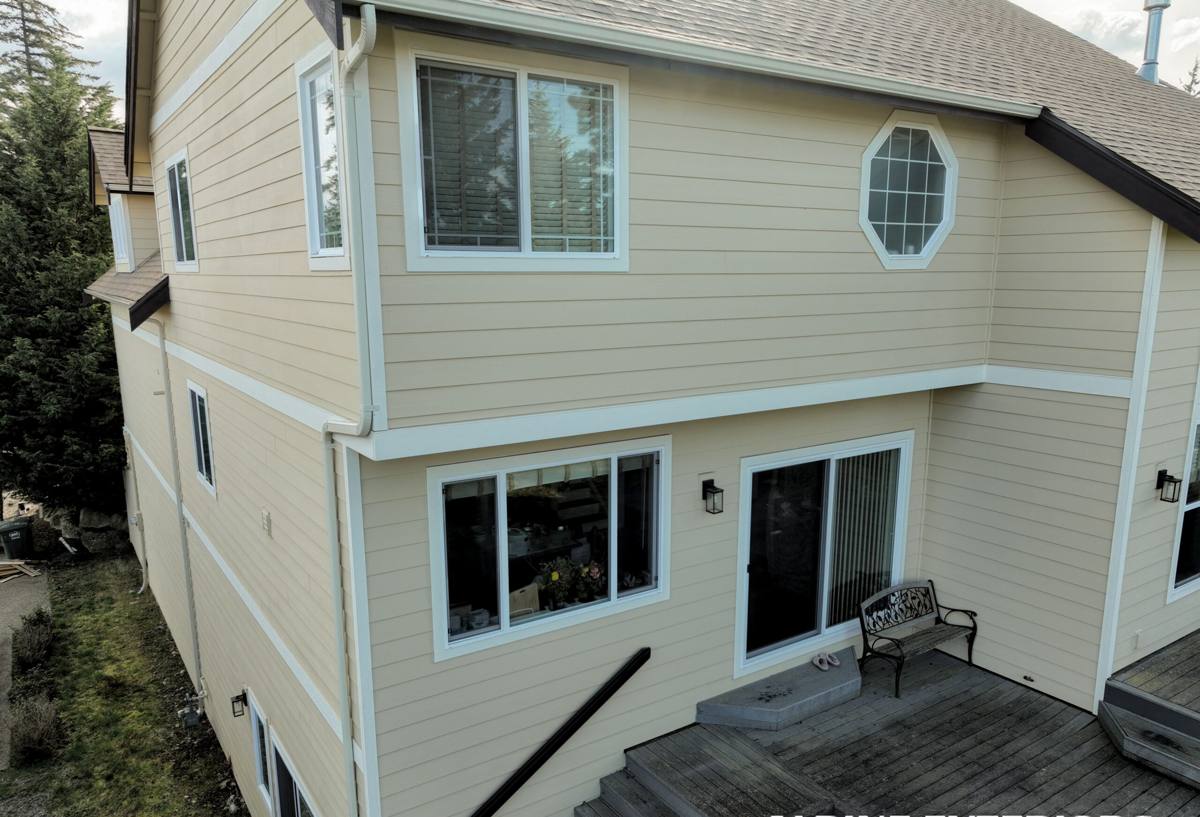
Why Cherry Point Decks Wear Differently
Salt Air and Metal Fasteners
Airborne salt from the Strait accelerates corrosion on anything metal — nails, screws, joist hangers, post bases. Once a fastener starts rusting, it loses grip strength long before it looks obviously bad. On a lot of the repair calls we get in this area, the decking boards themselves are still serviceable, but the fasteners holding them down have corroded to the point of failure.
Driving Rain and Water Intrusion
Storms coming off the water don't fall straight down — they come in sideways. That matters because it pushes rain into joints, under flashing, and behind ledger boards that were only ever designed to shed water falling vertically. Over years, that sideways-driven moisture finds every gap in a deck's waterproofing.
Moss, Shade, and a Long Wet Season
Whatcom County's wet season runs long, and shaded or north-facing decks near Cherry Point can stay damp for weeks at a stretch. Moss and algae take hold on decking boards, stairs, and railings, and once established they hold moisture against the wood surface around the clock — which is a very different exposure than an occasional rain shower.
Signs Your Deck Needs Repair
Not every issue means a full rebuild. Here's what we check for on a Cherry Point deck inspection, and what each sign usually points to:
- Soft or spongy decking boards — usually localized rot from trapped moisture, often repairable board by board
- Rust streaks below fasteners — corroding hardware that needs replacing before it fails under load
- Green or black film on the surface — moss and algae buildup, a maintenance issue now but a moisture trap if ignored
- Movement or bounce in the frame — loose or rotted joists, ledger connections, or posts; this is structural and shouldn't wait
- Gaps or separation at the ledger board (where the deck meets the house) — a common water-intrusion point that can affect the house framing behind it
- Railings that flex or wiggle — a safety issue first, and often a sign of post rot below the connection
- Stair stringers that feel uneven or springy — worth checking underneath for rot at ground contact points
A deck that shows only surface wear — graying wood, light moss, a few loose screws — is a maintenance job. A deck with soft framing, a failing ledger connection, or posts rotted at the base is a structural repair, and that distinction changes both the scope and the cost.
What a Correct Repair Actually Involves
Deck repair gets treated as a cosmetic fix more often than it should be. Swapping a few boards without checking what's underneath just hides the problem for another season. Here's what we actually look at before we touch a board:
The Ledger Connection
This is where the deck attaches to the house, and it's the single most important structural point on the whole deck. If flashing is missing, cracked, or was never properly installed, water gets behind the ledger and rots both the deck framing and the house rim joist behind it. Any repair that doesn't address a failing ledger connection is incomplete, no matter how good the decking looks.
Framing and Fasteners
We check joists, beams, and posts for rot and for corroded or undersized fasteners, especially near ground contact and at any point where two pieces of wood meet and trap moisture between them. In a salt-air environment, we replace corroded hardware with fasteners rated for coastal exposure rather than reusing what's there.
Decking and Drainage
Individual boards get replaced where they're soft, cracked, or cupped. Just as important is making sure water can actually get off the deck — proper board spacing, a slight slope away from the house, and clear drainage paths so water doesn't pool and re-soak the same spots all winter.
Railings and Stairs
Railings take direct wind and rain exposure and see constant hand contact, so post connections and baluster attachment points get checked for both rot and code-compliant spacing and load capacity. Stair stringers get the same rot check as framing, since ground-level wood is the first to go in a wet climate.
Repair vs. Replace: What Actually Drives the Decision
Homeowners often ask whether it's worth repairing an older deck versus starting over. There's no single answer, but a few factors consistently tip the scale one way or the other:
| Factor | Leans Toward Repair | Leans Toward Replacement |
|---|---|---|
| Framing condition | Solid joists and posts, isolated soft spots | Widespread rot in joists, beams, or posts |
| Ledger connection | Intact, properly flashed | Failed flashing with rot into house framing |
| Age of structure | Under 15-20 years, built to a reasonable standard | Original construction is old or undersized for current code |
| Extent of damage | Limited to specific boards, fasteners, or a section | Damage spread across most of the deck |
| Footings and posts | Sound, correctly sized and set | Undersized, unset, or deteriorated footings |
In practice, most of the calls we get in Cherry Point fall into the repair category — the framing is fundamentally sound, and the damage is concentrated at fastener points, the ledger, or a section of decking that took the brunt of wind-driven rain. Full replacement usually only makes sense when the structural framing itself has failed, not just the surface.
Our Repair Process
- On-site inspection. We check the ledger connection, framing, fasteners, posts, and decking surface, and probe any soft spots to find out how far rot has actually spread.
- Written scope and estimate. You get a clear breakdown of what needs repair versus what's cosmetic, so you're not paying to replace sound material.
- Structural repairs first. Ledger flashing, framing, and fasteners get addressed before any decking goes back on — cosmetic work over a bad structure doesn't hold.
- Decking, railings, and stairs. Damaged boards and hardware get replaced, with attention to drainage and spacing so water doesn't pool in the same spots again.
- Final walkthrough. We go over what was repaired, what to watch, and what basic maintenance will keep it in shape through the next wet season.
Material Choices for a Coastal Repair
When we're replacing boards or hardware on a Cherry Point deck, the material decision matters more than it would inland. Pressure-treated lumber is the standard for framing and is generally the most cost-effective choice for structural repairs, provided fasteners and hardware are rated for the exposure. For decking surfaces, homeowners are choosing between wood and composite, and each comes with real trade-offs in this climate rather than a clear winner.
Wood decking is lower cost up front and easier to spot-repair board by board, but it needs regular cleaning and refinishing to resist moss growth and moisture absorption in a wet, shaded environment. Composite decking resists rot and doesn't need refinishing, but it's a higher upfront cost, and if it's ever damaged, matching a repair patch to weathered composite boards is harder than with wood. Neither is automatically the right call — it depends on your budget, how much upkeep you want to do, and how much of the existing deck we're repairing versus replacing outright.
Whatever the surface material, we use fasteners and structural hardware rated for coastal or treated-wood exposure. Standard interior-grade hardware corrodes fast enough near the water that it isn't worth the short-term savings.
Keeping a Repaired Deck in Good Shape
A repair holds up a lot longer with a little basic upkeep, especially given how long the wet season runs in Whatcom County:
- Sweep debris and standing leaves off the deck surface regularly, especially in fall
- Clean moss and algae off boards and stairs before they get a foothold — a stiff brush and deck cleaner is usually enough if caught early
- Check that drainage gaps between boards stay clear and aren't packed with debris
- Look at the ledger flashing and any visible fasteners once or twice a year for early rust or gaps
- Keep gutters and downspouts near the deck clear so runoff isn't dumping extra water onto it
None of this replaces a proper repair when framing or fasteners have already failed, but it's what keeps a freshly repaired deck from ending up back on the repair list in a few years.
Why a Crew That Already Works Cherry Point Matters
Deck repair looks straightforward from the outside, but the failure points are specific to this environment — a ledger flashing detail that works fine in a dry climate can fail here, and hardware that's fine forty miles inland can be corroding within a few seasons this close to the water. A crew that regularly works Blaine and the Cherry Point shoreline already knows where those decks tend to fail first, what fastener and flashing specs actually hold up, and how to tell a cosmetic fix from a repair that's papering over a structural problem.
That local experience also means a more accurate first estimate — less back-and-forth discovering hidden rot mid-project, because we know where to look for it going in.
If you've got a deck near Cherry Point that's showing rust streaks, soft boards, moss buildup, or a railing that doesn't feel as solid as it used to, we're glad to take a look. Estimates are free, there's no pressure, and you'll get a straight answer on whether you're looking at a repair or something bigger.