 Blaine
 Composite Decking Built for Everson's Climate
Everson sits in the Nooksack River valley, and that location comes with its own set of weather demands on outdoor living spaces. Homes here deal with long stretches of steady rain, high ground moisture, and a moss season that can run from late fall well into spring. Add in the humid air that settles in the valley overnight and you have conditions that are hard on any decking material that isn't built or installed correctly for them.
Composite decking has become the go-to choice for a lot of Everson homeowners precisely because it holds up to this kind of weather better than solid wood, provided it's specified and installed the right way. This page focuses specifically on what that means for a composite deck in this part of Whatcom County — not composite decking in general, but composite decking as it needs to perform here.
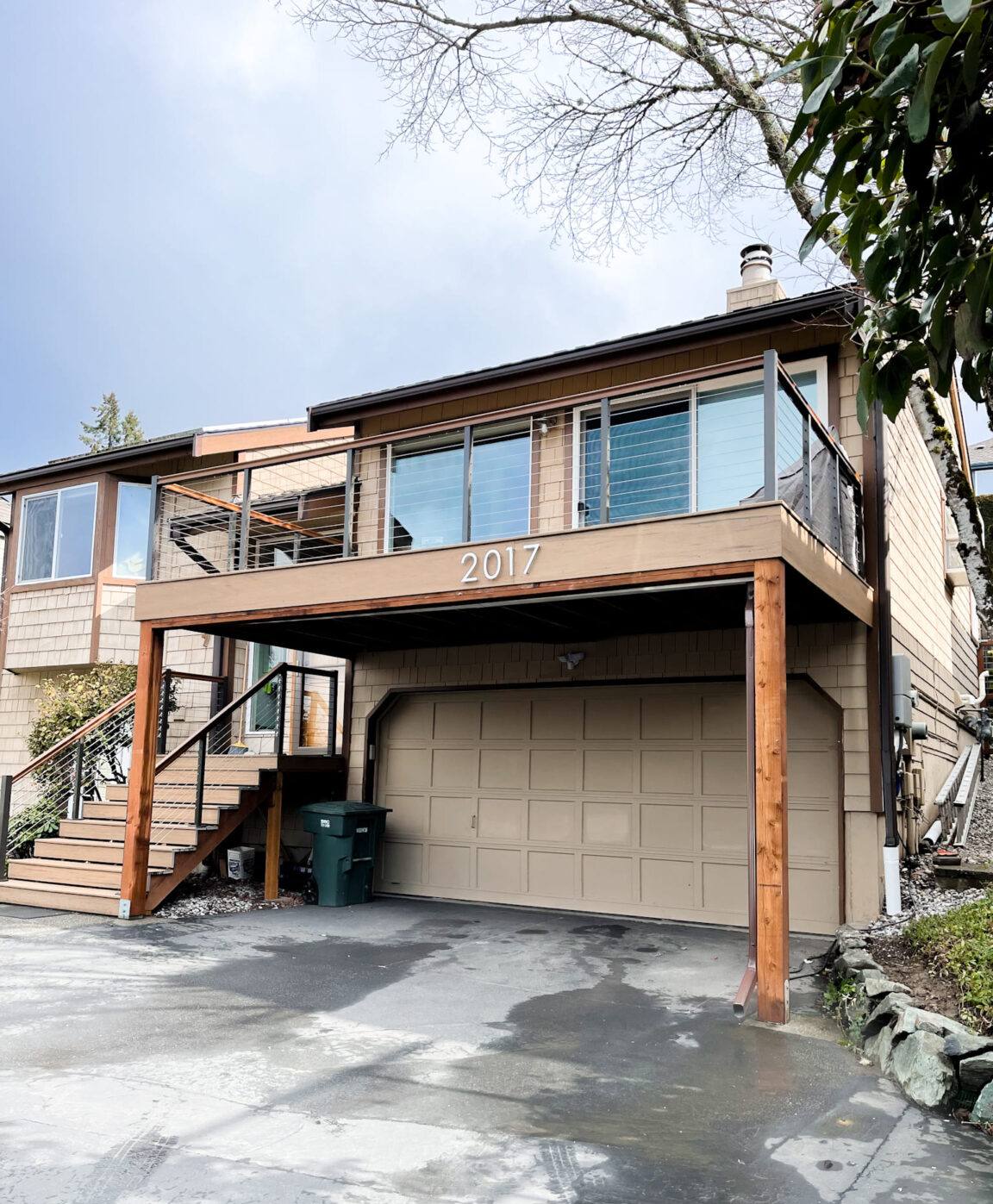
What Whatcom County Weather Actually Does to a Deck
Driving Rain and Standing Moisture
Rain in this region rarely falls straight down — wind off the valley pushes it sideways, which means water gets driven into gaps, under boards, and against ledger connections that a calmer climate wouldn't stress nearly as hard. Add regional salt-laden air moving inland off the coast, and any exposed fasteners or hardware take on moisture and corrosion pressure that a dry-climate deck never sees.
Moss and Organic Growth
Everson's moss season isn't a minor cosmetic issue. Moss and algae hold moisture against the deck surface long after the rain has stopped, and on the wrong material or the wrong fastening pattern, that trapped moisture works its way into the board itself or into the framing underneath. A deck that looks fine in July can be growing a green film by December if drainage and airflow weren't planned for at the start.
Freeze-Thaw Cycling
Whatcom County doesn't get deep freezes often, but it gets enough freeze-thaw swings each winter to matter. Water that's trapped in a board or a fastener channel expands when it freezes, and repeated cycles of that are what cause splitting, fastener pop, and surface checking over time — even in materials marketed as low-maintenance.
Composite vs. Other Decking Materials for This Climate
| Material | Moisture Behavior | Moss/Algae Resistance | Maintenance |
|---|---|---|---|
| Pressure-treated wood | Absorbs water, prone to swelling and rot at fastener points | Needs regular cleaning and re-sealing | Annual sealing/staining |
| Cedar or other natural wood | Moderate resistance untreated, degrades faster in constant damp | High susceptibility without upkeep | Frequent sealing, sanding over time |
| Composite (capped) | Does not absorb water into the core; performance depends on correct drainage/venting below | Resists staining better, but surface film can still grow if airflow is blocked | Periodic washing, no sealing/staining |
| PVC/vinyl decking | Fully water-resistant but can trap moisture beneath if substructure isn't vented well | Low, but slicker surface can be an issue in wet moss conditions | Low, but limited color/board options |
We install composite as our standard recommendation for most Everson decks specifically because it removes the rot risk that wood carries in this climate, without giving up the traditional deck feel that some PVC products trade away. That said, composite is only as good as the framing and drainage underneath it — the board itself is never the whole story.
What a Correct Composite Installation Actually Involves
A lot of composite deck problems we get called out to inspect trace back to shortcuts taken below the board line, not the board material itself. In a wet, moss-prone climate like this one, these details matter more than they would somewhere dry:
- Joist tape on every joist — protects the framing lumber from the moisture that inevitably gets driven under the boards during heavy rain
- Correct board spacing — gaps sized for drainage and for the wood's natural movement with humidity swings, not just tight for looks
- Ledger board flashing — the single most common failure point we see on older decks tied to the house, especially where wind-driven rain hits the wall
- Fastener selection — corrosion-resistant, coastal-rated hardware appropriate for salt-influenced air, not standard interior-grade screws
- Substructure ventilation — enough clearance and airflow underneath so trapped humidity can actually dry out between rain events
- Proper slope away from the house — so water sheets off instead of pooling near the foundation or under low-clearance sections
Any one of these done wrong won't necessarily show up in year one. They show up in year three or four, usually as soft framing, board movement, or a moss film that keeps coming back no matter how often it's washed off.
Board and Substructure Choices That Matter Locally
For Everson homes we generally steer toward composite boards with a fully capped profile on all four sides, rather than a capped-top-only or uncapped board, because the cut ends and underside are where moisture gets in first. For framing, treated lumber or a composite/aluminum substructure system both work, but whichever is used, it has to be paired with the drainage and taping details above — the framing choice doesn't substitute for good detailing.
Our Process for an Everson Composite Deck
- On-site assessment — we look at existing framing condition, drainage slope, sun/shade exposure, and how the deck ties into the house before quoting anything
- Design and material selection — board style, railing, and substructure sized to the actual footprint and load, not a generic package
- Permitting — Whatcom County and local jurisdiction requirements handled up front so there are no surprises mid-project
- Substructure build-out — framing, joist taping, flashing, and ledger work done to hold up under this region's rain, not just to pass a quick look
- Decking and railing install — board spacing, fastening pattern, and stair/railing details finished to spec
- Final walkthrough — we go over drainage, expected seasonal movement, and basic care before we consider the job done
What Drives the Cost of a Composite Deck in This Area
| Cost Factor | Why It Matters Here |
|---|---|
| Existing framing condition | Rot or moisture damage from a prior deck often requires substructure rebuild, not just a resurface |
| Deck size and shape | Complex angles, multiple levels, or stairs add labor beyond simple square footage |
| Board tier | Entry-level vs. premium capped composite affects both material cost and long-term moisture performance |
| Railing style | Composite, metal cable, or glass railing systems vary widely in material and install cost |
| Site access and grading | Sloped lots or limited access common in parts of the valley can add equipment or labor time |
| Ledger/house tie-in complexity | Additional flashing and waterproofing work where the deck attaches to existing siding |
We give real, itemized numbers during the on-site visit rather than a phone estimate, because framing condition alone can shift the price significantly once we're actually under the old deck.
Maintaining a Composite Deck Through a Whatcom County Winter
Composite is low-maintenance, not no-maintenance. In a climate with this much rain and moss pressure, a little seasonal attention goes a long way toward protecting the investment:
- Sweep leaves and debris off the surface regularly in fall — trapped organic matter is what feeds moss and surface staining
- Rinse the deck and railing periodically through winter, especially in shaded or low-airflow areas
- Keep gutters and downspouts clear so runoff isn't dumping directly onto the deck surface
- Check that furniture, planters, and rugs aren't sitting in one spot long enough to trap moisture underneath
- Have the substructure checked every few years, particularly at the ledger connection, even though the boards themselves need little upkeep
Why a Crew That Already Works in Everson Makes a Difference
Decking details that work fine in a drier part of the state can fall short here. A crew that regularly builds and repairs decks around Everson and the rest of Whatcom County already knows which fastener grades hold up, how much slope is actually needed given the average rainfall, and where moss tends to establish first on a given lot orientation. That's not something you get from a general contractor doing one deck a year in a wet climate — it comes from repetition in these specific conditions.
It also means we're not guessing at permitting requirements or inspection expectations for this jurisdiction, and we're positioned to come back for warranty service or a maintenance check without treating it as a special trip.
Get a Straight Answer on Your Deck Project
If you're planning a new composite deck or replacing one that's showing rot, moss buildup, or soft spots, we're happy to take a look and give you an honest read on what it needs. There's no pressure and no upsell — just a clear assessment and a real number. Fill out the form below to schedule a free estimate for your Everson property.