 Blaine
 Building a Deck That Actually Holds Up in Everson
Everson sits inland in the Nooksack River valley, which means a different set of weather problems than the coastal parts of Whatcom County — but not an easier set. You trade a little direct salt exposure for more standing dampness: tree-shaded lots, low-lying ground near the river, morning fog that lingers longer than it does closer to the water, and a long stretch of the year where wood surfaces just don't fully dry out between rains. A deck built without that reality in mind will look fine for a year or two and then start showing problems where you can't easily see them — at the ledger board, in the framing, and in the footings.
A custom deck for an Everson property should be designed around how this specific site drains, how much sun it actually gets through the year, and what the ground underneath is doing. That's a different conversation than a generic "deck package," and it's why we treat design and build as one process rather than picking a size off a brochure.
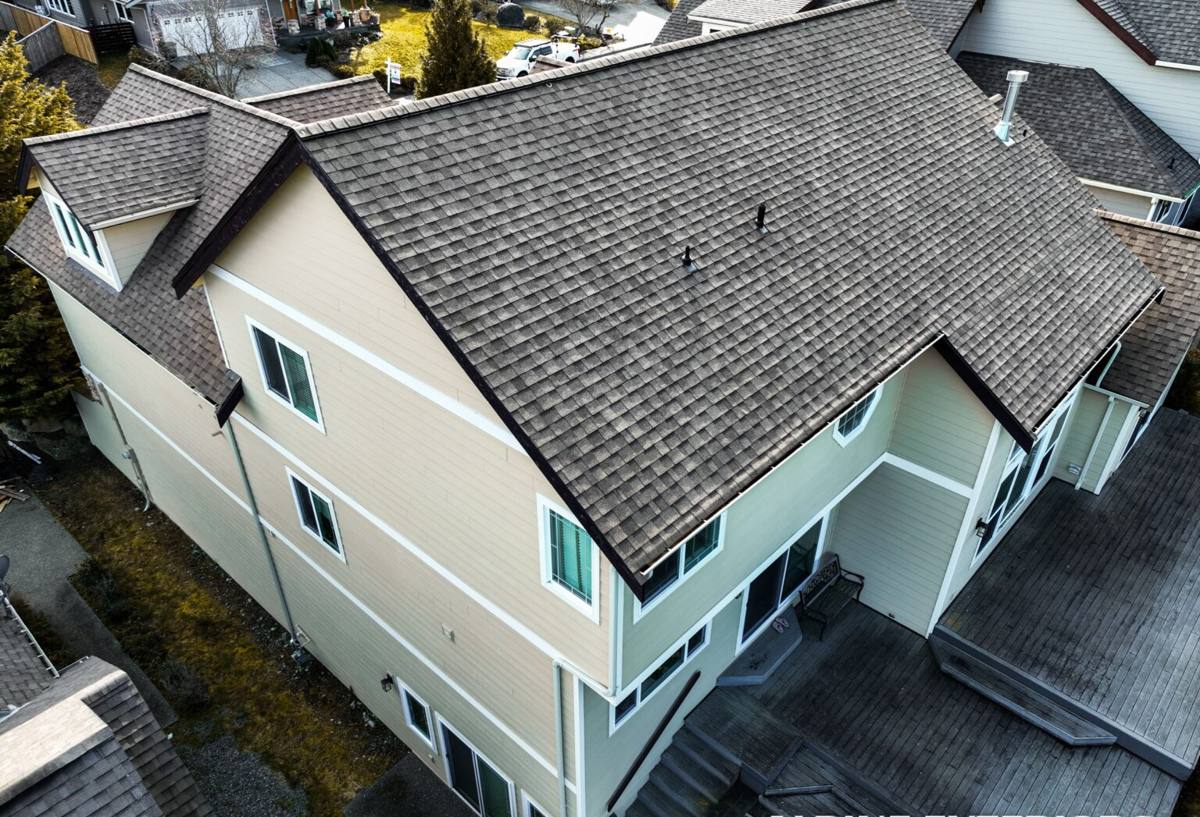
What Everson's Setting Means for the Build
River-valley moisture and shaded lots
Whatcom County's driving rain and long moss season hit low-lying, tree-covered lots harder than open ones, and a lot of Everson properties fit that description. Shade slows drying time on decking boards and framing after every storm, which is exactly the condition moss, algae, and mildew need to take hold. Board spacing, airflow underneath the deck, and material choice all matter more here than they would on a wide-open, full-sun lot.
Flood-prone ground near the Nooksack
Some properties near Everson sit close to the Nooksack River, and a portion of that ground falls in or near mapped flood zones. If your lot is one of them, footing depth, post material, and how low the framing sits above grade stop being cosmetic decisions and become structural ones. We check this before we design anything, not after.
Freeze-thaw cycling
Whatcom County doesn't get brutal winters, but it does get repeated freeze-thaw swings — cold snaps followed by rain and thaw, over and over, from late fall through early spring. Water that gets into a joint, a fastener hole, or a poorly sealed cut end expands when it freezes and works that damage wider every cycle. It's a slow failure, which is why it's so often missed until a board or a connection finally gives out.
Choosing the Right Decking Material
There's no single "best" decking material — there's the right material for how much maintenance you want to do and how much shade and moisture your specific lot deals with. Here's how the common options actually compare for a climate like this one:
| Material | Moisture Behavior | Maintenance | Typical Lifespan |
|---|---|---|---|
| Pressure-treated wood | Resists rot when properly sealed; absorbs and releases moisture with the weather, which drives swelling, cracking, and fastener pop over time | Annual cleaning and re-sealing/staining recommended | 10-15 years with regular upkeep |
| Cedar | Naturally moisture- and insect-resistant, but still needs a sealed finish to fight moss and graying in shaded, damp spots | Cleaning and refinishing every 1-2 years | 15-20 years with upkeep |
| Composite decking | Doesn't absorb water or rot, but can still grow surface algae/moss film in shaded, low-airflow areas if it's never cleaned | Periodic washing; no staining or sealing | 25-30+ years, manufacturer-dependent |
| PVC/capped polymer decking | Fully sealed surface, best moisture and moss resistance of the group | Occasional washing | 25-30+ years, manufacturer-dependent |
For a shaded, damp Everson lot, we usually steer homeowners toward composite or capped polymer boards if long-term, low-maintenance performance matters most to them. Real wood still has a place — it's less expensive up front and plenty of homeowners like the look and don't mind the upkeep — but we're honest that it asks more of you every year in a climate this wet.
The Structure You Don't See Is What Determines the Lifespan
Almost every deck failure we get called out to inspect traces back to the framing, not the decking boards on top. The visible surface is the easy part. What actually determines whether a deck lasts 10 years or 30 is underneath it.
- Footings sized and set below frost depth — undersized or shallow footings shift with freeze-thaw and ground saturation, especially on lower, wetter lots.
- Joist protection — flashing tape over the top of every joist keeps water from soaking into end grain and fastener holes, which is where rot starts on an otherwise sound frame.
- Corrosion-resistant hardware — hangers, screws, and structural connectors rated for treated lumber and wet exposure, not standard interior-grade hardware.
- Proper drainage slope — a very slight pitch away from the house so water sheds off the surface instead of pooling on it.
- Airflow underneath — enough clearance and gapping for the structure to actually dry out between storms, which matters more on shaded lots than sunny ones.
Ledger Board Attachment: The Single Biggest Point of Failure
Where a deck attaches to the house — the ledger board — is the most common place for hidden water damage to start, and it's also the hardest spot for a homeowner to check without pulling boards up. Done wrong, water works its way behind the ledger and into the house's rim joist and wall framing, and you often don't see it until there's already rot or even interior damage. In a climate that gets as much driving rain as Whatcom County, this connection has to be flashed correctly the first time.
A correct ledger installation includes proper flashing that directs water out and away from the house, structural lag bolts or through-bolts (not just deck screws) sized for the load, and a small air gap or drainage path behind the ledger so any moisture that does get in can escape instead of sitting against the house sheathing. This is not an area to cut corners on to save time, and it's usually invisible once the deck is finished — which is exactly why it matters who builds it.
Design Choices That Matter Locally
Railings and guards
Cable, glass, and metal picket railings all handle Whatcom County's wet, mossy conditions better than painted wood balusters, which need repainting more often to keep moisture out of joints and fastener holes.
Multi-level and stair layouts
Sloped or uneven lots near the river valley often call for a multi-level deck or a stair transition down to grade. Each level and stair run needs its own drainage thought-through, not just the main deck surface.
Covered vs. open decks
A partial roof or pergola over at least part of the deck cuts down significantly on the moss and mildew buildup that comes with Everson's shaded, damp conditions — worth considering if the lot doesn't get much direct sun to begin with.
Permits
Most attached decks above a certain height, or decks with guardrails, require a permit through the county or local building department. We handle that process as part of the build rather than leaving it for you to sort out.
How Our Process Works
- On-site visit — we walk the lot, check sun exposure, drainage, soil, and how close the property is to any flood-prone ground.
- Design and material selection — sized and laid out for how your household actually uses outdoor space, with a material recommendation based on your maintenance preference and the site's shade/moisture level.
- Permitting — we pull the required permits and build to the applicable code.
- Footings and framing — footings set to proper depth, joists flashed, hardware corrosion-rated.
- Decking, railings, and finish work — boards, railings, stairs, and any lighting or accessories installed.
- Final walkthrough — we go over the finished deck and a basic care schedule with you before we consider the job done.
Keeping a Deck Healthy Through Whatcom County's Wet Seasons
Even a well-built deck needs some seasonal attention in a climate this wet. Here's what actually matters:
- Sweep debris off the surface regularly, especially fallen leaves and needles in shaded corners where moss gets started fastest.
- Wash the deck surface at least once or twice a year — more often on heavily shaded sections — to keep moss and algae from getting a foothold.
- Check and clear gaps between boards so water keeps draining through instead of pooling.
- Inspect railings, stair connections, and any visible fasteners once a year for looseness or corrosion.
- If you have a wood deck, plan on re-sealing or re-staining on the schedule the finish manufacturer recommends — skipping a cycle in this climate shows up fast.
- Keep gutters and downspouts near the deck clear so roof runoff isn't dumping extra water onto or under the structure.
Why Local Experience Matters for This Job
Deck-building isn't complicated in the abstract — footings, framing, decking, railings. What's harder to get right from a distance is knowing how a specific Everson lot behaves: which yards stay damp longest after a storm, which ground sits close enough to the Nooksack to warrant a more conservative footing approach, and how much shade actually reaches a given deck through the seasons. A crew that already works Whatcom County properties has already made those judgment calls dozens of times over, on ground very much like yours.
If you're thinking about a new deck or replacing one that's showing its age, we're happy to come take a look and talk through what makes sense for your property. The estimate is free, there's no pressure, and you'll get a straight answer about what your site actually needs — use the form below to get started.