 Blaine
 Custom Windows for Nooksack Homes: Why Standard Sizes Often Fall Short
Nooksack sits in a part of Whatcom County where houses don't always fit a catalog. Farmhouses with settled, slightly out-of-square openings sit alongside newer construction with modern rough openings, and a fair number of homes have additions or remodels where a window opening was framed by hand, not to a manufacturer's stock chart. When a window doesn't match a stock size, contractors have two choices: force a stock unit into an opening it wasn't made for, or build the window to the actual opening. We do the second one. It costs a bit more up front and it's the only way to guarantee the seal, the flashing, and the trim all come together correctly.
This page is specifically about custom window work for homes in and around Nooksack — not a general product overview. The reasoning behind sizing, materials, and installation sequence below is shaped by what this area's weather actually does to a window over the years.
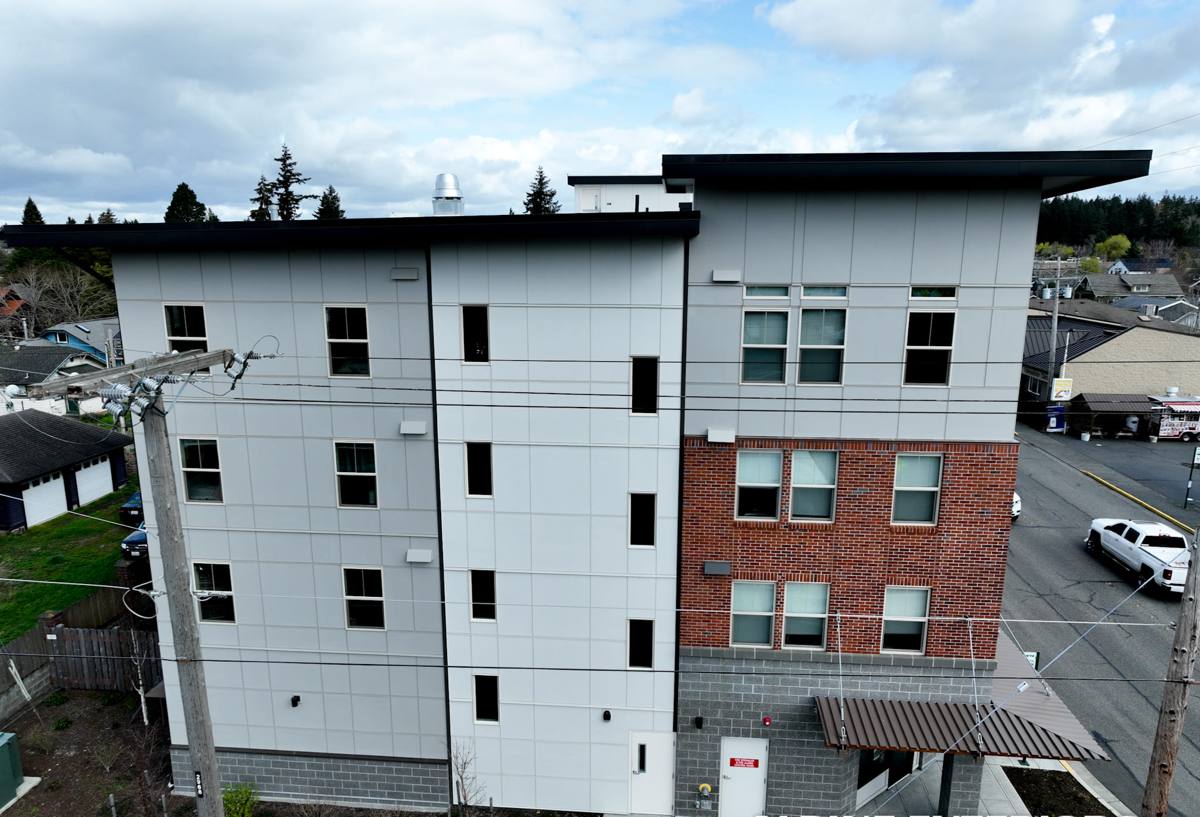
What This Region's Weather Does to Windows Over Time
Whatcom County homes deal with a specific combination of stresses: salt-laden air moving inland off the water, long stretches of driving, wind-pushed rain rather than gentle straight-down rain, and a moss season that can run most of the year on north- and west-facing walls. None of these alone destroys a window quickly. Together, over a decade or two, they find every weak point in a window system.
Salt air and metal fatigue
Salt in the air accelerates corrosion on window hardware, balances, and fasteners. Cheaper hinges, cranks, and locking mechanisms that would last decades in a dry inland climate can start sticking or corroding years earlier here. This is why we pay attention to hardware quality, not just glass and frame, when we spec a custom window for this area.
Wind-driven rain and water intrusion
Straight-down rain is easy for a window to shed. Wind-driven rain gets pushed sideways and upward against the building envelope, which means it tests the flashing details and the sill pan far more than it tests the glass. Most window failures we see in this region aren't glass failures — they're water finding a gap at the sill, the head flashing, or a poorly sealed nailing flange.
Moss, mildew, and prolonged moisture exposure
Shaded walls and slow-drying siding around window openings hold moisture longer here than in drier climates. That moisture works on wood trim, sill material, and any exposed fasteners. A window detail that looks fine on a sunny install day needs to be built assuming it will stay damp for days at a stretch during the wet months.
Signs a Nooksack Home Needs Custom Sizing, Not a Stock Replacement
- The opening is out of square by more than a small margin — common in older farmhouses as framing settles
- You've had a contractor say a stock window "should work with some shimming and extra caulk"
- Trim or siding around the window shows staining, soft spots, or paint failure concentrated near the frame
- The window is a non-standard shape — arched, angled, or part of a custom bay or bow arrangement
- You're replacing one window in a set and need it to match sightlines and sash proportions on the others
- Condensation collects between panes or along the frame edges even in mild weather
Any one of these is a reason to have someone measure and evaluate in person rather than order off a size chart.
What a Correct Custom Window Job Actually Involves
The window itself is one part of the job. The installation details around it matter just as much, especially given the wind-driven rain this area sees.
Measuring the opening, not the old window
Old windows are frequently not square, plumb, or level, especially in older Nooksack homes. We measure the actual rough opening in multiple places — width and height at top, middle, and bottom — and build or order to the true dimensions, not to whatever the previous window happened to be.
Removing old material down to the framing
A correct install means pulling the old window and any failed trim or sill material back to sound wood or framing, so we can see what's actually there. Skipping this step to save time is how rot and hidden water damage get sealed back up behind a brand-new window.
Sill pan and flashing, in the right order
The sill pan goes in first, sloped to shed any water that gets past the window back out, not into the wall. Flashing tape integrates with the house wrap or building paper in a shingled sequence — top layer overlapping the one below — so water moving down the wall never meets a seam that lets it in.
Insulation and air sealing around the frame
The gap between the window frame and the rough opening needs to be filled with a material that stays flexible and doesn't compress or trap water — low-expansion foam or backer rod and sealant, not just fiberglass batting stuffed in by hand.
Interior and exterior trim that sheds water
Exterior trim gets back-caulked and detailed so water runs off the face of the trim, not behind it. This is a small detail that makes the difference between trim that lasts fifteen-plus years and trim that needs attention in five.
Frame Material Options for This Climate
There's no single "best" material for every home — it depends on the house's style, your maintenance preference, and budget. Here's how the common options actually perform in Whatcom County conditions:
| Material | How It Handles Salt Air & Rain | Maintenance | Typical Fit |
|---|---|---|---|
| Vinyl | Good — won't corrode or rot; seams and hardware quality vary by manufacturer | Low — occasional cleaning | Most homes, budget-conscious remodels |
| Fiberglass | Very good — dimensionally stable, resists moisture-driven expansion | Low | Custom shapes, larger openings, higher-end remodels |
| Aluminum-clad wood | Good exterior protection, but relies on the cladding seal staying intact over time | Moderate — interior wood still needs occasional attention | Homes wanting a wood interior look with exterior durability |
| Bare wood | Requires the most diligence — moss/mildew season and driving rain will find any gap in the paint or stain | High — regular repainting/resealing | Historic homes where matching original wood trim matters |
For most Nooksack homes we work on, vinyl or fiberglass ends up being the practical choice given the amount of wind-driven rain the walls see, but we'll walk through the honest trade-offs for your specific house rather than push one product line.
What Drives Cost on a Custom Window Job
| Factor | Why It Matters |
|---|---|
| Opening size and shape | True custom sizes and non-rectangular shapes cost more to manufacture than standard sizes |
| Number of openings | Per-window cost typically drops when several windows are done in one project |
| Existing water or rot damage | Framing repair found once we open the wall adds labor and material beyond the window itself |
| Frame material | Fiberglass and clad-wood generally cost more than vinyl; bare wood custom units cost the most |
| Trim and siding integration | Matching existing trim profiles or siding patterns takes more time than a plain trim-out |
| Access and building height | Second-story or hard-to-reach openings add labor time and equipment needs |
We give a written estimate after an in-person look at the openings — not a phone quote — because so much of the cost depends on what's actually behind the old window.
Our Process, Start to Finish
- On-site assessment — we measure every opening, check for existing water damage, and talk through material and style options for your home
- Written estimate — itemized, so you can see what's driving the cost, with no surprise add-ons hidden in a lump sum
- Ordering and lead time — custom units take longer to manufacture than stock sizes; we'll give you a realistic timeline up front
- Removal and inspection — old windows and surrounding trim come out down to sound material, and we flag anything unexpected before proceeding
- Installation — sill pan, flashing, window, insulation, and trim, in that order, sealed for wind-driven rain
- Final walkthrough — we check operation, seals, and trim with you before calling the job done
Maintaining Custom Windows Through Whatcom County's Wet Season
- Clean tracks and weep holes each fall so moss and debris don't block drainage paths
- Check exterior caulk lines at the trim joints once a year — this is usually the first place to fail
- Wipe down hardware periodically if you're close enough to the water to get salt air exposure
- Watch for soft spots in wood trim during the wet months, especially on north- and west-facing walls
- Keep gutters and downspouts clear so roof runoff isn't dumping extra water near window heads
- Re-caulk or touch up paint at the first sign of a gap — small gaps become rot faster in a wet climate than a dry one
Why It Matters That We Already Work in Nooksack
Custom window work depends on knowing how a specific area's houses were built and how the local weather actually behaves against them — not just following a generic install manual. Working regularly in and around Nooksack and the rest of Whatcom County means we've seen how the settling patterns in older farmhouses affect openings, how far wind-driven rain gets pushed under different roof overhangs, and which trim details hold up through repeated moss seasons and which ones don't. That local pattern recognition shows up in how we measure, flash, and trim every custom window we install here.
If you're dealing with a window that never quite fit right, water staining around a frame, or you're planning a remodel with openings that don't match a standard size chart, we're glad to take a look. Reach out for a free, no-pressure estimate using the form below, and we'll give you a straight assessment of what your windows actually need.