 Blaine
 Building Decks for Dakota Creek's Specific Climate
Dakota Creek sits close enough to the water that homes here deal with a version of Whatcom County weather that's a notch harder on outdoor structures than what you'd find further inland. The combination of salt-laden air off Drayton Harbor and Semiahmoo Bay, driving rain that comes in sideways during winter storms, and a moss season that can stretch from October through May means a deck built to a generic spec sheet often starts showing problems within a few years. A deck built correctly for this specific area can go a decade or more before it needs anything beyond routine care.
We've worked on homes throughout Blaine, and the properties nearest Dakota Creek and the surrounding low-lying, tree-covered lots consistently show the same wear patterns: corroded fasteners, soft spots where moisture pooled under boards, and moss or algae growth on the north-facing or shaded sections of decking. None of that is inevitable. It's mostly a function of material selection, fastener choice, and how the deck was framed and ventilated underneath — details that matter more here than they would in a drier climate.
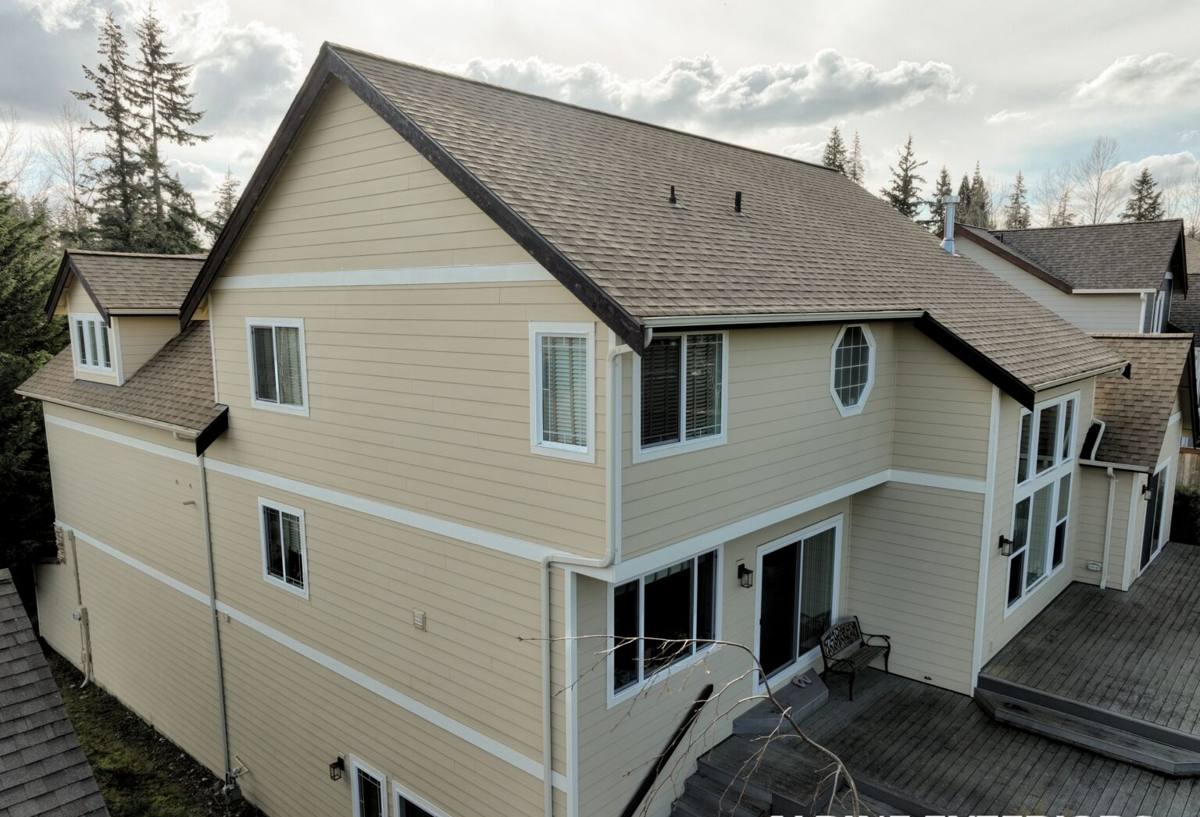
What Salt Air Actually Does to a Deck
Salt air doesn't just sit on the surface — it works its way into any exposed metal and accelerates corrosion, especially on standard galvanized fasteners and connectors. Once a fastener starts rusting, it weakens, stains the surrounding wood or composite, and eventually needs replacing — which usually means pulling boards. This is a slow process, but it's a steady one for any property within a mile or two of the water, and Dakota Creek's proximity to Drayton Harbor puts it squarely in that zone.
The fix isn't complicated, but it does add cost up front: stainless steel or marine-grade coated fasteners and structural connectors throughout, not just on the visible top layer. A deck that looks identical to a cheaper build on install day can age completely differently five years out depending on what's holding it together underneath.
Moss, Shade, and Driving Rain
Blaine's moss season is long, and Dakota Creek's tree cover and creek-adjacent humidity make it worse than average. Moss and algae need three things to take hold: moisture, shade, and a surface that holds water — and a lot of standard deck-building leaves all three unaddressed. Boards installed tight against each other with no drainage gap trap water between them. Framing built without a drip edge or proper flashing lets water wick back up into the structure. Areas under overhangs or heavy tree canopy stay damp for days after a rain, which around here can be most of the winter.
Driving rain adds a second problem: wind-driven water gets pushed sideways into ledger boards, fascia, and any point where the deck attaches to the house. If that connection isn't flashed correctly, water finds its way behind the siding or into the rim joist, and you end up with rot that's invisible until it's serious. This is one of the most common failure points we see on decks that weren't built with this climate in mind — and it's almost entirely preventable with correct flashing and a properly sloped ledger connection.
Framing and Fasteners
- Structural connectors and hardware rated for coastal/high-moisture exposure, not standard galvanized
- Ledger board flashed with a continuous drip cap, never just caulked
- Joist tape or a comparable moisture barrier on top of every joist before decking goes down
- Consistent gapping between boards for drainage and airflow, not just for looks
- Post bases that keep wood posts off grade and off standing water
Decking Material Choices
There's no single "right" material for every Dakota Creek home — it depends on budget, how much upkeep you want to do, and how much shade the deck gets. Here's how the common options actually perform in this specific climate:
| Material | How It Handles Salt Air & Moisture | Moss/Algae Resistance | Upkeep |
|---|---|---|---|
| Pressure-treated wood | Good if fasteners are upgraded; wood itself is rot-resistant when sealed | Needs regular cleaning and re-sealing to resist growth | Annual cleaning, re-stain/seal every 2-3 years |
| Cedar | Naturally moisture-resistant; still benefits from upgraded hardware | Moderate — needs cleaning in shaded areas | Regular cleaning, periodic oil/sealant |
| Composite decking | Excellent — unaffected by salt air, won't rot | Can still grow surface algae in deep shade; cleans off easily | Occasional wash, no sealing/staining |
| PVC decking | Excellent — fully synthetic, no moisture absorption | Best resistance of the group | Lowest — mostly just rinsing |
For homes right along the creek or in heavy shade, we usually steer people toward composite or PVC for the decking surface itself, while keeping the substructure in properly treated and fastened wood framing — that combination handles the moisture load without the ongoing maintenance burden of an all-wood build.
Drainage and Ventilation Underneath
A deck is only as good as what's happening below the surface. Low decks built tight to the ground with poor airflow trap moisture and become the spot where rot and moss problems start. Where grading and height allow, we build in enough clearance for air to move underneath, and on lower decks we pay closer attention to drainage away from the foundation and post footings so water isn't sitting against the structure after every storm.
Design Considerations for Dakota Creek Properties
Lots near the creek and the surrounding low-lying areas of Blaine often have some combination of slope, tree cover, and softer or wetter soil than you'd find on higher ground elsewhere in the city. That affects footing depth and placement, and it can affect how a deck ties into the existing grade. Wind exposure is also worth planning for on more open lots — railing and guard details that hold up to steady wind off the water are a different consideration than a deck tucked into a sheltered yard.
None of this changes what a deck looks like day to day. It changes what's underneath it, which is exactly the part that determines whether the deck is still solid in fifteen years or needs major repair in five.
Our Process for a Custom Deck Build
- On-site assessment — we look at grade, drainage, sun/shade exposure, proximity to the house, and any existing structure being replaced or built onto
- Design and material walkthrough — we go over layout, decking material trade-offs, railing options, and how the deck ties into your home, with honest pricing for each option
- Permitting — we handle the permit application and inspections required for the project through the applicable jurisdiction
- Framing and structural work — footings, posts, beams, and joists built with corrosion-resistant hardware and proper flashing at every connection point to the house
- Decking, railing, and finish work — installed with correct spacing and fastening for drainage and long-term stability
- Final walkthrough — we go over care and maintenance specific to the material you chose before we call the job done
Keeping a Deck Ahead of Moss and Salt Air
A well-built deck in this area still needs some seasonal attention — the goal is to make that upkeep light and manageable rather than a constant fight against the climate.
- Sweep debris and standing leaves off the deck regularly, especially in fall — trapped organic matter is what moss and algae feed on
- Rinse or gently wash the surface a few times a year, more often in heavily shaded spots
- Check railing hardware and fasteners annually for early rust or corrosion, particularly on decks within sight of the water
- Keep gutters and downspouts near the deck clear so runoff isn't draining directly onto or under it
- Re-seal or re-stain wood decking on schedule rather than waiting until it visibly needs it
- Trim back overhanging branches where practical to reduce shade and improve airflow across the surface
Permits and Local Requirements
Most new decks and significant deck rebuilds require a permit, with specifics depending on size, height, and attachment to the home. Requirements can vary by jurisdiction within Whatcom County, and setback rules matter more on creek-adjacent and waterfront-influenced lots than on a typical inland property. We handle the permit process as part of the build so you're not sorting through code requirements on your own.
What a Deck Like This Costs
Every deck is priced around its own size, material choice, height, and site conditions, so exact numbers only come from an on-site look. In general terms, the biggest cost drivers on a Dakota Creek project are:
| Factor | Why It Affects Cost |
|---|---|
| Decking material | Composite and PVC cost more upfront than wood but need far less long-term maintenance |
| Height and footing depth | Sloped or low-lying lots near the creek often need deeper or additional footings |
| Hardware upgrade | Stainless or coastal-rated fasteners and connectors cost more than standard galvanized but prevent early corrosion |
| Size and layout complexity | Multi-level decks, built-in seating, or custom railing add labor and material |
| Flashing and waterproofing detail | Correct ledger flashing is non-negotiable here and adds a modest, worthwhile cost |
Why It Matters to Hire a Crew That Already Works This Area
A deck built from a standard, one-size-fits-all spec will often look fine for the first year or two anywhere in the country. What separates a deck that lasts in Blaine from one that doesn't is whether the builder actually accounted for salt air, driving rain, and a long moss season when choosing fasteners, planning drainage, and detailing the flashing — decisions that don't show up until years later. Crews that work Dakota Creek and the surrounding Blaine neighborhoods regularly see how decks age in this specific environment, not just how they look on installation day.
If you're planning a new deck or replacing one that's showing its age, we're happy to take a look at your property and talk through what makes sense for your site, your budget, and this climate. Fill out the form below for a free, no-pressure estimate.