 Blaine
 Siding Installation Built for Dakota Creek's Wooded, Creek-Side Lots
The homes along Dakota Creek sit a little differently than the rest of Blaine. This is a wooded, semi-rural corridor set back from the open shoreline, with a mix of older houses on larger lots and newer construction tucked in among mature trees near the water. It's still squarely inside the marine climate that defines this part of Whatcom County, but the specific combination of tree cover, low-lying ground near the creek, and larger, more sheltered parcels changes how a siding system needs to be built and installed compared to a home closer to open water or right in town.
This page is specifically about siding installation — new siding and full re-siding jobs — for properties in and around the Dakota Creek area, not patch repair. We install James Hardie fiber cement exclusively, and everything below assumes that system, since it's the only one we put on homes in this area and the only one we'll stand behind here.
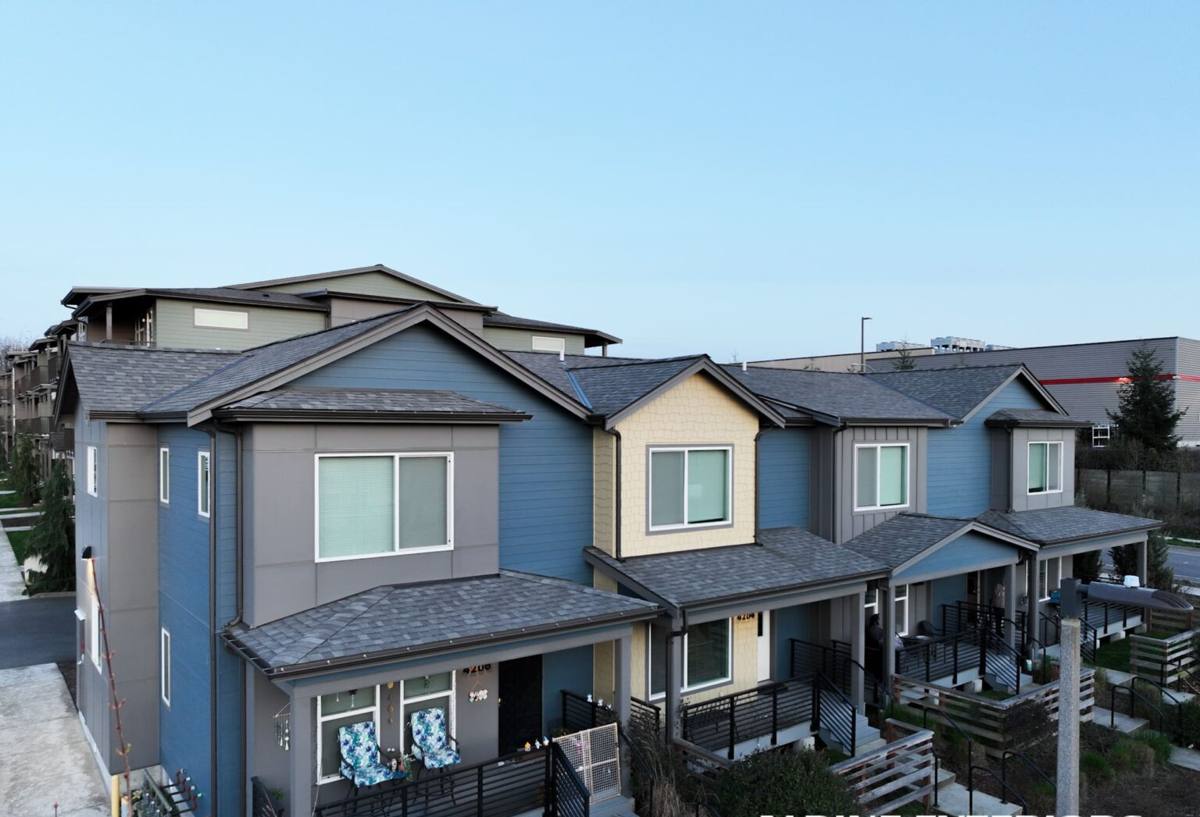
What This Corner of Blaine Demands From a Siding Installation
Salt Air That Still Reaches Inland
Dakota Creek sits back from the open water compared to Blaine's waterfront lots, but it isn't sheltered from salt-laden marine air — wind off the Strait and Drayton Harbor carries it inland across this whole part of Whatcom County, tree cover or not. It's a slower, less obvious exposure than a shoreline property gets, but it still accelerates corrosion on fasteners, flashing, and trim hardware over time, and an installation that skips corrosion-resistant hardware because a lot "feels" more protected under trees is making a decision that shows up as rust streaking and loosened trim a few years down the road regardless.
Mature Tree Cover and a Longer Moss Season
The tree canopy that makes Dakota Creek lots attractive also works against a siding system. Shade slows drying after every rain, and mild, humid conditions for most of the year mean moss and mildew get a longer runway on shaded, north-facing walls here than they would on an open, sun-exposed lot elsewhere in Blaine. That's not a reason to avoid a wooded lot — it's a reason the installation itself needs to account for airflow and drainage behind the siding rather than relying on sun exposure to dry things out.
Low-Lying Ground and Creek-Adjacent Drainage
Properties closer to the creek and its surrounding drainage tend to sit on lower, damper ground than lots higher up in town, and that affects how the bottom courses of siding behave over time. Splash-back, standing groundwater after heavy rain, and grade that's been built up around a foundation over the years all put extra moisture pressure on the lowest few feet of a wall — exactly where clearance and drainage detailing matter most and are easiest to shortcut.
Why We Only Install James Hardie Fiber Cement
We narrowed down to one siding system after seeing which materials actually held up on shaded, damp, creek-adjacent properties like the ones along Dakota Creek, and which ones started showing problems within a few years.
- Non-combustible core: Fiber cement doesn't feed a fire the way wood-based siding products can, which matters for safety and often for insurance underwriting.
- Factory-applied ColorPlus finish: The color is baked on in a controlled factory process rather than brushed on in the field, so it holds up far longer against fading and moisture intrusion than site-applied paint — a real advantage on shaded walls that stay damp longer between dry spells.
- Climate-engineered HZ5 formulation: Hardie's HZ5 product line is built for regions with heavy moisture exposure and freeze-thaw cycling, which fits this part of Whatcom County, tree cover and all.
- Dimensional stability: Fiber cement doesn't swell, cup, or warp the way engineered wood products can after repeated wetting through a long, shaded wet season.
- Strong transferable warranty: Hardie backs its product with one of the more substantial warranty structures in the industry, as long as the installation follows their spec.
We won't install LP SmartSide, vinyl siding, Cemplank, Allura, primed spruce, or cedar. Each has a legitimate place in the market, and plenty of homeowners are happy with them in drier, more open settings. But on a shaded, damp, creek-side lot, we've made a professional call to install one system we can fully stand behind rather than a cheaper option that quietly shifts long-term maintenance risk onto the homeowner.
What a Correct Installation Involves Here
Fastening, Spacing, and Clearance
James Hardie publishes exact fastener type, spacing, and clearance requirements, and following that spec — not a shortcut version of it — is what keeps panels secure and keeps the manufacturer's warranty valid. On lower, damper lots near the creek, clearance above grade and any nearby hardscape or planting beds matters even more than the published minimum suggests, since built-up soil or mulch beds tend to creep upward against a foundation over the years.
Water-Resistive Barrier and Flashing Around Shaded Walls
The barrier underneath the siding, and how carefully it's lapped and taped at every seam and penetration, does most of the real work of keeping moisture out of the wall assembly. On shaded, tree-covered elevations that stay damp longer, a correctly lapped barrier and properly integrated flashing at windows, doors, and vents are what keep that extra dwell time from ever becoming a problem behind the cladding.
Sealing Every Field Cut
Any panel cut on site — at a window, a corner, or the end of a run — needs its cut edge sealed or primed to spec before it goes up. An unsealed cut edge is one of the more common places fiber cement actually takes on water, and on a shaded wall that dries slowly, a raw cut edge stays wet longer than it would on a sun-exposed one.
Installation Shortcuts That Fail Fastest Under Tree Cover
| Shortcut | What it looks like on install day | How it shows up later on a Dakota Creek home |
|---|---|---|
| Standard-grade fasteners | No visible difference | Rust streaking and loosened panels, especially on walls exposed to prevailing wind |
| Skipped clearance at grade or planting beds | Siding looks flush and tidy | Wicking, softness, and paint failure at the bottom courses as soil or mulch builds up over time |
| Barrier or flashing rushed on shaded walls | Looks sealed from outside | Slower drying lets hidden moisture linger longer before it's ever noticed |
| Unsealed field-cut edges | Cuts look clean and painted | Localized swelling at the cut, worse on walls that don't get much direct sun |
| Panels installed tight with no drainage gap | Appears well-fitted | Trapped moisture and persistent moss on north-facing or heavily shaded elevations |
Our Process, Step by Step
We start by walking every elevation of the house and noting which walls sit in near-constant shade, which are closest to lower or damper ground, and where existing moss, staining, or soft trim already point to a chronic moisture pattern rather than a one-time issue. On older homes, we pull the existing siding and inspect the sheathing underneath before anything new goes up — installing over damaged sheathing just buries the problem, and on a lot that holds moisture longer, that's a mistake that compounds. The water-resistive barrier goes on next, with proper overlap and taped seams at every joint and penetration, since this hidden layer does most of the actual work of keeping the wall dry. Siding then goes up following Hardie's fastening, spacing, and clearance requirements as the baseline, with field cuts sealed as they're made rather than at the end of the day. We finish with a walkthrough where we explain what was done and what basic maintenance looks like for a shaded, creek-adjacent property specifically.
New Construction, Re-Siding, and What Access Adds to the Timeline
New construction along Dakota Creek means installing onto fresh sheathing and a new barrier with no unknowns hiding behind the wall — the sequence still matters, but there's no guesswork involved. Re-siding an older home on one of these lots usually means correcting some amount of older detailing along the way: clearances that were adequate when the house was built but no longer are, flashing that was never properly integrated, or a barrier that's failed after years under tree cover. Both call for the same attention to spec; re-siding just adds a discovery phase new construction doesn't have.
Access is also a bigger factor here than on a typical in-town lot. Longer driveways, mature trees close to the house, and softer or uneven ground can all affect how equipment and material get staged, and that's worth accounting for in a timeline rather than discovering on day one.
| Factor | Why it matters on a Dakota Creek property |
|---|---|
| Square footage and number of stories | More area and height mean more labor and, on taller walls, more staging equipment |
| Tree cover and access | Longer driveways and trees close to the house can slow material staging and require extra care around landscaping |
| Sheathing condition underneath old siding | Rot or water damage found during tear-off adds repair scope before new siding can go up |
| Grade and drainage around the foundation | Low or damp ground near the creek sometimes warrants extra drainage detailing at the base of the wall |
| Product line and finish selection | James Hardie offers multiple panel styles, textures, and ColorPlus finishes at different price points |
Choosing a Crew for Dakota Creek: A Checklist and Why Local Experience Matters
Whether you're evaluating our work or getting a second opinion from another contractor, these are reasonable things to confirm before a siding installation is considered done:
- Fasteners and hardware rated for this region's marine exposure, not standard-grade material
- Documented clearance between the bottom of the siding and grade, planting beds, and any nearby hardscape
- A continuous, properly lapped water-resistive barrier, with flashing visible before siding covers it
- All field-cut edges sealed or primed, not left raw
- An installation plan that accounts for shaded, slow-drying walls, not a one-size-fits-all approach
- Current Washington contractor licensing and active liability insurance
- A final walkthrough where the contractor explains what was done, not just a final invoice
A crew that regularly works this specific stretch of Whatcom County already knows how shade, creek-side drainage, and lingering marine air behave differently here than they do on a sunnier, more open lot a few blocks away. That familiarity shows up in the small decisions — where extra drainage detailing earns its keep, which walls need closer flashing attention, how to stage a job around mature trees without damaging root systems or landscaping — and those details are what determine whether a siding job holds up for one wet season or several decades on a lot like this.
If you're planning new siding for a home along Dakota Creek, or want an honest read on whether an existing installation was done correctly, we're glad to come take a look. Reach out using the form below for a free, no-pressure estimate.