 Blaine
 Why Siding Takes a Beating Near Dakota Creek
Homes in and around Dakota Creek sit close to the tidal waters of Drayton Harbor and Semiahmoo Bay, which means siding here works harder than siding twenty miles inland. Salt-laden air, wind-driven rain off the Salish Sea, and Whatcom County's long, damp moss season combine to attack exterior surfaces in ways that don't show up overnight. By the time a homeowner notices a problem, the damage is often already a season or two old.
Siding repair in this area isn't just about patching what's visible. It's about understanding which of these three forces caused the failure, because the fix — and the material choice going forward — depends on getting that right.
Salt Air and Corrosion
Proximity to saltwater means airborne salt settles on siding, trim, and fasteners year-round. On wood and engineered wood products, that salt draws moisture into the surface and accelerates paint failure. On fasteners and metal flashing, it speeds up corrosion, which can loosen boards or create small gaps where water gets behind the siding. A repair that ignores corroded fasteners or compromised flashing will fail again within a year or two.
Driving Rain and Wind-Driven Moisture
Storms coming off the water don't just fall straight down — they drive rain sideways into wall assemblies, especially on west- and south-facing elevations. Over time, wind-driven rain finds every unsealed seam, nail hole, and butt joint. Once water gets behind the siding, it can rot sheathing, delaminate engineered products, and cause paint to blister and peel from the inside out, long before the outer surface looks obviously damaged.
The Long Moss Season
Whatcom County's mild, wet stretch from fall through spring gives moss and algae months to establish themselves on shaded or north-facing walls. Moss holds moisture against the siding surface far longer than open air ever would, and its root structure works into seams, caulk lines, and any place the finish has thinned. Left alone, a patch of moss is rarely just a cosmetic issue — it's usually sitting on top of siding that's already softer than it should be.
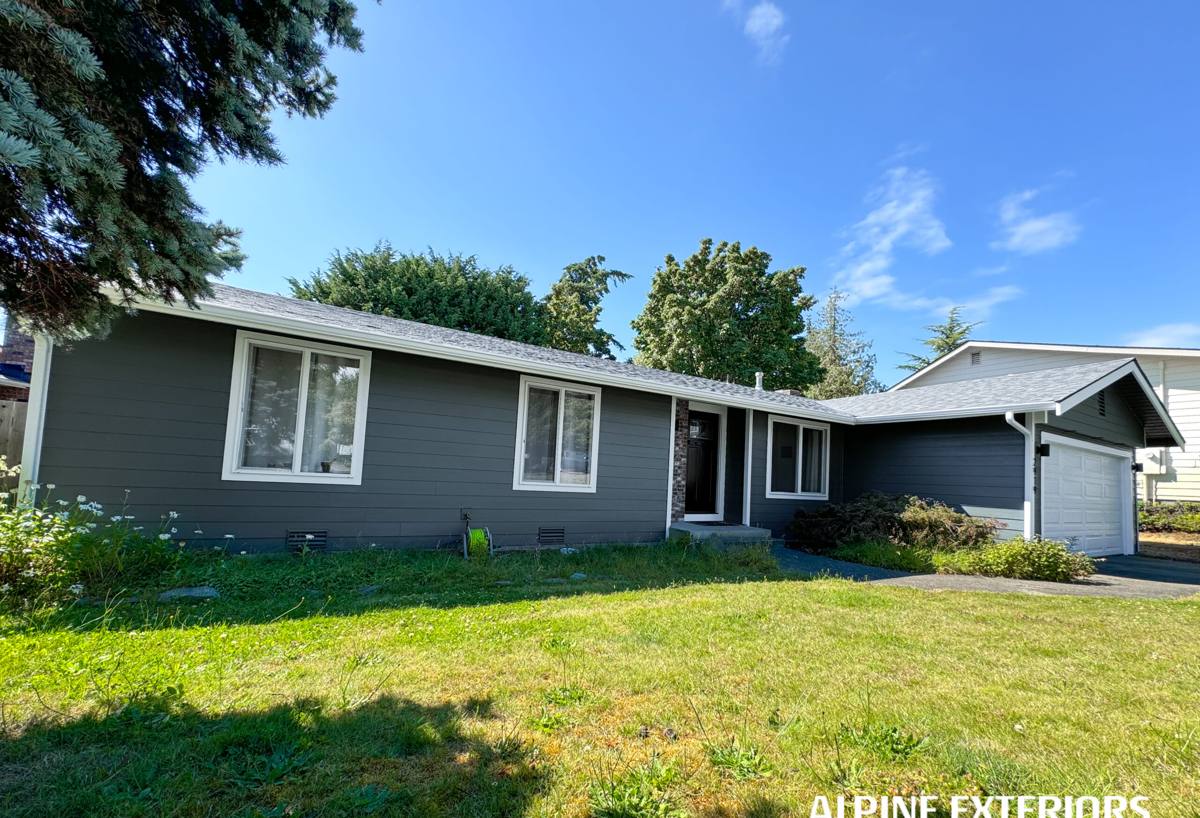
Signs Your Dakota Creek Home Needs Siding Repair
Most siding failures near the water give warning signs well before a full section fails. Worth checking for:
- Soft or spongy spots when you press on the siding, especially near the bottom courses or below windows
- Paint that's bubbling, peeling, or flaking in patches rather than evenly across a wall
- Visible gaps or separation at butt joints, corners, or where siding meets trim
- Moss or algae growth that keeps returning after cleaning, particularly on shaded elevations
- Streaking, staining, or a chalky residue running down from seams or fastener heads
- Warped, cupped, or bowed boards, which usually indicate moisture already trapped behind the surface
- Rust streaks below nail heads or flashing, a sign that fasteners are corroding
- A musty smell along interior walls near the exterior, which can point to moisture intrusion before it's visible outside
What a Correct Siding Repair Actually Involves
Diagnosing the Cause, Not Just the Symptom
A repair that only replaces the damaged board without asking why it failed is a repair you'll likely pay for again. Before any siding comes off, we look at what's happening behind it: is flashing missing or damaged, is a nearby seam letting water in, is a gutter or downspout dumping water where it shouldn't? In a location like Dakota Creek, the underlying cause is almost always some combination of salt exposure, wind-driven rain, or trapped moisture from moss — and the repair needs to address that source, not just the surface.
Matching Materials and Finish
A patch that doesn't match the surrounding siding in profile, reveal, or color sticks out and often performs differently than the original material. On factory-finished fiber cement, that means using compatible product and finish rather than field-painting a mismatched patch. On older wood or composite siding, it means sourcing a comparable profile and understanding that a spot repair may not hold paint or caulk the same way as the surrounding, already-weathered material.
Repair or Replace? How We Help You Decide
Not every siding problem calls for full replacement, and not every siding problem should be patched. The right call depends on how much of the wall is affected, what's causing the damage, and how the existing material has held up overall.
| Factor | Repair usually makes sense | Replacement usually makes sense |
|---|---|---|
| Extent of damage | Isolated boards or a single section | Damage spread across multiple walls or elevations |
| Cause | One identifiable source, like a flashing or gutter issue | Systemic moisture intrusion behind multiple areas |
| Material condition | Surrounding siding is otherwise sound | Surrounding siding is thinning, warped, or near end of life |
| Material type | Fiber cement or sound wood with a clean matching source | Aging vinyl, engineered wood, or wood with recurring moisture problems |
| Repair history | First repair to this area of the home | Third or fourth repair to the same wall in a few years |
When repair is the right call, we'll say so and do the job properly. When the pattern points toward a bigger, recurring problem, we'll tell you that too — including what it would cost to solve it once instead of patching it repeatedly.
Siding Materials We Commonly See — and Repair — in This Area
Dakota Creek homes were built and re-sided across several decades, so repair calls here cover a mix of materials, each with its own considerations.
Wood siding is common on older homes in the area. It can be repaired successfully if caught early, but wood near the water needs more frequent paint maintenance than wood further inland, and any repair should include a hard look at what's happening behind the boards.
Vinyl siding is generally repairable for cracks or a dislodged panel, but color-matching older vinyl is difficult since it fades unevenly over time, and it doesn't hold up as well against direct salt exposure and wind-driven debris as heavier materials.
Engineered wood siding can be repaired, but it's worth knowing these products are more sensitive to sustained moisture at cut edges and seams than fiber cement is — which matters in a climate with this much wind-driven rain and a moss season this long.
Fiber cement siding, including James Hardie products, is what we install on every project and what we most often repair cleanly, since it holds its dimensions and factory finish well even after years near the water. When we repair Hardie siding, the goal is always to match the existing HZ product line and ColorPlus finish so the repair blends in and performs the same as the surrounding wall.
Our Repair Process, Start to Finish
- On-site inspection. We look at the damaged area and the wall assembly around it, not just the board that's failing.
- Root-cause diagnosis. We identify whether the issue is flashing, a seam, drainage, or trapped moisture from moss or debris.
- Honest recommendation. You get a clear answer on whether a repair will hold or whether a larger section needs attention.
- Material sourcing. We source matching material and finish so the repair doesn't stand out or perform differently.
- Proper removal and prep. Damaged material comes off cleanly, and we check and correct the underlying flashing, house wrap, or sealant as needed.
- Installation to spec. New siding goes in with correct fastening, clearances, and sealant — the same standards we hold on full installs.
- Final walkthrough. We confirm the repair matches, seals properly, and address any related concerns you've noticed elsewhere on the home.
Timing a Repair Around This Climate
Siding repair can be done in most seasons here, but the drier stretch of the year makes for cleaner, faster work and gives new caulk and finish time to cure properly before the wet season sets in. If you notice a problem in late fall or winter, it's still worth getting it looked at rather than waiting — an open seam or exposed section left through a wet Whatcom County winter can turn a small repair into a much bigger one by spring, especially with moss having months to take hold on top of it. We'll always be upfront about whether a repair can wait a few weeks or needs attention right away.
Why Hiring a Crew That Already Works in Dakota Creek Matters
Siding repair near the water isn't the same job as siding repair twenty miles inland, and a crew that hasn't worked this specific stretch of Whatcom County can miss things a local crew catches automatically. We know which elevations in this area tend to take the worst of the wind-driven rain, how fast moss re-establishes on shaded walls this close to the creek and harbor, and what salt exposure does to fasteners and flashing over a few winters. That local pattern recognition shortens the diagnosis and reduces the chance of a repair that looks fine for a season and then fails again.
It also means we're not guessing at permitting or code requirements for Blaine and Whatcom County, and we're not learning the local climate on your dime. We've already seen how this specific stretch of coastline treats siding, year after year.
When Repeated Repairs Mean It's Time to Talk Replacement
If you've patched the same section of wall more than once, or if repair calls keep turning up new problem areas each time, that's usually a sign the siding system itself — not just isolated boards — has reached the end of what repair can reasonably fix. That's a normal part of a siding's life near the water, not a sign anything was done wrong.
When that point comes, we install James Hardie fiber cement siding exclusively. It's engineered for coastal, wet climates like this one, holds its factory finish for years without the repeated repainting older wood siding demands, and comes with a strong transferable warranty. It's the product we're willing to put our name behind after repairing a lot of siding that wasn't built for what Dakota Creek's salt air, rain, and moss throw at it.
If you're noticing soft spots, peeling paint, stubborn moss, or gaps in your siding, we're happy to take a look and give you an honest read on what's going on — no pressure, no obligation. Reach out for a free estimate and we'll walk the exterior with you and lay out exactly what we'd recommend.