 Blaine
 Building Decks for Grandview's Coastal Climate
A deck in the Grandview area of Blaine has to survive a different set of conditions than a deck built twenty miles inland. Whatcom County's northwest corner sits right up against the marine air off the Salish Sea, and that air carries salt. Add in the long, wet Pacific Northwest winters and the moss season that follows, and you've got a structure that's under constant low-grade attack from moisture, corrosion, and organic growth. Most of what separates a deck that looks good for fifteen years from one that's soft and spongy by year six comes down to decisions made before the first board is ever installed.
We build decks for homes in this area regularly, and the approach we take here is not the same approach we'd use for a dry-side Washington project. Everything from fastener selection to footing depth gets adjusted for what this specific climate does to wood, metal, and composite materials over time.
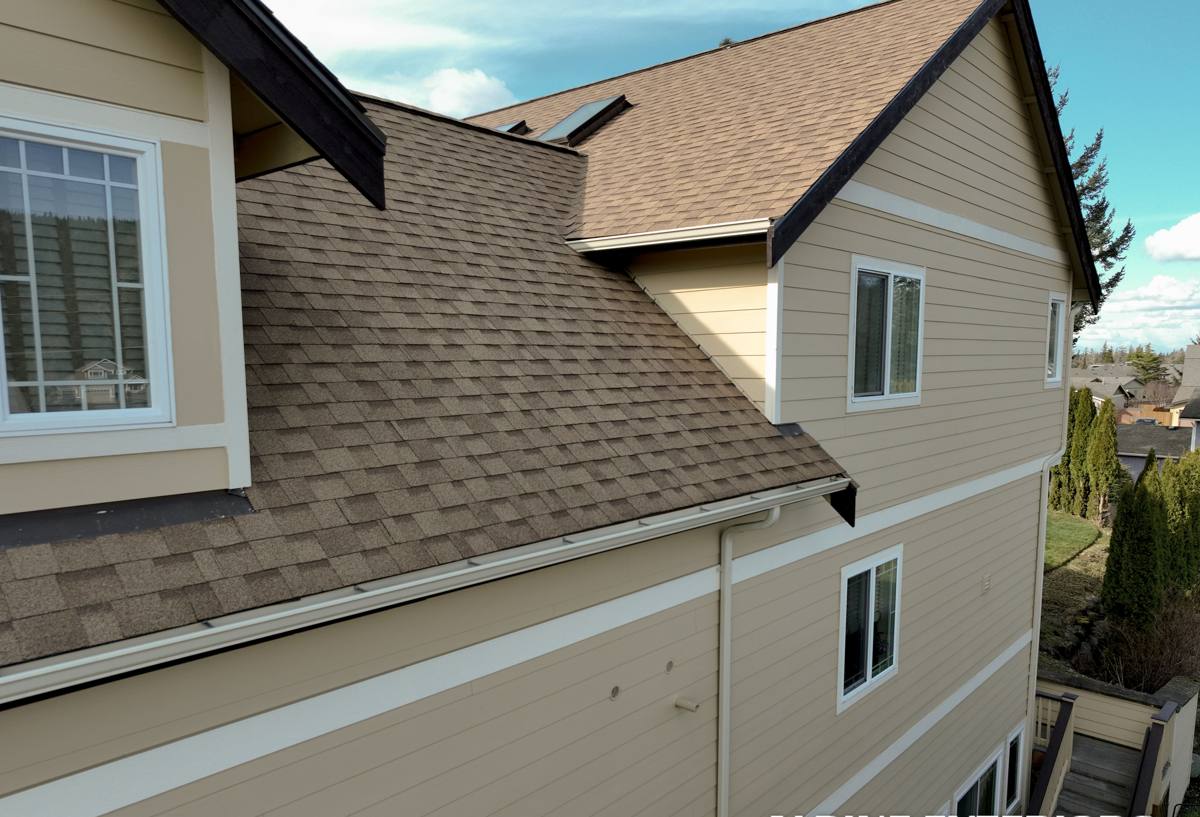
What Salt Air, Rain, and Moss Actually Do to a Deck
Salt Air and Corrosion
Airborne salt accelerates corrosion on any exposed metal — nails, screws, joist hangers, bolts. Standard electro-galvanized fasteners that might be fine in a dry inland climate can start showing rust and pitting within a few years this close to the water. Once a fastener corrodes, it loses holding strength long before it looks obviously bad, which is part of why deck failures near the coast often come as a surprise.
Driving Rain and Water Intrusion
Blaine gets rain that doesn't just fall straight down — wind off the water pushes it sideways into ledger boards, siding-to-deck connections, and any gap in flashing. Water that gets behind a ledger board or under a rim joist and can't drain back out is one of the most common causes of hidden rot in decks throughout Whatcom County.
Moss and Prolonged Dampness
Moss doesn't just grow on roofs. Given a deck surface that stays damp and shaded — north-facing decks, areas under trees, boards installed too tight together — moss and algae take hold on wood and even on some composite surfaces. Beyond looking bad, a mossy deck surface gets slick and holds moisture against the board longer, which speeds up decay in wood decking and can void warranties on some composite products if buildup isn't addressed.
Framing and Fasteners: Where Most Decks Fail First
The visible decking is what homeowners notice, but the structure underneath is what determines whether a deck is safe and long-lasting. In a coastal, high-moisture area like this, we pay particular attention to:
- Ledger board flashing — a proper self-adhered membrane and metal flashing detail where the deck ties into the house, not just caulk
- Fastener material — stainless steel or high-corrosion-resistant coated fasteners rated for the exposure, not generic hardware-store screws
- Joist protection — flashing tape or a protective barrier on top of joists so standing water doesn't sit directly on cut lumber
- Post base connections — elevated, ventilated post bases rather than posts sitting directly in or on wet concrete
- Airflow underneath — enough clearance and ventilation below the deck so the frame can actually dry out between rain events
None of this is visible once the deck is finished, which is exactly why it matters. A deck that looks identical from the outside can have a five-year lifespan or a thirty-year lifespan depending on what's underneath.
Choosing Decking Material for This Climate
There's no single "best" decking material — there's a best material for a given budget, maintenance appetite, and exposure level. Here's how the common options hold up specifically under salt air, driving rain, and moss conditions:
| Material | Upfront Cost | Maintenance | Moss/Moisture Resistance | Realistic Lifespan Here |
|---|---|---|---|---|
| Pressure-treated lumber | Lowest | Annual cleaning, periodic sealing | Fair — needs upkeep to resist moss and checking | 10-15 years |
| Cedar | Moderate | Regular sealing/staining to hold color and resist moisture | Good natural rot resistance, but surface needs care | 15-20 years |
| Composite decking | Higher | Occasional washing, no staining or sealing | Good — resists rot, but caps can still grow surface algae if shaded/damp | 25+ years |
| PVC decking | Highest | Low — periodic washing | Very good — fully synthetic, doesn't absorb moisture | 25-30+ years |
We'll walk through these trade-offs honestly during an estimate rather than pushing whatever has the best margin. A lot of Grandview homeowners land on composite or PVC for the low-maintenance factor given how much moss pressure this climate puts on wood, but a well-built and properly maintained cedar deck is still a solid, attractive choice if you don't mind the upkeep.
Footings, Drainage, and Local Soil
Whatcom County soils vary block to block, but many sites in this part of Blaine have clay-heavy or poorly draining soil that holds water around footings longer than sandier ground would. Footings need to be set below frost depth and sized correctly for the soil conditions on your specific lot — not just built to a generic minimum. Poor drainage around footings is a slow problem: it doesn't usually cause a visible issue in year one, but it contributes to post rot and settling over time. Grading the area under and around the deck so water moves away from the structure, rather than pooling under it, is part of a correct build, not an optional add-on.
Permits and Code Requirements
Most deck construction in Blaine requires a permit, and inspections typically check footing depth, ledger attachment, guardrail height, and stair specifications, among other things. Skipping permitting on a deck build can cause real problems later — at resale, with insurance, or if something needs to be corrected after the fact. We handle the permit process as part of the job rather than leaving it to the homeowner to navigate, and we build to the code requirements that apply in this jurisdiction, not a generic national standard.
Our Process for a Grandview Deck Build
1. On-Site Assessment
We look at sun/shade exposure, wind direction relative to the water, existing drainage patterns, and the condition of the house at the point where the deck will attach.
2. Design and Material Selection
We talk through decking material, railing style, and layout based on how you'll actually use the space, plus what fits the maintenance level you want long-term.
3. Permitting
We prepare and submit what's needed for permit approval and coordinate inspections at the required stages.
4. Construction
Footings, framing, flashing, and fastening are done to the standard described above — the parts you won't see once it's finished are where we spend the most care.
5. Final Walkthrough
We go over the finished deck with you, including basic maintenance expectations for the material you chose, so there are no surprises in year two or three.
Maintenance Checklist for Coastal Decks
Whatever material you choose, a few habits go a long way toward getting the full lifespan out of a deck in this climate:
- Rinse off salt residue and debris periodically, especially after storms with wind off the water
- Clear leaves and organic debris from between boards before they trap moisture
- Check and clear moss from shaded or north-facing areas before it spreads
- Inspect fasteners and hardware yearly for early rust or corrosion signs
- Confirm gaps between boards and clearance underneath aren't blocked, so airflow keeps working
- Reseal or restain wood decking on the schedule appropriate to the product
- Check that gutters and downspouts near the deck aren't dumping extra water onto or under it
Why a Crew That Already Works Grandview Matters
A contractor who mostly builds decks in drier parts of the state will default to specs that work fine there and fall short here. Fastener grade, flashing detail, and material selection all need to be adjusted for a site that sits in salt air with a real moss season, and that adjustment only happens if the crew has actually seen what this climate does to a deck over five or ten years. We work in Blaine and the surrounding Whatcom County area regularly, which means we're not guessing at how a given material or detail will hold up here — we're building to what we've already seen work and seen fail on decks like yours.
If you're planning a new deck or replacing one that's showing its age, we're happy to take a look and put together a straightforward estimate — no pressure, no upsell, just an honest read on what your project needs. Use the form below to get started.