 Blaine
 Deck Repair Built for Dakota Creek's Weather
Dakota Creek sits close enough to the water that homeowners feel it in their decks before they feel it anywhere else on the house. Salt-laden air off the bay corrodes fasteners and hardware faster than inland neighborhoods ever see, driving rain gets pushed sideways into ledger boards and railings by wind off the Strait, and a moss season that can run from October through April keeps deck boards damp for weeks at a stretch. None of that is unusual for Whatcom County, but it does mean a deck built to a generic national standard often ages poorly here. A deck repaired with that same climate in mind lasts a lot longer.
This page is about deck repair specifically — not new deck construction. If your deck is structurally sound but showing wear, rot in isolated spots, loose railings, or surface damage, repair is usually the right call and the more affordable one. We'll walk through what we look for, how we fix it, and why the details matter more in a neighborhood like this than they might somewhere drier.
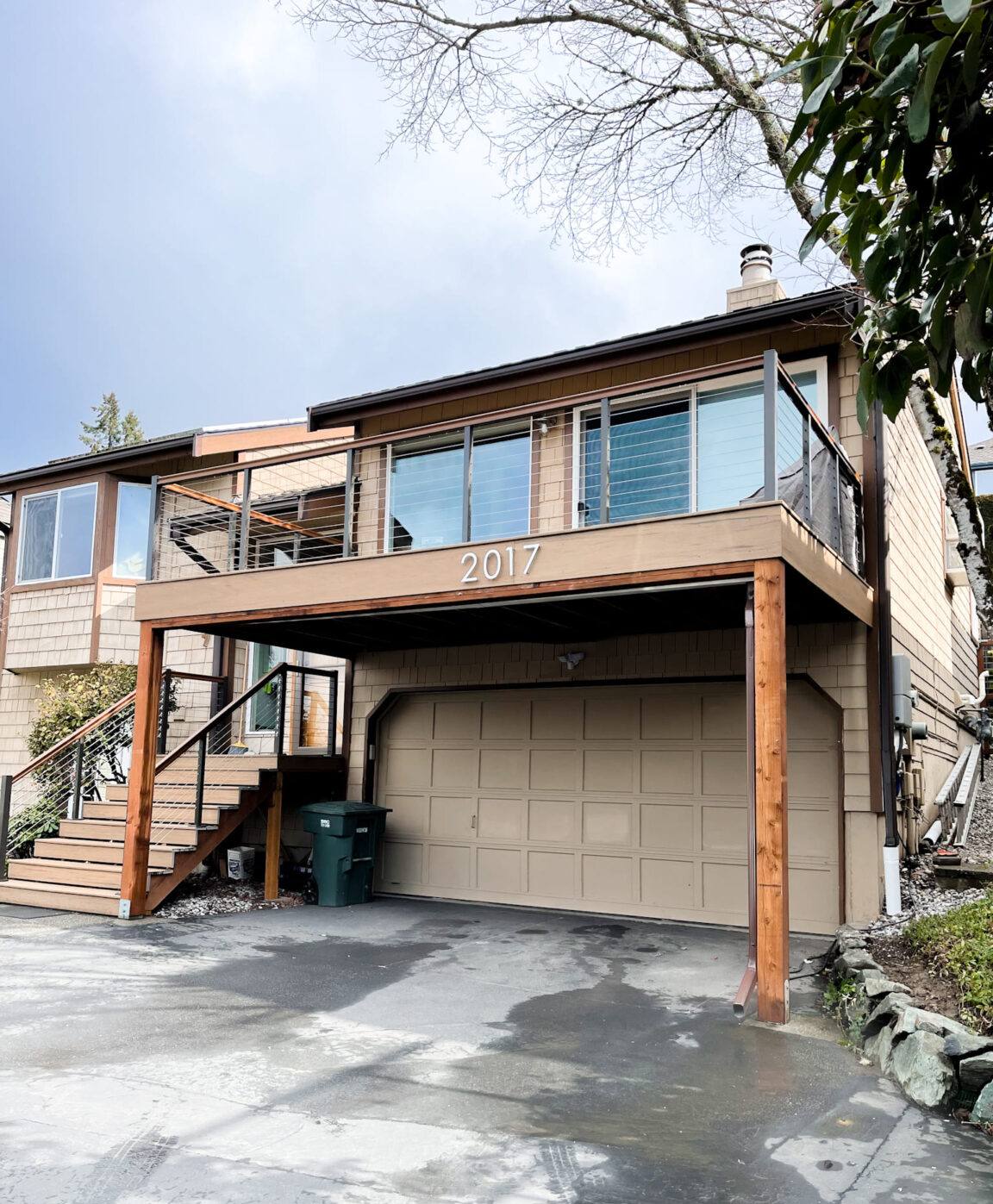
How Local Climate Wears Down a Deck
Salt Air and Metal Fatigue
Every fastener, bracket, and piece of hardware on an exposed deck is exposed to airborne salt whether the deck faces the water or not. Standard galvanized coatings break down under sustained salt exposure, and once that coating is compromised, corrosion moves fast. The failure isn't always visible from the top — a nail or screw can be rusting through from underneath while the deck surface still looks fine.
Driving Rain and Water Intrusion
Wind-driven rain doesn't just fall on a deck, it gets pushed into the joints — where the ledger board meets the house, around post bases, under railing connections, and into any gap where flashing has failed or was never installed correctly. Water that gets trapped in these spots doesn't dry out quickly in our climate, and that's where rot starts.
Moss, Algae, and a Long Wet Season
A shaded deck in Dakota Creek can stay damp for most of the fall and winter. Moss and algae take hold on horizontal surfaces, and beyond being a slip hazard, they hold moisture against the wood or composite surface far longer than open air and sun would allow. Left alone through a few wet seasons, moss growth accelerates surface breakdown on wood decking and can stain and degrade even composite boards over time.
Signs Your Deck Needs Repair, Not Just Cleaning
Some deck problems are cosmetic and some are structural. Knowing the difference before you call anyone saves time and helps you understand what a contractor should be checking.
- Boards that feel spongy, springy, or noticeably softer underfoot in one area
- Visible gaps, cracking, or splintering concentrated near the house or at board ends
- Railings or posts that wiggle or flex when pushed
- Rust streaks running down from screw heads or brackets
- A ledger board area that stays wet longer than the rest of the deck after rain
- Persistent moss or dark staining that comes back within weeks of cleaning
- Stairs that feel uneven, bounce, or have a stringer pulling away from its connection
- Any spot where you can push a screwdriver into the wood with light pressure
Any one of these on its own might be a small repair. Several together, especially near the ledger board or main support posts, usually means it's worth having someone look at the framing underneath, not just the visible surface.
Where We Typically Find Problems in This Neighborhood
The Ledger Board Connection
This is the board that attaches the deck to the house, and it's the single most common failure point we see on repair calls in this area. If flashing was skipped or installed poorly during original construction, water works its way behind the ledger board every time it rains and the wood behind it rots quietly for years before anyone notices a soft spot.
Fasteners and Hardware
Given the salt exposure here, we routinely find corroded joist hangers, popped or rusted-through deck screws, and post base connectors that have weakened well before the wood around them has failed. Replacing wood without upgrading compromised hardware underneath it just resets the clock on the same problem.
Railings and Posts
Railing posts take a lot of lateral stress, and if the post-to-frame connection was under-built or has corroded, you get the wobble homeowners describe as the railing "feeling loose." This is a safety issue, not just a comfort one.
Board Surfaces and Moss Staining
Wood decking that's gone through several wet seasons without regular maintenance often shows checking, cupping, and soft spots concentrated in shaded areas where moss holds moisture longest. Composite decking is more resistant but not immune — moss and algae staining on composite is a cleaning and drainage issue more than a structural one, and it's worth addressing before it becomes a slip hazard.
Repair or Replace? A Practical Way to Decide
Homeowners often assume visible damage means the whole deck needs to go. That's rarely true. Here's how we think through it on a typical Dakota Creek repair call.
| Condition | Usually Repairable | Usually Needs Larger Work |
|---|---|---|
| Framing / structure | Isolated joist or beam rot near one area | Widespread rot across multiple joists or the main beam |
| Ledger board | Localized rot caught early, flashing not yet failed elsewhere | Rot running the length of the ledger, flashing failed everywhere |
| Decking boards | A handful of boards cupped, cracked, or soft | Most of the deck surface showing the same wear at once |
| Railings/posts | Loose connections, minor rot at post base | Multiple posts compromised, code-noncompliant original build |
| Hardware | Some corroded fasteners, frame otherwise sound | Corrosion has already caused fastener failure and movement |
Age matters too. A ten-year-old deck with a rot pocket at the ledger board is a strong repair candidate. A twenty-five-year-old deck with the same symptom, built before current flashing and fastener standards, is often a case where repair buys a few years but replacement is the more honest long-term answer. We'll tell you which situation you're in rather than defaulting to the bigger job.
Our Deck Repair Process
- On-site inspection. We check the deck surface, but more importantly we get underneath it — looking at joists, the ledger connection, post bases, and hardware condition, not just what's visible from above.
- Moisture and rot mapping. Soft-spot probing and a visual check for water staining tells us how far a problem has spread before we start removing anything.
- Honest scope. We tell you what's failing, what's still sound, and what your real options are — repair now, plan a replacement later, or full replacement now if that's genuinely the better value.
- Framing and structural repair. Compromised joists, beams, or ledger board sections get properly cut back to sound wood and reinforced or replaced, with corrected flashing where the original installation was the root cause.
- Fastener and hardware upgrades. Any corroded hangers, brackets, or fasteners get replaced with hardware rated for coastal exposure, not just whatever matches the original build.
- Surface repair. Damaged decking boards, railing components, and stair elements are replaced to match the existing deck as closely as possible.
- Final check and cleanup. We confirm railings are solid, boards are secure, and the site is cleaned up before we call the job done.
Materials We Reach for in Coastal Repairs
| Component | Our Standard Approach | Why It Matters Here |
|---|---|---|
| Fasteners/hardware | Coastal-rated stainless or heavy-duty coated fasteners | Standard galvanized hardware corrodes faster under salt air exposure |
| Flashing | Properly lapped, sealed ledger flashing | This is the single biggest point of water intrusion on repair calls |
| Replacement decking | Matched to existing material — wood or composite | Mixing materials without a plan creates uneven wear and maintenance headaches |
| Post connections | Structural post base and cap hardware rated for the load | Prevents the wobble that comes back within a season on cheaper fixes |
Maintaining a Deck Once It's Repaired
A repair holds up longer with a little seasonal attention, and in this climate that attention matters more than in drier parts of the state.
- Clean moss and algae off horizontal surfaces before it builds up thick enough to hold standing moisture
- Keep gutters and downspouts near the deck clear so overflow isn't adding extra water at the ledger connection
- Check railings for movement once a year — catching a loose post early is a small fix, catching it late is a bigger one
- Reseal or refinish wood decking on the schedule the product actually needs, not just when it looks worn
- Have hardware and fastener condition checked periodically given the accelerated corrosion rate near the water
Why Hire a Crew That Already Works in Dakota Creek
Deck repair done right requires knowing what actually causes failures in this specific environment, not applying a generic checklist. A crew that regularly works Blaine and the surrounding Whatcom County waterfront knows which hardware holds up against salt air, how far flashing failures typically travel before they show on the surface, and which repair shortcuts fail again within a couple of wet seasons. That local pattern recognition is the difference between a repair that lasts and one that becomes a repeat call.
We also know this neighborhood well enough to give you a straight answer about scope before we start — no upsell to a full replacement when a targeted repair will genuinely hold, and no patch job when the framing tells a different story.
If you've noticed soft spots, a loose railing, persistent moss, or just want a second opinion on a deck that's showing its age, we're happy to take a look. Reach out for a free, no-pressure estimate using the form below.