 Blaine
 Why Decks Near Nooksack Wear Out Faster Than the Brochure Says
If you own a home in the Nooksack area outside Blaine, you already know your deck doesn't age the way a deck in a drier inland climate does. Three things work against it year-round: salt-laden air moving in off the water, driving rain that gets pushed sideways instead of falling straight down, and a moss season that can run eight or nine months out of the year. None of these are dramatic on their own. Together, over a decade, they're why a deck that "should" last 20-25 years starts failing structurally at 12-15.
Salt air is the quiet one. It doesn't just sit on the surface — it works into any exposed metal fastener, connector plate, or hinge, accelerating corrosion well beyond what you'd see with the same hardware 30 miles inland. Once a fastener starts rusting, it loses grip strength long before it looks bad enough to worry about. Driving rain compounds this by forcing water sideways into joints, under flashing, and behind ledger boards — areas a straight-down rain would never reach. And moss doesn't just look bad on decking boards; it holds moisture against the wood surface for months, which is exactly the condition that lets rot get started.
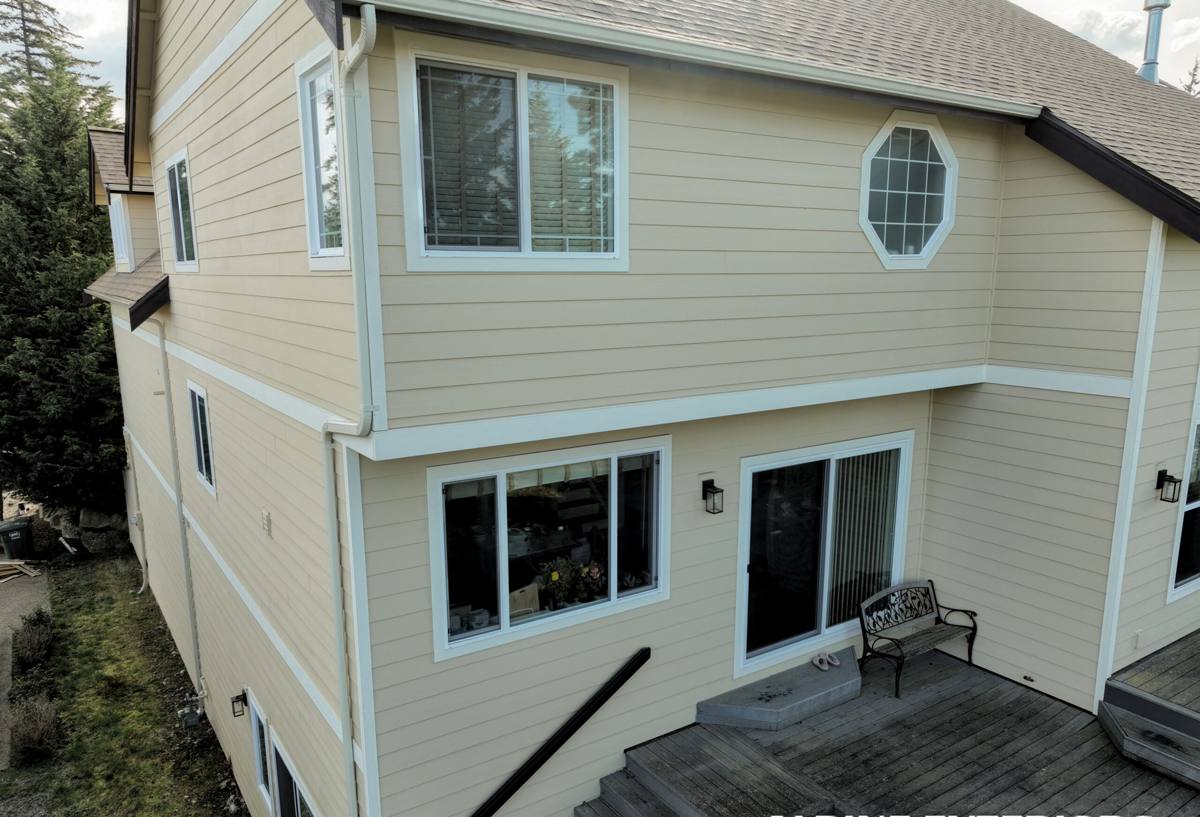
Repair or Replace? Reading the Real Signs
Not every tired-looking deck needs a full replacement, but in this climate, cosmetic problems are often standing in for structural ones underneath. Here's how we sort it out on a walkthrough.
Signs that usually mean repair is enough
- Surface graying or moss on decking boards with solid wood underneath
- A handful of loose or popped fasteners in an otherwise sound structure
- Isolated soft spots on one or two boards, with joists testing firm
Signs that usually mean replacement
- Soft or spongy decking across multiple areas, not just one board
- Rust staining streaking down from fasteners or connectors
- Ledger board separation, gaps, or visible water staining where the deck meets the house
- Wobble or give in the railing posts or main support posts
- Visible rot at post bases or anywhere wood sits close to grade
The honest answer, most of the time, is that a deck built or last rebuilt more than 15 years ago in this area is a candidate for replacement even if it looks passable from the yard. What matters is what's happening at the ledger connection and the joist framing, and that's not something you can fully judge from the surface.
What a Correct Deck Replacement Actually Involves
A deck replacement done right in a wet, salt-exposed area isn't just pulling old boards and nailing down new ones. The parts that determine whether the new deck lasts are mostly invisible once the job is finished.
Ledger board and flashing
The ledger board — where the deck attaches to the house — is the single most common failure point we see on decks in this area, and it's almost always a flashing problem, not a wood problem. Water finds its way behind the ledger, sits against the house rim joist, and rots both the ledger and the framing behind it, often for years before anyone notices. A correct replacement includes proper flashing that sheds water away from the house at every connection point, not just a bead of caulk.
Framing and fastener grade
In a coastal-influenced climate, hardware grade isn't optional upgrade — it's the baseline. That means corrosion-resistant structural connectors and fasteners rated for the type of lumber being used, at every joist hanger, post base, and beam connection. Standard interior-grade hardware corrodes visibly faster here, and once a connector weakens, the failure isn't cosmetic — it's structural.
Footings and post bases
Posts that sit directly on or near grade in consistently damp soil are a rot risk regardless of the wood species. Correct footing depth, proper post base hardware that keeps wood off concrete and off grade, and attention to drainage around the footing all matter more here than they would in a dry climate.
Board spacing and drainage
Decking board gapping needs to account for this area's moisture load — enough spacing to let the deck actually dry between rain events, not just enough to look right on installation day. Tight-fit decking looks clean for a season and then starts trapping moisture and moss between boards.
Decking Material Options for This Climate
There's no single "best" decking material — there's a best fit for how you use the deck, your maintenance appetite, and your budget. Here's how the common options actually perform in Whatcom County's wet, moss-prone conditions.
| Material | Moisture Behavior | Moss/Mildew Resistance | Maintenance | Typical Lifespan Here |
|---|---|---|---|---|
| Pressure-treated wood | Absorbs and releases moisture; needs to breathe and dry | Needs regular cleaning to stay ahead of moss | Annual cleaning, periodic sealing/staining | 15-20 years with upkeep |
| Cedar | Naturally moisture-resistant but still absorbs over time | Better natural resistance, still needs cleaning | Periodic sealing to hold color and resist checking | 15-20 years with upkeep |
| Composite decking | Doesn't absorb like wood; can still hold surface moisture | Surface can still grow moss/mildew without cleaning | Occasional washing, no sealing/staining | 25-30 years |
| PVC/capped composite | Fully moisture-sealed surface | Best resistance; still benefits from cleaning | Lowest maintenance of the group | 25-30+ years |
We'll be direct about one thing: in a climate with this much sustained moisture and moss pressure, wood decking is a legitimate choice, but it only performs well if you're realistic about the annual cleaning and sealing commitment. If that's not something you want to keep up with, composite or capped composite earns its higher upfront cost back in reduced maintenance over the life of the deck. We install both, and we'll tell you honestly which one fits your situation rather than steering you toward whichever is easier for us to sell.
How Our Deck Replacement Process Works
Homeowners near Nooksack generally want the same thing: a straight answer, no surprises mid-project, and a deck that's still solid a decade from now. Here's how we run the job.
- On-site evaluation. We check the ledger connection, framing, post bases, and footings — not just the decking surface — so the plan is based on what's actually happening structurally.
- Written scope and estimate. You get a clear breakdown of what's being replaced, what materials are involved, and what it costs, before any work starts.
- Permitting. Most deck replacements in this area require a permit, particularly for decks attached to the home or elevated above a certain height. We handle that process rather than leaving it on you.
- Tear-out. Old decking, framing, and any compromised structural members come out, and we check what's behind the ledger before closing anything back up.
- Rebuild. Framing, flashing, footings, and decking go in to a standard built for this climate, not the minimum code allows.
- Final walkthrough. We go over the finished deck with you and answer questions about care and maintenance before we consider the job done.
Why a Crew That Already Works Nooksack Matters
Deck replacement isn't exotic work, but local conditions change what "correct" looks like. A crew that regularly works this specific stretch of Whatcom County already has a working understanding of how fast moss reestablishes here, how far driving rain gets pushed under normal siding and decking details, and which fastener and flashing choices hold up versus which ones start showing rust streaks within a few winters. That's not something you learn from a spec sheet — it's something you learn from pulling apart enough failed decks in this exact area to see the pattern repeat.
There's also a practical side: a local crew isn't guessing at permit requirements or driving in cold on a job that then gets rushed to make the trip worthwhile. We're set up to do this work as a normal, recurring part of what we do in Blaine and the surrounding area, not as a one-off project we're learning on as we go.
Maintaining Your New Deck in This Climate
A correctly built deck still needs some seasonal attention here — that's the trade-off of living somewhere this green and this close to the water. A little consistency goes a long way toward hitting the full lifespan of whatever material you choose.
- Sweep debris and standing leaves off the deck surface regularly, especially in fall
- Wash the surface at least once a year to knock back moss and algae before it establishes
- Check and re-seal wood decking on the manufacturer's recommended schedule — don't let it go two seasons past due
- Keep gutters and downspouts clear so runoff isn't dumping extra water directly onto or near the deck
- Look at fastener heads and connectors once a year for early rust staining
- Trim back vegetation that's shading the deck and keeping it damp longer than it should be
What Drives the Cost of a Deck Replacement
Every deck is different, so we won't put a number on your project without seeing it — but these are the factors that move the price up or down.
| Factor | Why It Matters |
|---|---|
| Deck size and shape | Square footage and complexity (multiple levels, angles, built-in seating) both add labor |
| Decking material | Pressure-treated, cedar, composite, and PVC carry different material costs |
| Condition of existing framing | Rotted joists, posts, or footings that need full replacement add scope beyond surface decking |
| Height and railing requirements | Elevated decks need more substantial railing and structural work to meet code |
| Ledger and flashing condition | Water damage behind the ledger often means opening up siding to address it properly |
| Permit requirements | Permit and inspection timelines factor into overall project cost and schedule |
As a general guide, straightforward decking-only replacements on sound framing sit at the lower end of the range; full tear-downs that include new framing, footings, and railing run higher. We'll walk you through exactly where your project lands once we've seen it.
Ready for a Straight Answer on Your Deck
If your deck near Nooksack is showing soft spots, rust streaks, or just isn't holding up the way it used to, it's worth having a local crew take a real look before you decide between repair and replacement. We'll give you a free, no-pressure estimate and an honest read on what your deck actually needs — use the form below to get started.