 Blaine
 Windows in Sumas: Working Against a Different Kind of Wear
Sumas sits inland in Whatcom County, up against the Canadian border in the Nooksack Valley, away from the direct salt air that homes closer to the coast deal with every day. That doesn't mean windows here have it easy. Storms that come ashore off the Pacific still push driving rain sideways into window openings, humidity sits heavy for much of the year, and shaded, north-facing walls in Sumas grow moss and mildew on about the same long season as the rest of the county. Windows take that punishment directly, at every seam where glass meets frame and frame meets siding.
We install siding and windows as one connected exterior system, not two separate jobs. That matters most right at the window opening, where the flashing behind the siding either sheds water away from the frame or quietly feeds it into the wall cavity. A window replacement done in isolation, without attention to how it ties into the surrounding siding and weather barrier, is a common way homeowners end up with a beautiful new window and a slow leak they don't find for a year or two.
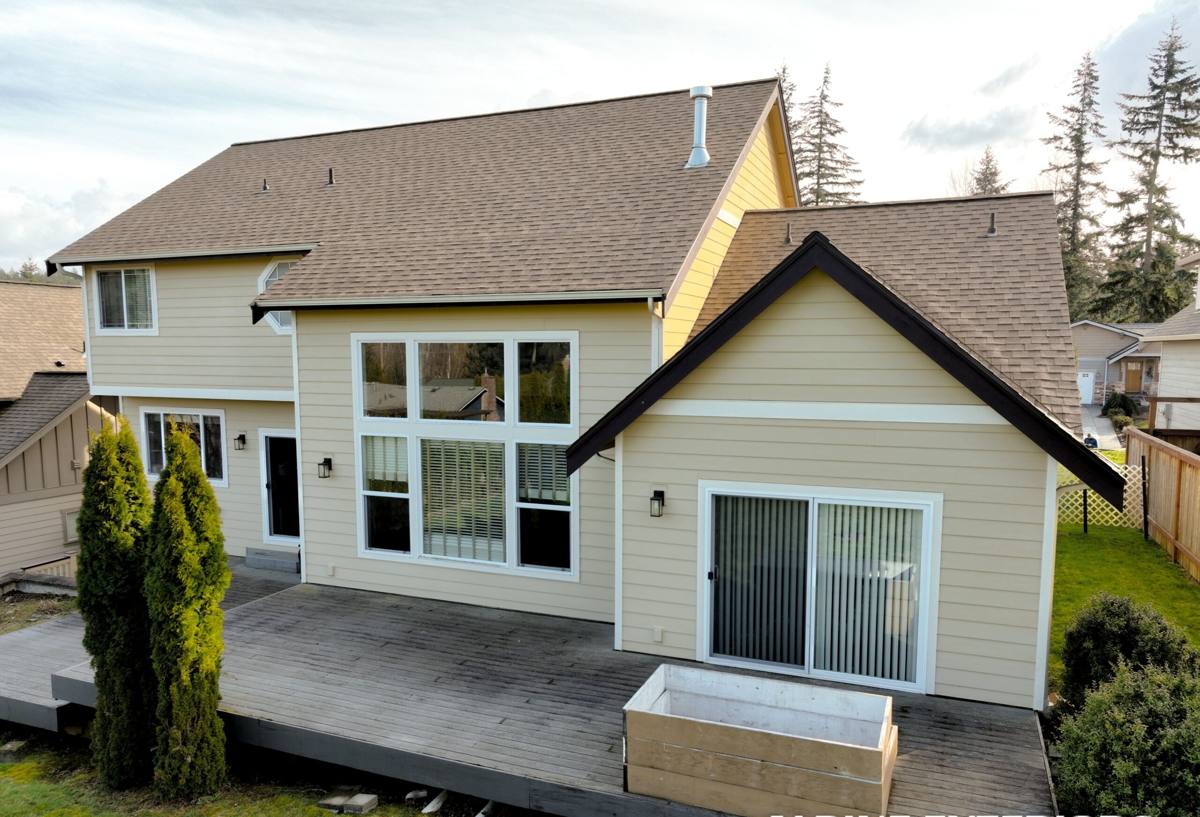
Signs Your Current Windows Are Costing You Money
Most homeowners don't replace windows because they woke up thinking about U-factors. They replace them because something is bothering them day to day. Here's what usually prompts the call in Sumas:
- A noticeable draft near the frame, especially on windy days coming off the valley
- Fogging or a permanent haze between the panes, which means the seal on a double-pane unit has failed and the gas fill is gone
- Glass or frames that feel cold to the touch even with the heat running
- Wood-framed windows that swell, stick, or won't latch tight during the wetter months
- Soft or discolored wood at the sill, a sign moisture has been getting past the weatherstripping for a while
- Heating bills that feel high relative to the size of the house
- Original single-pane or older aluminum-frame windows, common in older homes throughout the Sumas Prairie area
Any one of these on its own might not justify a full replacement. Several of them together, especially on a house with windows original to its construction, usually means the frames and seals have reached the end of what weatherstripping and caulk can fix.
What "Energy-Efficient" Actually Means
Double-pane glass alone doesn't make a window efficient. A handful of specs do most of the real work, and they're worth understanding before you compare quotes:
U-Factor
This measures how much heat the window lets escape. Lower is better. In a climate like ours, where the heating season runs long and the goal is keeping warmth inside, U-factor is usually the single most important number on the label.
Solar Heat Gain Coefficient (SHGC)
This measures how much solar heat passes through the glass. In hot, sunny climates, homeowners want this low to keep interiors cool. Here in Whatcom County, where sunny days are the exception rather than the rule, a moderate SHGC that lets in some free solar heat on the clear days we do get is often the better call than chasing the lowest possible number.
Low-E Coatings and Gas Fill
A low-emissivity coating is a microscopically thin layer that reflects heat back into the room without noticeably darkening the glass. Argon or krypton gas fill between the panes replaces the air, which conducts heat less efficiently and improves insulation. Both are standard on any window worth installing today.
Spacer Type
The spacer is the small strip separating the two panes of glass at the edge. Older aluminum spacers conduct cold straight to the edge of the glass, which is why older double-pane windows often show condensation or frost in a ring around the perimeter first. Warm-edge spacers, made from less conductive materials, cut that cold transfer down significantly and matter more in a humid climate than most homeowners realize.
Frame Material: What Holds Up in This Climate
Frame material affects both energy performance and how much attention the window needs over the years it's installed. In a climate with sustained moisture and a long wet season, this decision matters as much as the glass package.
| Frame Material | Moisture Behavior | Maintenance | Typical Lifespan |
|---|---|---|---|
| Vinyl | Does not rot or absorb water; won't corrode | Low — occasional cleaning | 20-30+ years |
| Fiberglass | Very stable, minimal expansion/contraction with temperature swings | Low | 30-40+ years |
| Wood | Handsome, but vulnerable to swelling, rot, and moisture damage without diligent upkeep | High — repainting, sealing | Varies widely with maintenance |
| Wood-clad (wood interior, clad exterior) | Exterior protected from weather; interior still wood | Moderate | 20-30+ years, dependent on clad seal quality |
| Aluminum | Conducts cold heavily, prone to condensation; largely outdated for residential efficiency work | Low, but poor thermal performance | Long-lasting but energy-inefficient |
We generally steer homeowners in Sumas toward vinyl or fiberglass frames for full replacements. That's a professional standard based on how these materials actually perform in sustained regional moisture, not a preference for one brand over another — both hold their shape and seal integrity through wet winters without the upkeep wood demands or the cold-conducting drawbacks of aluminum.
The Installation Details That Matter More Than the Window Itself
A high-end window installed poorly will underperform a mid-range window installed correctly, especially in a climate that pushes rain into every gap it can find. The parts of the job that don't show up in a brochure are usually the parts that determine whether the window still performs well in ten years.
- Pan flashing at the sill: a sloped, sealed pan under the window directs any water that gets past the frame back outside instead of into the wall
- Proper integration with the weather-resistive barrier: flashing tape needs to overlap correctly with the house wrap or building paper so water sheds downward and outward, not behind the siding
- Shimming and squaring: a window that isn't shimmed level and square won't seal or operate correctly even if every component is high quality
- Correct insulation of the gap: low-expansion foam or backer rod and sealant designed to allow for material movement, not a gap packed solid or left with visible voids
- Interior and exterior air sealing: caulking and sealant on both sides of the frame, not just a cosmetic bead on the visible interior trim
This is also where window replacement and siding work overlap directly. If we're already handling siding on a home, tying the window flashing into the new siding installation in one continuous sequence is more reliable than a window going in separately and siding being worked around it later.
Our Process
- On-site assessment — we look at existing window condition, frame material, signs of past moisture intrusion, and how the home's siding and trim interact with each opening
- Measurement and product selection — exact sizing for each opening, and a glass/frame package matched to the home's exposure and your priorities on cost, appearance, and performance
- Removal and inspection — old windows come out carefully so we can check the sheathing and framing underneath for hidden rot or past leaks before anything new goes in
- Installation — proper flashing, shimming, insulation, and sealing at every opening, tied into the surrounding siding or trim
- Interior and exterior finish work — trim, caulking, and cleanup so the finished opening looks correct inside and out
- Walkthrough — we go over operation, cleaning, and what to watch for so you know what normal wear looks like versus something worth a call
What Affects the Cost
We don't publish flat pricing because every home and every opening is different, but these are the factors that move a quote up or down:
| Factor | Why It Matters |
|---|---|
| Full-frame replacement vs. insert | Full-frame replaces down to the framing and allows correction of hidden rot or flashing issues; inserts fit into the existing frame and cost less but can trap existing problems |
| Frame material | Vinyl generally costs less than fiberglass or wood-clad; each trades off differently on maintenance and lifespan |
| Glass package | Triple-pane, upgraded Low-E coatings, and specialty gas fills add cost along with performance |
| Number and size of openings | Larger openings and specialty shapes take more material and labor |
| Condition of the existing opening | Rot or moisture damage found during removal adds repair work before the new window can go in correctly |
| Concurrent siding work | Bundling window and siding work at the same opening is usually more efficient than doing them as separate projects later |
Why a Crew That Already Works Sumas Matters
Window performance in this region depends on getting the moisture management right, and that's something you learn by doing the work here repeatedly, not by installing windows in a dry climate and assuming the same techniques transfer. A crew that already works Whatcom County has seen how driving rain finds weak flashing details, how long the moss season really runs on shaded walls, and which older homes in the area tend to have original windows with the same predictable failure points. That familiarity shows up in fewer surprises during the job and a better chance the installation performs the way it's supposed to for the long haul.
We treat window work the same way we treat siding: one crew, one standard, applied consistently rather than cutting corners on the parts that don't show once the trim is back on.
Caring for New Windows in This Climate
Energy-efficient windows installed correctly need very little upkeep, but a little seasonal attention goes a long way here:
- Clear weep holes along the bottom of the frame so water can drain rather than pool
- Check exterior caulking and sealant once a year for cracking or gaps, especially after a hard winter
- Wipe down sills and frames on north-facing or shaded windows where moss and mildew tend to establish first
- Operate hardware periodically through the year so mechanisms don't seize from disuse
- Keep an eye on screens and weatherstripping, which wear faster than the frame or glass itself
If your windows are drafty, fogged, or original to a home that's been standing a while, we're glad to come take a look and give you a straightforward, no-pressure estimate on what correct replacement would involve for your specific house. Use the form below to get started.