 Blaine
 Why Ferndale Roofs Need to Be Built for This Specific Climate
Ferndale sits in a part of Whatcom County where the weather doesn't do anything in half measures. The wet season runs long, the wind off the Strait and the lowlands pushes rain sideways more often than people expect, and the mild, damp air that hangs around from fall through spring is exactly what moss needs to get established and stay established. None of that is unique to any one roof type, but it changes what "correct installation" means when the material is metal.
A metal roof can be one of the best-performing options for this area, but only when the panel system, fasteners, flashing, and underlayment are all chosen and installed with this specific combination of marine-influenced air, driving rain, and moss pressure in mind. Get any one of those wrong and you trade one set of problems for another.
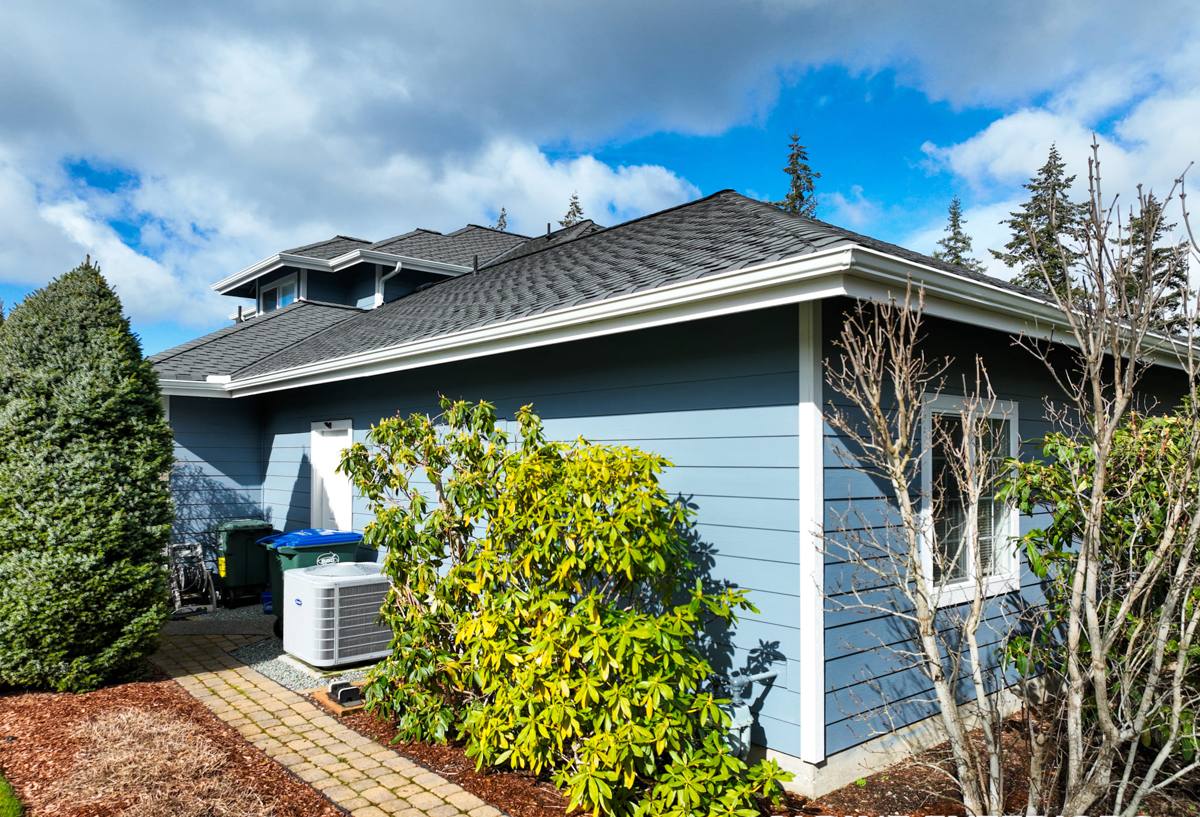
What Driving Rain, Salt Air, and Moss Actually Do to a Roof Here
Wind-Driven Rain
Vertical rain is easy for almost any roof to shed. Wind-driven rain is different — it can push water sideways and upward under laps, around penetrations, and into any seam that wasn't detailed to handle it. On a metal roof this means seam type, panel overlap, and flashing at every transition (ridges, valleys, sidewalls, chimneys, vents) have to be treated as the parts of the job that actually determine whether the roof stays dry, not just the panels themselves.
Salt-Laden Marine Air
Whatcom County's proximity to the water means the air carrying moisture inland also carries trace salt, even for homes that aren't right on the shoreline. Over years, that accelerates corrosion on any metal component that isn't rated for it — fasteners, flashing, and cut edges are the usual weak points. This is a materials-selection issue more than an installation issue, but it only gets solved if it's accounted for up front.
Moss and Trapped Moisture
Shaded lots, mild temperatures, and a wet season that doesn't let up for months are a near-perfect environment for moss and algae growth. On a roof, moss doesn't just sit on the surface — it holds moisture against whatever it's growing on, and on shaded slopes or north-facing sections it can persist for most of the year. Metal resists rooting far better than shingles or wood, but debris, needles, and organic buildup in valleys and against flashing can still hold water long enough to cause staining and, over time, contribute to corrosion at vulnerable points.
Metal Roofing Options: What We Recommend for Ferndale
Not every "metal roof" is built the same way, and the right choice depends on the home, the roof's pitch and exposure, and budget. The two main categories homeowners in this area choose between:
- Standing seam panels — concealed fasteners, raised interlocking seams, and no exposed screw heads for water to work its way past over time. This is our default recommendation for Ferndale roofs with any real exposure to wind-driven rain, because the seam design sheds water even when it's being pushed sideways.
- Exposed-fastener panel systems — a lower-cost option where screws penetrate the panel face with a rubber washer seal. These can perform well for the right application, but the washers are a wear item that eventually need attention, and in a climate with this much sustained wet weather, that maintenance dependency is a real factor to weigh, not a minor footnote.
We'll walk through both honestly during an estimate, including where each one makes sense on your specific roof, rather than defaulting to whichever is easier to install.
What a Correct Metal Roof Installation Actually Involves
The panels get most of the attention, but on a roof built for this climate, several other components do most of the work:
- Underlayment — a high-temperature, self-adhering underlayment at eaves, valleys, and other vulnerable areas, sized to this region's wet-season duration rather than a minimum-code shortcut.
- Fasteners and flashing rated for coastal exposure — matched to the panel metal to avoid galvanic corrosion, and specified for the salt content in the air here, not just generic exterior-grade hardware.
- Flashing detail at every penetration — chimneys, vents, skylights, and wall intersections are where wind-driven rain finds its way in; these get built up in layers, not just caulked.
- Ventilation — proper intake and exhaust airflow so moisture from inside the home doesn't condense against the underside of the roof deck, which matters even more under a metal roof than under some other materials.
- Panel and seam layout — planned around prevailing wind and rain direction on your specific roof, not a one-size-fits-all layout.
Table: Cost Factors That Actually Move the Price
| Factor | Why It Matters Here |
|---|---|
| Panel system (standing seam vs. exposed fastener) | Standing seam costs more up front but reduces long-term maintenance in a climate this wet |
| Roof complexity (valleys, dormers, penetrations) | More transitions mean more flashing work, which is where leaks actually start |
| Tear-off vs. overlay | Existing moss or trapped moisture under old roofing often makes tear-off the honest recommendation |
| Coating and gauge | Heavier gauge and a quality factory finish hold up better against sustained damp exposure |
| Access and pitch | Steeper or harder-to-access roofs take longer and require more safety setup |
Our Process, Start to Finish
- On-site assessment. We look at your current roof, decking condition, ventilation, and how water and shade behave on your specific lot — moss patterns and drainage tell us a lot before we even talk panel options.
- Honest scope and options. We explain what panel system fits your roof and budget, what tear-off versus overlay would mean for your situation, and what the real trade-offs are — no upselling to the most expensive option by default.
- Prep and protection. Landscaping, gutters, and the areas around your home get protected before any work starts.
- Tear-off (when needed), deck check, and underlayment. We don't cover up a compromised deck or skip underlayment upgrades to save time.
- Panel installation and flashing. Panels go on with the fastener and seam detail appropriate to your roof's exposure, with flashing built up correctly at every transition.
- Cleanup and walk-through. We clear the site and walk the finished roof with you so you know what was done and what maintenance, if any, it needs going forward.
Metal vs. Other Roofing Materials for a Ferndale Home
| Material | Typical Lifespan Here | Moss Resistance | Maintenance |
|---|---|---|---|
| Standing seam metal | 40+ years | High — little for moss to grip | Low — periodic debris clearing |
| Exposed-fastener metal | 25–40 years | High | Moderate — washer/fastener checks over time |
| Asphalt composition shingle | 15–25 years | Low — granular surface holds moss and moisture | Higher — moss treatment and gutter maintenance |
| Cedar shake | 20–30 years with upkeep | Low — organic material moss readily colonizes | High — regular treatment and inspection |
This isn't a claim that metal is right for every home — roof structure, budget, and the look you want all factor in. It's a starting point for an honest conversation about what performs well against this specific climate.
Maintenance: What Actually Needs Doing (and What Doesn't)
One of the real advantages of a correctly installed metal roof in this climate is how little ongoing maintenance it needs compared to other materials. That said, "little" isn't "none."
- Clear needles, leaves, and debris from valleys and around penetrations, especially under overhanging trees.
- Check that gutters and downspouts are flowing freely so water isn't backing up against the roof edge.
- Look for any organic buildup (moss, algae) on shaded, north-facing slopes and remove it gently — it's more of a cosmetic and moisture-retention issue on metal than a structural one, but it's still worth addressing.
- Have flashing and seams visually checked every couple of years, particularly after a hard windstorm.
- Address any scratches to the panel coating promptly, since exposed bare metal is where corrosion can start in salt-influenced air.
Why Hiring a Crew That Already Works in Ferndale Matters
Metal roofing installation isn't a forgiving trade to learn on the job — a seam or flashing detail that's slightly off doesn't usually fail on day one, it fails two or three wet seasons later when it's harder to trace back to the cause. A crew that already works Whatcom County roofs day in and day out has already seen how wind-driven rain behaves on roofs like yours, how far moss can spread on a shaded lot in one season, and which fastener and flashing choices actually hold up against the marine air here rather than just meeting a spec sheet written for a drier climate.
That familiarity shows up in the details that don't get photographed — the extra underlayment at a valley, the flashing lap sequence at a chimney, the fastener spec that accounts for salt exposure. It's the difference between a roof that looks right on installation day and one that's still performing correctly ten wet seasons from now.
Get a Free, No-Pressure Estimate
If you're weighing metal roofing for a home in Ferndale, we're glad to take a look, walk you through honest options for your specific roof, and give you a straightforward estimate — no pressure, no upsell. Use the form below to get started.