 Blaine
 Siding That Has to Work Hard in Peace Arch
Peace Arch sits in one of the more exposed corners of Whatcom County — close enough to the water that salt-laden air is a constant, close enough to the border that winter storms come in off the Strait with little to slow them down. Siding here isn't just a cosmetic choice. It's the first line of defense against moisture, wind-driven rain, and the shade and dampness that make moss and algae a year-round concern rather than a seasonal nuisance. We've installed and repaired siding on enough homes in this part of Blaine to know exactly what holds up and what fails early, and that experience shapes every recommendation we make here.
This page focuses specifically on fiber cement siding for homes in Peace Arch — what the local climate demands from it, what a correct installation actually involves, and why the process matters as much as the product.
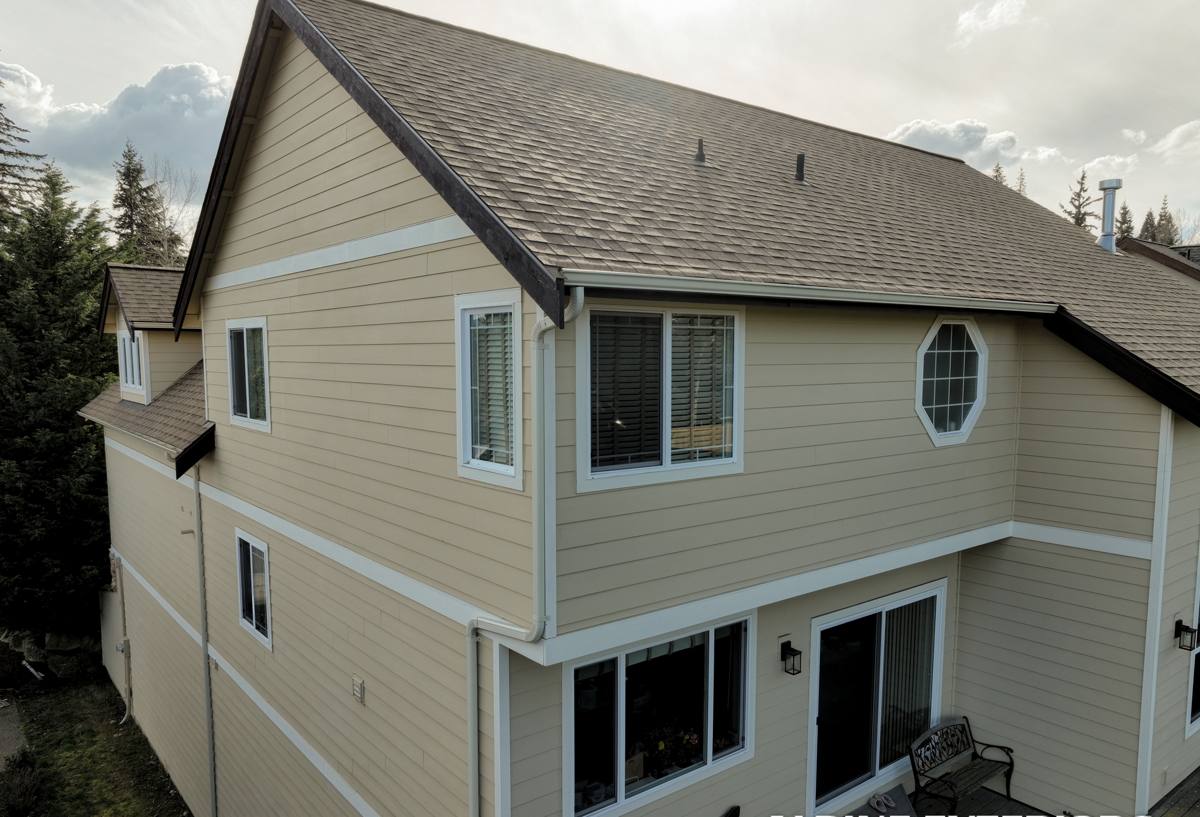
What Salt Air, Rain, and Moss Do to Siding Over Time
Salt Air and Corrosion
Homes within a few miles of saltwater deal with airborne salt settling on every exterior surface. Over years, that salt accelerates corrosion in fasteners, flashing, and any metal trim that isn't rated for coastal exposure. Siding materials that rely on painted wood fiber or exposed metal edges tend to show pitting, rust streaks, and finish breakdown well before their inland counterparts do.
Driving Rain and Wall Moisture
Whatcom County storms don't just fall straight down — wind pushes rain sideways into wall assemblies, especially on homes with less roof overhang or exposure toward open water. If the siding, flashing, and water-resistive barrier behind it aren't detailed correctly, that moisture finds its way behind the cladding. Once it's trapped there, it doesn't leave quickly in our climate — it just sits and does damage.
The Long Moss Season
Shade, moisture, and mild temperatures are exactly what moss and algae need to establish themselves, and Peace Arch has all three for most of the year. Siding with a porous or absorbent surface gives moss something to grip. Once it's established, it holds moisture against the wall even longer, compounding the problem it started.
Why We Install Only James Hardie Fiber Cement Here
We standardized on James Hardie fiber cement siding because it's the product we trust to hold up under this exact combination of conditions. It's non-combustible, dimensionally stable in wet-dry cycling, and finished at the factory with a baked-on ColorPlus finish that resists fading and doesn't rely on a field-applied paint job to keep moisture out. That matters in a climate where a compromised paint film on lesser materials can mean swelling, softening, or rot within a few seasons.
Hardie's HZ5 product line is engineered specifically for climates with heavy moisture exposure and freeze-thaw cycling — which describes Whatcom County's winters well. We spec HZ5 on Peace Arch projects by default rather than treating it as an upgrade, because the standard product line simply isn't built for this level of exposure.
What We Don't Install, and Why
We don't install vinyl, LP SmartSide, Cemplank, Allura, or primed wood siding on homes in this area. Each of those products has legitimate uses elsewhere, but in a coastal, high-moisture, high-moss environment, we've seen the trade-offs — engineered wood's sensitivity to sustained moisture, vinyl's tendency to warp and fade under UV and temperature swings, and the inconsistent long-term performance of some fiber cement alternatives — outweigh the upfront savings. We'd rather install one product correctly than offer five options and let a homeowner discover the difference after the warranty period.
What a Correct Fiber Cement Installation Actually Involves
Fiber cement performs the way it's supposed to only when it's installed to spec. A rushed or undertrained crew can install the same boards a careful crew uses and still end up with a wall that fails early. The details that matter most in Peace Arch's climate include:
- A properly ventilated rain screen gap behind the siding, so any moisture that gets past the cladding can drain and dry instead of sitting against the sheathing
- Correct flashing at every window, door, and penetration, lapped so water is always directed outward and down, never trapped behind trim
- Fastener placement and spacing that matches Hardie's published specifications, with corrosion-resistant fasteners appropriate for coastal exposure
- Proper caulking and sealant only where Hardie's install guidelines call for it — over-caulking traps moisture just as surely as under-caulking lets it in
- Correct clearance between the bottom edge of the siding and grade, decking, or roofing, so splashback and standing water don't sit against the board
- Factory-cut and factory-primed edges kept intact wherever possible, since field cuts need to be sealed to maintain the product's moisture resistance
Skipping any one of these doesn't usually show up as a problem in year one. It shows up in year five or six, as bubbling paint, soft spots, or moss taking hold at a seam that was never properly sealed.
Our Process for Peace Arch Projects
Assessment First
Every project starts with an inspection of the existing siding and the wall assembly behind it, not just a measurement for new boards. In a climate like this, we're specifically checking for trapped moisture, soft sheathing, and any prior installation shortcuts that need to be corrected rather than covered over.
Removal and Prep
We remove the old siding down to the sheathing, address any moisture damage we find, and install a proper water-resistive barrier and rain screen system before a single piece of Hardie board goes up. This step is where a lot of lower-bid jobs cut corners, and it's the step that determines whether the siding lasts twenty years or five.
Installation
Boards, fasteners, and flashing go in to Hardie's specifications and to the realities of this specific site — orientation to prevailing weather, sun exposure, and shade patterns all factor into detail decisions on a given house.
Final Walkthrough
We walk the finished job with the homeowner, cover basic care, and make sure every trim and flashing detail is visible and understood before we consider the project done.
Cost Factors to Expect
Every home is different, and we don't quote a project without seeing it, but the following factors are what typically move the price of a fiber cement siding job up or down.
| Factor | Why It Matters |
|---|---|
| Extent of existing damage | Rot or moisture damage found during tear-off requires sheathing repair before new siding can go on |
| Home size and wall complexity | More corners, dormers, and cutouts mean more cuts, more flashing details, and more labor time |
| Siding profile and accessories | Lap siding, panel systems, and trim/fascia work are priced differently and often combined on one home |
| Access and site conditions | Steep lots, tight setbacks, or limited staging area near the water can add time to a project |
| Color and finish choice | Factory ColorPlus finishes vary in cost by line, but all outperform field-applied paint over time |
We provide a detailed, itemized estimate before any work begins, so there's no ambiguity about what's driving the cost of your specific project.
Maintaining Fiber Cement Siding in This Climate
Fiber cement is low-maintenance compared to wood or engineered alternatives, but "low-maintenance" doesn't mean "no maintenance," especially with Peace Arch's moss season. A little attention once or twice a year keeps the siding performing the way it's designed to.
- Rinse the siding annually, focusing on shaded, north-facing walls where moss and algae establish first
- Keep gutters clear so overflow doesn't run directly down the siding face
- Trim back vegetation and tree limbs that keep any section of wall in constant shade and dampness
- Check caulking at trim and penetrations every couple of years, and have any cracked or missing sealant addressed promptly
- Watch for chalking, fading, or lifted seams, which can signal it's time for a professional inspection rather than a DIY fix
Why Local Experience Matters for This Neighborhood
A crew that already works in Peace Arch and the surrounding parts of Blaine has already learned what this specific stretch of coastline does to a building — how far salt air travels inland here, which wall orientations take the worst of the winter storms, and where moss problems tend to start first. That's not something a crew from outside the area picks up on the first job. It shows up in fewer callbacks, better flashing decisions made on the fly, and a finished product that's actually built for the conditions it has to survive, not just the conditions on a spec sheet.
If you're planning a siding project in Peace Arch, we'd like to take a look at your home and talk through what it actually needs. Reach out for a free, no-pressure estimate using the form below.