 Blaine
 Sandy Point's Waterfront Weather Is Hard on Siding
Sandy Point sits close to the water on the edge of Whatcom County, and that proximity to the Strait of Georgia shapes everything about how a home's exterior ages. Homes here take on a steady mix of salt-laden wind, wind-driven rain, and long stretches of gray, damp weather that don't let up for months at a time. Add in a shoulder season where moss and algae get a foothold on anything that stays wet too long, and you've got a siding environment that's noticeably tougher than what you'd find further inland in Whatcom County.
Homeowners who've lived in Sandy Point for a while already know this. Paint fails faster near the water. Wood trim softens in spots that never quite dry out. Caulking cracks and lets water behind the siding before anyone notices. None of this is unusual for a marine-exposed property — it's just the reality of building on this stretch of coastline, and it means the siding material and the installation both have to be chosen with that reality in mind, not against it.
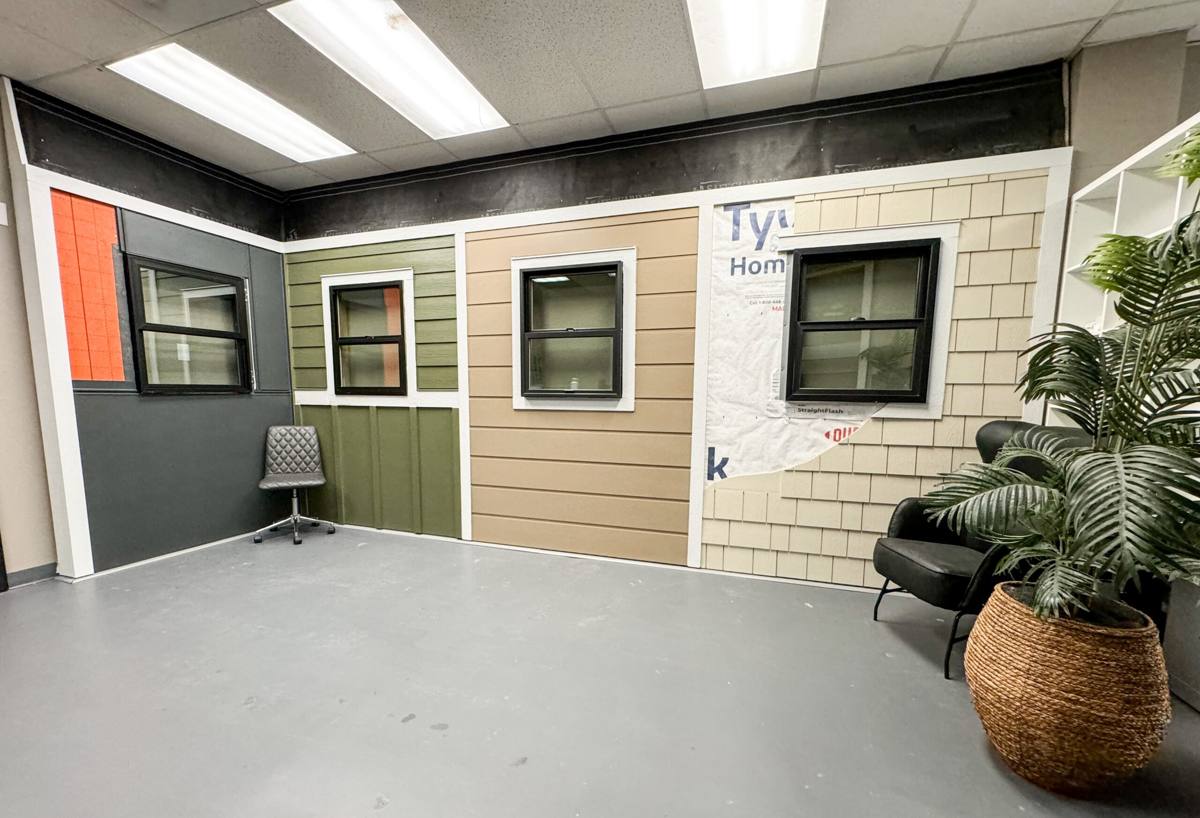
What Salt Air, Driving Rain, and Moss Season Actually Do to Siding
Salt Air
Airborne salt doesn't just sit on the surface — it works into seams, fastener heads, and any spot where a coating is thin or scratched. On metal fasteners and trim, it accelerates corrosion. On painted wood and composite products, it speeds up the breakdown of the finish, which is why houses near the water typically need repainting more often than the same house would a few miles inland.
Driving Rain
Wind off the water doesn't just bring moisture — it pushes rain sideways and up under laps, trim, and penetrations that would stay dry in a calm rain. That means water intrusion at siding isn't only a bottom-edge problem here; it can happen at butt joints, window and door trim, and anywhere flashing is missing or installed wrong.
Moss Season
Whatcom County's wet season runs long, and shaded or north-facing walls in Sandy Point can stay damp for weeks. Moss and algae need exactly that — sustained moisture and low light — to establish. Once they take hold on a porous or absorbent siding surface, they hold even more moisture against the wall, which compounds every other problem listed above.
Why We Only Install James Hardie Fiber Cement Here
We don't install vinyl siding, LP SmartSide, primed spruce, cedar, or other fiber cement brands like Cemplank or Allura. That's a deliberate standard, not a sales pitch, and it matters more in a place like Sandy Point than almost anywhere else we work.
Vinyl expands and contracts with temperature swings and can warp or crack in sustained wind exposure; it also isn't fire-resistant, which matters on properties near dry brush or vegetation in summer. Wood and primed spruce need vigilant repainting and caulk maintenance to survive marine air, and once moisture gets behind the finish, rot can spread before it's visible. Engineered wood products like LP SmartSide use a resin-treated wood substrate that performs well in many climates but is still wood-based, meaning it depends heavily on an intact factory coating and correct field sealing to keep moisture out — a bigger ask in a environment with this much sustained dampness. Other fiber cement brands can be reasonable products, but we've standardized on one manufacturer so our crews install one system, to one spec, every time — which is where most siding failures actually come from: inconsistent installation, not the material itself.
James Hardie fiber cement is non-combustible, doesn't rot, and holds its factory-applied ColorPlus finish far longer than field-painted materials — which matters a great deal when repainting a house means dealing with salt-air paint failure on a repeating cycle.
HardieZone Engineering for a Marine Climate
James Hardie manufactures its siding in different formulations for different climate zones, sold under the HardieZone system as HZ5 and HZ10 products. Whatcom County, including Sandy Point, falls in a zone where moisture exposure and freeze-thaw cycling are both relevant considerations, and the HZ5 formulation is engineered specifically for that kind of climate — it's built to resist moisture-related damage in areas that see sustained wet weather rather than dry heat.
Beyond the substrate itself, ColorPlus Technology is the other piece that matters near the water: it's a factory-baked finish, applied and cured under controlled conditions, that resists fading and chipping far better than site-applied paint. In a location where repainting is expensive and inconvenient because of access and weather windows, a finish that doesn't need repainting on the same schedule as painted wood is a real, measurable advantage — not a marketing detail.
What a Correct Installation Involves
Fiber cement siding is only as good as the installation behind it. A huge share of the siding problems we see on marine-exposed homes trace back to installation shortcuts, not the product itself. On a Sandy Point home, we pay particular attention to:
- Water-resistive barrier (house wrap) installed and lapped correctly, with all seams sealed before siding goes on
- Flashing at every window, door, and roof-to-wall intersection — not just caulk standing in for flashing
- Correct fastener type and placement, since marine air is hard on the wrong fastener material
- Proper clearance and gapping at the bottom of the siding, deck ledgers, and roof lines so water has somewhere to go
- Manufacturer-specified joint treatment at butt seams, which are a common weak point in driving rain
- Field-cut edges primed or sealed per Hardie's installation guidelines, since a raw cut edge is a moisture entry point
Skipping or rushing any one of these items might not show a problem for a year or two. On a property exposed to Sandy Point's wind and rain, it tends to show up faster than it would inland.
Our Process for Sandy Point Projects
Because we already work in this area, we know what to check before a bid ever turns into a proposal. Our process on a Sandy Point home typically includes:
- On-site assessment — checking existing siding, trim, and sheathing condition, with particular attention to north and west-facing walls where moss and prolonged dampness are most common
- Moisture and substrate check — confirming sheathing hasn't already taken on hidden water damage before new siding goes over it
- Product and color selection — matching the right Hardie profile and ColorPlus color to the home, with realistic expectations set about maintenance and longevity
- Installation to manufacturer spec — house wrap, flashing, fastening, and joint treatment done to Hardie's published requirements, not shortcuts
- Final walkthrough — reviewing the finished work with the homeowner, including a straightforward explanation of what maintenance (if any) to expect going forward
We don't upsell products we don't stand behind, and we won't quote a "quick and cheap" install that skips flashing or barrier work to save labor time — not on a property that's going to take this much weather.
Comparing Siding Options for a Sandy Point Property
Homeowners near the water often ask how the options actually stack up once you factor in salt air and sustained moisture, not just sticker price. Here's an honest comparison based on how these materials generally perform in marine-exposed conditions:
| Material | Marine Air Performance | Maintenance Burden | Fire Resistance |
|---|---|---|---|
| James Hardie Fiber Cement (HZ5) | Engineered for wet, coastal climates; won't rot | Low — factory finish resists fading/chipping | Non-combustible |
| Vinyl | Can warp or crack under wind and temperature swings | Low, but color fades and can't be repainted easily | Not fire-resistant; can melt |
| Cedar / Primed Wood | Vulnerable to rot and moss without vigilant upkeep | High — regular painting and caulk inspection needed | Combustible |
| Engineered Wood (e.g., LP SmartSide) | Resin-treated, but still wood-based; depends on intact coating | Moderate — coating and seams need monitoring | Combustible |
This isn't about declaring every other product unusable — it's about why, after years of doing exterior work in weather like this, we made fiber cement from one manufacturer our standard rather than offering several options with very different long-term outcomes.
Living With the Siding: Maintenance in a Salt Air, Moss-Prone Climate
Even the right material benefits from a little basic upkeep near the water. For a Sandy Point home, we generally recommend:
- A gentle rinse-down once or twice a year to clear salt residue and organic buildup before it establishes
- Keeping gutters clear so water isn't sheeting down the wall face during heavy rain
- Trimming back vegetation and tree cover on shaded walls to reduce the moisture and low light that moss needs
- A visual check of caulking at trim and penetrations every year or two, since caulk is usually the first thing to fail, not the siding itself
- Prompt attention to any fastener staining or trim discoloration, which is often an early, easy-to-fix warning sign
None of this is heavy maintenance — it's the kind of light attention any coastal home benefits from, and it's considerably less than what painted wood siding demands in the same conditions.
Cost Factors for a Sandy Point Siding Project
Every project is different, and we don't quote firm numbers without seeing the house, but the main variables that move the price on a Sandy Point job are generally:
| Factor | Why It Matters |
|---|---|
| Existing siding removal and disposal | Tear-off adds labor, especially with multiple layers or damaged sheathing underneath |
| Sheathing/substrate repair | Hidden moisture damage from prior siding failures may need to be addressed before new siding goes on |
| Home size, height, and access | Waterfront lots and elevated homes can add complexity for staging and scaffolding |
| Siding profile and color | Plank width, texture, and ColorPlus color selection affect material cost |
| Trim and detail work | Window, door, and corner detailing affects labor time regardless of material cost |
We walk through each of these on-site so the estimate reflects your actual house, not a generic per-square-foot guess.
Why a Crew That Already Works Sandy Point Matters
Installing siding correctly in a marine environment isn't the same skill set as installing it on a dry, inland lot. A crew that regularly works this stretch of Whatcom County already understands where water tends to find its way in on waterfront and near-waterfront homes, how much clearance to leave, and which details can't be shortcut when the weather is this consistently wet and salty. That experience shows up in fewer callbacks and a siding job that's still doing its job fifteen years from now, not just on installation day.
If you're considering new siding for a Sandy Point home, we're happy to take a look and give you a straightforward assessment — no pressure, no upsell. Use the form below to request a free estimate.