 Blaine
 Composite Decking in Grandview: A Climate That Doesn't Forgive Shortcuts
Grandview sits close enough to the water and deep enough into Whatcom County's tree cover that a deck here deals with two very different stresses at once: salt-laden marine air off the Salish Sea and the shaded, damp conditions that come with mature evergreen trees. A lot of composite decking gets sold with a one-size-fits-all pitch. That doesn't hold up out here. The boards themselves are engineered to resist rot, but the deck as a whole — substructure, fasteners, drainage, the connection to the house — still has to be built for this specific combination of salt exposure, driving rain, and a moss season that can run most of the year in shaded yards.
This page is about that one job, done right, in this one area: what the climate actually does to a deck here, what a correct composite installation involves, how we approach the work, and why it matters that the crew doing it already works in Grandview and understands the conditions instead of treating it like any other jobsite.
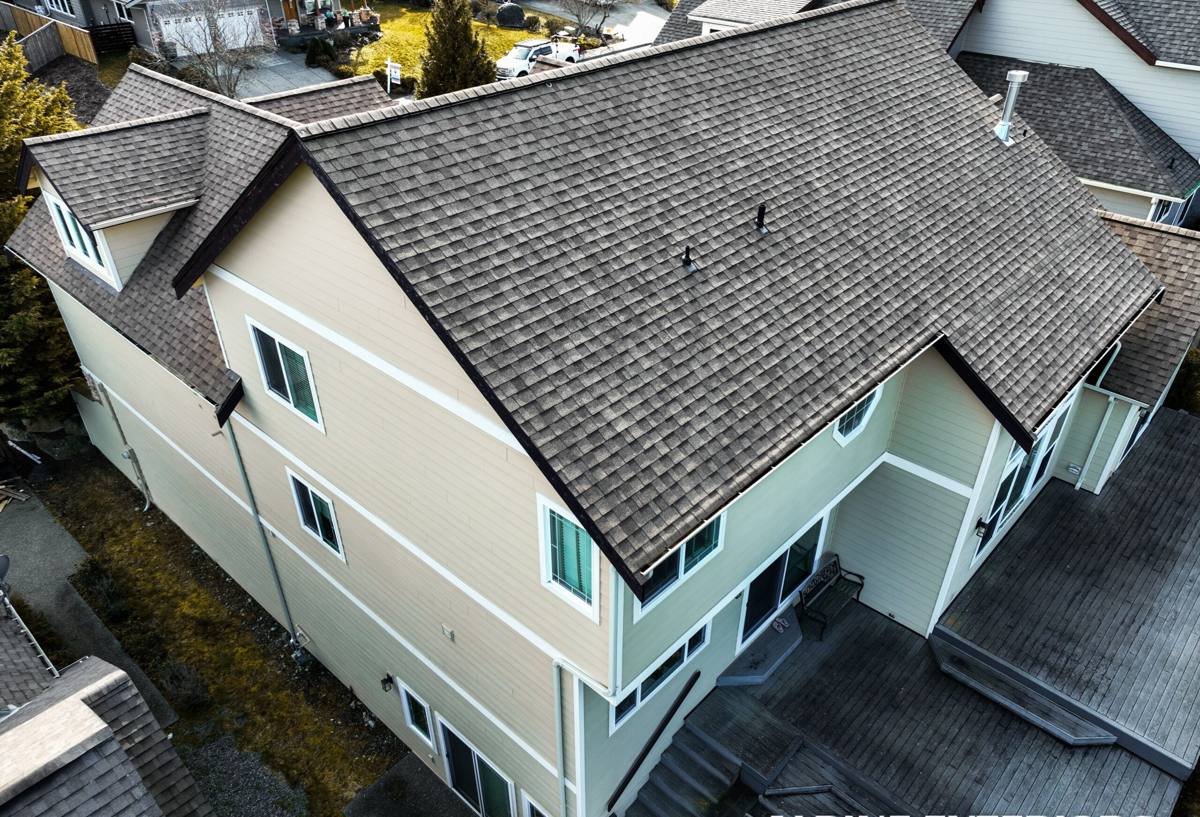
What Salt Air, Driving Rain, and Moss Season Actually Do
Salt Air
Salt-laden air doesn't rot composite boards the way it can degrade untreated wood, but it does accelerate corrosion on anything metal — fasteners, joist hangers, post bases, railing hardware. A deck built with standard hardware in a coastal-influenced area can develop rust streaks and weakened connections years before the decking itself shows any wear. The hardware spec matters as much as the decking brand.
Driving Rain
Wind-driven rain in this part of Whatcom County doesn't just fall on the deck surface — it gets pushed sideways into gaps, under ledger boards, and into any spot where flashing was skipped or done poorly. Composite boards themselves shrug off moisture, but the framing underneath (even pressure-treated framing) still needs to shed water fast. Standing water under a deck, especially where drainage is poor, is where problems start.
Moss Season
Shaded yards under fir and cedar cover stay damp for extended stretches, and that's exactly the environment moss and algae need. Composite decking won't rot from this the way wood can, but surface growth on a deck that doesn't get airflow or sun exposure is a real and common complaint. The board's surface texture, gap spacing, and site orientation all affect how much of a problem this becomes.
What a Correctly Built Composite Deck Involves
The decking material gets most of the attention, but the parts that actually determine whether a deck holds up in this climate are mostly hidden once the job is done.
- Ledger flashing: Where the deck ties into the house, proper flashing (not just caulk) keeps driving rain from working its way behind the siding and into the wall assembly over time.
- Joist protection: Joist tape or an equivalent barrier over the framing reduces moisture wicking into fastener holes, which is where rot typically starts on an otherwise sound deck.
- Fastener and hardware grade: Coastal-rated or stainless hardware where it matters (ledger bolts, hangers, post connections) costs more up front and avoids the corrosion issues salt air causes with standard-grade hardware.
- Hidden fastener systems: Most composite boards today use hidden clips rather than face-screwing, which also reduces the number of penetration points where water can find its way into the board core.
- Drainage and slope: A slight, consistent slope away from the house, plus gapping between boards, gives water somewhere to go instead of pooling.
- Ventilation underneath: Airflow beneath the deck surface matters more in shaded, damp yards — it's a big part of what keeps moss and algae from establishing on the underside of boards and on the framing.
- Footings sized for the site: Whatcom County soil and drainage vary block to block; footing depth and sizing should match the actual site conditions, not a generic minimum.
Choosing the Right Composite Product for This Climate
"Composite decking" covers a range of products, and the differences matter more here than in a drier inland climate. We walk homeowners through the honest trade-offs rather than pushing whatever has the best margin.
| Decking Type | How It Handles This Climate | Trade-Off to Know |
|---|---|---|
| Capped composite | A protective cap resists moisture absorption and staining better than uncapped composite; solid choice for salt air and rain exposure | Mid-to-upper price range; performance varies by manufacturer's cap quality |
| Full PVC decking | Fully synthetic, essentially immune to moisture absorption and rot; performs consistently in wet, shaded yards | Higher cost; some homeowners find the look and feel less "wood-like" |
| Uncapped composite | More prone to surface moisture absorption and staining over time in a wet climate; can be more susceptible to mold and mildew in shaded, damp spots | Lower upfront cost, but higher maintenance burden in this environment |
| Traditional wood | Requires regular sealing/staining to hold up against salt air and constant moisture; without upkeep, moss and rot set in faster | Lowest material cost, highest ongoing maintenance and inspection need |
We install capped composite and PVC decking as our standard recommendation for Grandview and the surrounding coastal-influenced areas, specifically because of how much less maintenance they demand in a climate that stays damp and shaded for long stretches of the year. That's a maintenance and moisture-behavior call, not a brand loyalty pitch — we're glad to walk through why for any specific product a homeowner is considering.
Our Process, Start to Finish
1. On-Site Assessment
We look at sun exposure, tree cover, existing drainage, the condition of the ledger connection if there's an existing deck, and how exposed the site is to prevailing wind and rain direction. This shapes the framing and drainage plan before we ever talk board colors.
2. Design and Product Selection
We go over composite options, hidden fastener systems, railing choices, and realistic maintenance expectations for the specific spot the deck will sit in.
3. Permitting
Decks tied to the structure, above a certain height, or requiring guardrails typically need a permit through the local jurisdiction. We handle that process as part of the job rather than leaving it to the homeowner.
4. Build
Framing, flashing, joist protection, and footings go in first — the parts nobody sees but that determine how the deck ages. Decking, fascia, and railing go on last.
5. Final Walkthrough
We walk the finished deck with the homeowner, cover basic care, and point out anything site-specific worth knowing — drainage patterns, shaded spots likely to need more frequent cleaning, that kind of thing.
What Maintenance Actually Looks Like Here
Composite decking is sold on being low-maintenance, and relative to wood, it is. But "low-maintenance" in a marketing sense and "zero-maintenance" in a Whatcom County shade yard are two different things. Here's what actually keeps a composite deck looking and performing well in this climate:
- Sweep or rinse off debris and needles regularly — trapped organic material is what feeds moss and algae growth, not the board material itself
- Give shaded sections an occasional scrub with a soft brush and mild cleaner, especially where tree cover blocks direct sun for most of the day
- Check gaps between boards periodically to make sure they haven't filled with debris that blocks drainage
- Inspect hardware and railing connections yearly for any early corrosion, particularly on decks closer to the water
- Keep gutters and downspouts near the deck clear so runoff isn't dumping extra water onto or under the deck surface
Permits and Site Considerations in Whatcom County
Deck permitting requirements depend on size, height, and whether the structure attaches to the house, and they're enforced by the local building department rather than being optional paperwork. Setback rules, guardrail height requirements, and footing depth all get checked during inspection. We factor this into the estimate and timeline up front so there are no surprises partway through the build — and we handle the permit application and inspection scheduling ourselves.
Why a Crew That Already Works Grandview Makes a Difference
None of this — flashing detail, hardware grade, drainage planning, product selection — is exotic knowledge. But it only gets applied consistently by a crew that's already dealt with this specific combination of salt air, driving rain, and moss-prone shade on other decks nearby. A crew coming from a drier or more inland market may build a technically fine deck by their own standards and still miss the details that matter specifically here — the flashing detail that keeps driving rain out of a ledger board, the hardware grade that won't corrode near the water, the drainage plan that accounts for a yard that stays damp most of the year. Working this area regularly means those aren't afterthoughts; they're just how the job gets done from the start.
If you're planning a new composite deck or replacing one that hasn't held up in Grandview's climate, we're happy to take a look and give you a straightforward, no-pressure estimate — just fill out the form below.