 Blaine
 Siding That Actually Holds Up in Dakota Creek
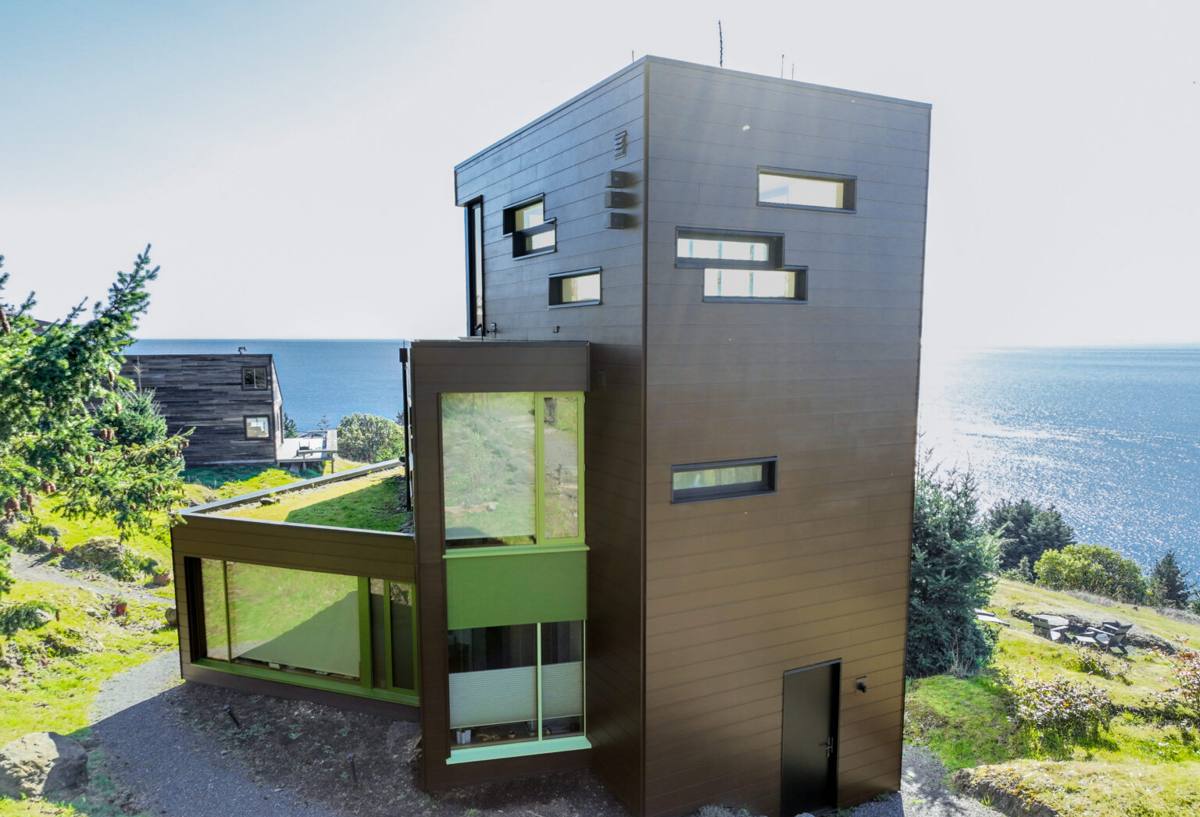
Dakota Creek sits close enough to the water that homes here take a different beating than siding fifteen miles inland. Salt-laden air off the strait, wind-driven rain that hits walls sideways instead of falling straight down, and a shoulder season that stays damp and shaded long enough to grow a green film on anything that can't shed moisture — that combination is hard on exterior materials. It's especially hard on the wrong exterior materials. We install James Hardie fiber cement siding exclusively, and on homes in this part of Whatcom County, the reasons for that go beyond preference. This page walks through what Dakota Creek's climate actually does to a house, what James Hardie brings to that fight, and what a correctly installed job looks like from the crew's side of things.
What This Climate Does to a House
Three conditions define exterior wear in this part of Blaine, and they compound each other.
Salt Air
Airborne salt from marine exposure accelerates corrosion on anything metal — fasteners, flashing, trim edges — and it's abrasive to painted and coated surfaces over time. Materials that rely on a thin surface coating to keep water out are the first to show it, usually as chalking, fading, or fastener bleed-through within a handful of years.
Driving Rain
Wind off the water doesn't let rain fall politely down a wall — it drives it sideways and up under laps, trim, and penetrations. Siding systems depend on lap geometry, flashing, and a drainage plane behind the cladding to manage that; any weak point in the detailing shows up as a leak or trapped moisture, not immediately, but eventually.
Long Moss Season
Shaded, damp walls in this region can stay wet for weeks at a stretch, especially on north- and west-facing elevations shielded by trees or neighboring structures. That's ideal moss and algae growth conditions. Porous or wood-based siding gives moss something to grip and feed on; it also holds moisture against the substrate longer, which is where rot starts.
Why James Hardie Is Built for This
James Hardie fiber cement is engineered specifically around moisture and climate exposure, which is a big part of why we standardized on it rather than offering a menu of siding options.
- Non-combustible composition — sand, cement, and cellulose fiber, not wood fiber, so it doesn't feed rot or provide the organic material that wood-based products do.
- HZ5 engineered formulation — Hardie's Pacific Northwest climate zone product is formulated for sustained moisture exposure and temperature swings typical of our region, as opposed to a generic national product.
- ColorPlus factory finish — a baked-on, multi-coat finish applied under controlled conditions, which holds color and resists fading and chalking far longer than field-applied paint exposed to salt air during cure.
- Dimensional stability — fiber cement doesn't swell, cup, or warp with moisture cycling the way wood-based sidings can, which matters when a wall is wet more often than it's dry for months at a time.
None of that makes James Hardie maintenance-free — nothing is, in this climate — but it removes several of the failure points that show up fastest on wood-based or vinyl products near the water.
What Correct Installation Actually Involves
Material choice only gets a homeowner halfway. Most of the siding failures we get called out to inspect in coastal Whatcom County aren't product failures — they're installation shortcuts that let water in behind a perfectly good product. On a Dakota Creek job, a correct installation means:
- Flashing at every penetration — windows, doors, hose bibs, vents, and any wall penetration get proper step and head flashing before siding goes on, not caulk as a substitute for flashing.
- A drainage plane behind the siding — house wrap or equivalent weather-resistant barrier, lapped correctly, with a rainscreen gap where conditions call for it so any water that does get behind the siding can drain and dry out instead of sitting against the wall sheathing.
- Manufacturer-specified clearances — Hardie specifies minimum clearance from grade, roofing, decks, and other horizontal surfaces. Skipping these clearances is one of the most common shortcuts we see, and it's exactly the kind of detail that causes moisture problems in a driving-rain climate.
- Correct fastening — the right fastener type, spacing, and embedment, corrosion-resistant given the salt air exposure this close to the water.
- Proper joint and caulk practices — using Hardie's specified joint treatment rather than relying on caulk to bridge gaps that shouldn't exist in the first place.
Get any one of these wrong and you can end up with moisture problems behind premium siding — which is worse than moisture problems behind cheap siding, because it's hidden longer.
How We Approach a Dakota Creek Job
Every home is different, but the sequence we follow on jobs in this area is consistent:
1. Site and Exposure Assessment
We look at which elevations take the most wind-driven rain, which stay shaded and damp longest, and what the existing wall assembly looks like once we open it up. A house set back from the water with good sun exposure on all sides doesn't need the same detailing as one that's shaded and directly in the wind path.
2. Tear-Off and Substrate Check
We remove the existing siding and inspect the sheathing underneath for rot, soft spots, or prior moisture damage — common on older homes in this area where the original siding or house wrap wasn't doing its job. Any damaged sheathing gets replaced before anything else happens.
3. Weather Barrier and Flashing
House wrap, flashing, and drainage plane go in per manufacturer spec, with extra attention to penetrations and any elevation that takes direct weather.
4. Hardie Installation
Siding, trim, and accessories go on to Hardie's fastening and clearance specifications, with attention to the details that matter most in this climate — grade clearance, roof-to-wall transitions, and window/door flashing integration.
5. Final Walkthrough
We walk the exterior with the homeowner, check every elevation, and go over what basic upkeep looks like going forward.
Comparing Siding Options for This Exposure
Homeowners near Dakota Creek often ask how James Hardie stacks up against other materials they've seen quoted elsewhere. Here's an honest comparison focused specifically on salt air, driving rain, and moss exposure — not a generic siding comparison.
| Factor | James Hardie Fiber Cement | Vinyl | Wood-Based Siding (e.g. LP SmartSide, cedar) |
|---|---|---|---|
| Salt air resistance | Strong — factory finish resists chalking/fading | Can become brittle and discolored over time | Coating wears faster; substrate vulnerable once finish fails |
| Driving rain / moisture | Dimensionally stable when properly flashed | Sheds water but can warp or buckle | Prone to swelling, cupping if moisture gets behind it |
| Moss/algae resistance | Dense, less porous surface | Resists moss but shows dirt and staining | Organic material feeds moss and rot if kept damp |
| Fire resistance | Non-combustible | Combustible | Combustible (wood fiber content) |
| Long-term maintenance | Periodic washing, minimal recoating | Low maintenance but limited repair options | Regular inspection, recoating, and caulking |
We don't install vinyl or wood-based products like LP SmartSide, primed spruce, or cedar lap — not because they can't be installed well, but because we've made a professional call that James Hardie gives homes in this climate the best combination of moisture performance, fire resistance, and finish longevity, and we'd rather stand behind one product system we know thoroughly than offer a menu of options with very different long-term outcomes.
Maintenance in a Salt Air, High-Moss Environment
James Hardie reduces maintenance burden compared to wood-based siding, but "low maintenance" isn't "no maintenance," especially this close to the water. A simple annual routine goes a long way:
- Rinse the exterior yearly (garden hose pressure is enough — avoid high-pressure washing directly at seams and edges).
- Check shaded, north- and west-facing walls for early moss or algae growth and treat promptly rather than letting it establish.
- Inspect caulk joints around windows, doors, and trim annually; recaulk failed joints before they let water in.
- Keep gutters clear and downspouts directed away from the foundation so runoff isn't sheeting down wall sections.
- Trim back vegetation and tree cover where practical to reduce prolonged shade and dampness on affected walls.
- Watch grade and landscaping over time — mulch, soil, or hardscaping that creeps up toward the siding's bottom edge closes the clearance gap that keeps the material dry.
Why a Crew That Already Works This Area Matters
Siding detailing that works fine in a drier, inland part of Whatcom County isn't automatically right for a home exposed to marine air and driving rain near Dakota Creek. A crew that's worked this specific stretch of coastline knows which elevations typically take the worst weather, how prior builders in this area have handled (or mishandled) flashing and clearances, and what moss and algae patterns look like on local homes before they become a real problem. That local pattern recognition is hard to substitute for, and it's a big part of why homeowners here get more value from a contractor who already knows this coastline than from a crew doing their first job near the water.
Getting Started
If your Dakota Creek home has siding that's showing its age — chalking, moss, soft spots, or failed caulk joints — or you're planning ahead for a replacement, we're happy to walk the exterior with you and give you an honest read on what's going on and what it would take to fix it right. Reach out for a free, no-pressure estimate; there's a form below to get that conversation started.